• KZT/USD = 0.00219
  • TJS/USD = 0.10860
  • UZS/USD = 0.00008
  • TMT/USD = 0.29850
  • KZT/USD = 0.00219
  • TJS/USD = 0.10860
  • UZS/USD = 0.00008
  • TMT/USD = 0.29850
  • KZT/USD = 0.00219
  • TJS/USD = 0.10860
  • UZS/USD = 0.00008
  • TMT/USD = 0.29850
  • KZT/USD = 0.00219
  • TJS/USD = 0.10860
  • UZS/USD = 0.00008
  • TMT/USD = 0.29850
  • KZT/USD = 0.00219
  • TJS/USD = 0.10860
  • UZS/USD = 0.00008
  • TMT/USD = 0.29850
  • KZT/USD = 0.00219
  • TJS/USD = 0.10860
  • UZS/USD = 0.00008
  • TMT/USD = 0.29850
  • KZT/USD = 0.00219
  • TJS/USD = 0.10860
  • UZS/USD = 0.00008
  • TMT/USD = 0.29850
  • KZT/USD = 0.00219
  • TJS/USD = 0.10860
  • UZS/USD = 0.00008
  • TMT/USD = 0.29850
20 November 2026

Viewing results 1 - 6 of 2

Interview: Mother’s Home CEO Timur Tuleuzhanov on Expanding the Kazakh Charity Abroad

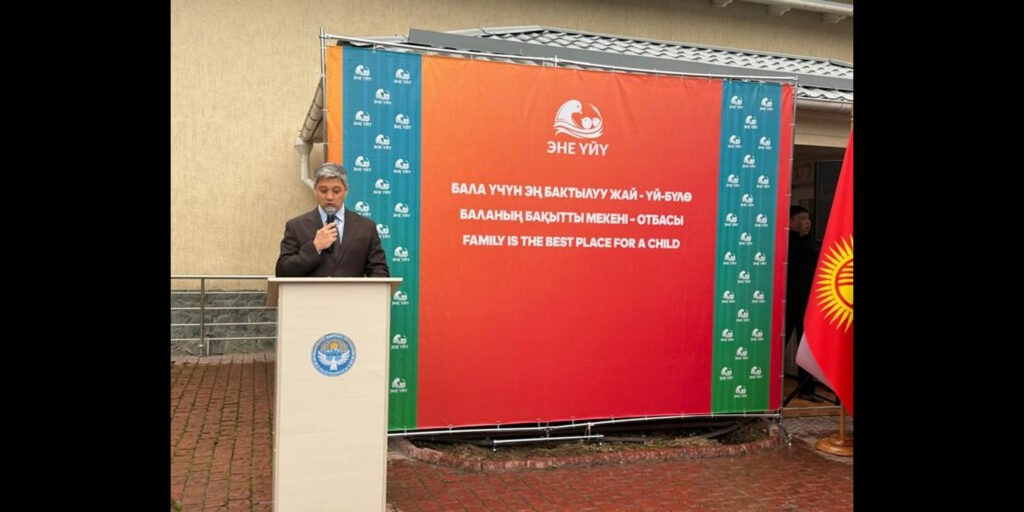
Kazakhstan’s Mother’s Home project, which helps women facing difficult circumstances stay with their children, now has an international network of 14 centers in Uzbekistan, Kyrgyzstan, Ukraine, Türkiye, and Malaysia. The foundation says its international work has helped approximately 500 children remain with their mothers since 2023. Across Central Asia, the United Nations Children’s Fund has called for greater investment in family support services to prevent children from entering institutional care unnecessarily. The Times of Central Asia spoke with Timur Tuleuzhanov, chief executive of the privately funded Mother’s Home International Foundation, about how the project is being adapted in other countries and how its centers are financed. He also discussed possible expansion into Azerbaijan and Tajikistan. TCA: The Mother’s Home project began in Kazakhstan and now operates internationally. How did it begin, and what results have you seen as it has expanded abroad? Timur Tuleuzhanov: Mother’s Home has been operating in Kazakhstan for 13 years. It was established in 2013 by Kazakh entrepreneurs who wanted to prevent children with living parents from entering institutional care. Not every child in an institution is an orphan. Some have mothers who want to raise them but lack housing, an income, or support from relatives. In those circumstances, a mother may feel she has no choice but to give up her child. Mother’s Home centers were created to help women in these circumstances. They provide temporary housing, professional support, and a chance to rebuild their lives while staying with their children. Over the years, more than 10,000 children in Kazakhstan have been able to stay with their mothers thanks to the project. This experience showed us that many cases of children entering institutional care can be prevented if families receive support at the right time. Eventually, we began considering expanding Mother’s Home beyond Kazakhstan. Women in other countries face similar circumstances, and we wanted them to have access to the same kind of assistance. That led to the establishment of the Mother’s Home International Foundation in 2023. Ukraine became the first country where the international project began operating that same year. Uzbekistan joined the initiative in 2024, followed by Kyrgyzstan and Malaysia in 2025. The first center in Turkey opened in 2026. Today, the international network has 14 centers in five countries. Nine of those centers are in Uzbekistan, where Ona Uyi operates in Tashkent and several other regions. But I consider the lives of the children, rather than the number of centers or countries, to be our most important achievement. Thanks to the international project, approximately 500 children who might otherwise have ended up in institutional care are now growing up with their mothers. TCA: Could you describe a specific case in which Mother’s Home helped keep a family together? What happened to the woman and her children afterward? Tuleuzhanov: In Uzbekistan, we support a woman named Zarnigor, a mother of three. Several years ago, she traveled to Russia in search of work. Her children were born there, but over time she encountered problems...

Kazakhstan Leads Central Asia with 24th Place in KidsRights Index

KidsRights Foundation is an Amsterdam-based international children’s rights organization founded in 2003. Working with Erasmus University Rotterdam, it produces the annual KidsRights Index, which compares how countries uphold children’s rights using United Nations data. The 2026 edition covers 194 countries. Kazakhstan ranked 24th worldwide in the 2026 index. It was the only country from Eastern Europe and Central Asia in the top 25. Its overall score was 0.797. Its highest result was in protection, with a score of 0.944. Health followed at 0.900. Kazakhstan scored 0.847 for life and 0.765 for education. The enabling environment for children’s rights received 0.583. Kazakhstan Leads Central Asia The remaining Central Asian countries ranked much lower. Turkmenistan placed 75th, followed by Kyrgyzstan in 82nd. Tajikistan was 92nd, and Uzbekistan 96th. Kazakhstan finished 51 places above Turkmenistan and 72 above Uzbekistan. The index does not explain the policy choices behind each ranking. It does show wide differences in children’s health and education across Central Asia. Protection and the legal framework for children’s rights also vary. Kazakhstan in the Global Ranking Luxembourg topped the index, followed by Iceland. Monaco placed third. Germany and Norway completed the top five. The Netherlands fell to 22nd after ranking in the top 10 four years ago. The 2026 report linked the decline to rising childhood obesity and higher child mortality. Children’s Rights Under Pressure Conflict-related sexual violence against children rose by 35% from 2024, according to the report. More than one in five children now live within range of armed conflict, which can disrupt schooling and healthcare while forcing families from their homes and driving more children into poverty. The 2026 index added overweight and obesity to its health indicators. KidsRights said the share of children aged 5 to 19 who are overweight or obese now exceeds the share who are underweight. Where Kazakhstan Scores Lower Kazakhstan’s lowest result was the 0.583 score for the enabling environment for children’s rights. This domain examines whether laws and budgets support the UN Convention on the Rights of the Child. It also considers data collection and cooperation between state institutions and civil society. The score was well below Kazakhstan’s results for protection and health. It points to areas where the country can improve despite its high overall ranking. The regional gap also shows why Central Asia should not be treated as a single policy model. Neighboring countries recorded very different results despite shared geography. As previously reported by The Times of Central Asia, Kazakhstan is using the digital tenge to track some forms of public spending. The KidsRights Index does not assess the currency project, so no direct link can be drawn between it and Kazakhstan’s ranking.