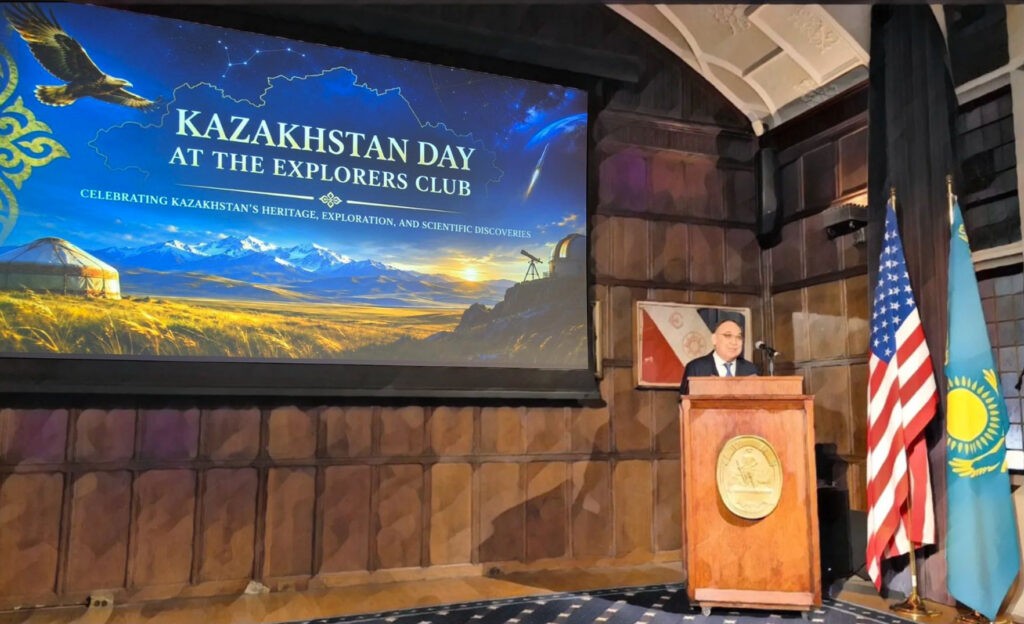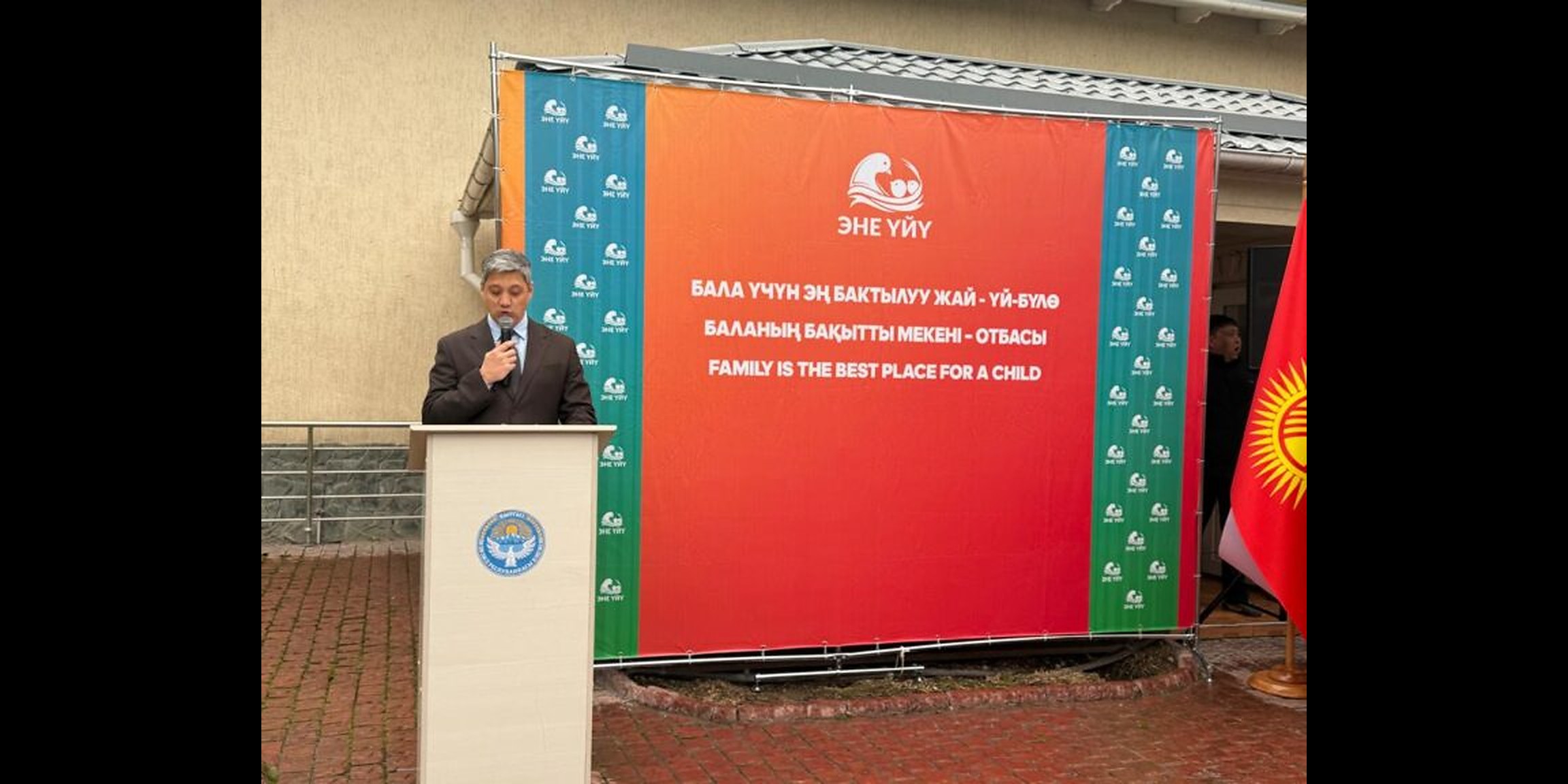
Kazakhstan’s Mother’s Home project, which helps women facing difficult circumstances stay with their children, now has an international network of 14 centers in Uzbekistan, Kyrgyzstan, Ukraine, Türkiye, and Malaysia. The foundation says its international work has helped approximately 500 children remain with their mothers since 2023.
Across Central Asia, the United Nations Children’s Fund has called for greater investment in family support services to prevent children from entering institutional care unnecessarily.
The Times of Central Asia spoke with Timur Tuleuzhanov, chief executive of the privately funded Mother’s Home International Foundation, about how the project is being adapted in other countries and how its centers are financed. He also discussed possible expansion into Azerbaijan and Tajikistan.
TCA: The Mother’s Home project began in Kazakhstan and now operates internationally. How did it begin, and what results have you seen as it has expanded abroad?
Timur Tuleuzhanov: Mother’s Home has been operating in Kazakhstan for 13 years. It was established in 2013 by Kazakh entrepreneurs who wanted to prevent children with living parents from entering institutional care. Not every child in an institution is an orphan. Some have mothers who want to raise them but lack housing, an income, or support from relatives. In those circumstances, a mother may feel she has no choice but to give up her child.
Mother’s Home centers were created to help women in these circumstances. They provide temporary housing, professional support, and a chance to rebuild their lives while staying with their children.
Over the years, more than 10,000 children in Kazakhstan have been able to stay with their mothers thanks to the project. This experience showed us that many cases of children entering institutional care can be prevented if families receive support at the right time. Eventually, we began considering expanding Mother’s Home beyond Kazakhstan. Women in other countries face similar circumstances, and we wanted them to have access to the same kind of assistance.
That led to the establishment of the Mother’s Home International Foundation in 2023. Ukraine became the first country where the international project began operating that same year. Uzbekistan joined the initiative in 2024, followed by Kyrgyzstan and Malaysia in 2025. The first center in Turkey opened in 2026.
Today, the international network has 14 centers in five countries. Nine of those centers are in Uzbekistan, where Ona Uyi operates in Tashkent and several other regions.
But I consider the lives of the children, rather than the number of centers or countries, to be our most important achievement. Thanks to the international project, approximately 500 children who might otherwise have ended up in institutional care are now growing up with their mothers.
TCA: Could you describe a specific case in which Mother’s Home helped keep a family together? What happened to the woman and her children afterward?
Tuleuzhanov: In Uzbekistan, we support a woman named Zarnigor, a mother of three. Several years ago, she traveled to Russia in search of work. Her children were born there, but over time she encountered problems with her documents. During an inspection, Zarnigor was detained and placed in a temporary detention center for foreign nationals, while her children were sent to a social care institution. Her youngest daughter was just one week old at the time. They spent almost a year apart.
With the involvement of diplomats and human rights advocates, the family was reunited and returned to Uzbekistan. In April 2026, Zarnigor and her children entered our Ona Uyi center in Tashkent. She had nowhere to live and no job, but what concerned our staff most was her emotional state. She appeared completely lost, with an empty look in her eyes. After such a long separation from her children, returning to everyday life was not easy.
We therefore paid particular attention to psychological support. Over several months, Zarnigor attended individual counseling sessions. She gradually recovered emotionally, became more confident, and began taking a more active role in planning her family’s future. At the same time, our specialists provided the family with housing and food and helped restore their documents.
Four months later, Zarnigor moved with her children to our Ona Uyi center in Termez. Her life has changed considerably since then. She is now employed, and all three children attend kindergarten. We are currently helping her secure permanent housing so that she can eventually live independently with her children.
But Zarnigor’s story is just one example of our work. At Mother’s Home, women receive more than temporary housing. Some of the women we support have obtained government-provided apartments with assistance from our lawyers. Others have continued their education, enrolled in universities, learned new professions, and found employment. While the mothers study or work, their children attend kindergarten or remain under the supervision of center staff.
Our coordinators play a major role in the lives of the women we support. They are there every day, understand each family’s circumstances, help resolve everyday problems, and support women through difficult periods. For many who have spent a long time without support from relatives, our coordinators become almost like second mothers.
TCA: A new Ona Uyi center opened in Termez in July. How does your partnership with Uzbekistan’s National Agency for Social Protection work, and how have you adapted the Kazakh model to local conditions?
Tuleuzhanov: We use the same model in Kazakhstan and Uzbekistan, but there are certain differences in how women enter our centers and how we work with government agencies.
In Kazakhstan, most women contact Mother’s Home directly. We also receive referrals from maternity hospitals and outpatient clinics for pregnant women and young mothers who find themselves in difficult circumstances.
In Uzbekistan, we work closely with the National Agency for Social Protection. Women can contact Ona Uyi directly, but before admission, their circumstances are assessed through the Inson social service centers. Specialists evaluate their situation and, if they confirm that assistance is needed, refer them to our centers. This cooperation allows us to combine the resources of the foundation and the state social protection system to address the needs of individual families.
At the same time, we do not aim to replicate the Kazakh experience in every detail. Each country has its own legislation, social protection system, and approach to working with families. We preserve the project’s core principles, standards, and methodology while adapting its operations to local conditions.
TCA: How are the centers financed? What roles do the foundation, entrepreneurs, and government agencies play?
Tuleuzhanov: A distinctive feature of our model is that Mother’s Home centers are funded entirely by philanthropists. These are entrepreneurs who commit to covering the centers’ costs, including housing and food for women and children, staff salaries, and day-to-day expenses. We do not receive government funding.
We have maintained this model as we have expanded internationally. In countries where new centers open, we attract local entrepreneurs who are prepared to do more than make a one-time charitable donation. They commit to supporting the project on an ongoing basis. Long-term support is particularly important to us because a center’s operations should not depend on occasional donations. It must be able to operate consistently, accept new residents, and provide continuing assistance to families.
We also separate financial and operational responsibilities. Philanthropists provide funding, while the foundation is responsible for managing the centers, coordinating specialists, and supporting the families in our care. Government and local partners help address social, legal, and other issues faced by the women we support. This division of responsibilities allows us to expand the project while maintaining its stability and the quality of our work.
TCA: Which countries does Mother’s Home plan to enter in the coming years? How could the experience of expanding abroad help strengthen cooperation between countries?
Tuleuzhanov: We plan to continue expanding the international Mother’s Home network. Azerbaijan and Tajikistan are currently among the countries we are considering. At the same time, we will continue developing the project in countries where we already operate. In Uzbekistan, for example, we plan to open additional centers so that women in every region of the country can access assistance.
Over three years of international operations, we have gained experience adapting the Kazakh model to conditions in different countries. This creates opportunities for regional cooperation, including sharing practical experience, training local government specialists, and developing partnerships among entrepreneurs willing to support social initiatives.
Ultimately, our goal is not simply to expand Mother’s Home’s geographical reach but to ensure that as few children as possible enter residential institutions. That is why our project exists: to prevent children from being separated from their families and help them grow up with their own parents.