Central Asia’s Rail Corridors: U.S. and Chinese Partnerships in Perspective
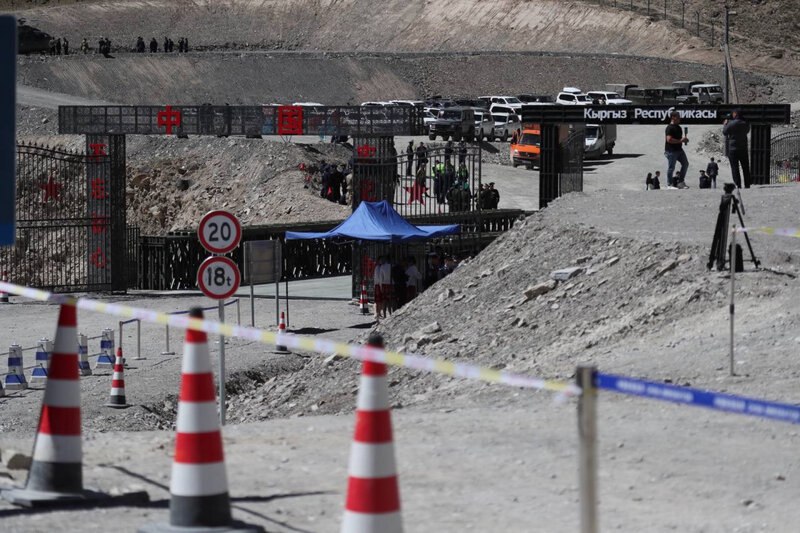
Kazakhstan’s railways are modernizing with a U.S. supplier, while Kyrgyzstan and Uzbekistan are advancing a new trans‑mountain link with China. On September 22, 2025, Wabtec and KTZ announced a multi‑year locomotive and services package worth about $4.2 billion, described by the company as its “largest” agreement. In parallel, China, Kyrgyzstan, and Uzbekistan formalized a joint company to build the long-planned CKU railway, with China holding a 51% stake. Central Asia’s rail networks are thus being reshaped by two major partnerships - one with the United States and one with China. Rather than a zero-sum rivalry, these projects show how regional governments are pursuing different infrastructure strategies to expand connectivity. Kazakhstan and Wabtec: Modernizing an Existing Network In September 2025, Kazakhstan’s railway operator KTZ signed a $4.2 billion agreement with U.S.-based Wabtec for 300 Evolution Series ES44ACi locomotives. The diesel-electric engines are tailored for Kazakhstan’s 1,520 mm gauge network and harsh climate, replacing aging Soviet-era stock. Wabtec finalized full ownership of the Astana locomotive plant in late 2023; production and services for 1,520-mm stock are now fully under Wabtec’s Kazakhstan subsidiary. Local manufacturing and long-term service contracts are expected to expand domestic engineering capacity. The locomotives’ digital diagnostic systems should improve fuel efficiency and maintenance intervals. According to the official Wabtec press release, the agreement “strengthens KTZ’s role as a critical and reliable hub for the Middle Corridor,” while KTZ CEO Talgat Aldybergenov said it “confirms our commitment to advanced technologies in the transport sector”. Rail accounts for about 64% of Kazakhstan’s freight turnover (2024), so locomotive performance directly affects Middle Corridor throughput. Financing details have not been disclosed, but the purchase appears to be domestically funded through KTZ and state support. For Astana, the order fits its multi-vector foreign-policy approach: Kazakhstan continues its partnerships with France’s Alstom, China’s CRRC, and Russia, maintaining balance across suppliers. While the locomotives are diesel, Kazakhstan is also electrifying key lines with European partners. Diesels provide an immediate boost without new catenary investment, and Wabtec claims lower emissions than previous models. Over time, expanded electrification could complement this upgrade. Overall, the Wabtec partnership represents incremental modernization. This is an interoperability-based approach that strengthens existing routes rather than building new corridors from scratch. [caption id="attachment_37655" align="aligncenter" width="950"] Image: trains.com - One of Kazakhstan’s modern Evolution Series diesel locomotives (model TE33A) produced through a partnership with U.S. firm Wabtec. Kazakhstan’s railways carry about 64% of the country’s freight, making such upgrades crucial for trade connectivity.[/caption] The China–Kyrgyzstan–Uzbekistan (CKU) Railway: Building a New Corridor After nearly three decades of discussion, China, Kyrgyzstan, and Uzbekistan launched construction of the CKU railway in late 2024. The 523 km line will run from Kashgar (Xinjiang) through the Kyrgyz mountain ranges to Andijan, Uzbekistan. It will provide a second direct China–Central Asia connection, bypassing reliance on Kazakhstan’s network. The CKU is designed with dual gauges: standard (1,435 mm) in China and broad (1,520 mm) in Kyrgyzstan and Uzbekistan, with a dry-port transshipment hub in Makmal, Kyrgyzstan. This compromise allows integration with existing Central...