• KGS/USD = 0.01144 0%
  • KZT/USD = 0.00191 0%
  • TJS/USD = 0.10850 0%
  • UZS/USD = 0.00008 0%
  • TMT/USD = 0.28490 0%
  • KGS/USD = 0.01144 0%
  • KZT/USD = 0.00191 0%
  • TJS/USD = 0.10850 0%
  • UZS/USD = 0.00008 0%
  • TMT/USD = 0.28490 0%
  • KGS/USD = 0.01144 0%
  • KZT/USD = 0.00191 0%
  • TJS/USD = 0.10850 0%
  • UZS/USD = 0.00008 0%
  • TMT/USD = 0.28490 0%
  • KGS/USD = 0.01144 0%
  • KZT/USD = 0.00191 0%
  • TJS/USD = 0.10850 0%
  • UZS/USD = 0.00008 0%
  • TMT/USD = 0.28490 0%
  • KGS/USD = 0.01144 0%
  • KZT/USD = 0.00191 0%
  • TJS/USD = 0.10850 0%
  • UZS/USD = 0.00008 0%
  • TMT/USD = 0.28490 0%
  • KGS/USD = 0.01144 0%
  • KZT/USD = 0.00191 0%
  • TJS/USD = 0.10850 0%
  • UZS/USD = 0.00008 0%
  • TMT/USD = 0.28490 0%
  • KGS/USD = 0.01144 0%
  • KZT/USD = 0.00191 0%
  • TJS/USD = 0.10850 0%
  • UZS/USD = 0.00008 0%
  • TMT/USD = 0.28490 0%
  • KGS/USD = 0.01144 0%
  • KZT/USD = 0.00191 0%
  • TJS/USD = 0.10850 0%
  • UZS/USD = 0.00008 0%
  • TMT/USD = 0.28490 0%
10 November 2025

Viewing results 1 - 6 of 30

Russia–Central Asia Summit in Dushanbe Tests Putin’s Grip

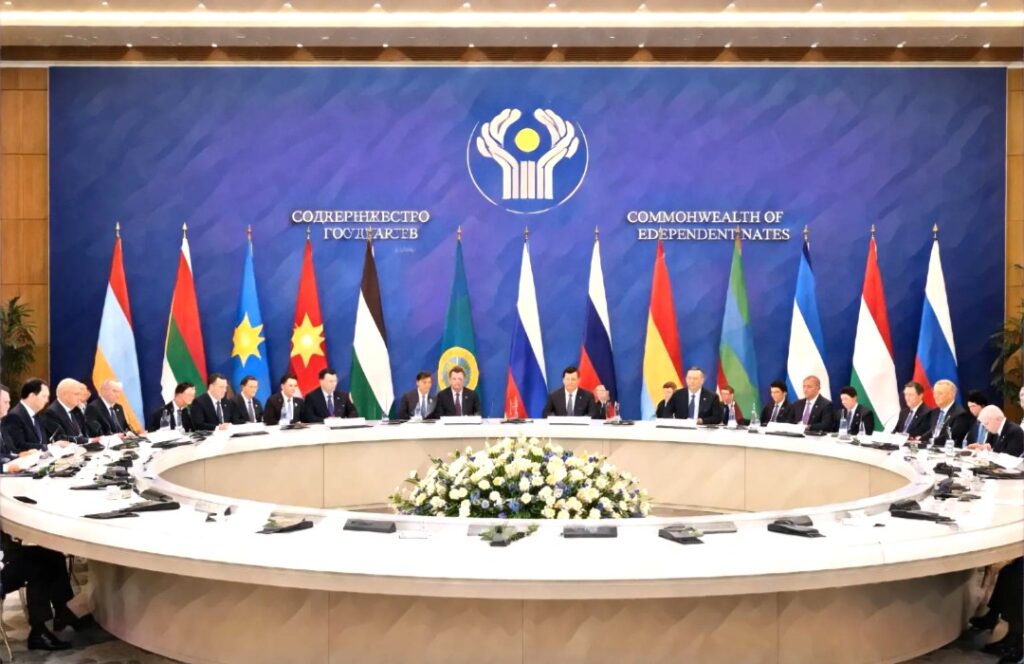
Russian President Vladimir Putin arrived in Tajikistan on October 8 for a three-day state visit that includes a Russia–Central Asia summit in Dushanbe, and a larger Commonwealth of Independent States (CIS) meeting. His arrival comes at a time of geopolitical flux in Central Asia, with Russia seeking to reaffirm its waning influence amid migration tensions, economic pressures, and security challenges on its southern flank. The Visit and Summit: What Has Happened So Far Putin was greeted at Dushanbe airport by Tajik President Emomali Rahmon, who has governed the country since 1992. Upon his arrival, the two leaders conducted a private meeting and later presided over expanded talks with their delegations. In his opening remarks, Putin told Rahmon that Russia and Tajikistan are “reliable allies” and pledged that Moscow would fulfil its obligations to Dushanbe, particularly in terms of security. In the first seven months of 2025, bilateral trade rose by more than 17%, a figure Putin cited to underscore that relations are developing “very positively.” Following the meeting, the two leaders signed a joint statement on “deepening the strategic partnership and alliance” between their countries. Alongside Rahmon, on October 9, Putin met with the presidents of Kazakhstan, Kyrgyzstan, Turkmenistan, and Uzbekistan as part of the Russia–Central Asia summit. As previously reported by The Times of Central Asia, the summit agenda includes cooperation in trade, transport, energy, security, migration, and environmental policy. A concluding communiqué is expected to lay out joint priorities for 2025–2027 in these fields. Following the Russia–Central Asia gathering, a broader CIS head-of-state meeting is scheduled for October 10. Alongside Russia and the Central Asian states, representatives from Armenia, Azerbaijan, and Belarus will also attend. Draft agendas suggest the adoption of a military-cooperation concept through 2030, counterterrorism and border security strategies, efforts to fight transnational crime, and discussions on a “CIS Plus” format that would allow third-party countries and international organizations to participate in selected CIS events. Russia’s Defense Minister Andrei Belousov held talks in Dushanbe with his Tajik counterparts on October 8, stating that “cooperation between our two military institutions” is key to regional stability. Tajikistan hosts Russia’s largest foreign military base and shares a long, porous border with Afghanistan, which makes the security relationship central to both sides’ calculus. Historical and Geopolitical Context Russia has long viewed Central Asia as its strategic backyard, but since 2022, its dominance has been challenged. Sanctions on Russia due to the war in Ukraine have constrained its economic leverage, while China has expanded its presence via Belt and Road investments. At the same time, the European Union has elevated its engagement with Central Asian states through trade, infrastructure funding, and diplomatic outreach. Central Asian governments have shown increasing boldness in balancing their relations between Moscow, Beijing, and the West. None of the Central Asian governments has openly backed Russia’s full-scale invasion of Ukraine. Surveys in Kazakhstan show that only 15% of respondents explicitly support Russia, while a larger share leans toward Ukraine or nonalignment. Kazakhstan has refused to recognize the...

Dushanbe Hosts Central Asia-Russia Summit and CIS Heads of State Meeting

Dushanbe has become the center of Eurasian diplomacy this week as it hosts the “Central Asia-Russia” summit alongside the meeting of the Council of CIS Heads of State. Over two days, leaders from across the region are set to discuss security, economic ties, transport infrastructure, energy cooperation, and new models of regional integration. The inaugural "Central Asia-Russia” meeting took place in Astana in October 2022, focusing on counterterrorism, support for small and medium-sized enterprises, and initiatives in energy, industry, and digitalization. Analysts note that the current summit does not duplicate the functions of existing integration frameworks such as the Eurasian Economic Union (EAEU) or the Collective Security Treaty Organization (CSTO). Instead, it complements them by offering a more flexible and pragmatic platform for dialogue. “The Central Asia-Russia format has the potential to become not just a venue for political signaling, but an instrument for the rapid implementation of infrastructure and regulatory solutions,” said Alibek Tazhibaev, Director of the Center for Eurasian Monitoring. He noted that the region has become a natural zone of industrial cooperation and logistics for Russia, with mutual economic interdependence deepening under the pressure of sanctions. Among the key priorities being discussed are the development of North-South and East-West transport corridors, Russian gas transit through Kazakhstan, and the construction of new energy facilities. In 2024, trade turnover between Central Asian countries and Russia totaled $44.7 billion, an increase of 11.3% from the previous year. Tazhibaev also argued that Central Asia could emerge as an independent “Eurasian hub” if it transitions from a simple transport corridor to a region that integrates added value. “Central Asia can offer a ‘door-to-door’ logistics service if it builds digital gateways, assembly warehouses, and unified logistics standards. This would help retain profit margins and manage standards within the region,” Tazhibaev said. CIS: Pragmatism and New Initiatives The second major component of Dushanbe’s diplomatic agenda is the summit of the Commonwealth of Independent States (CIS). Despite persistent criticism, the CIS continues to serve as a relevant platform for cooperation. Taisiya Marmontova, Associate Professor at Astana International University and Director of the Institute for Regional Integration Studies, noted that the CIS has “preserved a space for dialogue and joint projects after the collapse of the USSR.” According to the CIS Executive Committee, the combined GDP of member states is growing at an average annual rate of 4.5%, while internal trade has risen by 40% over the past five years. Kazakhstan remains a key player, with trade turnover with CIS countries reaching $37.3 billion in 2024, including $4.3 billion in services. During the summit, leaders are expected to consider several initiatives proposed by Kazakh President Kassym-Jomart Tokayev, including the creation of a “CIS+” dialogue format and the launch of the “Commonwealth Fair” intergovernmental program. The first such fair is scheduled to take place in Taraz in 2026. Member states have also agreed on the Strategy for Transport Corridor Digitalization, the Strategy for Scientific and Technological Development until 2035, and a new Concept for Construction Pricing. “Integration...

Putin in Tajikistan for CIS Summit Amid Migration Tensions

When President Vladimir Putin arrives in Dushanbe on 8 October for his first state visit, Tajikistan will briefly become the focal point of regional diplomacy. Currently holding the rotating chair of the Commonwealth of Independent States (CIS), Dushanbe is preparing to host both the CIS Heads of State Council and the second Russia–Central Asia summit. For Moscow, Central Asia has remained a priority since the invasion of Ukraine, and the visit highlights what is at stake for both Russia and its host. Tajikistan depends heavily on Russia for security, trade, and employment opportunities for its citizens, but relations have been tested by the aftermath of the March 2024 Crocus City Hall attack, which exposed the fragility of migration-driven economics and the risk of renewed extremism. An Old Relationship Tested by New Tensions Russia and Tajikistan have been closely entwined since the collapse of the Soviet Union. Putin has already made twelve trips to Tajikistan since taking office, and this will be his first with state‑visit status. Security cooperation remains the backbone of the relationship. Russia’s 201st military base in Tajikistan - formerly the 201st motor rifle division and now Moscow’s largest overseas facility - has long been billed as a shield along the Afghan frontier; the two sides continue to coordinate through the CSTO (Collective Security Treaty Organization), and within the SCO (Shanghai Cooperation Organization) framework. Trade between the two nations has expanded despite sanctions headwinds. On the eve of the visit, presidential aide Yuri Ushakov said bilateral turnover rose by more than 17 % in the first seven months of 2025, and reached about US$1.5 billion in 2024. Russia accounts for over 22 % of Tajikistan’s foreign trade. Meanwhile, more than 1.2 million Tajik citizens work in Russia, making up about 16 % of all foreign workers there. They remitted US$1.8 billion back home last year, roughly 17 % of Tajikistan’s GDP. This symbiosis means that the two leaders routinely discuss labor migration and social issues alongside security and trade. Yet the relationship has been strained by a wave of xenophobia following the Crocus City Hall attack, which killed 145 people, which the Russian authorities accused militants from Tajikistan of perpetrating. As previously reported by The Times of Central Asia, following the arrest of four Tajik suspects, Central Asian migrants in Russia have faced arson attacks, beatings, and boycotts of their businesses. Russian law enforcement has launched aggressive street inspections and created special units to check hostels and businesses frequented by Central Asians. Even long‑time Tajik residents with Russian citizenship have reported menacing phone calls and threats. In the wake of the attack, diaspora leaders urged compatriots not to leave their homes, and the Tajik interior ministry publicly rebutted Russian media reports, stating that three of the four suspects named were not involved. Those pressures hit a country heavily reliant on remittances. The World Bank’s 2025 update estimates that money sent home by migrants accounted for 49 % of Tajikistan’s GDP in 2024. Since the start of the Ukraine war, Russian politicians and media have become increasingly hostile toward Central Asian migrants, leading Moscow to deactivate all foreign‑owned SIM cards and...

Central Asian Leaders To Join Putin at Moscow’s WWII Parade

Leaders of the Commonwealth of Independent States, or CIS, will attend the 80th anniversary of the victory over Nazi Germany in Moscow on May 9, Russian state media have reported. The CIS, a regional group that was set up as the Soviet Union collapsed in 1991, includes the Central Asian countries that were Soviet republics: Kazakhstan, Kyrgyzstan, Tajikistan, Turkmenistan and Uzbekistan. Those leaders have traditionally attended the Moscow parade. But the event drew more international scrutiny in the last few years as Russian President Vladimir Putin tried to showcase diplomatic contacts in the face of Western efforts to isolate him, and display Russian military might as the war in Ukraine dragged on. "I am happy and pleased, just like you, to announce that all heads of state of the CIS will be at the celebrations in Moscow on May 9," CIS Secretary General Sergey Lebedev told the council of the group’s inter-parliamentary assembly. He was quoted by Russia’s RIA Novosti news agency. The Russian news outlet TASS issued a similar report. Kremlin spokesman Dmitry Peskov has said more than 20 heads of state and government are expected to join Putin at the victory parade in Moscow. Some Central Asian countries, whose ancestors fought for the Soviet Union against Germany in WWII, hold their own events around the anniversary of the end of the war against the Nazis. Kyrgyzstan, for example, plans a parade on May 8 in the capital of Bishkek, allowing President Sadyr Japarov to catch the Moscow parade on the next day. Similarly, the Kazakh capital of Astana will host a military parade on May 7 after canceling several previous commemorations.

Global Ranking: Kazakhstan Has the Third-Highest Unemployment Rate in Eurasia

In the global ranking of unemployment rates for 2024, prepared by ILOSTAT, Kazakhstan placed 104th out of 187 countries with an unemployment rate of 4.8%. According to analysts from Energyprom.kz, the worst unemployment rates were recorded in Eswatini (34.4%), South Africa (33.2%), and Djibouti (25.9%), while Qatar boasted the lowest rate globally at 0.1%. In the Eurasia region Kazakhstan ranked third highest for unemployment, ahead of only Tajikistan (11.6%) and Azerbaijan (5.6%). The best performers in the region are Moldova (1.4%), Russia (2.5%), and Kyrgyzstan (3.3%). For context, the global average unemployment rate stood at 5%, with the Europe and Central Asia region slightly higher at 5.5%. The Bureau of National Statistics of Kazakhstan (BNS) reported that by the end of Q3 2024, the country had 448,600 unemployed individuals - 0.6% fewer than during the same period in 2023. The official unemployment rate was 4.6%, with parity between urban and rural areas. Family circumstances (100,200 cases), voluntary resignations (95,600 cases), and difficulties in finding employment (92,200 cases) were identified as the primary causes of unemployment. In terms of job-seeking durations: 127,500 individuals searched for less than a month. 113,300 sought work for one to three months. 124,600 for three to six months. 36,800 for six months to a year. 46,000 were unemployed for over a year. A small fraction of the unemployed (332 individuals) had already initiated entrepreneurial ventures or secured employment arrangements.

Uzbekistan’s Foreign Trade Turnover Reaches $59.4 Billion in 2024

From January to November 2024, Uzbekistan’s foreign trade turnover (FTT) reached $59.4 billion, marking an increase of $2.1 billion or 3.6% compared to the same period in 2023, according to the Uzbek Statistical Agency. The volume of exports rose to $24.2 billion, a 4.4% increase compared to January-November 2023. Imports totaled $35.1 billion, growing by 3.0% over the same period. Kazakhstan emerged as one of Uzbekistan’s largest economic partners, following China and Russia. Factors contributing to this include a shared border, trade liberalization, and economic collaboration within the CIS free trade zone. Uzbekistan currently conducts trade with 195 countries, with significant FTT shares attributed to: China: 19.0% Russia: 18.0% Kazakhstan: 6.5% Turkey: 4.4% South Korea: 3.0% The Commonwealth of Independent States (CIS) countries accounted for 35.4% of Uzbekistan’s FTT during this period, reflecting a 3.0% increase from 2023. The growing economies of Uzbekistan’s trading partners in the CIS suggest a potential for increased demand for Uzbek exports. However, trade with non-CIS countries saw a decline. Uzbekistan’s trade share with other foreign nations dropped by 3.0% compared to the same period in 2023, comprising 64.6% of the total FTT.