
• KGS/USD = 0.01143 -0%
  • KZT/USD = 0.00198 -0%
  • TJS/USD = 0.10899 0.93%
  • UZS/USD = 0.00008 0%
  • TMT/USD = 0.28490 -0.28%
  • KGS/USD = 0.01143 -0%
  • KZT/USD = 0.00198 -0%
  • TJS/USD = 0.10899 0.93%
  • UZS/USD = 0.00008 0%
  • TMT/USD = 0.28490 -0.28%
  • KGS/USD = 0.01143 -0%
  • KZT/USD = 0.00198 -0%
  • TJS/USD = 0.10899 0.93%
  • UZS/USD = 0.00008 0%
  • TMT/USD = 0.28490 -0.28%
  • KGS/USD = 0.01143 -0%
  • KZT/USD = 0.00198 -0%
  • TJS/USD = 0.10899 0.93%
  • UZS/USD = 0.00008 0%
  • TMT/USD = 0.28490 -0.28%
  • KGS/USD = 0.01143 -0%
  • KZT/USD = 0.00198 -0%
  • TJS/USD = 0.10899 0.93%
  • UZS/USD = 0.00008 0%
  • TMT/USD = 0.28490 -0.28%
  • KGS/USD = 0.01143 -0%
  • KZT/USD = 0.00198 -0%
  • TJS/USD = 0.10899 0.93%
  • UZS/USD = 0.00008 0%
  • TMT/USD = 0.28490 -0.28%
  • KGS/USD = 0.01143 -0%
  • KZT/USD = 0.00198 -0%
  • TJS/USD = 0.10899 0.93%
  • UZS/USD = 0.00008 0%
  • TMT/USD = 0.28490 -0.28%
  • KGS/USD = 0.01143 -0%
  • KZT/USD = 0.00198 -0%
  • TJS/USD = 0.10899 0.93%
  • UZS/USD = 0.00008 0%
  • TMT/USD = 0.28490 -0.28%
07 December 2025

Viewing results 1 - 6 of 4

Thousands of Illegal Structures Demolished in Bishkek as City Pushes Urban Renewal

More than 6,300 residential and commercial structures have been demolished in Bishkek during the first half of 2025, as part of an ongoing urban renovation program, according to the city administration. Authorities report that over 80,000 square meters of municipal land have been cleared as a result. The sweeping effort follows a comprehensive review of land use across the Kyrgyz capital. In recent weeks, tensions have flared in the Kok-Zhar residential area, where officials began enforcing demolition orders against homes built on land the government claims was illegally occupied. During one such operation, five individuals were detained and administrative cases were opened against 17 others who protested the demolition of their homes. Approximately 120 residents reportedly blocked roads in an attempt to halt construction equipment and defend their properties. Many disputed homes were built on land formerly designated for agricultural use, which had been sold and developed for residential purposes over the past decade. The area now includes around 1,200 plots, with some 700 single and two-story houses. City officials argue that updated urban planning requires the reclamation of these areas for future public infrastructure projects. A prominent example includes the demolition of private homes and fences along the southern section of Bishkek’s government highway, currently under renovation for official use. This redevelopment, which followed the construction of new government and presidential offices nearby, has resulted in dozens of families losing part or all of their properties. Some residents, however, have managed to successfully challenge the demolitions in court. In response to mounting public criticism, Bishkek Mayor Aibek Dzhunushaliev has proposed a subsidized state mortgage program for families affected by the demolitions. Supported by city council members, the initiative also includes the rapid allocation of municipal land for multi-apartment housing and the creation of a transparent waiting list. “Several dozen families whose homes were removed during the reconstruction of Bishkek’s northern bypass have already received housing under the program,” the city administration stated. Mayor Dzhunushaliev emphasized the administration’s commitment to fulfilling President Sadyr Japarov’s directive that every Kyrgyz family should have a home. At the same time, he stressed the importance of aligning land use with current legislation, especially in areas originally zoned for agriculture. Despite official assurances, many residents remain skeptical. Some insist their homes were built legally and that they possess valid documentation. While a few court decisions have favored homeowners, most have lost their legal challenges against the city.
Urban Expansion in Astana: Strengths and Strains

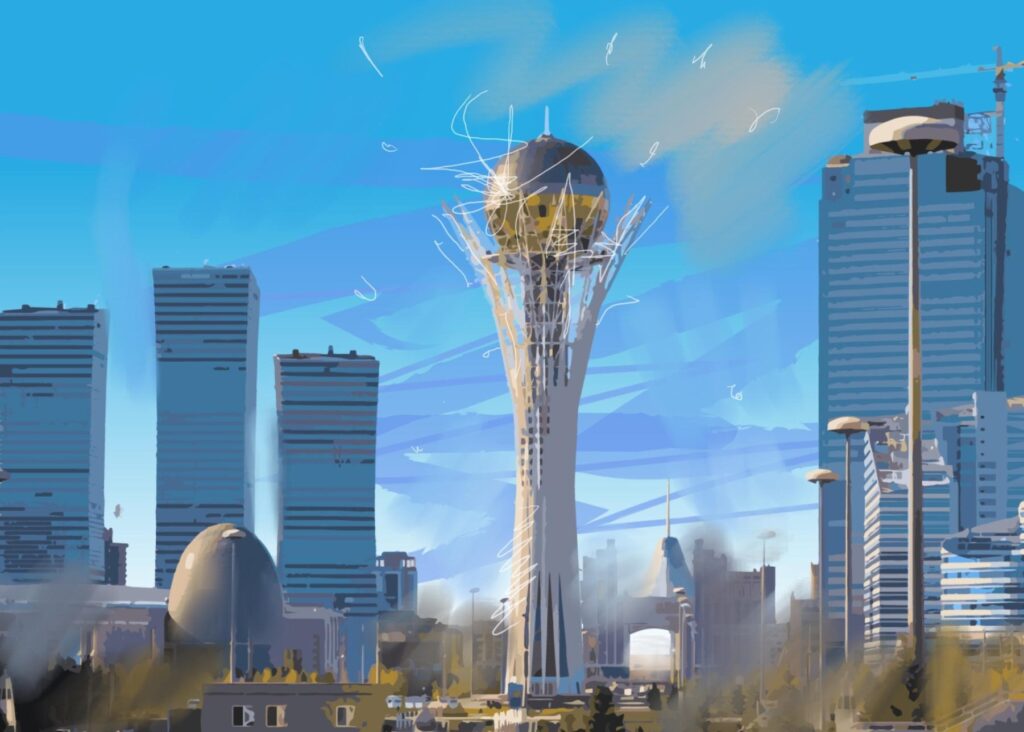
July 6 marked Capital Day in Kazakhstan, a national holiday celebrating the country's capital. To mark the occasion, Energyprom.kz released an in-depth analysis of Astana’s socio-economic standing, painting a mixed picture of rapid growth and persistent strain. Competition with Almaty and Global Standing In the 2025 Global City Ranking by Oxford Economics, Astana ranks 276th out of 1,000 cities worldwide. Almaty ranks slightly higher at 258th. While Astana outperforms Almaty in terms of ecological conditions and economic momentum, it lags behind in human capital and quality of life. Both cities are considered national leaders, yet remain far behind the world's top urban centers. According to the National Statistics Bureau, Almaty contributes 21.8% of Kazakhstan’s GDP (29.2 trillion KZT or approximately 56.2 billion USD), while Astana accounts for 11.5% (15.5 trillion KZT or around 29.8 billion USD). In terms of GDP per capita, Astana ranks fourth in the country, behind Atyrau, Ulytau, and Almaty. Its economy is heavily concentrated in services, which make up nearly 80% of its gross regional product. A Magnet for Opportunity and Strain Astana continues to attract internal migrants, particularly from rural regions, largely due to its relatively high wages. The average monthly salary in the capital is 538,000 KZT (around 1,035 USD). Higher salaries are found in resource-rich regions such as Atyrau (633,300 KZT) and Mangistau (580,900 KZT). In Astana, the highest-earning sectors include finance and insurance (1.2 million KZT or 2,310 USD), mining (981,300 KZT or 1,890 USD), and IT (824,600 KZT or 1,587 USD). However, this economic pull has placed growing pressure on the city’s infrastructure. Astana faces ongoing issues related to water supply, sewage systems, disorganized construction, and environmental management. These problems have been highlighted by both President Kassym-Jomart Tokayev and the public. The High Cost of Living Astana leads the country in housing prices. In 2023, the average cost of a new apartment reached 595,500 KZT per square meter (approximately 1,146 USD). In the secondary market, the average price rose to 649,800 KZT (around 1,250 USD). A typical 50-square-meter two-bedroom apartment costs nearly 29.8 million KZT (about 57,370 USD). For a resident earning the city’s average wage, saving for such a home without loans would take 55 months, or over four and a half years. In comparison, it would take just 2.5 years in Atyrau. Rental prices are also high. The average monthly rent for a 50 square meter apartment in Astana was 248,000 KZT in 2023 (around 477 USD), consuming over 46% of the average monthly wage. Only Almaty and Shymkent have higher rent-to-income ratios at 54.4% and 60.3% respectively. Food costs place additional strain on household budgets. Food accounts for 52% of the average consumer budget in Astana, equivalent to 181,600 KZT (around 349 USD) per person per quarter. Prices for 14 of 19 socially significant food items, including chicken, milk, butter, and vegetables, exceed national averages. Food inflation in the capital remains among the highest in the country. A Capital at a Crossroads Astana remains the political and administrative...

Kyrgyzstan to Build Large Residential Complex with IT Hub in Osh

Kyrgyzstan has launched the construction of an IT town as part of the large-scale project, an initiative aimed at transforming Osh, the country’s second-largest city. Speaking at the launch ceremony on February 14, President Sadyr Japarov stated that the project’s main goal is to ensure sustainable regional development through modern technology and large-scale housing construction. The Osh project will include a residential complex with over 10,000 apartments, covering a total area of 1 million square meters. The development will feature modern schools and kindergartens; medical facilities and gyms; pedestrian and bicycle paths; green recreation areas; and children’s playgrounds. A key component of the project, the IT town, will serve as an innovation hub for entrepreneurs and IT specialists, offering modern residential, social, and commercial infrastructure. According to Japarov, the growth of the IT sector will enhance Kyrgyzstan’s global competitiveness, accelerating economic, social, and technological development in Osh and beyond. The initiative is expected to strengthen trade, economic, cultural, and humanitarian ties, while also attracting more foreign tourists. Japarov noted that thousands of jobs will be created during the construction process, helping to reduce migration levels. Once completed, the Osh project will generate employment in housing services, education, healthcare, and the IT industry. The IT town is envisioned as a magnet for IT professionals, drawing specialists from across Kyrgyzstan and abroad.

Shopping Center May Be Built Beneath Bishkek’s Ala-Too Square

Bishkek authorities are moving forward with plans to reconstruct the Manas monument and the underground space beneath it in Ala-Too Square, the capital’s central public space. According to the Bishkek Mayor’s Office, the 1,500-square-meter area beneath the monument is currently unused. According to tender documents published on the government procurement website, the basement beneath Ala-Too Square is set to be redeveloped into retail space. The estimated cost of the reconstruction project is KGS 1.8 million ($20,600). “We want to renovate the basement area - it has been in a dilapidated state since 1983 due to lack of maintenance. As for the future, we are considering various possibilities for the space. However, it is important to clarify that the Manas monument will not be removed,” Bishkek Mayor’s Office spokeswoman Nazgul Zhamgyrchieva told reporters. Despite this reassurance, some Bishkek residents remain concerned, particularly since the Manas monument has already been removed from its pedestal as part of the reconstruction. Many fear it may not be returned to its original place. The monument to Manas, a symbol of Kyrgyzstan’s national heritage, has stood in Ala-Too Square since 2011. Alongside the White House, the National Historical Museum, and the national flag, it forms part of Bishkek’s so-called "marble center", a key landmark in the capital.
