• KGS/USD = 0.01144 0%
  • KZT/USD = 0.00216 0%
  • TJS/USD = 0.10659 0%
  • UZS/USD = 0.00008 0%
  • TMT/USD = 0.28530 0%
  • KGS/USD = 0.01144 0%
  • KZT/USD = 0.00216 0%
  • TJS/USD = 0.10659 0%
  • UZS/USD = 0.00008 0%
  • TMT/USD = 0.28530 0%
  • KGS/USD = 0.01144 0%
  • KZT/USD = 0.00216 0%
  • TJS/USD = 0.10659 0%
  • UZS/USD = 0.00008 0%
  • TMT/USD = 0.28530 0%
  • KGS/USD = 0.01144 0%
  • KZT/USD = 0.00216 0%
  • TJS/USD = 0.10659 0%
  • UZS/USD = 0.00008 0%
  • TMT/USD = 0.28530 0%
  • KGS/USD = 0.01144 0%
  • KZT/USD = 0.00216 0%
  • TJS/USD = 0.10659 0%
  • UZS/USD = 0.00008 0%
  • TMT/USD = 0.28530 0%
  • KGS/USD = 0.01144 0%
  • KZT/USD = 0.00216 0%
  • TJS/USD = 0.10659 0%
  • UZS/USD = 0.00008 0%
  • TMT/USD = 0.28530 0%
  • KGS/USD = 0.01144 0%
  • KZT/USD = 0.00216 0%
  • TJS/USD = 0.10659 0%
  • UZS/USD = 0.00008 0%
  • TMT/USD = 0.28530 0%
  • KGS/USD = 0.01144 0%
  • KZT/USD = 0.00216 0%
  • TJS/USD = 0.10659 0%
  • UZS/USD = 0.00008 0%
  • TMT/USD = 0.28530 0%

Viewing results 1 - 6 of 37

Kazakhstan Grounds Light Aircraft Following Two Fatal Crashes

Kazakhstan’s Civil Aviation Committee, working alongside the Aviation Administration, has temporarily suspended flights of TL-2000 and Aerostar R40F light aircraft following two fatal crashes near Astana in recent months. The suspensions are intended to allow for thorough investigations of both incidents. On June 22, 2025, a privately owned TL-2000 light aircraft crashed during a training flight near Zholaman Airfield, resulting in the deaths of both people on board. The accident occurred at approximately 11:30 a.m. A special investigation commission was established by the Ministry of Transport to determine the cause. On August 17, 2025, an Aerostar R40F (registration UP-LA229) crashed during a general aviation flight about 55 kilometers from Astana in the Akmola region. The crash resulted in the death of both the pilot and passenger. A commission was dispatched by the Ministry of Transport’s accident investigation department to the crash site, including representatives from the Transport Police and regional authorities. Transport Minister Nurlan Sauranbayev confirmed that each incident is being investigated independently, and that both aircraft models will remain grounded until the investigations conclude. The Civil Aviation Committee, in collaboration with the Aviation Administration, has suspended flights of both TL-2000 and Aerostar R40F aircraft models pending investigation results. The investigation into the June TL-2000 crash is ongoing, with final conclusions expected before the end of 2025.

Central Asia Charts New Course as Russian Aviation Falters

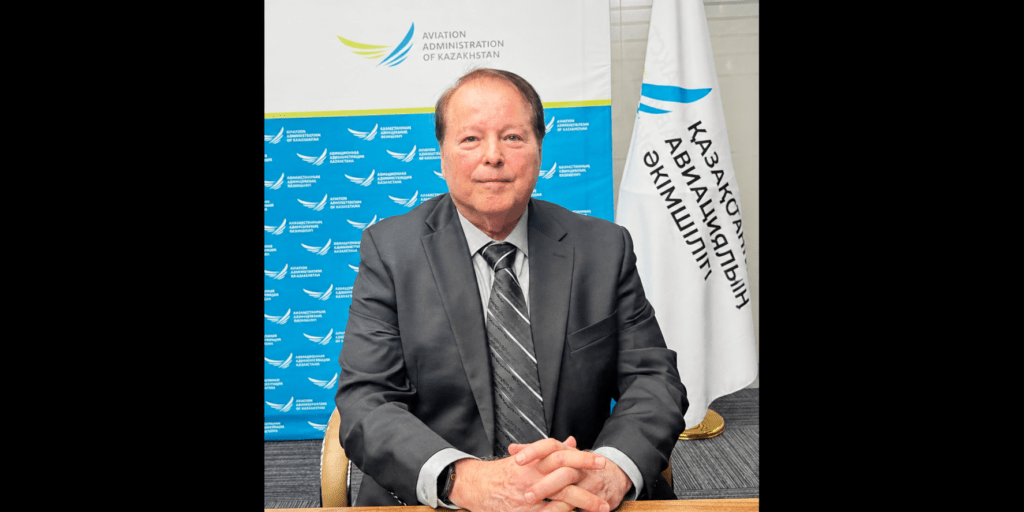
Sanctions against Russia may intensify if U.S. President Donald Trump escalates pressure on the Kremlin and Vladimir Putin. But even without additional measures, several sectors of Russia’s economy are already buckling under strain. Among the most vulnerable is civil aviation, now grappling with “fleet cannibalization”, a practice born of scarcity and isolation. In this context, alarmist claims from Russian aviation analysts that Central Asian airlines might soon replace Russian carriers not only on international routes but potentially within Russia itself are being reassessed. So, what is actually happening and why? Squeezing Russia Out One of the most overlooked aviation developments of 2024 was the announcement at the Central Asian Aviation Summit in Astana that regional countries were forming their own civil aviation regulatory body. As Amir Akhmetov, senior advisor to the director of the Aviation Administration of Kazakhstan, put it: “In the changing geopolitical environment of the republics of Central Asia and the South Caucasus, together with like-minded countries, they are creating their own regional civil aviation organization, the Eurasian Civil Aviation Conference (EACAC).” This initiative, first proposed by Astana in 2023, includes Kazakhstan, Kyrgyzstan, Uzbekistan, Tajikistan, and Turkmenistan, as well as Armenia, Azerbaijan, Georgia, Moldova, and Mongolia. Although initially scheduled for 2025, the first EACAC meeting took place in Almaty in November 2024. Russian observers have taken note. The publication Versiya, which had predicted Russia’s marginalization in the Central Asian aviation market as early as 2016, commented on the development in stark terms: “It is hard not to notice that this is truly a momentous event in the field of civil aviation regulation within the EAEU member states, aimed precisely at pushing Russia out of the process… which, after the formation of the announced structure, will de facto exist and be managed under direct Anglo-American influence.” However alarmist the tone, the underlying concern is not unfounded. Russia’s aviation sector is increasingly isolated and dependent. By December 2024, it was confirmed that a new aircraft maintenance hub would be built in Aktau, one of Kazakhstan’s four major aviation centers. The project, spearheaded by Turkish Technic, YDA, and ASFAT, will serve civil and military aircraft from Kazakhstan, Russia, Uzbekistan, Turkmenistan, Kyrgyzstan, and Tajikistan. According to then-Minister of Transport Marat Karabayev, “The center will serve 411 civil aircraft... As a result of the project, the airport’s cargo handling capacity will increase to 200,000 tons per year, with an annual turnover of 520 billion tenge ($996.7 million).” Aviation in Central Asia: A Regional Snapshot In Kazakhstan, liberalization and competition have allowed the civil aviation sector to flourish. National carrier Air Astana operates hubs in Almaty and Astana and is widely considered among the best airlines in the post-Soviet space. Its low-cost subsidiary, FlyArystan, has grown rapidly, fueled by a strong Airbus fleet, now over 60 aircraft, with new A320 and A321 deliveries annually. Private airline SCAT flies across the former USSR and Asia, while Qazaq Air, now rebranded as Vietjet Qazaqstan, entered into a strategic partnership in 2025 with Vietnam’s Sovico Group, owner...

Wizz Air to Offer Uzbek-Language Service After Passenger Complaint

Uzbekistan’s Competition Committee has investigated a passenger complaint against Wizz Air and taken action to improve service for Uzbek travelers. As a result, the airline will now provide Uzbek-language assistance on flights to Uzbekistan. The Complaint The issue came to public attention when Rasul Kusherbayev, a former deputy and adviser to the Minister of Ecology, encountered a language barrier on a Wizz Air flight from Samarkand to Abu Dhabi. Kusherbayev, who was seated near the emergency exit, was given safety instructions in English. Since he did not understand English, he requested an explanation in Uzbek or Russian. However, instead of accommodating his request, a crew member asked him to leave the plane. Kusherbayev refused, and upon arrival in Abu Dhabi, the airline contacted local police. Authorities advised both sides to resolve the matter amicably. Wizz Air staff later informed Kusherbayev that he was banned from using the airline’s services in the future. The incident led Kusherbayev to publicly criticize Wizz Air for failing to provide information in Uzbekistan’s state language. Government Response and Airline Commitment Following the complaint, Uzbekistan’s Competition Committee launched an investigation. The committee emphasized that all passengers must clearly understand safety instructions and that providing them exclusively in a foreign language could create risks and misunderstandings. As a result of the probe, the committee took action against the airline employees involved. Wizz Air also introduced new training programs for its crew on flight safety, etiquette, and passenger rights. The airline has committed to ensuring that by 2025, flight attendants and service personnel on Uzbekistan-bound flights will be able to communicate in Uzbek.

Russian Insurer Pays Compensation for AZAL Crash Near Aktau

The Russian insurance company AlfaStrakhovanie has completed payments under aviation hull insurance for the Embraer 190 aircraft operated by AZAL Airlines that crashed near the Kazakhstani city of Aktau. Additionally, compensation payments to passengers have begun, according to Ilya Kabachnyk, Deputy General Director for Aviation and Space Insurance at the company.  "Full payment for the aircraft was made in February," Kabachnyk stated, noting that a significant portion of the risk was reinsured by the Russian National Reinsurance Company (RNPC). While the exact amount of compensation has not been disclosed, industry experts estimate it to be between $25 million and $30 million. Compensation payments to passengers began in January and are ongoing. These payments are being made in accordance with the Montreal Convention of 1999 and Russia’s Compulsory Insurance of Civil Liability of Carriers (OSGOP) law, which provides for compensation of up to 2 million RUB (approximately $22,000) for injury or loss of life. Regarding potential claims for damage to third parties, Kabachnyk said no such claims have been received so far. "If they arise, we will work with the airline accordingly," he added. Investigation and Cause of the Crash The crash occurred on December 25, 2024, during an AZAL flight from Baku to Grozny. There were 67 people on board, 38 of whom died, the majority of them Azerbaijani citizens. According to Reuters, citing an unnamed source, the aircraft was shot down by a Russian Pantsir-S missile. Azerbaijani authorities have supported this claim, stating that they have recovered fragments of the missile. In early February, Kazakhstan published a preliminary report on the crash, which described external damage to the aircraft. 

Kyrgyzstan’s Aviation Authorities Await Removal from EU Blacklist

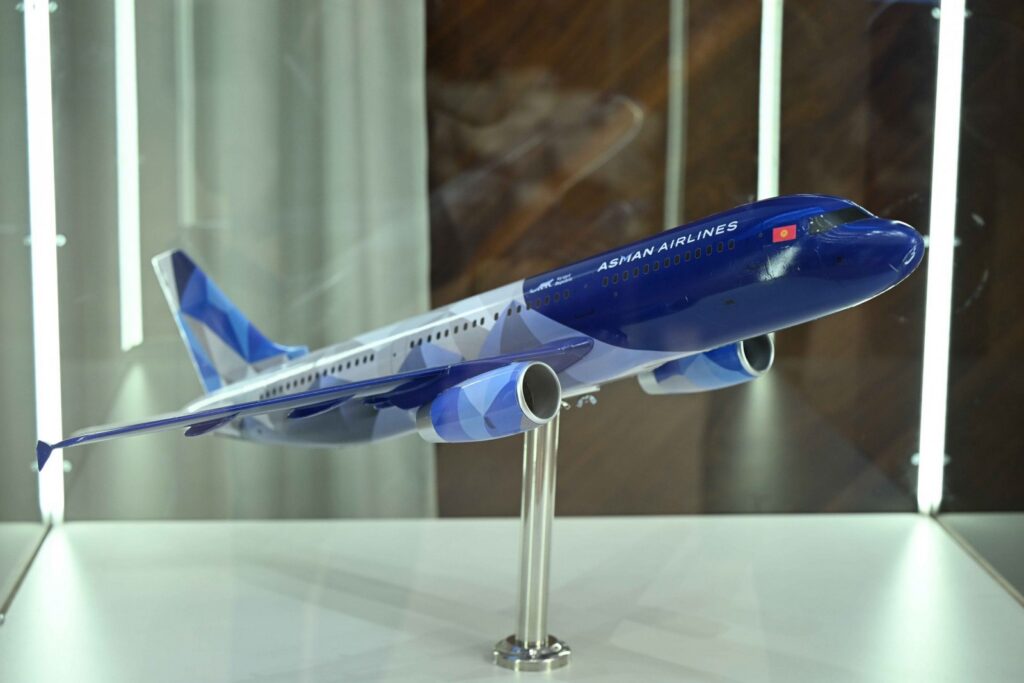
Kyrgyzstan’s State Civil Aviation Agency has announced that auditors from the European Union Aviation Safety Agency (EASA) will visit the country on March 9 to assess the possibility of lifting the EU’s long-standing flight ban on Kyrgyz airlines. Kyrgyz airlines have been on the EU’s aviation blacklist since 2006, with repeated but unsuccessful attempts by the country’s authorities to resolve the issue. The EU has cited multiple concerns, including shortcomings in Kyrgyzstan’s aviation legislation, inadequate inspector training, and a lack of flight crew development programs. The aging aircraft fleet has also been a key factor in maintaining the ban. Over the past two years, Kyrgyzstan has undergone two separate aviation audits, one focused on flight safety and another on aviation security. “Flight safety covers everything related to flight operations, while aviation security deals with protecting airports and aircraft from illegal interference,” explained Daniyar Bostonov, director of the State Civil Aviation Agency. According to Bostonov, Kyrgyzstan has been working since 2017 to meet all EU requirements. Hundreds of industry documents have been translated into English to demonstrate transparency and regulatory compliance. Bostonov believes the country now meets international aviation standards, and a final decision on Kyrgyzstan’s removal from the blacklist is expected in November 2025 at a meeting of the European Parliament’s Committee on Transport and Tourism (TRAN). “The question is no longer whether we will be removed from the EU blacklist - it is a certainty. We may just need to submit some additional documents to the European Parliament,” Bostonov stated. If the ban is lifted, Kyrgyzstan will be able to resume direct flights to the European Union and gain access to more favorable aircraft leasing agreements. “For example, if an Airbus aircraft is sold for $1,000, that price remains the same for non-blacklisted countries. However, if it is delivered to a blacklisted state, the price can drop to $800, which discourages investors,” Bostonov explained. Further supporting the possibility of removal from the blacklist, Manas International Airport recently became a member of ACI Europe, an organization representing over 500 airports across the continent.

ICAO to Develop Master Plan for Kazakhstan’s Civil Aviation

Kazakhstan’s Ministry of Transport and the International Civil Aviation Organization (ICAO) have signed an agreement to develop a strategic Master Plan for the Development of Kazakhstan’s Civil Aviation through 2050. The plan will outline a comprehensive strategy for the country’s civil aviation sector, covering the development of airports, air navigation systems, and airlines. It will also focus on improving flight safety, aviation security, accessibility, and the liberalization of air transport. Kazakhstan is the first country in Central Asia and the Commonwealth of Independent States (CIS) to establish a strategic partnership with ICAO for the sustainable development and modernization of its civil aviation sector. The initiative aligns with national objectives to enhance Kazakhstan’s role as a regional transit and transport hub. According to the Ministry of Transport, domestic airlines carried 14.3 million passengers in 2024, a 9% increase from 2023. Passenger traffic at Kazakhstan’s airports also grew by 14%, reaching 29.7 million people. Kazakhstan currently operates 582 flights per week to 31 countries, including Russia, Kyrgyzstan, Uzbekistan, Tajikistan, Georgia, Belarus, Azerbaijan, the United Arab Emirates, Saudi Arabia, Qatar, South Korea, China, India, and several European nations such as Germany, Italy, and the Netherlands. Additional destinations include countries in Southeast Asia, the Middle East, South Asia, Turkey, and the Maldives.