

• KZT/USD = 0.00212
  • TJS/USD = 0.10810
  • UZS/USD = 0.00008
  • TMT/USD = 0.29760
  • KZT/USD = 0.00212
  • TJS/USD = 0.10810
  • UZS/USD = 0.00008
  • TMT/USD = 0.29760
  • KZT/USD = 0.00212
  • TJS/USD = 0.10810
  • UZS/USD = 0.00008
  • TMT/USD = 0.29760
  • KZT/USD = 0.00212
  • TJS/USD = 0.10810
  • UZS/USD = 0.00008
  • TMT/USD = 0.29760
  • KZT/USD = 0.00212
  • TJS/USD = 0.10810
  • UZS/USD = 0.00008
  • TMT/USD = 0.29760
  • KZT/USD = 0.00212
  • TJS/USD = 0.10810
  • UZS/USD = 0.00008
  • TMT/USD = 0.29760
  • KZT/USD = 0.00212
  • TJS/USD = 0.10810
  • UZS/USD = 0.00008
  • TMT/USD = 0.29760
  • KZT/USD = 0.00212
  • TJS/USD = 0.10810
  • UZS/USD = 0.00008
  • TMT/USD = 0.29760

Viewing results 1 - 6 of 2

New Study Finds Sharp Decline in Amu Darya Flows

Central Asia’s water woes continue to grow worse. The water flow in the Amu Darya, one of Central Asia’s two great rivers, is slowly but significantly diminishing in Tajikistan, where the river originates. A recently released report shows the Amu Darya’s water flow in the middle and lower reaches in Tajikistan has fallen over the course of recent decades by 54-77%. And the report lays the blame firmly on human activity, not climate change. Up In the Mountains of Tajikistan The study published on ScienceDirect looked at data collected over 90 years and concludes that “streamflow decreased by 54–77% in the middle and lower reaches” of the Amu Darya in Tajikistan. Interestingly, the report mentions that precipitation in the mountains of Tajikistan has actually increased between 6 and 13%, but the Amu Darya’s water level is falling because people are using more water. The expansion of agriculture is the reason, accounting for 92% of the water reduction in Tajikistan, but the recent construction of water reservoirs is also playing a role. Lower flows of water were noted on many of the tributaries in Tajikistan that feed into the Amu Darya, including the “Vakhsh, Kunduz, Kofirnihon, Surkhandarya, Zeravshan, and Kashkadarya (rivers),” which showed streamflow reductions of 4–34%. The report said that areas in the upper reaches of the Amu Darya should see increased water levels, but this is mainly due to climate change hastening the melting of snow and glaciers. Once the glaciers are gone, the water will rapidly decrease. Bad News Downstream Water problems upstream in Tajikistan translate to bigger problems downstream in Uzbekistan and Turkmenistan. Both have already noticed a reduction in the amount of water in the Amu Darya, most visibly that the river has not reached the Aral Sea for about two decades now, contributing to the sea shrinking by some 90% since the 1960s. Every year the river recedes further south, forcing downstream communities suddenly without water to relocate. Climate change is now hastening this process in the arid, desert lands along the Uzbek-Turkmen border, but both countries are preparing for a bigger, impending shock. The Taliban started construction of the Qosh Tepa Canal in 2022, with the project scheduled to be completed in 2028. While Central Asia was liberally taking water from the Amu Darya for agricultural use, Afghanistan was in no position to claim its share until now. The canal will draw water from the Amu Darya at an area across from Uzbekistan and open up new agricultural land in northern Afghanistan, where food has long been in short supply. The 280-kilometer canal is expected to take some 16-20% of the water left in the Amu Darya after it leaves Tajikistan. Upstream Tajikistan’s falling water levels, of course, mean the Qosh Tepa Canal will also be receiving less and less water. The Combination For most of the 2020s, large areas of Central Asia have been experiencing droughts, prompting the governments there to implement water conservation measures. But as they find more ways to save...

Opinion: As Water Runs Short, Uzbekistan Faces New Migration Pressure

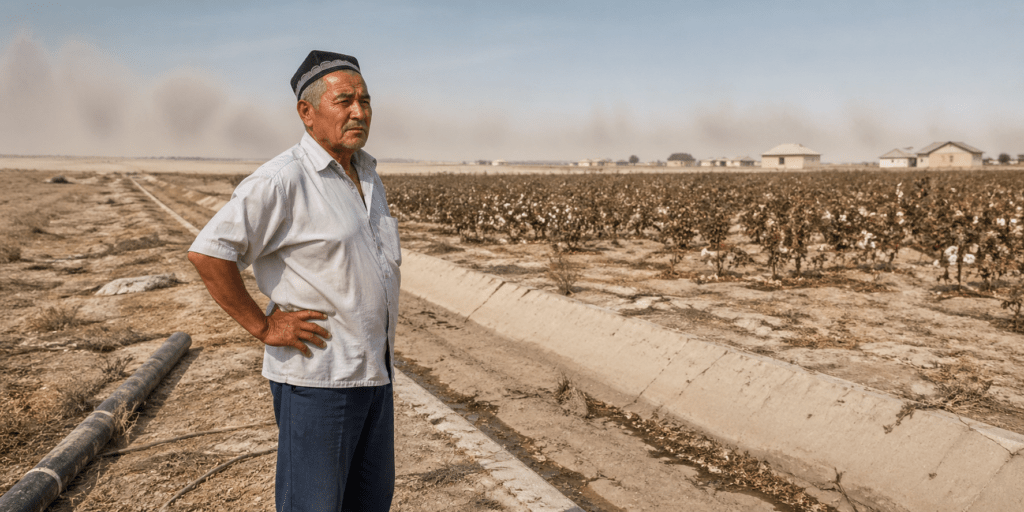
In the 21st century, Uzbekistan is no longer just confronting an ecological crisis - it is on the verge of socio-political transformations driven by water. As agricultural lands are being degraded and river flows are decreasing, the country is now facing what experts describe as a “slow-onset disaster”: internal climate migration. The roots of this crisis go back to the tragedy of the Aral Sea, once the world’s fourth-largest lake, which has shrunk to roughly 10% of its original area since the 1960s largely due to Soviet-era irrigation projects. The human toll has been enormous: not only is agriculture in decline, but the lives of the people living in the Aral Sea region have been profoundly altered. Each year, storms lift an estimated 15 million to 75 million tons of sand, dust, and salt from the dried Aral seabed, spreading it across Uzbekistan and the wider region. Now, another challenge is looming - the water supply. In 2018, 79,942 internally displaced people were reported in Uzbekistan. The dwindling water supply and the threat to agro-ecosystems are creating a new generation of climate migrants. The number of climate-related displacements is expected to reach 200,000 in the coming years. The Amu Darya and Syr Darya rivers, Uzbekistan’s hydrological lifelines, are under growing strain from climate change, inefficient irrigation, and transboundary water-distribution pressures. Experts warn that the country's water deficit could reach 7 billion cubic meters by 2030, and 15 billion cubic meters by 2050. The World Bank predicts that Uzbekistan's economy could shrink by 10% by 2050 if no meaningful action is taken to adapt to climate change. Now, another new factor threatens to accelerate this trend. The Taliban government in Afghanistan is building the Qosh Tepa Canal, a 285-kilometer irrigation project that will divert water from the Amu Darya River. According to Rieks Bosch, an international expert on natural resources and economics, the canal will divert 20% of the Amu Darya's water, which will exacerbate water shortages in some parts of Uzbekistan and negatively affect agriculture. "In any case, Uzbekistan will definitely suffer," he said.  Analyses show that up to 250,000 people could lose their jobs in agriculture as a result of water shortages. The most vulnerable regions - Bukhara, Khorezm, Karakalpakstan, Surkhandarya, and Kashkadarya - are located mainly in rural areas and depend on agriculture and livestock. With almost half of Uzbekistan’s population living outside urban centers, the loss of agricultural viability is not just an economic problem; it is the disruption of a way of life. “Water scarcity, air pollution, biodiversity loss, and a sharp decline in agricultural productivity are constantly increasing,” President Shavkat Mirziyoyev said at COP 28, acknowledging that these problems are “reaching their “critical peak.” Yet policy responses are still lagging behind the pace of environmental change. Uzbekistan’s climate migration problem cannot be solved by managing water resources alone. This requires a new strategic framework – a “Water-Migration-Security” strategy that combines regional cooperation, innovative water-saving technologies in agriculture, and proactive adaptation measures for the communities most at...