
• KGS/USD = 0.01143 0%
  • KZT/USD = 0.00201 0%
  • TJS/USD = 0.10510 -0.28%
  • UZS/USD = 0.00008 0%
  • TMT/USD = 0.28575 0%
  • KGS/USD = 0.01143 0%
  • KZT/USD = 0.00201 0%
  • TJS/USD = 0.10510 -0.28%
  • UZS/USD = 0.00008 0%
  • TMT/USD = 0.28575 0%
  • KGS/USD = 0.01143 0%
  • KZT/USD = 0.00201 0%
  • TJS/USD = 0.10510 -0.28%
  • UZS/USD = 0.00008 0%
  • TMT/USD = 0.28575 0%
  • KGS/USD = 0.01143 0%
  • KZT/USD = 0.00201 0%
  • TJS/USD = 0.10510 -0.28%
  • UZS/USD = 0.00008 0%
  • TMT/USD = 0.28575 0%
  • KGS/USD = 0.01143 0%
  • KZT/USD = 0.00201 0%
  • TJS/USD = 0.10510 -0.28%
  • UZS/USD = 0.00008 0%
  • TMT/USD = 0.28575 0%
  • KGS/USD = 0.01143 0%
  • KZT/USD = 0.00201 0%
  • TJS/USD = 0.10510 -0.28%
  • UZS/USD = 0.00008 0%
  • TMT/USD = 0.28575 0%
  • KGS/USD = 0.01143 0%
  • KZT/USD = 0.00201 0%
  • TJS/USD = 0.10510 -0.28%
  • UZS/USD = 0.00008 0%
  • TMT/USD = 0.28575 0%
  • KGS/USD = 0.01143 0%
  • KZT/USD = 0.00201 0%
  • TJS/USD = 0.10510 -0.28%
  • UZS/USD = 0.00008 0%
  • TMT/USD = 0.28575 0%
28 February 2026

Viewing results 1 - 6 of 3

“Ergenekon Is Not Just a Myth, It’s a Cultural Bridge”: An Interview with Artist and Designer Emre Erdur

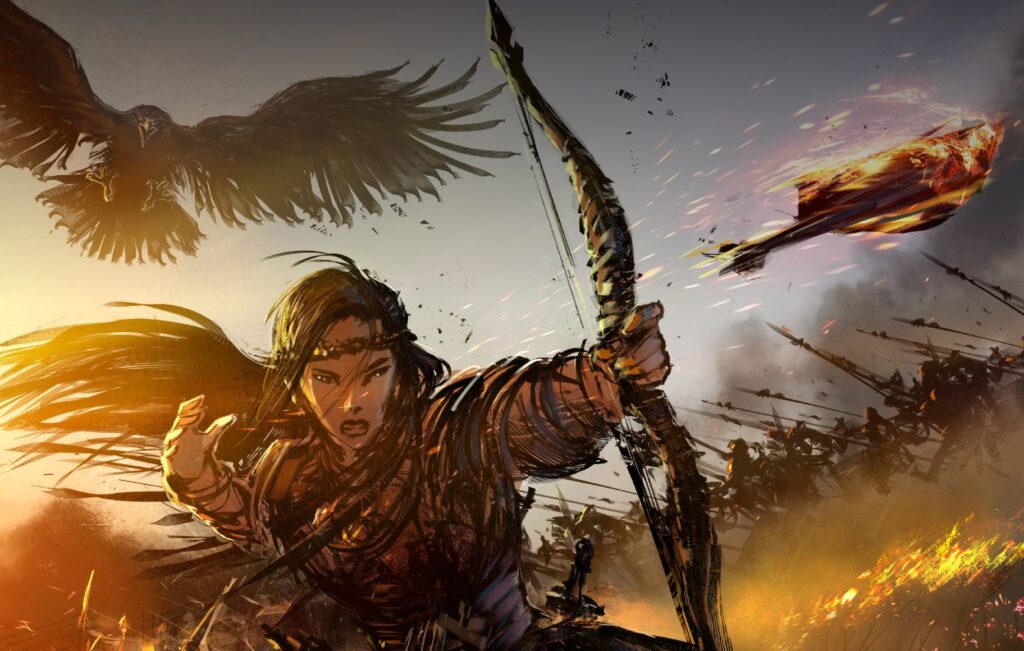
Today, comics and visual storytelling are increasingly going beyond entertainment. They are becoming part of a cultural dialogue, helping audiences reconnect with their roots. One such project is the graphic novel series The Legend of Ergenekon (Ergenekon Destanı), created by Turkish artist and designer Emre Erdur. The Legend of Ergenekon is a Turkic origin myth that tells of a people driven into a remote valley after defeat in battle, where they lived in isolation for centuries until a blacksmith forged a path through the surrounding mountains. Guided by a gray wolf, they emerged to reclaim their strength and expand across the steppe. In Central Asia, the story symbolizes resilience, unity, and renewal, often invoked as a metaphor for nations overcoming hardship to reassert independence and identity on the Eurasian crossroads. It resonates strongly in Kazakhstan, Kyrgyzstan, Turkmenistan, and Uzbekistan, where Turkic identity, language, and heritage are foundational. Born in Istanbul and trained as an architect at Mimar Sinan Fine Arts University, Emre Erdur worked for many years in the entertainment and design industries. Since 2019, however, he has dedicated himself to developing a multi-volume graphic novel series inspired by ancient Turkic history and mythology. His work was first presented at a festival in Taldykorgan. As part of his research, he visited the National Museum of Kazakhstan in Astana and collaborated with historian Assoc. Prof. Dr. Talgat Moldabay to ensure historical accuracy. [caption id="attachment_35647" align="aligncenter" width="1824"] Image: Emre Erdur[/caption] For Central Asia, Ergenekon Destanı is more than a creative project; it represents an effort to connect a shared heritage through the language of comics and popular culture. In an interview with The Times of Central Asia, Emre Erdur spoke about his inspiration, research, the role Kazakhstan plays in his work, and his plans for expanding this unique visual universe. TCA: You were born and educated in Turkey, yet you chose to dedicate yourself to wider ancient legends and Turkic history. When did you first feel drawn to this theme? Erdur: Yes, I was born in the westernmost corner of Turkic geography, but every individual in this world has cultural roots that reach out and nourish them. Naturally, as an artist, the desire to draw from and explore my own roots is an inner force. Although I was born and raised in Istanbul, you can find traces of our roots as far as Yakutia in Russia, Buryatia, Mongolia, the Altai, further south in East Turkestan, in the Gobi Desert, and even in Korea. None of these places feels separate from us; you can sense the connection. Of course, as a human being, every part of this world is valuable and fascinating; each region holds its own beauty and heritage. But there is also something called “national identity,” which is different from our individual identity. Our soul cannot be confined to this world; it knows no geography or race, it belongs beyond time and space. Yet during our lifetime on Earth, we do carry both national and individual identities, and defining them correctly...

Comic Con Astana 2025: Kazakhstan’s Premier Geek Culture Festival Set to Break Records

Geek culture has become a vibrant facet of Astana’s tourist appeal, and on July 9, the city kicked off the fourth edition of Comic Con Astana, Kazakhstan’s flagship festival for anime, comics, and cosplay. Over the years, festival-goers have become a familiar sight in the capital's summer streets, embodying characters from across the worlds of comics, gaming, and fantasy. While other Central Asian capitals, including Tashkent, have made similar attempts, it is Astana that has succeeded in establishing a sustainable and growing comic convention. The inaugural Comic Con Astana was held in 2019, but subsequent years were disrupted by the COVID-19 pandemic and the political turbulence of 2022. In 2023, however, the festival returned with renewed energy, drawing not only domestic fans but also international guests eager to meet Hollywood actors Michael Rooker and Sean Gunn, known for their roles as Yondu and Kraglin in Guardians of the Galaxy. The guest list also included top Eurasian video bloggers and prominent cosplayers, names that may be unfamiliar to the broader public, but are iconic within the global geek community. That year, organizers reported at least 60,000 attendees. [caption id="attachment_33875" align="aligncenter" width="1280"] Image: TCA[/caption] In 2024, the festival built on that momentum. A major highlight was the appearance of Danish actor Mads Mikkelsen, famed for his portrayal of Hannibal Lecter in the eponymous TV series, whose popularity kept him signing autographs late into the night, well past the scheduled program. He was joined by Canadian actor Percy Hynes White, who had recently risen to prominence through his role in Netflix’s Wednesday. Now, in 2025, Comic Con Astana is aiming to surpass its own benchmarks. [caption id="attachment_33876" align="aligncenter" width="1280"] Image: TCA[/caption] "This year, we decided to scale up and break our own record: two venues, Astana Arena and Barys Arena, and an extended five-day program," said Natalina Abrashkin, general producer of Comic Con Astana. "Every year, Comic Con grows in terms of guests, international stars, and economic impact. In 2025, we expect more than 75,000 attendees, including at least 10,000 foreign tourists." Organizers estimate that each foreign visitor spends around 118,000 KZT ($228) per day. With an average stay of three days, the festival is projected to generate over 3.5 billion KZT (nearly $7 million) in economic activity through accommodation, food, transportation, entertainment, and shopping. This year’s expanded program reflects that ambition. Even the two arenas may struggle to accommodate the crowds expected to attend appearances by three Hollywood stars: Andy Serkis, renowned for his motion-capture roles as Gollum in The Lord of the Rings and Caesar in Planet of the Apes, will headline. He will be joined by Esai Morales (Ozark, Titans, Mission: Impossible, La Bamba) and Scott Adkins (John Wick 4, Doctor Strange, Ip Man 4). Their public sessions are scheduled for the festival’s final weekend. [caption id="attachment_33877" align="aligncenter" width="1832"] Image: TCA[/caption] A central feature of Comic Con Astana remains the cosplay competition. This year, organizers have raised the prize fund to 15 million KZT ($29,000). Cosplay has been a cornerstone...

An Overview of Kazakhstan’s Comic Industry by Oraskhan Zhakup, CEO Khan Comics

TCA: What inspired you to create comics and get involved in the industry?  My entry into the comic book industry was intuitive as opposed to a conscious decision.  I just followed my passion. It all started when aged 10-12 years old, my friends and I drew comic strips in school notebooks and sketchpads and then stapled them together to create homemade comic books. Over time, this childhood hobby became more serious and we formed a club with several members. In 2003, Pavel Shein, Stas Misyurin and I decided to launch a newspaper titled ‘Comics’ which included three comic strips, each spanning around eight pages. The newspaper was black and white, with a circulation of about a thousand copies. Several issues were printed, providing our entry point into the industry. We then started a comic book magazine. After a long hiatus, we organized a comic book exhibition in 2010, and with work amassed from the show, published our first anthology in 2011. Named ‘KZ Comics’ the 112-page publication, again in black and white, had a print run of 500 copies. It was in this magazine that the Khan Comics logo first appeared. TCA: Tell us more about the Khan Comics Art Studio. The Khan Comics Art Studio in Almaty was originally a place where a few people gathered to create comics and then, a couple of years ago, we extended our practice to include cartoons and animation. Over the last 5-6 years, I have also been experimenting with making toys based on our comics. All of this naturally requires considerable financial and human resources as well as time. But we keep working, making comics and everything related to them. TCA: How has the comics culture developed in Kazakhstan since you entered the industry? Unfortunately, there is no market for Kazakh comics in our country. Regular players are needed for such a market to exist, but there are none. Our studio has been publishing 5-6 books annually for 13 years. Occasionally new players enter the field, but after a year or two, disappear. The popularity of comics in Kazakhstan is not related to the local market, but to global trends spurred by the release of Hollywood movies based on comics, such as ‘The Avengers’ and ‘Spider-Man.’ The popularity of comic books in post-Soviet countries (CIS) is now in its third wave and we are its pioneers. The first began in the early 2000s with the arrival of comics from IDK Publishing, and the second, was associated with manga. TCA: What key events or projects would you single out as the most significant for the development of Kazakh comics? I would cite the ‘Erketay’ and ‘Jetysu’ comic series as our studio’s key projects. ‘Erketay,’ currently being adapted, is an ethno-fantasy based on Kazakh mythology, whilst ‘Jetysu’ is an urban fantasy. Both of these projects are important for us. Although I love 90% of what we produce, ‘Erketay’ stands out as number one.     [caption id="attachment_20321" align="aligncenter" width="589"] Jetysu[/caption] [caption id="attachment_20319" align="aligncenter" width="568"]...
