Tokayev Meets U.S. Envoy Sergio Gor on Sidelines of BRICS Summit
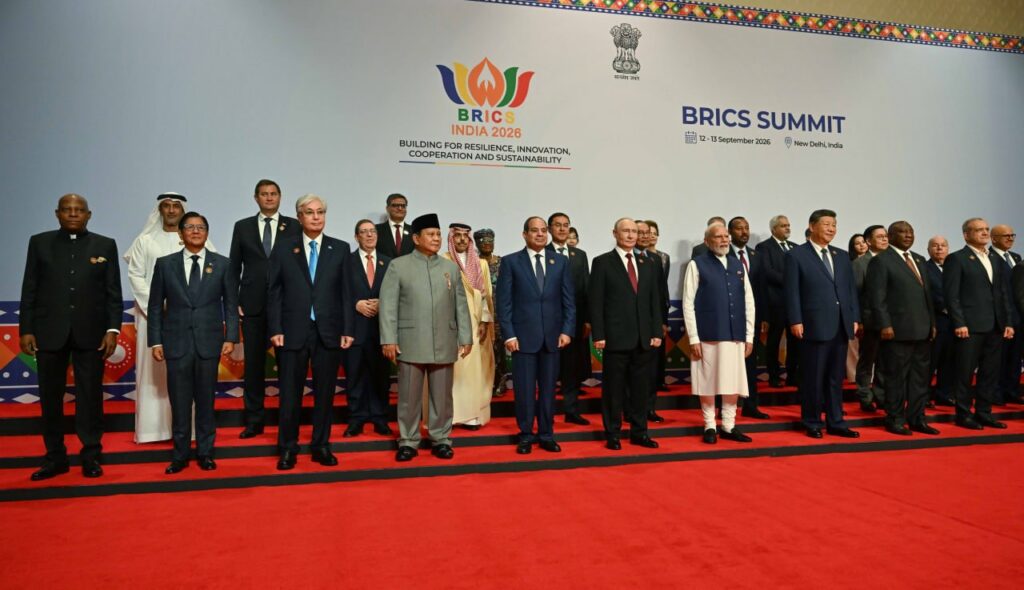
India hosted the 18th BRICS summit in New Delhi on September 12–13. Kazakhstan and Uzbekistan are among the partner countries of this international grouping, which began meeting in 2006 and held its first summit in 2009. Uzbekistan was represented by a delegation headed by Deputy Prime Minister and Minister of Economy and Finance Jamshid Kuchkarov. Kazakhstan’s delegation was led by President Kassym-Jomart Tokayev. On Saturday, September 12, the Kazakh president met on the sidelines of the summit with Abu Dhabi Crown Prince Sheikh Khaled bin Mohamed bin Zayed Al Nahyan and Sergio Gor, the U.S. president’s special envoy for South and Central Asia. During his meeting with the crown prince, they discussed economic and investment cooperation. In 2025, the United Arab Emirates ranked among Kazakhstan’s four largest foreign investors. Foreign direct investment from the Emirates totaled $1.6 billion. In January–March 2026, bilateral trade between Kazakhstan and the UAE amounted to $45.8 million. Over the past 20 years, Emirati investment in Kazakhstan has exceeded $7 billion, including around $3 billion over the past two and a half years. That same day, President Tokayev met with Sergio Gor, the U.S. president’s special envoy for South and Central Asia. Gor delivered a personal message from President Donald Trump congratulating Tokayev ahead of the 35th anniversary of Kazakhstan’s independence. They discussed the development of the Kazakhstan-U.S. enhanced strategic partnership, including cooperation in artificial intelligence and digitalization. According to the official readout, they also discussed the Kazakh president’s planned participation in the G20 summit, scheduled to take place in Miami in December 2026. Tokayev said: “I am currently preparing to take part in the G20 Summit in Miami. I believe this will also be a good opportunity to discuss the issues on the bilateral agenda. We prefer not fine words, but tangible results and practical steps to advance our mutual cooperation.” Tokayev also reaffirmed his invitation for President Trump to visit Kazakhstan. Contacts between senior Central Asian and U.S. officials have intensified. The U.S. Embassy in Bishkek reported on September 2 that Gor had met with Tokayev and other regional leaders in Kyrgyzstan. In June, Gor met with Kazakhstan’s foreign minister. Also in June, Tokayev met with Ben Black, chief executive officer of the U.S. International Development Finance Corporation (DFC), as part of Astana’s efforts to expand economic cooperation with Washington and attract more strategic investment. On July 10, Tokayev spoke by phone with President Trump. Another meeting of the secretariat of the C5+1 framework for U.S.-Central Asia cooperation took place in Ashgabat on September 9. Gor serves as both the U.S. ambassador to India and the U.S. president’s special envoy for South and Central Asia. Also on Saturday, Tokayev had an informal meeting with Russian President Vladimir Putin in New Delhi, at the Russian leader’s residence during his visit to India. Reports suggested the meeting was unplanned. No details of their discussion were released. On Sunday, September 13, President Kassym-Jomart Tokayev delivered a speech at the plenary session of the BRICS Outreach Summit in New Delhi, focusing on the theme of "Strengthening Resilience, Innovation, Cooperation, and Stability." In his speech, Tokayev noted: “Last year, the volume of transit cargo transportation...