


Opinion: What is on the agenda for Central Asia at COP31?
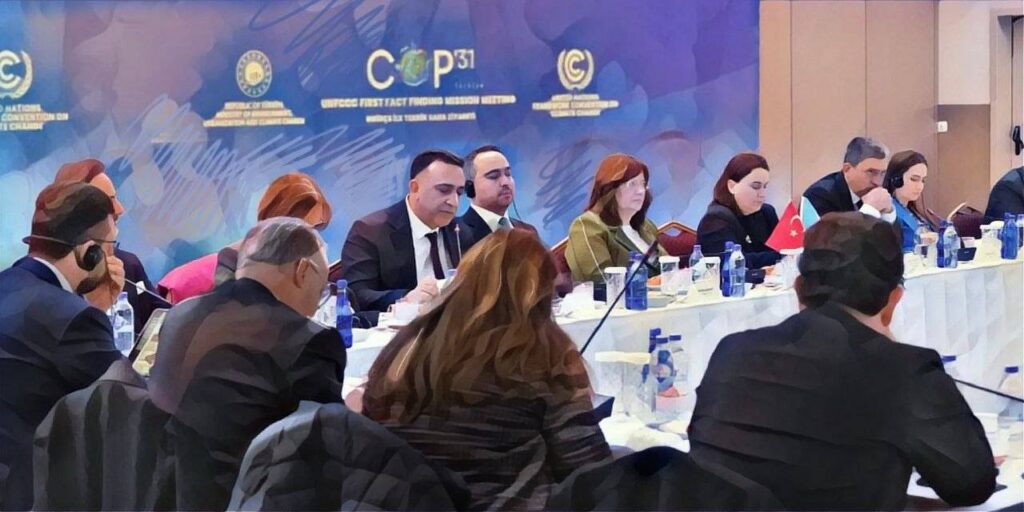
The 2026 United Nations Climate Change Conference, better known as COP31, is taking place in Antalya, Türkiye, from November 9 to 20. Delegations from almost 200 countries will participate in the event, including all the Central Asian republics, but Uzbekistan and Kazakhstan will play an outsize role in coordinating their messaging and ensuring the regional environmental agenda gets the time it needs in the spotlight. The buzzword for the C5 in Türkiye is “cooperation.” Kazakhstan’s Ministry of Ecology and Natural Resources will host a meeting for Central Asia’s five environmental ministers at its national pavilion to discuss regional cooperation and joint climate initiatives. Uzbekistan is committed to contributing to common positions on glacier retreat, water security, adaptation needs, and equitable access to climate finance through the multilateral Mountain Group and the Group of Landlocked Developing Countries (LLDCs). Turkmenistan will continue pushing for the formation of the Ashgabat Climate Dialogue as a new multilateral platform for promoting climate change initiatives. In line with its Mountain Agenda, the Kyrgyz Republic will be lobbying for support to establish the Global Mountain Resilience Center in Bishkek. Mobilizing affordable climate finance is critical for all the republics. According to the Climate Policy Initiative, global climate finance reached $2 trillion in 2024, against estimated annual mitigation finance needs of $7.8 trillion through 2030. In an interview with The Times of Central Asia, Aziz Abdukhakimov, Presidential Adviser on Environmental Issues and Chair of the National Committee on Ecology and Climate Change of the Republic of Uzbekistan, stated: “Access to adequate, predictable and affordable climate finance remains essential for developing countries to achieve their climate goals. For Uzbekistan, the implementation of our national climate commitments is estimated to require approximately $33.7 billion for mitigation and $15.7 billion for adaptation by 2030.” Closing, or at least narrowing, that gap requires building support among international financial institutions, multilateral development banks, development partners, and private investors. The GEF Council, meeting in Samarkand ahead of the Eighth GEF Assembly, endorsed a $3.9 billion replenishment package (GEF-9), demonstrating donor interest and tangible commitment to climate projects, including for a restoration project in the Chu and Talas river basins shared by Kazakhstan and Kyrgyzstan, and for a risk mitigation facility to attract private investment into Uzbekistan’s renewable energy sector. But there is hope that commitments at COP31 will go further. In September 2026, during Climate Week NYC, President-Designate Murat Kurum announced that Uzbekistan would be one of the first five pilot countries to receive support under the Climate Implementation Bridge (BRIDGE), the flagship initiative of COP31. This represents an important opportunity to translate national climate priorities into investment-ready projects and facilitate access to international financing. In his interview, Abdukhakimov stated that Uzbekistan’s focus will be “mobilizing investment in renewable energy, energy efficiency, climate-resilient infrastructure, sustainable water management, agriculture and ecosystem restoration.” At the same time, Kazakhstan will be presenting its plans to establish a national climate investment platform, plus a framework partnership program for developing the circular economy across Central Asia. Tajikistan will be...
