• KGS/USD = 0.01143 0%
  • KZT/USD = 0.00216 0%
  • TJS/USD = 0.10633 -0.28%
  • UZS/USD = 0.00008 0%
  • TMT/USD = 0.28571 0%
  • KGS/USD = 0.01143 0%
  • KZT/USD = 0.00216 0%
  • TJS/USD = 0.10633 -0.28%
  • UZS/USD = 0.00008 0%
  • TMT/USD = 0.28571 0%
  • KGS/USD = 0.01143 0%
  • KZT/USD = 0.00216 0%
  • TJS/USD = 0.10633 -0.28%
  • UZS/USD = 0.00008 0%
  • TMT/USD = 0.28571 0%
  • KGS/USD = 0.01143 0%
  • KZT/USD = 0.00216 0%
  • TJS/USD = 0.10633 -0.28%
  • UZS/USD = 0.00008 0%
  • TMT/USD = 0.28571 0%
  • KGS/USD = 0.01143 0%
  • KZT/USD = 0.00216 0%
  • TJS/USD = 0.10633 -0.28%
  • UZS/USD = 0.00008 0%
  • TMT/USD = 0.28571 0%
  • KGS/USD = 0.01143 0%
  • KZT/USD = 0.00216 0%
  • TJS/USD = 0.10633 -0.28%
  • UZS/USD = 0.00008 0%
  • TMT/USD = 0.28571 0%
  • KGS/USD = 0.01143 0%
  • KZT/USD = 0.00216 0%
  • TJS/USD = 0.10633 -0.28%
  • UZS/USD = 0.00008 0%
  • TMT/USD = 0.28571 0%
  • KGS/USD = 0.01143 0%
  • KZT/USD = 0.00216 0%
  • TJS/USD = 0.10633 -0.28%
  • UZS/USD = 0.00008 0%
  • TMT/USD = 0.28571 0%

Viewing results 1 - 6 of 19

Kyrgyz Anti-Corruption Crackdown: Officials Arrested During Live Meeting in Osh

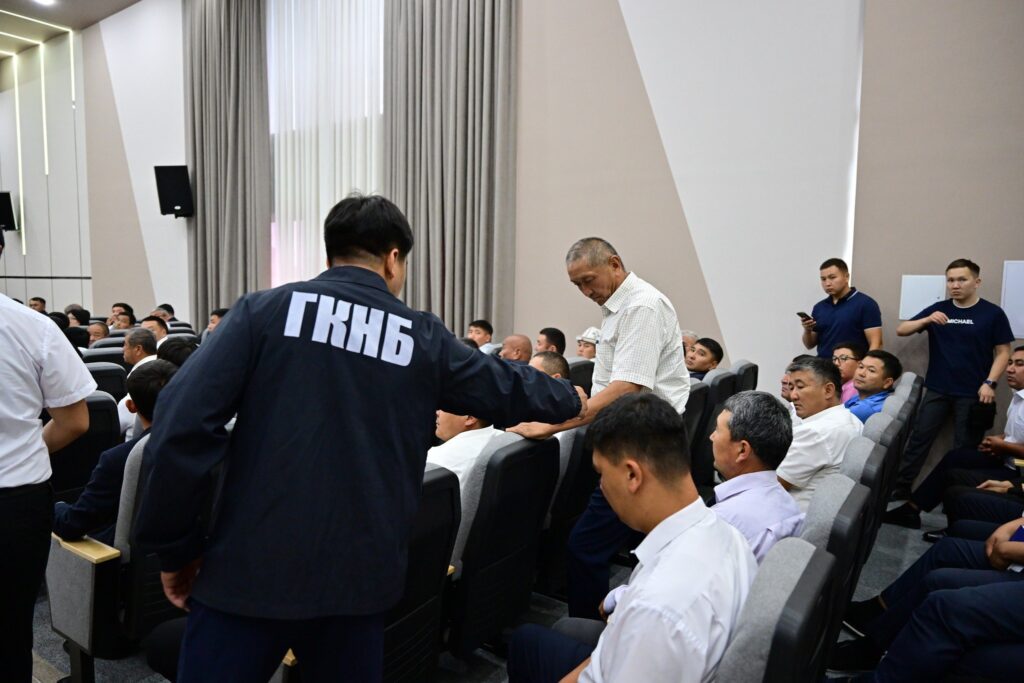
Several officials were arrested during a high-level government meeting in the southern Kyrgyz city of Osh, as part of an ongoing anti-corruption campaign led by the State Committee for National Security (GKNB). Kamchybek Tashiev, chairman of the GKNB, ordered the arrests during a gathering with the heads of state agencies. Six civil servants were detained on the spot after Tashiev accused them of embezzling state funds and providing false information. Among those taken into custody were the head of the Tax Service in the Uzgen district and the deputy head of the Tax Service in the Kara-Suu district. “Take him out, he’s lying!” Tashiev said, pointing to the deputy head of the Kara-Suu Tax Inspectorate. He also stated that the head of the service had already been transferred to the GKNB’s central office in Bishkek for interrogation. The detentions extended beyond the tax authorities. According to local media reports, two employees from the Cadastral Service in the Nookat district, a representative of the judiciary, and a passport office staff member in Uzgen were also arrested. All face allegations of corruption and misappropriation of public funds. These events in Osh follow a series of high-profile detentions in northern Kyrgyzstan. Over the past month, at least three mayors and several senior officials have been arrested in the Chui and Issyk-Kul regions. They are accused of abuse of office, illicit enrichment, and orchestrating corruption networks. During the meeting, Tashiev reiterated the GKNB’s commitment to combating corruption at all levels of government. He referenced the arrest of former State Tax Service head Altynbek Abduvapov in late 2024 as a prominent example. Investigators claim Abduvapov accumulated approximately $55 million in assets through illegal means. “He never had a business of his own. Employees say they gave him bribes ranging from $50,000 to $100,000 every month. We are confiscating everything. Altynbek Abduvapov will now be a poor man,” Tashiev declared. Political analysts suggest the crackdown indicates both an intensification of anti-corruption efforts and a recalibration of power dynamics between Kyrgyzstan’s northern and southern regions. While critics have accused the authorities of selective justice, GKNB officials maintain that the arrests are supported by solid evidence and reveal systemic governance failures.

Kazakhstan Confronts Major Data Leak in High-Stakes Security Crackdown

A detective thriller worthy of a Hollywood script is quietly playing out in the daily lives of Kazakhstani citizens, one with implications for nearly every household. At its core lies the largest leak of personal data in Kazakhstan’s history, unfolding across Almaty and Astana. The incident touches on something deeply personal: data that could be weaponized by fraudsters for illicit gain. Sixteen Million Records Exposed In early June, the Telegram channel SecuriXy.kz, known for its cybersecurity reporting, revealed a massive breach of Kazakh citizens' personal data. "A CSV file containing the personal data of Kazakh citizens, containing 16.3 million lines, has been discovered. The table contains the following fields: Last name, First name, Middle name, Gender, Date of birth, ID number, IIN [Bank Identification Number], Mobile phone number, Work phone number, Home phone number, Citizenship, Nationality, Address, Confirmed address, Start and end dates of residence," the channel stated. The analysis identified 16,302,107 records, 16.9 million unique phone numbers, and 15,851,699 unique individual identification numbers (IINs), the number of citizens whose information had been compromised. “The ‘address’ field often contains the addresses of dental clinics, polyclinics, the Tax Committee, universities, and other organizations,” the channel noted. The leak included highly sensitive personal data such as contact details and IINs, which the channel warned could be used for: “Phishing, social engineering, document forgery, and telephone fraud.” The data appears to have been compiled over a significant period. SecuriXy.kz reported that, “Most of the records were entered into the system after 2011,” with over two million added in 2022 alone. Data from 2023-2024 also appears, underscoring the leak's relevance. The revelation sparked swift reactions from officials. The Ministry of Digital Development, Innovation, and Aerospace Industry (MCIAI) released a statement confirming an investigation in collaboration with law enforcement and intelligence agencies. “It should be noted that the initial analysis indicates that the information may have originated from private information systems. No hacker attacks or leaks of personal data from state information systems have been recorded at this time. It is premature to draw final conclusions or confirm the accuracy of the information until the investigation is complete,” the ministry stated, adding that similar past incidents often involved outdated data compiled by service sector firms or microfinance institutions. “The ministry is monitoring the situation," the authorities concluded. "Additional information will be posted after the investigation is complete.” Cybersecurity experts, however, were less dismissive. Enlik Satieva, vice president of the TSARKA Group, a cybersecurity firm affiliated with the government, stressed the seriousness of the breach. "These are not just names," she stated. "The published database contains the most important personal data of citizens. In particular, it includes surnames, first names, patronymics, gender, dates of birth, IINs, citizenship, nationality, residential addresses, registration and residence periods, as well as mobile, home, and work phone numbers." Satieva suggested that some of the data may have been sourced from medical organizations, and that the leak might stem from a specific entity or multiple sources linked through IINs. Criminal Case and Contradictions...

New York Mayor Eric Adams Under Scrutiny for Ties to Uzbek Businessman

New York City Mayor Eric Adams is facing renewed federal scrutiny over alleged ties to a Brooklyn-based businessman with close links to the Uzbek government. As The Times of Central Asia reported last year, the investigation centers on whether Adams helped improve Uzbekistan’s public image in exchange for campaign contributions. According to court documents reviewed by THE CITY, the businessman, Tolib Mansurov, a dual citizen of the United States and Uzbekistan, allegedly served as an intermediary for the Uzbek government while also helping to fund Adams’ mayoral campaigns. In return, Adams is said to have provided favorable public exposure that enhanced Uzbekistan’s reputation, despite the country’s record of human rights abuses. Prosecutors describe Mansurov as a well-connected figure who maintained frequent communication with officials at Uzbekistan’s mission to the United Nations. He organized multiple events involving Adams and the Uzbek-American community in New York. One notable event was a flag-raising ceremony at Bowling Green on September 2, 2023, during which Adams became the first New York City mayor to raise the Uzbek flag in the financial district. “Happy Uzbekistan Independence Day!” Mansurov posted on social media. “Mayor Eric Adams made history by being the first to raise the Uzbek flag on Wall Street!” Mansurov also arranged a roundtable at City Hall and hosted various cultural gatherings, including Ramadan dinners and community meetings, through the Silk Road Foundation, a nonprofit he founded. Prosecutors allege the foundation coordinated closely with Uzbekistan’s UN mission. Alongside his community engagement, Mansurov reportedly funneled illegal straw donations into Adams’ campaign. In one instance, he allegedly reimbursed four employees who made individual contributions. He later arranged ten more donations of $1,000 each, again reimbursing at least one donor, according to investigators. In private messages, Adams reportedly referred to Mansurov as “my strongest go-to person.” In May 2024, months after the FBI had seized Adams’ electronic devices, the mayor used a new phone and the encrypted app Signal to ask Mansurov for a favor. He requested that Mansurov quickly gather 20 donations of $250 each to meet the threshold for matching public campaign funds. Mansurov has not been charged but is cooperating with investigators. He has denied any involvement in money laundering, though prosecutors say he received over $11 million from a Cyprus-based entity, which he allegedly used to purchase real estate in Brooklyn. This is not the first time Adams’ campaign financing has come under legal scrutiny. Federal prosecutors have previously accused him of accepting illicit donations and perks from Turkish interests. The FBI is also examining his fundraising ties to individuals connected to China. Commenting on the broader implications, exiled Uzbek journalist Shahida Yakub said, “The regime is trying to gain legitimacy in the West. They always want to be liked by the U.S. The mayor of New York is important.” Federal investigators continue to probe Adams’ relationships with foreign governments and the role of campaign donations in potentially influencing his political conduct.

Leonid Slutsky: Scandals, Nationalism, and the Migrant Blame Game

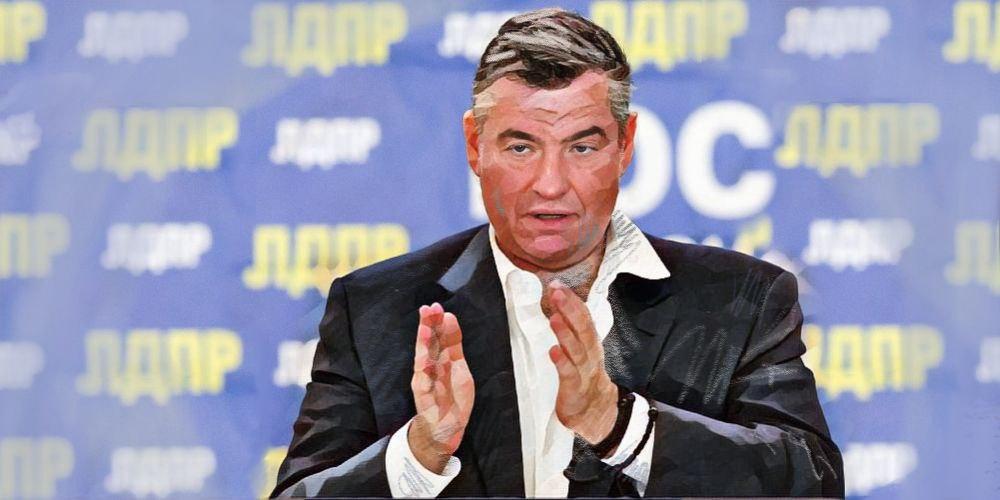
The leader of Russia’s Liberal Democratic Party (LDPR), Leonid Slutsky has long been a figure surrounded by controversy. A hardline nationalist, Slutsky’s career has been marked by allegations of corruption and harassment. Recently, his intensified rhetoric against labor migrants – including proposed restrictions on labor migrants bringing their families into the country, a requirement for foreign workers to learn Russian, and attacks on the former head of the Uzbek National and Cultural Autonomy Council in Moscow - have further spotlighted his controversial political career. “Our people... should not suffer from boors and criminals who consider themselves masters here, gather in packs and attack people,” Slutsky stated regarding migrant workers. “If you want to make money in Russia, learn Russian, and respect our laws and traditions. In any other case, go home. We will not experiment on ourselves or our children. Our great country must be respected.” This shift to the far-right aligns with a broader nationalist trend in Russia and raises questions about Slutsky’s intentions and the potential impact on the country and those working there. Slutsky’s Scandal-Ridden Career Slutsky's political reputation has been marred by allegations of sexual harassment that surfaced in 2018, with multiple female journalists accusing him of inappropriate conduct, including a BBC correspondent whom he reportedly touched inappropriately and whom he was recorded calling a “bunny”. Despite public disquiet, a State Duma ethics panel dismissed the complaints, leading to a media boycott but no political repercussions. This episode, as well as reports of hidden assets and extravagant wealth, including luxury properties and cars, point to a broader culture of impunity within the Russian political elite. Investigations have revealed that Slutsky's family enjoys a lavish lifestyle, including stays at a luxury Turkish villa, private jet travel, and an elite education for his children in Switzerland, despite his declared income in 2020 of $77,000. Additionally, reports link him to high-end vehicles such as Bentleys and a Mercedes-Maybach, often financed through questionable means. To paraphrase a piece by David Szakonyi in the American Political Science Review, in Russia, corrupt politicians work less but support the regime more. A member of the State Duma since 1999, Slutsky succeeded Vladimir Zhirinovsky as head of the LDPR in 2022. Under his leadership, the party has increasingly leaned on ultranationalist rhetoric and populist measures that appeal to disillusioned voters during times of economic strain. His recent attacks on labor migrants echo this strategy. Weaponizing Anti-Migrant Sentiment Slutsky’s outspoken criticism of labor migrants fits into a growing narrative in Russia that blames foreign workers for economic and social problems. Migrants, particularly those from Central Asia and the Caucasus, have been routinely scapegoated in nationalist circles, accused of taking jobs, disrupting social harmony, and contributing to crime. While there is little evidence to support many of these claims, Slutsky is capitalizing on prevailing anxieties as a means to rally support for his party. By portraying himself and the LDPR as defenders of a nostalgia-fueled Russian identity, he hopes to appeal to conservative voters who view...

Kazakhstan: Alexander Mashkevich, Business and Jewish Community Leader, Dies

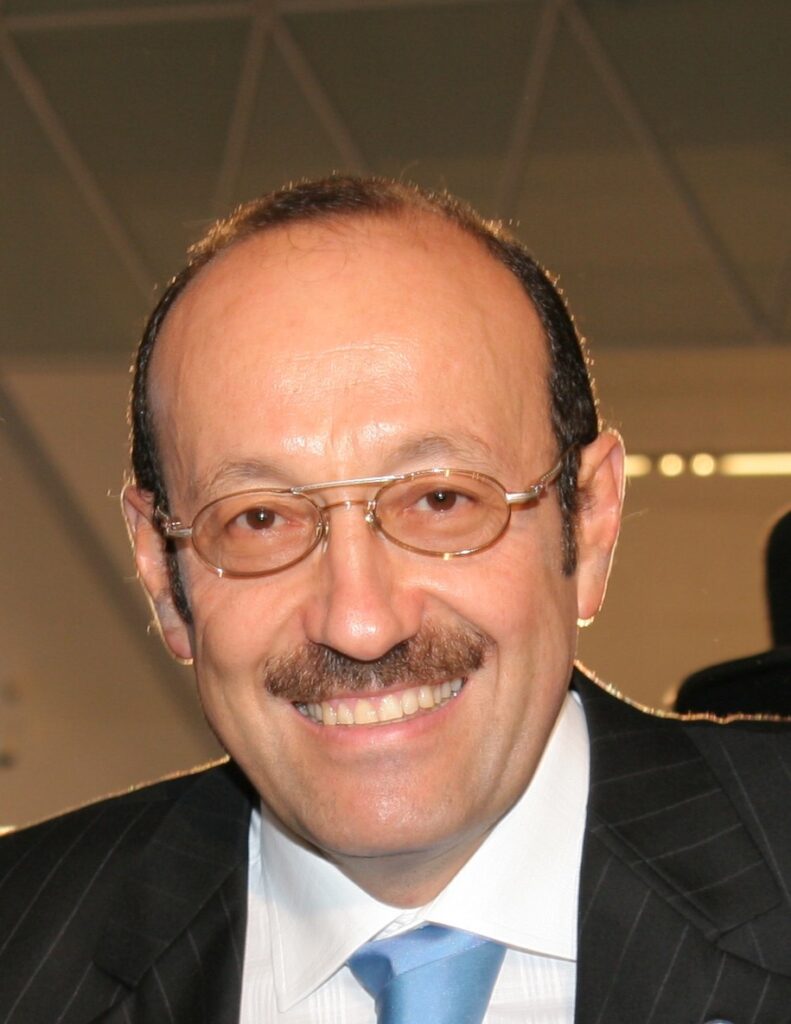
Alexander Mashkevich was a prominent figure in Central Asian business for many years: a founder of Eurasian Resources Group, a major mining company that is partly owned by Kazakhstan’s government and has operations in Africa and Brazil, and chairman of the board of directors of the Almaty-based Eurasian Bank. He also founded the Jewish Congress of Kazakhstan and became its first president. Mashkevich, who moved from Kyrgyzstan to Kazakhstan in the 1990s and later obtained Israeli citizenship, died on March 22 after an illness. He was 71 years old and leaves a wife, Larissa, and two daughters, Anna and Alla. Mashkevich “made an enormous contribution to the development of Kazakhstan’s metals and mining sector and the country’s economy,” said Eurasian Resources Group, or ERG. Between 2014 and 2024, Mashkeviich was chairman of the board of directors of Luxembourg-based ERG, which says it is one of the world’s largest producers of ferrochrome, an alloy that can be used to make stainless steel, and cobalt, which is used in batteries and other technologies. The company also says it is also a major producer of copper, the only producer of high-grade aluminum in Kazakhstan, and a big supplier of alumina and iron ore in the Eurasia region. It provides electricity and is a major railway operator in the region. Mashkevich received awards from the Kazakh state for contributions to the country’s development. His operations also came under scrutiny from Britain’s Serious Fraud Office, which for many years investigated suspected bribes that were paid to access mining contracts in Africa. In 2023, the office closed its case without bringing charges. The Eurasian Natural Resources Corporation, a subsidiary of ERG, had meanwhile sued the fraud office for alleged wrongdoing. The two sides settled last year. Separately, Belgian prosecutors alleged that Mashkevich and two partners were involved in a money-laundering scheme. In 2011, the matter was dropped after the three businessmen paid a fine without admitting guilt. Mashkevich, who had a Lithuanian Jewish background, built a reputation as a philanthropist. He was active in the Jewish community in Central Asia, leading the Euro-Asian Jewish Congress, or EAJC, for more than a decade after it was founded in 2002. He supported Jewish schools and other institutions, and one of his last projects was the establishment of a museum about Albanian citizens who saved Jews during World War II, according to the EAJC. In addition to synagogues, he also provided funds for the construction of mosques and churches in Kazakhstan. Mashkevich’s parents met in Kyrgyzstan after being evacuated during World War II. At a conference in Israel in 2011, Mashkevich said Jews had to excel in order to survive. “We have to find – every day – new, creative ways to respond to challenges, which we get every, every, every day the last few thousand years,” Mashkevich said in English. “And I suppose we will get these challenges another few thousand years.”

Kazakh Activists Slam PACE Member’s Allegations

Kazakh civil activists have strongly criticized a written declaration signed by 20 of the 306 members of the Parliamentary Assembly of the Council of Europe (PACE), labeling it a “defamatory document.” Their response, representing various non-governmental organizations and public associations across Kazakhstan, accuses PACE signatories of bias, double standards, and a lack of objectivity in its assessment of human rights and democratic practices in the country. The contentious declaration, published on the PACE website on February 5, 2025, alleges that Kazakhstan has imprisoned eight political dissidents and is repressing another five individuals living abroad. However, Kazakh civil society representatives argue that these claims are misleading and politically motivated. A key point of contention is the alleged connection between the individuals named in the declaration and Mukhtar Ablyazov, a notorious figure accused of embezzling $8-10 billion during his tenure as chairman of BTA Bank. Ablyazov has been the subject of multiple legal judgments in the UK and US, with liabilities exceeding $5 billion, including two jury trial verdicts in the Southern District of New York in 2022 and 2024 with regard to the laundering of the stolen funds. The activists assert that the individuals referenced in the PACE declaration are not political prisoners but rather individuals convicted of ordinary criminal offenses. In their February 24 response, the Kazakh civil society representatives expressed concern over what they perceive as an attempt by certain PACE members to “militarize” Europe’s democratic agenda against Kazakhstan. “We are deeply concerned about how individual PACE representatives are attempting to ‘militarize’ Europe’s democratic agenda in relation to Kazakhstan,” the statement reads. “We have every reason to believe that the authority of PACE is being actively used by criminal elements to advance their interests - among whom we include Mukhtar Ablyazov and his supporters.” While the PACE declaration called for an investigation into Kazakhstan, the civil activists countered by urging European law enforcement agencies to investigate potential abuses of office by PACE representatives. They accused PACE of turning a blind eye to systemic corruption, such as the “Qatargate” scandal, and questioned whether connections between those implicated in “Qatargate” and individuals shaping PACE’s stance on Kazakhstan are fueling a biased agenda. [caption id="attachment_29119" align="aligncenter" width="683"] According to its website, the National Endowment for Prosperity is an "organization dedicated to the protection of human rights, strengthening democracy and developing civil society, implementing a wide range of projects and initiatives in these areas."[/caption] The rebuttal, titled “Response of representatives of civil society of Kazakhstan to the declaration of the Parliamentary Assembly of the Council of Europe,” was signed by 20 prominent figures from Kazakh civil society. These include Marlen Imangaliyev from the "Veterans of military operations who took part in the settlement of the interethnic conflict in Nagorno-Karabakh in the Caucasus region" public association; Usen Suleimen and Marat Sarsembayev from the “National Endowment for Prosperity”; Salamat Kabidayev from the "Eurasian Peace and Accord" institution; and Dauyl Togzhan from the "Alash Ulandary" public foundation. The response underscores the activists’ belief that the actions...