• KGS/USD = 0.01144 0%
  • KZT/USD = 0.00204 0%
  • TJS/USD = 0.10571 -0.28%
  • UZS/USD = 0.00008 0%
  • TMT/USD = 0.28571 0%
  • KGS/USD = 0.01144 0%
  • KZT/USD = 0.00204 0%
  • TJS/USD = 0.10571 -0.28%
  • UZS/USD = 0.00008 0%
  • TMT/USD = 0.28571 0%
  • KGS/USD = 0.01144 0%
  • KZT/USD = 0.00204 0%
  • TJS/USD = 0.10571 -0.28%
  • UZS/USD = 0.00008 0%
  • TMT/USD = 0.28571 0%
  • KGS/USD = 0.01144 0%
  • KZT/USD = 0.00204 0%
  • TJS/USD = 0.10571 -0.28%
  • UZS/USD = 0.00008 0%
  • TMT/USD = 0.28571 0%
  • KGS/USD = 0.01144 0%
  • KZT/USD = 0.00204 0%
  • TJS/USD = 0.10571 -0.28%
  • UZS/USD = 0.00008 0%
  • TMT/USD = 0.28571 0%
  • KGS/USD = 0.01144 0%
  • KZT/USD = 0.00204 0%
  • TJS/USD = 0.10571 -0.28%
  • UZS/USD = 0.00008 0%
  • TMT/USD = 0.28571 0%
  • KGS/USD = 0.01144 0%
  • KZT/USD = 0.00204 0%
  • TJS/USD = 0.10571 -0.28%
  • UZS/USD = 0.00008 0%
  • TMT/USD = 0.28571 0%
  • KGS/USD = 0.01144 0%
  • KZT/USD = 0.00204 0%
  • TJS/USD = 0.10571 -0.28%
  • UZS/USD = 0.00008 0%
  • TMT/USD = 0.28571 0%
17 February 2026

Viewing results 1 - 6 of 11

Kazakhstan Begins Oil Exports to Hungary

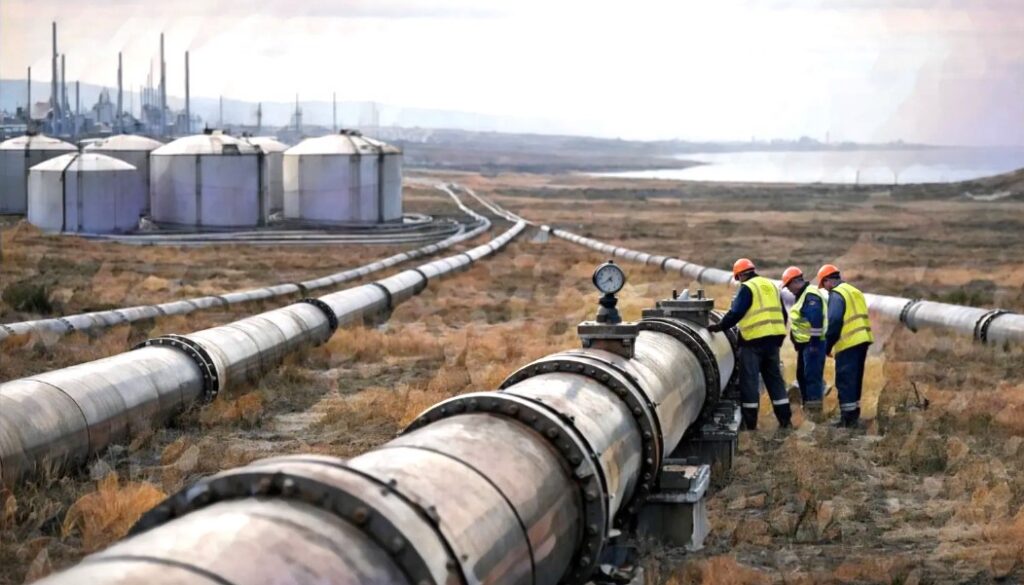
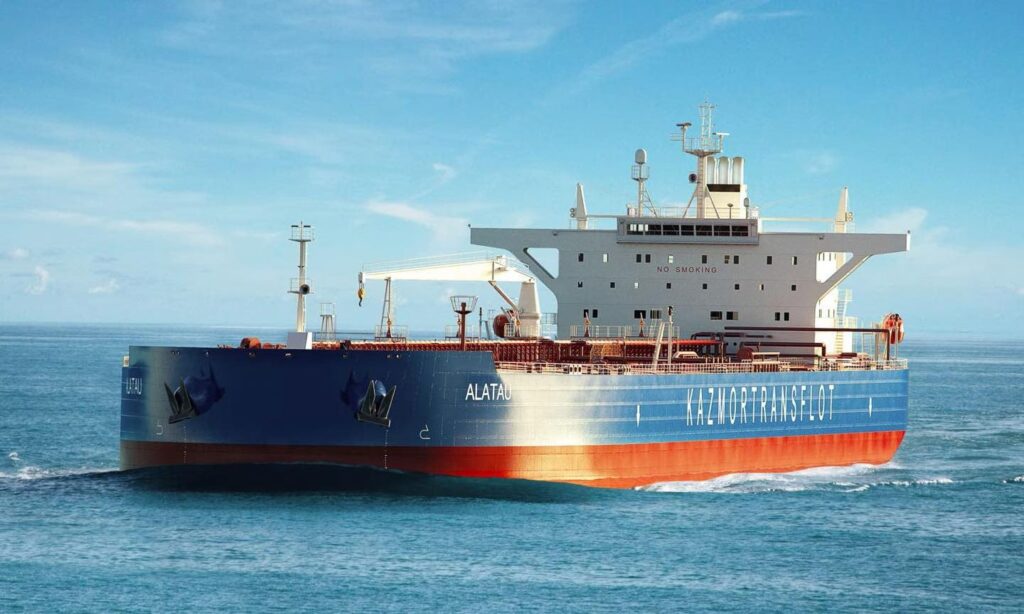
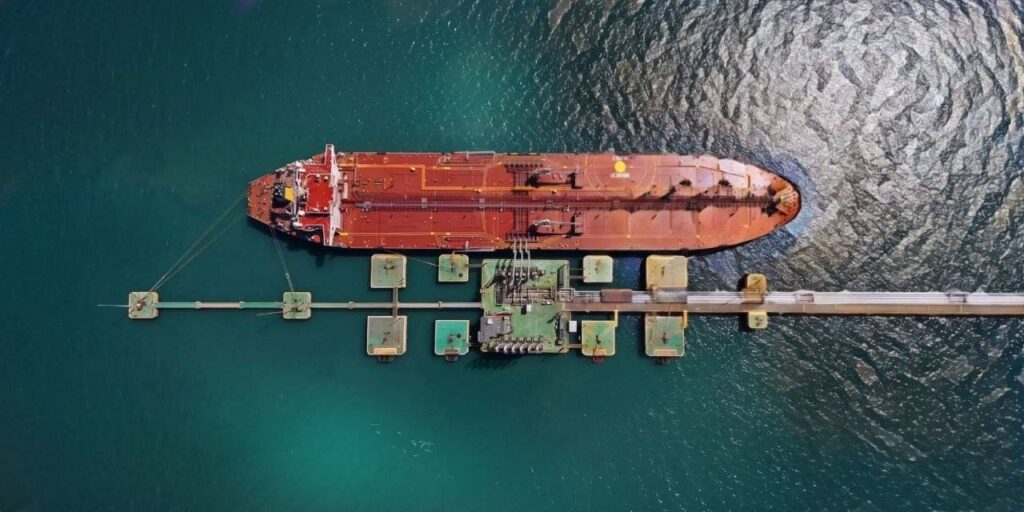
Kazakhstan has shipped its first batch of crude oil to Hungary, marking a significant step in the deepening energy partnership between KazMunayGas (KMG), the country’s national oil and gas company, and Hungary’s MOL Group. According to KMG, 85,000 tons of crude were transported by sea from the Russian port of Novorossiysk to the Croatian port of Omisalj aboard the Alatau tanker, operated by Kazmortransflot, a KMG subsidiary. From there, the oil was transported via the Adriatic pipeline, operated by JANAF, Croatia’s state oil pipeline operator, to the Százhalombatta refinery in Hungary. Upon the tanker's arrival in Croatia, representatives of KMG, MOL Group, and JANAF convened to discuss further cooperation. Following the meeting, KMG and MOL Group signed a framework agreement outlining future oil supply arrangements. The deal broadens the scope of Kazakhstan’s oil exports to the European Union. Kazakhstan already supplies crude to Germany via the Druzhba (Friendship) pipeline, which runs through Russian territory. As previously reported by The Times of Central Asia, Kazakhstan and Hungary reached a preliminary agreement earlier this year to supply Kazakh oil to Hungary through the Druzhba pipeline as well. The agreement was concluded in February during a meeting in Astana between Kazakhstan’s Minister of Energy, Almasadam Satkaliyev, and Hungarian Minister of Foreign Affairs and Trade, Péter Szijjártó. The two sides agreed to conduct trial shipments in 2025. MOL Group has been active in Kazakhstan for over two decades and has invested $200 million in the development of the Rozhkovskoye gas condensate field in western Kazakhstan.

Kazakhstan to Boost Oil Exports to Turkey via BTC Pipeline

Kazakhstan plans to increase crude oil exports to Turkey through the Baku-Tbilisi-Ceyhan (BTC) pipeline, President Kassym-Jomart Tokayev announced following bilateral talks with Turkish President Recep Tayyip Erdoğan in Ankara. “Currently, 1.4 million tons of Kazakh oil are transported annually to Turkey through the BTC pipeline. We discussed the possibility of expanding volumes and welcomed Turkish Petroleum’s plans to enter the Kazakh market. Kazakhstan is also interested in Turkish companies’ investment potential and expertise in energy diversification and power plant construction. We are ready to implement large-scale joint projects,” Tokayev stated at a joint press conference. Kazakhstan began exporting oil via the BTC pipeline in 2008, initially at just 300,000 tons per year. Expansion has since been limited by the pipeline’s capacity, 50 million tons annually, with Kazakhstan allocated a quota of 1.5 million tons and by the restricted tanker fleet of KazTransOil, the transport subsidiary of the national oil and gas company KazMunayGas (KMG), which ships crude across the Caspian Sea from the port of Aktau. In 2022, President Tokayev prioritized the development of the Trans-Caspian corridor as part of Kazakhstan’s export diversification strategy. That same year, Azerbaijan signaled readiness to raise Kazakhstan’s BTC quota to 2.2 million tons. As a result, shipments surged 5.5-fold to 1.392 million tons in 2023 and surpassed 1.4 million tons in 2024. The government now aims to reach 1.5 million tons in 2025. During the Ankara visit, KMG Chairman Askhat Khasenov met with Turkish Petroleum Corporation (TPAO) President Ahmet Türkoğlu to discuss potential cooperation in exploration, transport, and oil and gas sector development. “Currently, KMG and TPAO working groups are assessing prospects for joint initiatives in geological exploration in Kazakhstan,” the press release stated. Khasenov emphasized that strengthening ties with Turkey’s leading energy firms aligns with Kazakhstan’s strategic foreign policy. He expressed confidence that enhanced collaboration with TPAO would boost economic relations between the two countries. As previously reported by The Times of Central Asia, Kazakhstan has encountered growing challenges in transporting oil via Russian ports due to new regulations and export bottlenecks.

Opinion – Storm Clouds Over Kazakhstan: Oil Slump and Global Risks Threaten Economic Stability

The persistent decline in Brent crude prices is the latest sign of a looming 'perfect storm' for Kazakhstan’s economy, the largest in Central Asia. With the mining sector comprising nearly half of its GDP and oil as a cornerstone resource, the nation’s economic stability is facing a cascade of potential shocks. Oil Prices and Budget Vulnerability Kazakhstan is grappling with significant economic headwinds amid forecasts of a global recession and declining energy prices. In April 2025, OPEC+, including Kazakhstan, unexpectedly agreed to raise oil production by 411,000 barrels per day, pushing prices below $65 per barrel. Given the country's reliance on hydrocarbon exports, such price drops jeopardize state revenues. Analysts say Kazakhstan needs oil prices to remain above $42.30 per barrel in 2025 to maintain fiscal stability. However, the threat extends beyond oil. As energy journalist Oleg Chervinsky noted on his Telegram channel, global commodity prices across the board are falling, a signal that recession is imminent. “The bad news for Kazakhstan is that prices are dropping not only for oil but for all raw materials,” Chervinsky wrote. “JP Morgan estimates the global recession probability at 60%. Even though oil and gas are exempt from Donald Trump’s new tariffs, the broader protectionist policies could fuel inflation, curb growth, and escalate trade tensions”. Trump's Trade War and Kazakhstan President Donald Trump’s sweeping tariffs are designed to limit low-cost imports and incentivize domestic production. Kazakhstan has been hit with a 27% tariff, the highest among the Central Asian nations. Its strategic location within China’s Belt and Road Initiative positions it as a potential re-export hub, prompting higher trade scrutiny. Kazakhstan’s Ministry of Trade and Integration has downplayed the immediate economic impact, noting that U.S.-bound exports account for less than 5% of total trade, and the country still holds a $1 billion trade surplus with the U.S. While the direct fallout may be limited, the broader implications of a global trade war could severely strain Kazakhstan’s economy. If a global recession takes hold, demand for Kazakhstan’s key exports, oil, uranium, and metals, will drop, dragging prices down further. Currency Pressures and Investor Retreat With shrinking export revenues, the tenge faces devaluation, leading to inflation, rising import costs, and weakened consumer purchasing power. In addition, recessions typically dampen foreign direct investment, especially in emerging markets like Kazakhstan, where perceived risk grows amid uncertainty. The China Factor The U.S.-China trade conflict is another critical variable. Trump’s strategy aims to undercut Beijing’s economic strength, but for Kazakhstan, China is its largest trading partner, representing over 15% of foreign trade. A slowdown in China would reduce demand for Kazakhstani raw materials and transit services. Such a downturn could also jeopardize President Kassym-Jomart Tokayev’s ambition to establish Kazakhstan as a vital trade corridor between China and Europe. While the Belt and Road Initiative is unlikely to collapse, reduced cargo flows would strain state revenues. China is also the primary buyer of Kazakhstan’s copper, aluminum, and ferroalloys. Any industrial slowdown there immediately impacts Kazakhstan's export volumes. Converging Risks Taken...

Opinion: Tengiz, Karachaganak, and Kashagan: Kazakhstan Asserts Contract Stability Amid Lawsuits Exceeding $170 Billion

Following statements by President Kassym-Jomart Tokayev, the intrigue surrounding the PSA agreements for Kashagan and Karachaganak and the stabilized contract for Tengiz have taken on new dimensions. Previously, in the articles, Breaking Down Kazakhstan’s Claims Against International Oil Consortiums and Is Kazakhstan Preparing to Take on the Oil Consortium “Whales?, TCA examined the ongoing lawsuits filed by the government and the authorized body, PSA LLC, against the North Caspian Operating Company N.V. (NCOC) and Karachaganak Petroleum Operating B.V. (KPO), noting that the Ministry of Energy and KazMunayGas have not raised any claims against the joint venture Tengizchevroil LLP (TCO). While shares in NCOC and KPO are managed by PSA LLC, those in TCO are controlled by the national company, KazMunayGas. What did President Tokayev say? On January 28, President Tokayev held an expanded government meeting addressing the public and political debate surrounding PSA agreements. "Reforms in the subsoil use sector must continue, no matter what," Tokayev stated. "This is a fundamental position that the government should firmly adhere to. The implementation of production-sharing agreements (PSAs) for major oil fields has allowed Kazakhstan to become a reliable supplier of energy resources to the global market. These projects make a significant contribution to the country’s socioeconomic development. However, large investments require a long-term planning horizon. Therefore, the government must intensify negotiations on extending PSA contracts, possibly on updated and more favorable terms for our country." This statement sparked discussions among experts; who exactly was the president referring to? The major PSAs in Kazakhstan are the Karachaganak and Kashagan projects, with contracts expiring in 2038 and 2041, respectively. In contrast, Tengiz does not operate under a PSA but rather a stabilized contract, which is set to expire much sooner, in 2033. I have repeatedly emphasized the need for an audit of Tengiz before the contract expires and have proposed that it should not be extended. Kazakhstan can independently, or with the involvement of foreign oil service companies, develop this highly profitable field under more advantageous conditions. On January 29, Kazakhstan's Minister of Energy, Almassadam Satkaliyev, provided clarification, confirming that the president's directive was specifically about Tengiz. "The directive was given quite openly within the framework of international agreements and international law to conduct consultations with consortium participants. Given the development timelines, the most relevant project for us is Tengizchevroil, which operates the Tengiz field in partnership with Chevron, ExxonMobil, and Lukoil. We plan to start certain preliminary consultations with them, and once we are ready for negotiations, we will proceed with them. The government will first develop an agenda and a list of its demands. One possible demand is an increase in Kazakhstan’s stake in these projects." So, is Tengiz the primary target? Or is Kazakhstan preparing for a broader offensive on all three fronts? “There are Hardliners in the Government” On February 16, the international industry portal Upstream Online published an extensive article titled Kazakhstan Seeks Shake-Up at Crucial Foreign-Led Oil Projects. The article primarily focuses on the production-sharing agreements (PSAs) for Karachaganak...

Kazakhstan to Expand Oil, Gas, and Green Energy Production in 2025

The Ministry of Energy of Kazakhstan has released its 2024 fuel and energy sector report and outlined its plans for 2025. The country aims to increase crude oil and natural gas production while expanding renewable energy capacity. Oil Production and Refining In 2024, Kazakhstan produced 87.7 million tons of crude oil. Oil refining met the target of 17.9 million tons, while the production of: Oil products reached 14.5 million tons (exceeding the plan) Liquefied gas totaled 3 million tons Petrochemical products amounted to 540,000 tons In 2025, the country aims to boost crude oil production to 96.2 million tons, driven by the expansion of production at the Tengiz field and continued development at Karachaganak, Kalamkas-Sea, and Khazar. Natural Gas Expansion and Infrastructure Kazakhstan produced 59 billion cubic meters (bcm) of natural gas in 2024 and plans to increase output to 62.8 bcm in 2025. As of last year, 61.8% of Kazakhstan’s population had access to natural gas supplies. The government plans to expand gasification efforts in 2025 through the completion of major gas pipelines and distribution stations. Growth in Renewable Energy and Electricity Generation Kazakhstan generated 117.9 billion kWh of electricity in 2024, with 7.58 billion kWh (6.4%) coming from renewable energy sources (RES). In 2025, the country will implement nine new RES projects with a total capacity of 455.5 MW, further increasing the share of green energy and reducing the carbon footprint of Kazakhstan’s energy sector.

Kazakhstan and Hungary Reach Preliminary Deal on Oil Supply via Druzhba Pipeline

Kazakhstan and Hungary have reached a preliminary agreement on the supply of Kazakh crude oil to Hungary via the Druzhba (Friendship) oil pipeline system through Russia. According to Kazakhstan’s Ministry of Energy, the agreement was reached during a meeting in Astana on February 17 between Kazakhstan’s Minister of Energy Almasadam Satkaliyev and Hungarian Minister of Foreign Affairs and Trade Péter Szijjártó. The two sides agreed to conduct test oil shipments in 2025. Kazakhstan already supplies oil to Germany through the Druzhba pipeline. The ministers also discussed cooperation between Kazakhstan’s national oil and gas company, KazMunayGas, and Hungary’s MOL Group in developing the Rozhkovskoye gas condensate field in western Kazakhstan. MOL Group has invested $200 million in the development of this major field and has previously expressed interest in processing Kazakh oil at Hungarian refineries. On the same day in Astana, Szijjártó held talks with Kazakhstan’s Deputy Prime Minister and Minister of Foreign Affairs Murat Nurtleu. The foreign ministers reviewed trade and economic relations, noting that bilateral trade turnover increased by 4.4% last year, reaching nearly $200 million. Both sides agreed to take additional measures to achieve the goal set by their leaders, to expand trade to $1 billion, according to Kazakhstan’s Foreign Ministry. Key topics of discussion included: The opening of Hungarian bank branches in Kazakhstan The construction of a multimodal cargo terminal in Budapest Expanding exports of Kazakh uranium and critical minerals The ministers also highlighted plans to launch a direct air connection between Shymkent, Kazakhstan’s third-largest city, and Budapest in May 2025. The new route is expected to further strengthen economic and cultural ties between the two nations. Since 2005, Hungarian direct investments in Kazakhstan have exceeded $370 million, reflecting the deepening economic partnership between the two countries.