
• KGS/USD = 0.01143 0%
  • KZT/USD = 0.00205 0%
  • TJS/USD = 0.10433 0.1%
  • UZS/USD = 0.00008 0%
  • TMT/USD = 0.28577 0%
  • KGS/USD = 0.01143 0%
  • KZT/USD = 0.00205 0%
  • TJS/USD = 0.10433 0.1%
  • UZS/USD = 0.00008 0%
  • TMT/USD = 0.28577 0%
  • KGS/USD = 0.01143 0%
  • KZT/USD = 0.00205 0%
  • TJS/USD = 0.10433 0.1%
  • UZS/USD = 0.00008 0%
  • TMT/USD = 0.28577 0%
  • KGS/USD = 0.01143 0%
  • KZT/USD = 0.00205 0%
  • TJS/USD = 0.10433 0.1%
  • UZS/USD = 0.00008 0%
  • TMT/USD = 0.28577 0%
  • KGS/USD = 0.01143 0%
  • KZT/USD = 0.00205 0%
  • TJS/USD = 0.10433 0.1%
  • UZS/USD = 0.00008 0%
  • TMT/USD = 0.28577 0%
  • KGS/USD = 0.01143 0%
  • KZT/USD = 0.00205 0%
  • TJS/USD = 0.10433 0.1%
  • UZS/USD = 0.00008 0%
  • TMT/USD = 0.28577 0%
  • KGS/USD = 0.01143 0%
  • KZT/USD = 0.00205 0%
  • TJS/USD = 0.10433 0.1%
  • UZS/USD = 0.00008 0%
  • TMT/USD = 0.28577 0%
  • KGS/USD = 0.01143 0%
  • KZT/USD = 0.00205 0%
  • TJS/USD = 0.10433 0.1%
  • UZS/USD = 0.00008 0%
  • TMT/USD = 0.28577 0%

Viewing results 1 - 6 of 3

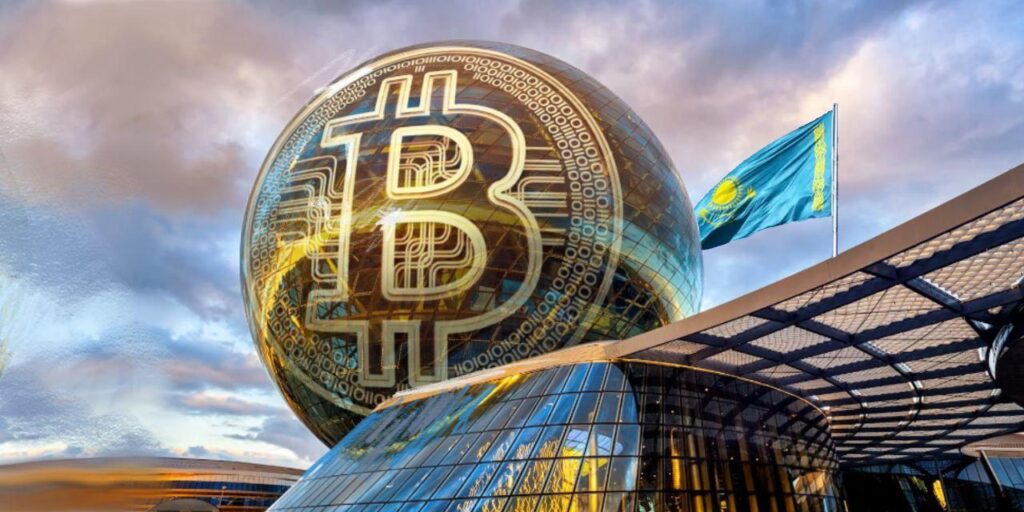
Kazakhstan Sets Sights on Becoming Central Asia’s Blockchain Hub

Kazakhstan is accelerating its efforts to become a regional leader in blockchain and cryptocurrency. Among its latest initiatives is a proposal by the National Bank of Kazakhstan (NBK) to establish a state crypto reserve. National Strategy and Regulatory Evolution The NBK recently endorsed the idea of forming a national reserve of crypto assets. This was confirmed in an official response from NBK Chairman Timur Suleimenov to a parliamentary inquiry. The proposal includes creating the reserve through a subsidiary of the NBK focused on alternative investments. Mirroring practices in countries such as the United States, the reserve could be composed of confiscated crypto assets and cryptocurrencies mined with state involvement. Legislative amendments to support this move are expected. In January, President Kassym-Jomart Tokayev underscored the urgency of developing Kazakhstan’s crypto infrastructure, citing a global shift toward digital assets. Tokayev emphasized the need for a comprehensive national strategy to meet emerging challenges. Currently, legal cryptocurrency transactions in Kazakhstan can only occur via exchanges operating under the Astana International Financial Center (AIFC). Registered participants include major platforms such as Binance and Bybit. Expanding Infrastructure and Innovation The government is also considering the creation of crypto banks, which would regulate the digital asset market, facilitate storage and transactions, and boost the financial ecosystem. These institutions are seen as critical to fostering IT sector growth and blockchain compliance jobs. There are also plans to establish a licensed national cryptocurrency exchange that would operate nationwide beyond the AIFC. In May, Kazakhstan announced the launch of a special CryptoCity zone to pilot cryptocurrency-based payments for goods and services. The following month, five banks, Halyk Bank, Forte, Freedom, RBK, and Altyn, joined a NBK pilot program to introduce crypto cards. These cards, linked to wallets on AIFC-registered exchanges, allow for the real-time conversion of crypto into tenge for payments and cash withdrawals, including at physical retail terminals. Mining: Prospects and Pressure Kazakhstan has had a complex relationship with cryptocurrency mining. Between mid-2021 and early 2022, the country ranked third globally in Bitcoin mining, driven by low energy costs and an influx of miners from China. At its peak in January 2022, Kazakhstan accounted for 13.22% of global mining power. However, the surge in mining led to severe energy shortages. While enthusiasm for mining has returned, President Tokayev called in March 2025 for renewed investment in digital mining infrastructure. First Deputy Minister of Digital Development Kanysh Tuleushin has championed state-regulated mining as a potential revenue source and a catalyst for modernizing the energy grid. He pointed to models such as the U.S., where miners help balance grid loads, and to Kazakhstan’s “70/30” initiative, which allocates 30% of newly modernized thermal power plant capacity to miners and 70% to the national grid. Tuleushin also emphasized the potential for repurposing associated petroleum gas to generate mining power, thereby reducing emissions and monetizing a previously wasted resource. He argued that legalizing crypto activity nationwide could transform Kazakhstan into Central Asia’s crypto leader, on par with emerging markets in Uzbekistan and Kyrgyzstan. Energy...

Silicon Steppes: Can Kazakhstan Become Eurasia’s Next Digital Nexus?

At this month’s Eurasian Economic Forum in Minsk, Kazakh President Kassym-Jomart Tokayev urged fellow Eurasian Economic Union (EAEU) leaders to reorient toward the future. “Digitalization and artificial intelligence… should become an absolute priority of the EAEU,” he told the plenary session, warning that “we are already living in the era of AI.” Tokayev cited forecasts that AI could contribute $15 trillion to global GDP and displace 300 million jobs by 2030, arguing the EAEU bloc has a “historic opportunity” to act now. “It is important to use this window of opportunity in a timely manner… to strengthen our role in the emerging digital world order,” he stated. “A small group of countries will emerge as leaders in this field… others may be left behind. The EAEU must lead — or, at the very least, avoid lagging behind.” Tokayev’s remarks capped a speech outlining Kazakhstan’s sweeping digital agenda, which includes a national supercomputer, a high-profile artificial intelligence hub, and a “CryptoCity” pilot zone. These efforts signal not only a pivot away from extractive industries but a push to establish Kazakhstan as the heart of Central Asia’s digital and data infrastructure. Once seen as an economic hindrance, Kazakhstan’s landlocked geography is now being leveraged as a potential asset. A 3,700 km West–East Fiber-Optic Highway is under construction, connecting China’s Xinjiang province to the Caspian Sea. The project, expected to be completed in 2026, aims to provide a secure, high-speed terrestrial route for global data flows between Europe and East Asia. By pairing this with expanded redundancy and data center capacity, Kazakhstan hopes to serve as a neutral, cost-effective host for hyperscale data centers supporting global cloud providers and sovereign clients alike. With abundant energy, political stability, and growing fiber capacity, officials argue Kazakhstan can reduce regional dependence on submarine cables routed through politically sensitive chokepoints. Kazakhstan’s infrastructure investments are central to Tokayev’s vision. In Astana, the futuristic Nur Alem sphere — originally built to host the 2017 World Expo — is being converted into Alem.AI, an international artificial intelligence center focused on education, research, and applied technology. The facility will host labs, training academies, and co-working space for startups, to produce 10,000 AI specialists per year and generate $5 billion in AI-driven exports by 2029. Complementing this is the new national AI supercomputer, developed in partnership with UAE-based Presight AI. Launched in May 2025, the system is rated at up to 2 exaflops, powered by NVIDIA H200 chips, and installed within a Tier III-certified data center. Government officials say it will be used for machine learning, scientific modeling, LLM development, and cybersecurity testing, and will eventually be made available to Kazakh universities and private sector firms. Meanwhile, the CryptoCity pilot zone near Alatau will allow the regulated use of cryptocurrencies in daily life, from shopping to property purchases, within a restricted environment. It is being developed under the supervision of Kazakhstan’s Ministry of Digital Development and Samruk-Kazyna, the country’s sovereign wealth fund. Though crypto transactions currently remain largely banned in the country,...

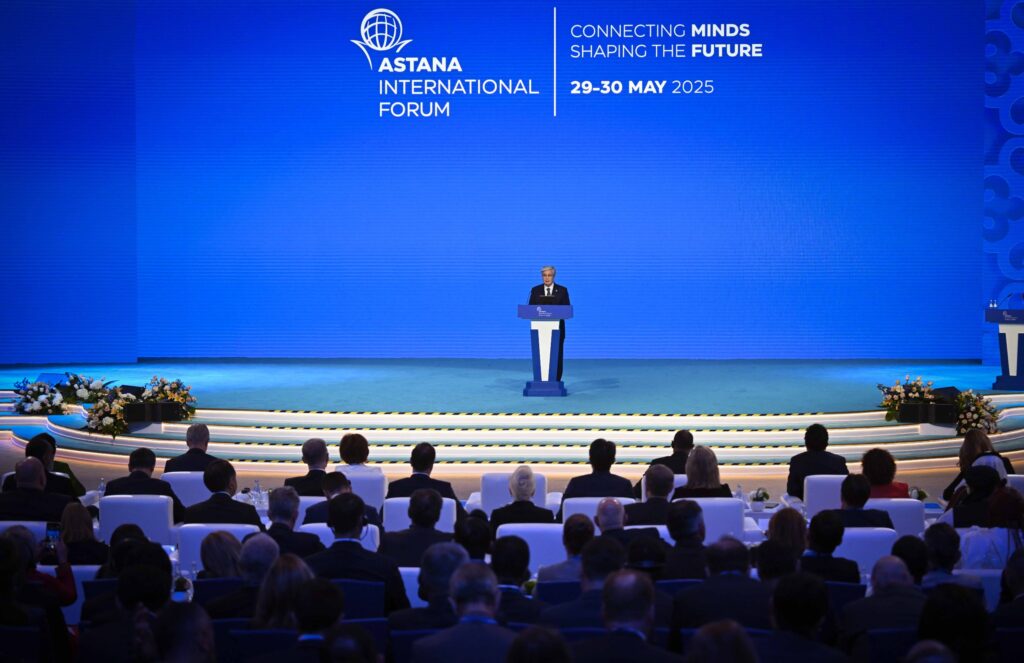
At AIF, Tokayev Proposes “CryptoCity” as Pilot Zone for Digital Innovation

Kazakhstan plans to establish a pilot zone named "CryptoCity" to facilitate the free circulation of cryptocurrencies, President Kassym-Jomart Tokayev announced at the Astana International Forum (AIF). “We plan to create an innovative pilot zone called CryptoCity, where cryptocurrencies can be used to purchase goods, services, and for other purposes,” Tokayev stated. The president highlighted Kazakhstan's progress in digital transformation, positioning the country as a potential Eurasian IT hub. He also outlined ambitions for Kazakhstan to become an academic and innovation center through partnerships with foreign universities and increased research and development. “Kazakhstan is launching the most powerful supercomputer, which has already been delivered to the country,” Tokayev said, referencing a recent agreement between the Ministry of Digital Development, Innovation and Aerospace Industry and Presight AI Ltd. The system, boasting a performance of about 2 exaflops, was developed under a strategic partnership with G42, an Abu Dhabi-based technology group. Cryptocurrency regulation remains a divisive issue in Kazakhstan. While the National Bank supports liberalizing the sector, several members of parliament are advocating for increased state control. Tokayev used the economic forum to reaffirm Kazakhstan's commitment to innovation as a tool for societal development. “Our primary task is to reduce regional disparities and strengthen the middle class. That is why we continue to bolster our capabilities in key sectors, from digital technologies and artificial intelligence to clean energy and high value-added manufacturing,” he said. He also emphasized regional cooperation: “Kazakhstan is ready to share its emerging IT capabilities with its neighbors and collaborate with all countries interested in fostering economic ties.” Reflecting on global trends, Tokayev warned of growing protectionism and weakening multilateralism. “There are different scenarios for the future, some offer opportunities, others harbor risks. Will we see inclusive progress or destructive fragmentation? This depends not on the declarations of a few, but on the cooperation of the majority,” he concluded.
