• KGS/USD = 0.01143 0%
  • KZT/USD = 0.00200 0%
  • TJS/USD = 0.10593 -0.19%
  • UZS/USD = 0.00008 0%
  • TMT/USD = 0.28575 0%
  • KGS/USD = 0.01143 0%
  • KZT/USD = 0.00200 0%
  • TJS/USD = 0.10593 -0.19%
  • UZS/USD = 0.00008 0%
  • TMT/USD = 0.28575 0%
  • KGS/USD = 0.01143 0%
  • KZT/USD = 0.00200 0%
  • TJS/USD = 0.10593 -0.19%
  • UZS/USD = 0.00008 0%
  • TMT/USD = 0.28575 0%
  • KGS/USD = 0.01143 0%
  • KZT/USD = 0.00200 0%
  • TJS/USD = 0.10593 -0.19%
  • UZS/USD = 0.00008 0%
  • TMT/USD = 0.28575 0%
  • KGS/USD = 0.01143 0%
  • KZT/USD = 0.00200 0%
  • TJS/USD = 0.10593 -0.19%
  • UZS/USD = 0.00008 0%
  • TMT/USD = 0.28575 0%
  • KGS/USD = 0.01143 0%
  • KZT/USD = 0.00200 0%
  • TJS/USD = 0.10593 -0.19%
  • UZS/USD = 0.00008 0%
  • TMT/USD = 0.28575 0%
  • KGS/USD = 0.01143 0%
  • KZT/USD = 0.00200 0%
  • TJS/USD = 0.10593 -0.19%
  • UZS/USD = 0.00008 0%
  • TMT/USD = 0.28575 0%
  • KGS/USD = 0.01143 0%
  • KZT/USD = 0.00200 0%
  • TJS/USD = 0.10593 -0.19%
  • UZS/USD = 0.00008 0%
  • TMT/USD = 0.28575 0%
22 February 2026

Viewing results 1 - 6 of 33

Kyrgyzstan Advances Digital Asset Strategy with Support from Binance

The second meeting of Kyrgyzstan’s National Council for the Development of Virtual Assets and Blockchain Technologies was held in Bishkek on October 24, with the participation of President Sadyr Japarov and Changpeng Zhao, founder of Binance, the world’s largest cryptocurrency exchange. Following the meeting, Zhao, who serves as a public adviser to Japarov on digital asset development and is a member of the Council, announced on X that Kyrgyzstan’s national stablecoin, the KGST, has officially launched on @BNBChain. The KGST is pegged to the Kyrgyz som. Zhao also confirmed the creation of a National Cryptocurrency Reserve and the full localization of the Binance app for Kyrgyz-speaking users. Japarov and Zhao previously met in May to discuss the digital future of Kyrgyzstan. Their agenda included developing a national digital asset ecosystem, integrating blockchain into public administration, and strengthening cybersecurity. Zhao pledged Binance’s support through training and expertise for specialists working on the country’s digital currency initiative. As part of this collaboration, the National Council and Binance are preparing to launch an online educational platform in the Kyrgyz language, aimed at providing basic knowledge about virtual assets. The platform will be accessible to the general public. During the Council meeting, Japarov underscored Kyrgyzstan’s pioneering role in the region, highlighting that the country has enacted legislation to regulate virtual assets and is actively pursuing a coherent government policy in the sector. He noted the national market is expanding, with an increasing number of licensed participants, a stronger regulatory framework, and new infrastructure projects emerging. Japarov pointed to several national advantages, including a flexible institutional environment, a motivated and tech-savvy youth population, and the ongoing digitalization of public services, as key factors driving Kyrgyzstan’s ambition to become a regional hub for digital finance. “The combination of these factors makes the goal of transforming the country into a regional hub for virtual assets realistic and achievable,” he stated. Melis Turgunbaev, Chairman of the National Bank of Kyrgyzstan, announced that the digital som project has entered its practical implementation phase. The initiative aims to create a fully regulated blockchain-based payment system under the control of the National Bank, which will oversee the issuance and circulation of the digital currency.
Kazakhstan Sets Sights on Becoming Central Asia’s Blockchain Hub

Kazakhstan is accelerating its efforts to become a regional leader in blockchain and cryptocurrency. Among its latest initiatives is a proposal by the National Bank of Kazakhstan (NBK) to establish a state crypto reserve. National Strategy and Regulatory Evolution The NBK recently endorsed the idea of forming a national reserve of crypto assets. This was confirmed in an official response from NBK Chairman Timur Suleimenov to a parliamentary inquiry. The proposal includes creating the reserve through a subsidiary of the NBK focused on alternative investments. Mirroring practices in countries such as the United States, the reserve could be composed of confiscated crypto assets and cryptocurrencies mined with state involvement. Legislative amendments to support this move are expected. In January, President Kassym-Jomart Tokayev underscored the urgency of developing Kazakhstan’s crypto infrastructure, citing a global shift toward digital assets. Tokayev emphasized the need for a comprehensive national strategy to meet emerging challenges. Currently, legal cryptocurrency transactions in Kazakhstan can only occur via exchanges operating under the Astana International Financial Center (AIFC). Registered participants include major platforms such as Binance and Bybit. Expanding Infrastructure and Innovation The government is also considering the creation of crypto banks, which would regulate the digital asset market, facilitate storage and transactions, and boost the financial ecosystem. These institutions are seen as critical to fostering IT sector growth and blockchain compliance jobs. There are also plans to establish a licensed national cryptocurrency exchange that would operate nationwide beyond the AIFC. In May, Kazakhstan announced the launch of a special CryptoCity zone to pilot cryptocurrency-based payments for goods and services. The following month, five banks, Halyk Bank, Forte, Freedom, RBK, and Altyn, joined a NBK pilot program to introduce crypto cards. These cards, linked to wallets on AIFC-registered exchanges, allow for the real-time conversion of crypto into tenge for payments and cash withdrawals, including at physical retail terminals. Mining: Prospects and Pressure Kazakhstan has had a complex relationship with cryptocurrency mining. Between mid-2021 and early 2022, the country ranked third globally in Bitcoin mining, driven by low energy costs and an influx of miners from China. At its peak in January 2022, Kazakhstan accounted for 13.22% of global mining power. However, the surge in mining led to severe energy shortages. While enthusiasm for mining has returned, President Tokayev called in March 2025 for renewed investment in digital mining infrastructure. First Deputy Minister of Digital Development Kanysh Tuleushin has championed state-regulated mining as a potential revenue source and a catalyst for modernizing the energy grid. He pointed to models such as the U.S., where miners help balance grid loads, and to Kazakhstan’s “70/30” initiative, which allocates 30% of newly modernized thermal power plant capacity to miners and 70% to the national grid. Tuleushin also emphasized the potential for repurposing associated petroleum gas to generate mining power, thereby reducing emissions and monetizing a previously wasted resource. He argued that legalizing crypto activity nationwide could transform Kazakhstan into Central Asia’s crypto leader, on par with emerging markets in Uzbekistan and Kyrgyzstan. Energy...

Kazakhstan Unveils Alatau: Investor-Led City with Crypto Ambitions

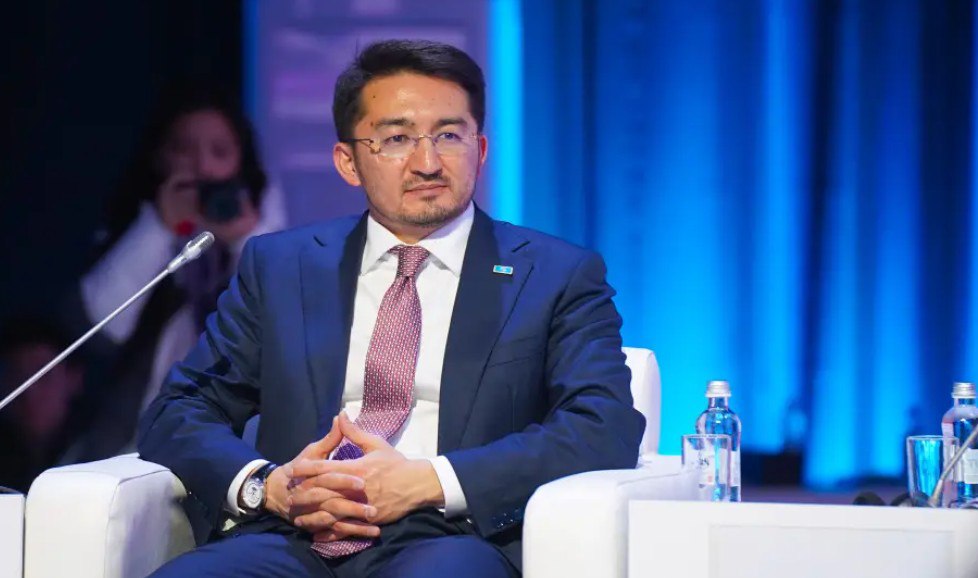
A major new urban development project is underway in Kazakhstan’s Almaty region, where a city named Alatau is being built with an emphasis on private investment and innovation. According to Zhaslan Madiyev, Minister of Digital Development, Innovation, and Aerospace Industry, the city is envisioned as a "magnet" for both domestic and international investors. Initially known as G4 City, the Alatau project was designed as a “smart city” comprising four interconnected districts: Gate District - A financial and business hub Golden District - A center for education and healthcare Growing District - An industrial and logistics zone Green District - An area for recreation and entertainment The development plan for Alatau aims to attract KZT 3.7 trillion (approx. $7.2 billion) in investment and expand the population from 52,000 to 2 million residents. The city will also be part of a special economic zone, with over 170 projects valued at KZT 12.5 trillion (around $24.4 billion) earmarked for implementation. Speaking at the Astana International Forum (AIF), Madiyev stated that the city could take one of two development paths: state-funded, as in the cases of Astana and Turkestan, or developed as a platform for private investment. “There are several options for how the city can be developed,” he said. “Alatau can be made a platform for investors. However, this requires an environment where the private sector can thrive. We need to design the entire landscape to support that in Alatau.” Madiyev also proposed key regulatory and infrastructural reforms to attract foreign investors. English should become the city’s main business language, cryptocurrency should be permitted for free circulation, and foreign nationals should be allowed to purchase real estate. These initiatives, he argued, would help position Alatau as a hub for education and tourism. “This city can become a magnet for young people who dream of living in places like Dubai,” Madiyev said. “We hope they will choose Alatau.”

$15 Billion in Crypto Withdrawn from Kazakhstan Amid Calls for Tighter Controls

Approximately $15 billion worth of cryptocurrency has been withdrawn from Kazakhstan, a figure disclosed by Berik Sholpankulov, Deputy Chairman of the National Bank. The exodus highlights systemic issues in the country's digital finance regulations. Billions in the “Gray Zone” According to Sholpankulov, the primary driver of this significant capital outflow has been the absence of robust regulatory frameworks governing digital finance. "Today, the volume of crypto assets withdrawn from the country amounts to $15 billion. The fact is that there was insufficient administrative and legal regulation in place to allow citizens to invest safely,” he stated during a briefing. In response, the National Bank plans to introduce sweeping changes, including administrative and criminal penalties for the illegal circulation of cryptocurrencies and their unauthorized transfer abroad. Sholpankulov also indicated that the authorities may soon begin naming individuals involved in illicit transactions. “Perhaps we will also hold a briefing and announce by name who spent what in the ‘gray’ zone. But [there] will already be administrative and criminal prosecution,” he stated. Transparency and Licensing: Key Reforms Legislative amendments are currently under development to legitimize and open Kazakhstan’s digital asset market. The initial step will involve licensing all market participants, such as cryptocurrency exchanges and digital service providers, through the Astana International Financial Center (AIFC). Licensed entities operating through the AIFC will enable residents to legally buy and sell digital assets. All transactions will be monitored and transparent, giving the state tools to prevent illegal financial flows. A dedicated platform is also being launched under the National Bank to test emerging digital technologies and services before a broader rollout. Strategic Shift Toward a Digital Economy These reforms extend to Kazakhstan's cryptocurrency mining sector. Large-scale operators will be permitted to build independent power plants to reduce their reliance on the national power grid, thus improving operational stability and economic feasibility. Deputy Minister of Digital Development Kanysh Tuleushin emphasized that establishing a legal market for digital assets marks a pivotal phase in the country's economic transformation. The relevant authorities aim to implement a fully regulated and transparent cryptocurrency market by the end of 2025. Kazakhstan's competitive advantages, including affordable electricity, vast space, and a supportive legal infrastructure, position it well to attract investment and build a robust digital ecosystem. If fully realized, the reform package could elevate Kazakhstan to a leading position in the region for legal cryptocurrency operations, stimulating job creation, and curbing shadow capital outflows. Previously, The Times of Central Asia reported that MP Olzhas Kuspekov had proposed strengthening state controls over cryptocurrency circulation, including blocking access to unlicensed exchange platforms.

Kazakhstan’s Crypto Aspirations Face a Power Problem

Kazakhstan’s First Deputy Minister of Digital Development, Innovation, and Aerospace Industry, Kanysh Tuleushin, believes that state-regulated cryptocurrency mining could generate substantial revenue and help modernize the country's energy infrastructure. Tuleushin argues that Kazakhstan has the potential to become Central Asia’s leading blockchain hub. However, this vision clashes with the country’s ongoing energy crisis, which continues to impact households and businesses. Optimistic Vision In an article published in the state newspaper Kazakhstanskaya Pravda, Tuleushin outlined how mining operations could contribute to the development of Kazakhstan’s power generation capabilities. He emphasized the use of associated petroleum gas (APG) to produce electricity for mining, which he claims would reduce carbon emissions and boost oil sector profits. “Miners can help modernize the power grid. In the U.S., they participate in grid balancing by consuming excess energy during low-demand periods. Kazakhstan already has a ‘70⁄30’ initiative, where foreign investors upgrade thermal power plants, allocating 70% of new capacity to the general grid and 30% to miners,” Tuleushin wrote. Tuleushin reported that cryptocurrency mining has brought 17.7 billion tenge to the national budget over the past three years. Meanwhile, trading volume on the Astana International Financial Center (AIFC) exchanges increased from $324.2 million in 2023 to $1.4 billion in 2024. From January 1, 2025, miners will be required to sell 75% of their assets through the AIFC. Despite a generally cautious regulatory stance, Kazakhstan permits digital asset trading within the AIFC. Digital assets are categorized as secured (linked to physical assets) or unsecured (such as Bitcoin and Ethereum). In 2023, digital asset transactions in Kazakhstan reached $4.1 billion, but 91.5% occurred in the “gray zone,” beyond state oversight. In 2024 alone, the Financial Monitoring Agency shut down 36 illegal crypto exchanges, froze $4.8 million in assets, and blocked over 3,500 illicit platforms. Tuleushin argues that fully legalizing and regulating these operations could add more than 190 billion tenge annually to the budget, enough to fund major public infrastructure such as schools and hospitals. He proposes extending crypto trading beyond the AIFC, authorizing crypto ATMs, and opening the market to major players, an approach akin to that of the UAE. Tuleushin also claimed that regions like Pavlodar and Karaganda have electricity surpluses and that Kazakhstan's cold climate further lowers operational costs for miners. Unchecked Consumption and Mounting Strain Despite the deputy minister's optimism, Kazakhstan’s Supreme Audit Chamber (SAC) has raised alarms over uncontrolled energy consumption by miners. According to a 2024 audit, miners consumed 901 million kWh worth 13 billion tenge, despite a national energy shortage, by bypassing RFZ LLP, the country’s sole energy purchaser. Former Prime Minister and current head of the Supreme Audit Chamber, Alikhan Smailov, warned, “Miners are consuming up to a billion kilowatt-hours. This is damaging our economy. How can we allow unchecked consumption amid such a crisis?” The audit revealed systemic issues, including deteriorating Soviet-era power plants (55% average wear), a 4,500-worker shortfall in the energy sector, and a lack of financial oversight by the Ministry of Energy. Looming Crisis In January...

Kazakhstan’s Central Bank Governor: Navigating the “New Global Map”

Gov. Timur Suleimenov of the National Bank of Kazakhstan spoke about U.S. tariffs, financial uncertainty, reforms and declining oil prices on Wednesday at the spring meetings in Washington of the World Bank Group and the International Monetary Fund. Here are some of Suleimenov’s key comments in a conversation with Jihad Azour, director of the IMF’s Middle East and Central Asia department: Consumer lending and regulation in Kazakhstan: Due to advances in digitizing financial services, Suleimenov said, “consumer lending became easy for the banks because they're all interlinked to the government databases, they have developed their own databases. So checking a consumer, a potential consumer, and deciding whether or not to go ahead with the loan takes minutes. And therefore everyone can go online and in a couple of weeks get, I don't know, $1,000 microcredit or something like that. That led to proliferation of consumer lending. It grew in last five years, it grew at about 30%. Well, nominal wages grew at about 10-12%. So it's not sustainable and that's why we decided that we're doing something. Our part as macroprudential regulator and our colleagues at the Agency for Oversight, they're doing their part in terms of prudential regulation as well.” U.S. Tariffs: “Now, of course, we're in a completely different setup with tariffs, reshaping global economy, supply chains, investment flows. And I think everyone is yet to find their place on this new global map. In terms of trade with the United States, we have $4.2 billion in trade and most of it is in strategic goods when it comes to U.S. imports from Kazakhstan, therefore it is exempted. But the key element is of course oil prices, global economic turmoil, of course the decrease in oil prices for oil-producing countries. Very important, 50% of our exports is oil, 35-33% of our fiscal revenues is oil. So anything that relates to oil production or oil price affects public finances and overall economic performance of the country. But we are ready, we of course as the situation was unfolding, we have our plan B and plan C. I believe many countries do have the same plan and I think we all should. It's very difficult to predict how this thing plays out.” Navigating Uncertainty “Sometimes times of crisis call for very difficult reforms. But all the stakeholders should be on the same page. Sometimes, you know, things like stability are better than development. They prevail. And therefore, it is for the governments and central banks to sit down together and see what the priorities are, the common national interests, national economic interests, whether it's difficult reforms, whether it's just maintaining stability. Well, in Kazakhstan, I think we're ready for more radical reforms that we're currently implementing. But again, let's be honest, being a petroleum state, oil producing state, makes it much, much more difficult. Because when you have 30% of your GDP in coffers in the national fund… it is very difficult to sell the reforms to the public, to the parliaments, because they're saying, guys, you're sitting on cash. The cash is invested normally, elsewhere, not into the local economy, which is the right way,...