• KGS/USD = 0.01143 0%
  • KZT/USD = 0.00202 0%
  • TJS/USD = 0.10661 -0.19%
  • UZS/USD = 0.00008 0%
  • TMT/USD = 0.28575 0%
  • KGS/USD = 0.01143 0%
  • KZT/USD = 0.00202 0%
  • TJS/USD = 0.10661 -0.19%
  • UZS/USD = 0.00008 0%
  • TMT/USD = 0.28575 0%
  • KGS/USD = 0.01143 0%
  • KZT/USD = 0.00202 0%
  • TJS/USD = 0.10661 -0.19%
  • UZS/USD = 0.00008 0%
  • TMT/USD = 0.28575 0%
  • KGS/USD = 0.01143 0%
  • KZT/USD = 0.00202 0%
  • TJS/USD = 0.10661 -0.19%
  • UZS/USD = 0.00008 0%
  • TMT/USD = 0.28575 0%
  • KGS/USD = 0.01143 0%
  • KZT/USD = 0.00202 0%
  • TJS/USD = 0.10661 -0.19%
  • UZS/USD = 0.00008 0%
  • TMT/USD = 0.28575 0%
  • KGS/USD = 0.01143 0%
  • KZT/USD = 0.00202 0%
  • TJS/USD = 0.10661 -0.19%
  • UZS/USD = 0.00008 0%
  • TMT/USD = 0.28575 0%
  • KGS/USD = 0.01143 0%
  • KZT/USD = 0.00202 0%
  • TJS/USD = 0.10661 -0.19%
  • UZS/USD = 0.00008 0%
  • TMT/USD = 0.28575 0%
  • KGS/USD = 0.01143 0%
  • KZT/USD = 0.00202 0%
  • TJS/USD = 0.10661 -0.19%
  • UZS/USD = 0.00008 0%
  • TMT/USD = 0.28575 0%
08 February 2026

Viewing results 1 - 6 of 10

Beshbarmak, Pilaf, and Olivier Salad: What Will Be Served on New Year’s Eve Tables in Central Asia

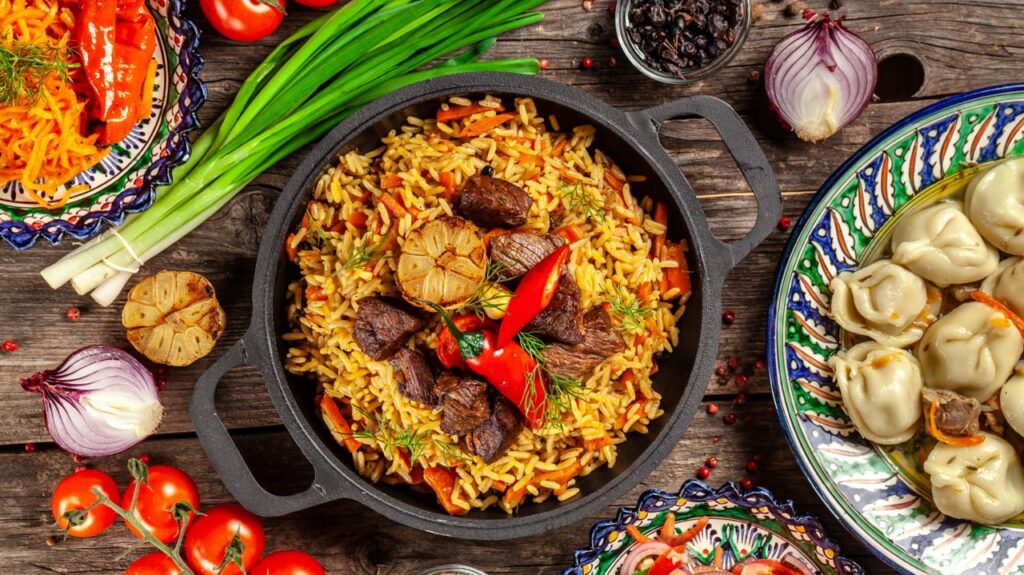
New Year remains one of the most significant holidays in Central Asia. While its scale and prominence have gradually declined due to rising religiosity, many residents still regard it as the foremost secular and ideology-free celebration of the year. Across the region, households prepare their most beloved dishes to ring in the occasion. No New Year Without Olivier Salad For many families, traditional fare is an essential part of New Year’s Eve. Olivier salad has long been a staple of the holiday table. Originally created in the 1860s by a French chef in Russia, the dish once featured ingredients such as hazel grouse and seafood. Over time, particularly during the Soviet era of shortages, the recipe evolved. Today, Olivier salad typically includes beef, chicken (or boiled sausage), potatoes, green peas, pickled cucumbers, and mayonnaise. It is usually prepared in large batches to ensure there is enough for all guests. Other popular salads include herring under a fur coat, vinaigrette, and “Tenderness”, hearty dishes that can leave guests too full for main courses. Even in modest households, red caviar often finds its way to the table, adding a touch of festivity and indulgence. Kazakhstan: Beshbarmak with a Twist In Kazakhstan, beshbarmak remains the centerpiece of the New Year’s feast, as it is for most major celebrations. Traditionally, the dish combines three cuts of horse meat, kazy, karta, and zhay, served with flat noodles and onions. However, some families are adapting their menus in line with the Chinese zodiac. As the Year of the Red Horse approaches, online advice has suggested avoiding horse meat out of respect for the symbolic animal. A vegan version of beshbarmak, featuring mushrooms and pumpkin, is gaining traction. Baked koktal fish is another showpiece dish, while kuydak (lamb with potatoes and onions) and khan syrbaz (a rich stew of lamb, vegetables, barley, and broth) are popular additions. Desserts often include traditional fermented milk products such as zhent, katyk, and irimshik, and the table is rarely without kumys, a fermented mare’s milk beverage. Uzbekistan: Pilaf Reigns Supreme In Uzbekistan, New Year is celebrated with great enthusiasm. According to folklore, Korbobo, a local version of Santa Claus, arrives on a donkey with his granddaughter Korgyz to distribute gifts to well-behaved children. Pilaf, or plov, is the dominant holiday dish. Made with rice, carrots, onions, meat, and spices, regional variations might include raisins or quince for added sweetness. Each area boasts its own version of the national favorite. Samsas, meat-filled pastries baked in a tandoor, are also served, as are manti, large, steamed dumplings filled with lamb, beef, or pumpkin. Other popular dishes include kazan-kabob (fried meat and potatoes). For dessert, chak-chak (fried dough with honey) and halva (made from sesame, semolina, or nuts) are perennial favorites. Kyrgyzstan: Boorsoki and Beshbarmak In Kyrgyzstan, beshbarmak, prepared with either horse meat or lamb, is also a central dish. Families commonly serve manti, baked chicken, and boorsoki (known in Kazakhstan as baursaki), fried dough balls that are a holiday staple. Other meat-based specialties...

Qazaq Gourmet Draws Global Gastronomic Spotlight

In late November, Paris hosted the anniversary ceremony of La Liste 2025, one of the world’s most prestigious gastronomic events. This year’s ceremony held special significance for Kazakhstan: Qazaq Gourmet, a restaurant specializing in haute Kazakh cuisine, not only represented the country at the French Ministry of Foreign Affairs but also received a special honor, the La Liste 2026 Plate. For the QazElles community in France, this recognition marked the continuation of a journey that began last year when Qazaq Gourmet was first included in La Liste’s global ranking of the best restaurants. That initial listing signaled international recognition; this year’s award reflects growing interest in Kazakh cuisine among the global culinary elite. [caption id="attachment_40141" align="alignnone" width="300"] @Madina Kulman[/caption] Throughout the evening, chefs and representatives from leading restaurants in Japan, France, Spain, and Italy visited the Qazaq Gourmet table. Many were encountering elevated Kazakh cuisine for the first time, a novelty that sparked considerable curiosity. Guests asked about preparation techniques, native ingredients, and the cultural heritage of the dishes, exchanging impressions and expressing delight at discovering unfamiliar flavors. Kazakhstan’s ambassador to France, Gulsara Arystankulova, was in attendance, lending diplomatic weight to the occasion and highlighting the country’s commitment to promoting its national cuisine on the international stage. [caption id="attachment_40140" align="alignnone" width="225"] With Head Chef Artem Kantsev, @Madina Kulman[/caption] The La Liste 2026 Plate is awarded to restaurants that demonstrate consistent quality, make use of local products, and show potential for international influence. This recognition is particularly significant for Qazaq Gourmet at a time when La Liste is increasing its focus on Asian gastronomy. Kazakh cuisine is now firmly on the radar of global culinary experts. La Liste’s methodology combines expert reviews, critical ratings, and data-driven analysis, making its awards a credible benchmark in the culinary world. For Kazakhstan, the recognition marks a step forward in gastronomic diplomacy. For Qazaq Gourmet, it affirms that its modern interpretation of national cuisine resonates on the global stage and suggests that further accomplishments are within reach.

Uzbek Restaurant in Nashville Recommended by Michelin Guide

It may not have yet earned a coveted star, but a small Uzbek restaurant in Nashville, Tennessee has impressed reviewers from Michelin. This month Uzbegim, on the city’s 28th Avenue North, was named on the Nashville Bib Gourmand list, which is composed by Michelin’s Guide. In its own words, a place on the Bib Gourmand list “acknowledges excellent food at more affordable prices”. The Central Asian diner, whose dishes are halal, appears alongside much bigger and more established spots. The accolade is a reward for the superb traditional Uzbek food offered by owner Ulugbek Fayziev, who opened his restaurant in the east of Nashville in late 2023. Uzbegim is located at the back of a pizzeria, which is owned by different Uzbeks who let Fayziev use their space. Michelin’s Guide mentions that Uzbegim “promises something different, specializing in authentic Uzbek cuisine in a space with a stunning patio. Originating in Islamic China and traveling across to the Middle East, this is a cuisine that features some of the usual suspects (think kebabs) as well as standouts like Uyghur-style, hand-cut noodles.” Nashville local Mark Reese is a fan of the restaurant. “Uzbegim has what I call Central Asian comfort food,” he tells The Times of Central Asia. “It serves chaikhona [cafe-style] plov with tender lamb, rice, raisins and carrots. Shashlik [kebab] with onions and vinegar. 'Kazan kabob' is a highlight with chunks of tender meat and potatoes cooked perfectly, fork tender. My favorite is the Uyghur laghmon [noodles], both boiled and fried. The noodles were freshly prepared with just enough spicy broth, meat and bell peppers to offset the noodles.” Reese is well acquainted with Uzbek cuisine: he has worked in Central Asia’s education and cultural spheres for 30 years, and was awarded Uzbekistan’s Order of Do'stlik for his English translation of Abdulla Qodiriy’s historical novel O’tkan Kunlar (Bygone Days). He explains to The Times of Central Asia: "Nashville is relatively new as an emerging place for Uzbeks and other Central Asians to live. Vanderbilt University is home to quite a few Uzbek students." Noting some links between this part of the southern United States and Uzbekistan, Reese adds: “Uzbeks have lived in Tennessee for decades, especially Memphis. Uzbeks are naturally attracted to an emerging city that has slowly become internationalized. Especially the Umarov family engage in philanthropic activities, including cancer research for children’s hospitals." Nashville's Uzbek diaspora may have discovered Uzbegim first, but since Michelin's review, new American customers are sure to wander in, to taste Central Asian comfort food for themselves.

QazElles Brings Kazakh Culture to France

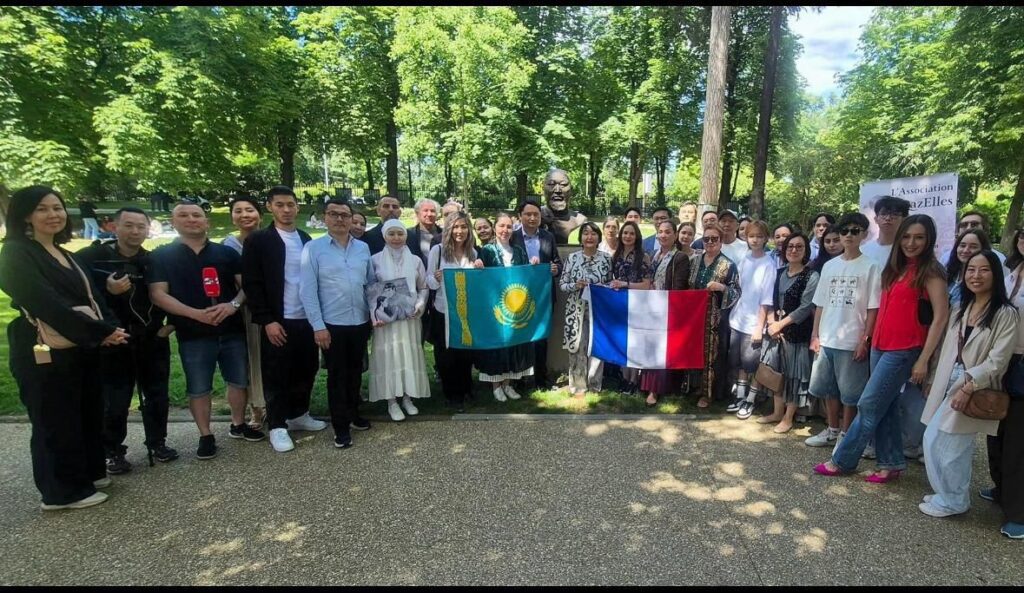
Since 2023, the Association of Kazakh Women in France — QazElles, a name blending "Kazakhstan" with the French word elles (meaning "women") — has gained international recognition for its impactful initiatives well beyond the borders of France. Today, QazElles unites 40 accomplished women living in cities across France, all of whom have personal or professional ties to Kazakhstan. Its diverse membership includes students from leading Parisian universities, engineers at prominent French companies, entrepreneurs, and professionals in the creative industries. The association was established a few years ago in cooperation with the Embassy of the Republic of Kazakhstan in France. “QazElles represents bright, strong, and accomplished daughters of their homeland who dedicate their free time to promoting Kazakh identity in France, building a supportive community of like-minded women," says Madina Kulmanova, president of QazElles, who has lived in France for over 20 years. "Many of us have no close family here in France. This association became our family." Despite its relatively recent founding, QazElles has already organized several high-profile cultural events, all carried out on a fully volunteer basis by Kazakh women living in Paris. In 2023, the group operated a chalet at La Défense, the largest Christmas market in the Paris region, for over a month. Showcasing Kazakh artisans, it quickly became a crowd favorite. Long queues formed for traditional manti (steamed dumplings filled with meat, pumpkin, and dough) and handmade felt slippers. For two consecutive years, a miniature Kazakh aul (village) has come to life during Nauryz (March 21–22) on Place des Ternes, just steps from the Arc de Triomphe. Much like in Kazakhstan, the celebration features a yurt, traditional games, folk music, and festive cuisine. This year, several thousand visitors, mostly local Parisians, many encountering Kazakh culture for the first time, explored the aul. Inside the yurt, guests experienced a guided audio tour written and narrated by Aliya Syzdykova. Outside, dancers from the Kazakh city of Shymkent performed in the square, while artisans sold out of tyubeteikas (traditional embroidered caps). Among the exhibitors was QazElles member Kamila Florenti, a jeweler who creates a distinctive line of delicate silver pieces inspired by Kazakh motifs. "We love this project because it brings people together. There was so much kindness, warmth, and friendship. I think we truly gave Parisians a little journey into a real Kazakh celebration,” shares Madina Kulmanova, her emotion clearly visible. QazElles quickly discovered that the way to a Parisian’s heart is through culinary exploration. One of the association’s most celebrated initiatives was a “four-hands” dinner featuring two renowned chefs: Artem Kantsev from Astana and Frédéric Simonin from Paris. The event was held at Simonin’s Michelin-starred restaurant, where the two chefs collaborated on a unique menu that blended the bold flavors of Kazakh cuisine with the finesse of French culinary tradition. Among the standout dishes was camel meat manti wrapped in coffee-infused dough, served with a sauce made from kurt (a salty, dried fermented dairy product popular in Central Asia) and French cheeses. The success of the event...