• KZT/USD = 0.00219
  • TJS/USD = 0.10820
  • UZS/USD = 0.00009
  • TMT/USD = 0.29760
  • KZT/USD = 0.00219
  • TJS/USD = 0.10820
  • UZS/USD = 0.00009
  • TMT/USD = 0.29760
  • KZT/USD = 0.00219
  • TJS/USD = 0.10820
  • UZS/USD = 0.00009
  • TMT/USD = 0.29760
  • KZT/USD = 0.00219
  • TJS/USD = 0.10820
  • UZS/USD = 0.00009
  • TMT/USD = 0.29760
  • KZT/USD = 0.00219
  • TJS/USD = 0.10820
  • UZS/USD = 0.00009
  • TMT/USD = 0.29760
  • KZT/USD = 0.00219
  • TJS/USD = 0.10820
  • UZS/USD = 0.00009
  • TMT/USD = 0.29760
  • KZT/USD = 0.00219
  • TJS/USD = 0.10820
  • UZS/USD = 0.00009
  • TMT/USD = 0.29760
  • KZT/USD = 0.00219
  • TJS/USD = 0.10820
  • UZS/USD = 0.00009
  • TMT/USD = 0.29760
09 September 2026

Viewing results 1 - 6 of 4

Almaty and Astana Set to Retain Central Asia’s Economic Lead

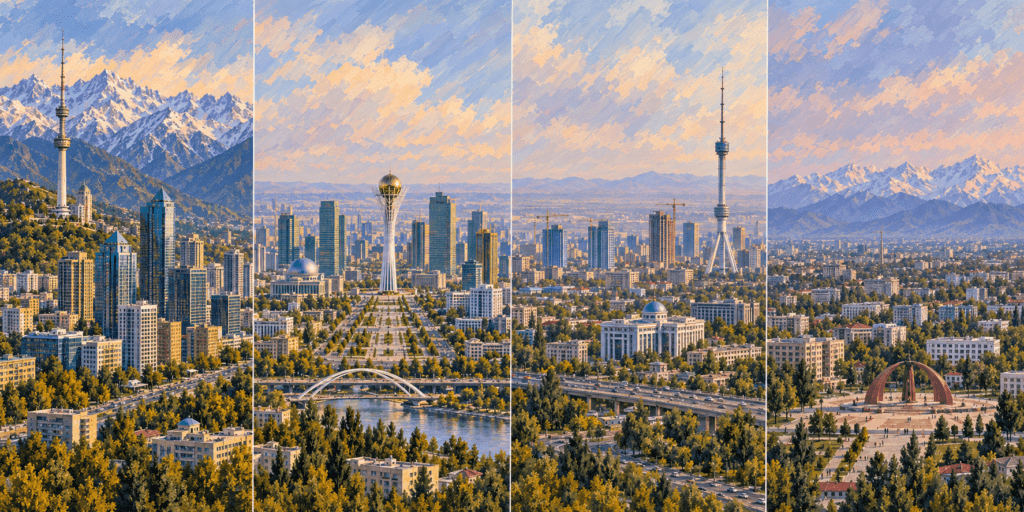
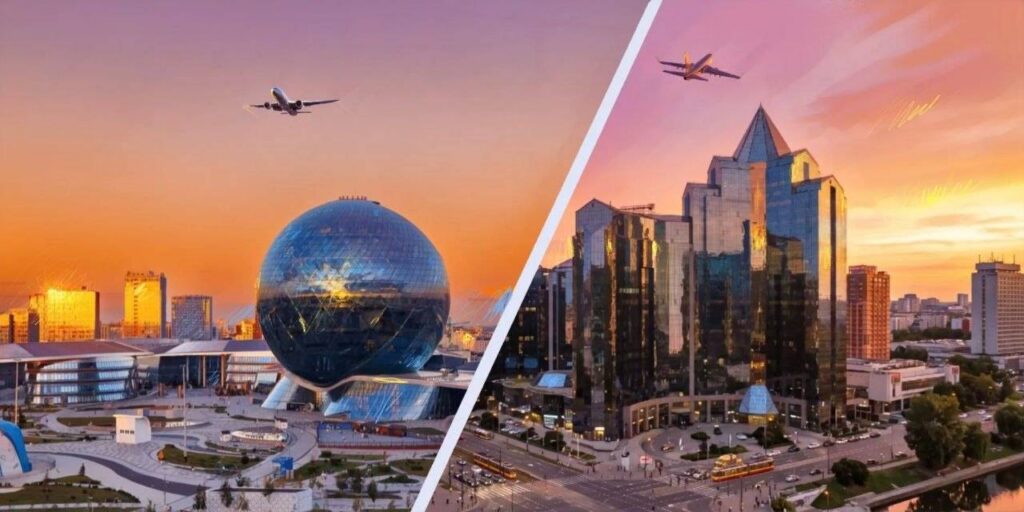
Almaty long combined Kazakhstan’s political and commercial functions and established itself as Central Asia’s leading business center. After Astana became Kazakhstan’s capital, the two cities developed increasingly complementary roles, with Almaty remaining the region’s largest business and financial hub while Astana accumulated political, institutional and corporate weight. Kazakhstan’s updated figures put Astana’s growth at about 10% and Almaty’s at about 5%. Together, the two cities generated roughly $107 billion in 2025. Together, they have become a two-city engine anchoring much of Central Asia’s commerce. Almaty and Astana benefit from an economic scale unmatched elsewhere in Central Asia. Kazakhstan alone accounts for more than half of the region’s GDP and roughly two-thirds of its inward FDI stock, according to TCA’s Central Asia Balance Sheet. That scale helps generate the fiscal resources needed to build and maintain the municipal infrastructure that supports business activity. Kazakhstan also has Central Asia’s most developed capital markets. The combination of the Kazakhstan Stock Exchange (KASE) in Almaty and the Astana International Financial Centre (AIFC) and Astana International Exchange (AIX) in Astana gives companies access to equity, debt, institutional investors and financial infrastructure at a scale no other market in the region currently matches. Kazakhstan is also the only Central Asian country with an investment-grade sovereign rating, lowering the country-risk premium and helping reduce financing costs for companies and projects relative to lower-rated regional markets. These advantages have been reinforced over decades. Almaty and Astana have long served as regional bases for major global companies, creating an established ecosystem of corporate management, finance, professional services and skilled labor. That track record, in turn, strengthens their ability to attract further investment and regional headquarters. Tashkent and Bishkek are also growing rapidly Then there is Tashkent. Uzbekistan’s political and commercial capital had an economy of about $29 billion in 2025, about 40% the size of Almaty’s and three-quarters that of Astana. Tashkent has also experienced rapid growth, with its economy growing by 11.3% in real terms in 2025, according to preliminary national figures. Tashkent benefits from Uzbekistan’s demographic scale. The country’s population is almost twice Kazakhstan’s, giving its capital access to a much larger domestic market and labor pool. But that scale also raises the need for sustained job creation and continued investment in housing and infrastructure. If productivity and investment fail to keep pace with population growth, the demographic advantage could increasingly act as a constraint rather than help Tashkent close the gap with Almaty and Astana. Almaty and Astana, meanwhile, generate substantially more economic output per resident. In 2025, Gross Regional Product (GRP) per capita was approximately $29,900 in Almaty and $23,700 in Astana, compared with about $9,300 in Tashkent, using reporting-year average exchange rates. These figures measure output per resident, not labor productivity, household income or living standards. Like Tashkent, Bishkek combines the roles of political capital and principal economic center. On the reporting years used here, however, its economy is only about 30% as large. Its economy grew by 15.8% in 2024, according to Kyrgyzstan’s...

A Little Bit of America at the World Nomad Games

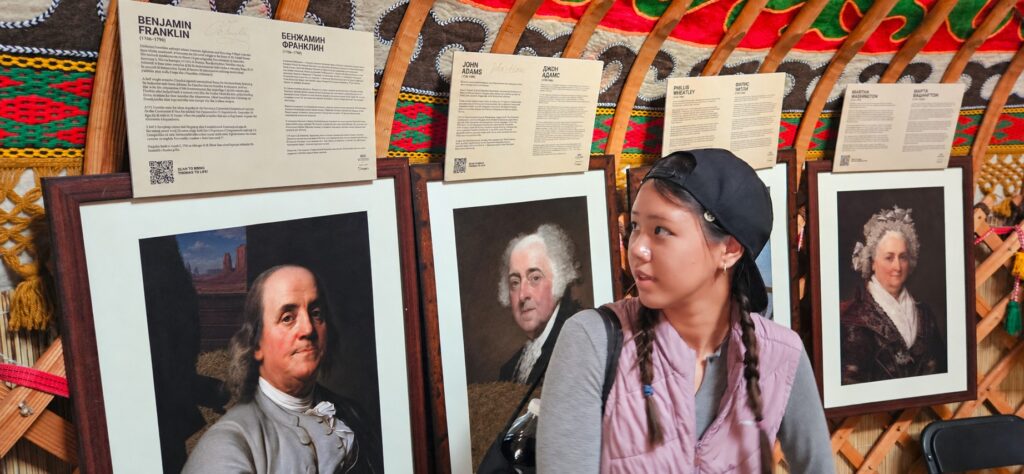
The “Universe of Nomads” ethno-town at the 6th World Nomad Games contains roughly 500 yurts spread across the mountain pasture at Kyrchyn, beneath the forested slopes of the Kungey Ala-Too Mountains. Among them, visitors may be surprised to come across the Stars and Stripes flying beside the Kyrgyz flag at the entrance to one particular yurt. Nearby, a cardboard cowboy with a hole where the face should be invites them to poke their heads through for a photograph. Inside, a Kyrgyz host in a cowboy hat welcomes visitors and introduces them to the Founding Fathers and, indeed, Mothers of the United States before inviting them to pose on a bale of hay beside a cutout of George Washington and a covered-wagon backdrop. The U.S., it turns out, is represented by two adjacent yurts, and Katarina Lage Ramos, a diplomat and spokesperson for the U.S. Embassy in Bishkek, is on hand to explain their purpose. The historical display marks 250 years since U.S. independence. Ramos is attending the World Nomad Games for the first time, although she said the embassy has taken part in previous editions held in the country. She explained that a Blackfeet drum in the yurt had been donated by the Montana National Guard and would later be presented to Kyrgyz military representatives following a joint disaster-preparedness exercise. The Montana National Guard and Kyrgyzstan have worked together since 1996 through the State Partnership Program, with joint training in disaster relief and border security. Next door, another yurt houses a small makerspace with a 3D printer brought from the American Center in Bishkek. Ramos said such spaces give young people practical experience with programming and digital design. Based at the Bayalinov Republican Youth and Children’s Library, the center “started out as a little corner,” Ramos said, and has since expanded onto the second floor. Its 160-square-meter Maker Space was upgraded in 2019 and offers free, hands-on technology programs. Alumni and exchange participants can also organize events there without charge. A U.S. State Department grant funded an elevator at the library in 2024, allowing people with disabilities to access the American Center and its programs independently. Outside the two yurts, Kyrgyz visitors, young and old, eagerly try cornhole and a mini, kid-sized lacrosse game. Cornhole is a simple DIY game in which players throw beanbags toward a hole cut into a wooden board. With roots in games played by Indigenous peoples of North America centuries before European contact, lacrosse is a convenient tie-in with the World Nomad Games. While interest in the Games grows among Western tourists, including those from the U.S., the embassy brings to Kyrchyn what Ramos called “a little bit of America.” For more from our World Nomad Games 2026 special coverage, click here.

Love Takes Center Stage at TEDxMarvila in Lisbon

Pátio da Galé, one of Lisbon’s most iconic public spaces, became a gathering place for ideas, art, and cultural exchange on Saturday as TEDxMarvila held its latest edition under the theme “What is Love.” Held in the heart of the Portuguese capital, the event drew an international audience for a full day of talks exploring love as emotion, language, identity, and shared human experience. Anel Imanbay, who is originally from Kazakhstan, founded and organized the event. She has built TEDxMarvila as a Lisbon-based platform that brings together people of different nationalities and creative backgrounds. This year’s edition extended beyond the stage, featuring an art exhibition titled “Love at First Sight,” which brought together artists from around the world. Among the participating artists was acclaimed Kazakhstani artist Eduard Kazaryan, who exhibited three works as part of the program. Kazakhstan was also represented diplomatically at the event. Jean Galiev, Kazakhstan’s ambassador to Portugal, attended as an honorary guest, adding to the gathering’s international character and its connections with the Kazakhstani community abroad. The event created an atmosphere of openness and exchange. Guiomar de Oliveira, one of the attendees, said the event showed how differently people can express the same universal emotion. “It was interesting to hear how different people translated love as emotion with words,” she said. “I met people from all over the world. Love is international, and I loved meeting all those translators of emotions.” Behind the scenes, organizers said the event reflected the work of a committed international team. Co-organizer Henrique Tiago del Castro praised Imanbay’s leadership in developing the event. “Anel Imanbay is the kind of professional who brings clarity, dedication, and a strong sense of purpose to every project she is part of,” he said. “For TEDxMarvila, her contribution reflects both confidence and thoughtful engagement, helping shape the conversation with relevance and depth.” With its blend of talks, international art, and cross-cultural participation, TEDxMarvila highlighted love as both a personal emotion and a language of connection across communities and borders.

A Breakout Year for Contemporary Art in Kazakhstan

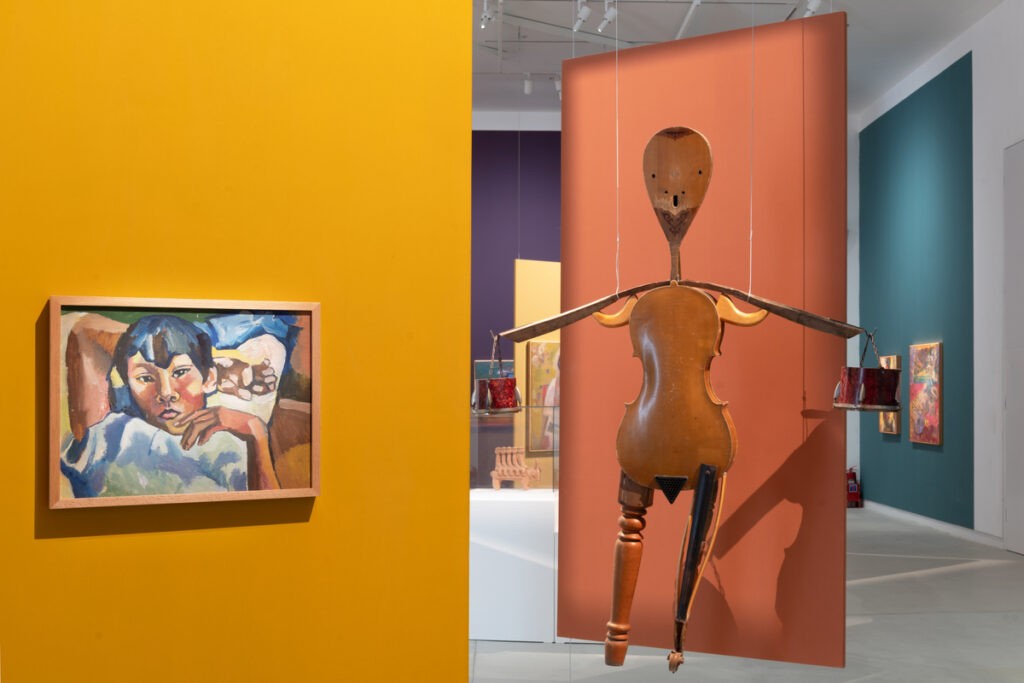
The year 2025 marked not only a busy period for contemporary art in Kazakhstan but also a decisive acceleration. Art moved beyond professional circles, claimed urban spaces, entered international agendas, and ceased to be a conversation “for insiders only.” The Kazakhstani art scene spoke with growing confidence both at home and abroad. New institutions, landmark exhibitions, festivals, and global collaborations signaled a pivotal shift: contemporary art has become a visible and integral component of the country’s cultural fabric. New Museums and Art Spaces in Kazakhstan Geographically, Almaty emerged as the epicenter of contemporary art activity in 2025. The city saw the opening of key institutions that became new focal points for artists, curators, and audiences. Opening of the Almaty Museum of Arts (ALMA) On September 12, 2025, the Almaty Museum of Arts (ALMA) opened its doors in Almaty, becoming one of the largest contemporary art museums in Central Asia. From the outset, ALMA signaled serious institutional ambitions, with a mission to support and study contemporary art processes and situate them within a global cultural context. The museum’s collection includes around 700 works, more than 70% of which are by notable Kazakhstani artists of the 20th century, such as Zhanatai Shardenov, Tokbolat Togyzbayev, Makym Kisameddinov, and Shaimardan Sariyev. Contemporary artists like Rustem Khalfin, Saule Suleimenova, and Said Atabekov are also prominently featured. Designed by the British architectural bureau Chapman Taylor, the 10,000-square-meter museum includes expansive exhibition halls (“The Great Steppe,” “Saryarka”), an Art Street atrium, storage and restoration facilities, and a creative workshop, setting a new standard for museum infrastructure in the region. [caption id="attachment_42431" align="aligncenter" width="1200"] Installation view of "I Understand Everything" – Almagul Menlibayeva (12 September 2025 - May 2026), Almaty Museum of Arts; image: Alexey Naroditsky[/caption] Tselinny Center of Contemporary Culture: Reclaiming a Building and Its Meaning Just days earlier, on September 5, 2025, the Tselinny Center of Contemporary Culture was inaugurated in Almaty. Housed in a restored 1964 Soviet-era cinema, the building underwent nearly seven years of renovation led by British architect Asif Khan. Notably, the facade’s unique sgraffito by artist Evgeny Sidorkin was preserved. The transformed space now features an exhibition hall, library, cafe, and workshop areas. Its opening was marked by the performance BARSAKELMES, with initial public access free of charge. Tselinny now operates three days a week and serves as a vital platform for exhibitions, education, and creative dialogue. [caption id="attachment_42433" align="aligncenter" width="2400"] The Tselinny Center of Contemporary Culture; image: SAPARLAS/Zhanarbek Amankulov[/caption] A. Kasteev State Museum of Arts: A New Status and Contemporary Focus Kazakhstan’s primary national art institution also redefined its role in 2025. Celebrating its 90th anniversary, the A. Kasteev State Museum of Arts was granted National Museum status. In conjunction with this milestone, a new gallery dedicated to contemporary Kazakhstani art from the independence period was unveiled. The exhibition Memory. Space. Progress brought together works from leading artists, charting the development of artistic practice from the 1990s to the present. Contributors included members of the Shymkent-based Red Tractor group, Almaty conceptualists,...