
• KGS/USD = 0.01144 0%
  • KZT/USD = 0.00191 0%
  • TJS/USD = 0.10850 0%
  • UZS/USD = 0.00008 0%
  • TMT/USD = 0.28490 0%
  • KGS/USD = 0.01144 0%
  • KZT/USD = 0.00191 0%
  • TJS/USD = 0.10850 0%
  • UZS/USD = 0.00008 0%
  • TMT/USD = 0.28490 0%
  • KGS/USD = 0.01144 0%
  • KZT/USD = 0.00191 0%
  • TJS/USD = 0.10850 0%
  • UZS/USD = 0.00008 0%
  • TMT/USD = 0.28490 0%
  • KGS/USD = 0.01144 0%
  • KZT/USD = 0.00191 0%
  • TJS/USD = 0.10850 0%
  • UZS/USD = 0.00008 0%
  • TMT/USD = 0.28490 0%
  • KGS/USD = 0.01144 0%
  • KZT/USD = 0.00191 0%
  • TJS/USD = 0.10850 0%
  • UZS/USD = 0.00008 0%
  • TMT/USD = 0.28490 0%
  • KGS/USD = 0.01144 0%
  • KZT/USD = 0.00191 0%
  • TJS/USD = 0.10850 0%
  • UZS/USD = 0.00008 0%
  • TMT/USD = 0.28490 0%
  • KGS/USD = 0.01144 0%
  • KZT/USD = 0.00191 0%
  • TJS/USD = 0.10850 0%
  • UZS/USD = 0.00008 0%
  • TMT/USD = 0.28490 0%
  • KGS/USD = 0.01144 0%
  • KZT/USD = 0.00191 0%
  • TJS/USD = 0.10850 0%
  • UZS/USD = 0.00008 0%
  • TMT/USD = 0.28490 0%
10 November 2025

Viewing results 1 - 6 of 2

Kyrgyz Energy Ministry Rejects Concerns About Seismic Safety of Future Kambarata-1 HPP

The Kyrgyz Ministry of Energy has dismissed concerns raised by leading seismologists about the seismic safety of the planned Kambarata-1 Hydropower Plant (HPP), a flagship regional energy project jointly backed by Kyrgyzstan, Kazakhstan, and Uzbekistan. Speaking at a parliamentary committee meeting on September 9, Kanatbek Abdrakhmatov, President of Kyrgyzstan’s National Academy of Sciences and Director of the Institute of Seismology, warned that the future dam may be vulnerable to strong earthquakes due to its proposed location. Seismic Warnings from Scientists “The dam is planned in a dangerous area, surrounded by mountains,” Abdrakhmatov said. “It may not withstand a powerful earthquake.” He stressed that preliminary seismic micro-zoning studies had not been conducted and said his institute had written twice to the Ministry of Energy requesting such research, but received no response. He warned that the destruction of Kambarata-1 in the event of a major earthquake could trigger cascading failures downstream, including at the existing Kambarata-2 HPP and other facilities. Ministry and International Experts Respond In a formal statement issued on September 10, the Ministry of Energy rejected the criticism and pointed to a recent review conducted by Swiss engineering consultancy AFRY, which is responsible for updating the feasibility study for the project. According to the ministry, AFRY commissioned a team of international experts, including renowned dam safety specialists Dr. Martin Wieland and Dr. Stefan Ehlers, to carry out a comprehensive seismic analysis of the proposed site. The assessment used geological, tectonic, and seismic data, as well as satellite imagery and historical earthquake records. The experts recommended constructing a curved gravity dam, which they said would improve both the structural stability and hydraulic performance of the plant. AFRY concluded that the dam would withstand projected seismic loads and stated that “its overall behavior in terms of load-bearing capacity is safe.” Ongoing Safety Measures The ministry also stated that further detailed safety studies are planned. These include the creation of a seismic micro-zoning map and the installation of three to five seismic monitoring stations at strategic points: along the dam’s axis, on both riverbanks, at the crest level, and upstream from the site. The Kambarata-1 HPP is expected to become the largest hydropower facility in Kyrgyzstan. With a projected capacity of 1,860 megawatts and average annual generation of 5.6 billion kilowatt-hours, the $4 billion project is seen as a critical step in alleviating chronic electricity shortages in the country. Construction Preparations Underway The Ministry of Energy has reported steady progress in preparatory works. Infrastructure projects currently underway include the construction of access roads, power transmission lines, a substation, a bridge across the Naryn River, and a shift camp for construction workers.  
Ecologists Warn Central Asian Dams May Threaten UNESCO Heritage Site

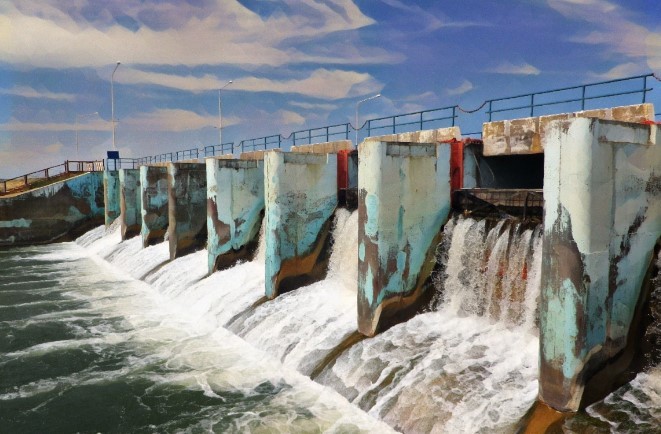
A coalition of international environmentalists is sounding the alarm over the impact of large-scale dam construction in Central Asia, warning that it could cause irreversible harm to the Western Tien Shan, a UNESCO World Heritage Site jointly shared by Kazakhstan, Kyrgyzstan, and Uzbekistan. Dam Projects Multiply Across Region According to a recent report by the coalition Rivers Without Boundaries, dozens of new hydropower projects are either in development or under construction across the region. The group says this wave of dam-building poses a significant threat to the unique ecosystems and biodiversity of the Western Tien Shan, which was inscribed on the UNESCO World Heritage List in 2016 due to its exceptional natural value. The report identifies more than five dams already constructed in recent years, with an additional 15 to 40 projects currently in the pipeline. These developments are affecting key river systems, including the Chatkal, Ugam, Pskem, and Aksu, which play a vital role in sustaining the region’s delicate ecological balance. Protected Areas Under Pressure Some of the most contentious projects are unfolding inside or near designated conservation zones. In Kyrgyzstan, a dam is planned within the Besh-Aral Nature Reserve, while gold mining activities have already degraded parts of the Chatkal River valley. In Kazakhstan, officials are considering a series of dams in Sayram-Ugam National Park. Uzbekistan is also pressing ahead with new hydropower schemes, including one on the Pskem River, drawing criticism from environmental advocates. “Short-term economic goals are being prioritized over the long-term need to protect this globally important natural area,” said Eugene Simonov, international coordinator of Rivers Without Boundaries. He urged UNESCO and the broader international community to intervene before further damage is done. Threats to Rare Species and Ecosystems Environmentalists argue that dam construction is fragmenting river systems and isolating animal habitats, particularly those of rare and endemic species. The snow leopard and several native fish species are among the wildlife at risk. Floodplain forests and wild fruit tree habitats, critical components of the area’s biodiversity, are also under threat. Alexander Kolotov, regional director of Rivers Without Boundaries, highlighted the dangers of building dams within protected national parks. “We are not properly measuring the impact on fish and river ecosystems,” he said. “If this continues, we could lose many species forever.” Legal and Diplomatic Concerns The group further contends that several dam projects may be violating international agreements, including the World Heritage Convention and the Espoo and Aarhus Conventions. These treaties require environmental impact assessments, public consultation, and cross-border cooperation, all of which may be lacking or inadequately implemented. Rivers Without Boundaries has formally petitioned UNESCO to add the Western Tien Shan to its List of World Heritage in Danger. The proposal is expected to be reviewed at the UNESCO World Heritage Committee session scheduled for July 2025. Previously, Evgeny Vinokurov, Vice-Chairman and Chief Economist of the Eurasian Development Bank, issued a stark warning about Central Asia’s looming water and energy crisis, noting that regional development must be carefully balanced with environmental protection.
