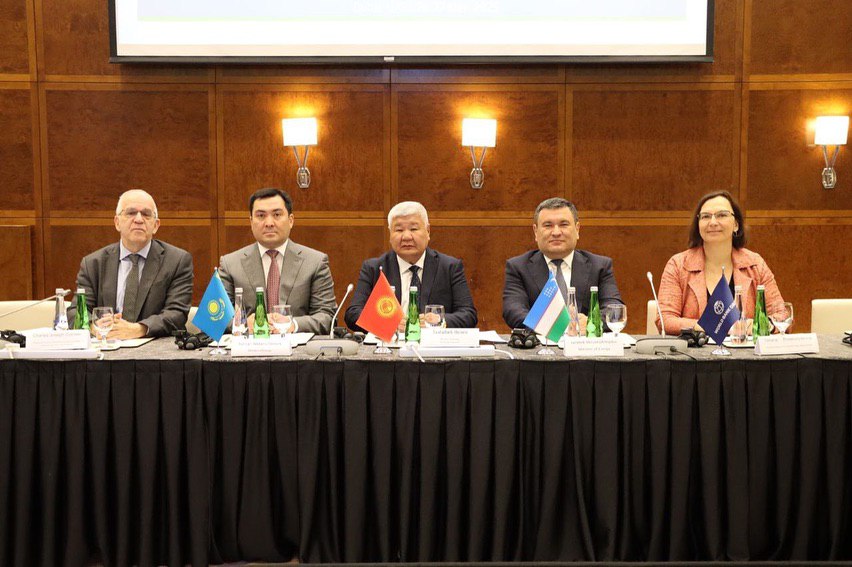
Experts Call for Seismic Study Ahead of Kambarata-1 Hydropower Construction
At a recent parliamentary session, Kanatbek Abdrakhmatov, director of the Institute of Seismology and president of Kyrgyzstan’s National Academy of Sciences, warned that seismic microzonation has not been conducted at the site of the planned Kambarata-1 hydropower plant (HPP), a critical prerequisite for infrastructure projects of this magnitude. Located in western Kyrgyzstan, the Kambarata-1 HPP is a joint venture between Kyrgyzstan, Uzbekistan, and Kazakhstan, with financial support from the World Bank. The facility is expected to have a capacity of 1,860 MW, with a reservoir volume of 4.5 billion cubic meters. The dam is projected to stand 256 meters tall and house four turbines capable of generating over 5.5 billion kWh annually. The total estimated cost of the project is $5-6 billion. The statement has raised alarms over the country’s most ambitious hydroelectric initiative since independence. Abdrakhmatov said scientists had twice appealed to the Ministry of Energy requesting the study, but received no response. He cautioned that the ministry is underestimating the potential seismic risks. “We are about to launch the Kambarata-1 project. It is crucial to understand that seismic microzonation must be carried out before projects of this magnitude begin. Unfortunately, this has not been done,” Abdrakhmatov said. “This raises serious concerns, because if an earthquake occurs, the dam could collapse, which in turn could destroy Kambarata-2 and other hydropower plants downstream on the Naryn River.” He further noted that the dam is planned between two mountain ridges, one significantly higher than the other. Since seismic waves interact differently with varying topographies, a powerful earthquake could cause destabilization and structural damage. Conducting a microzonation study would help mitigate such risks. The Ministry of Energy has dismissed the concerns raised by domestic seismologists, maintaining that the design of the curved gravity dam is safe. According to the ministry, AFRY Switzerland Ltd, the company preparing the project’s feasibility study, engaged international experts to assess the seismic profile of the region. The ministry stated that the expert team conducted an analysis of seismic sources, earthquake history, and regional tectonics using data from the National Institute of Seismology and the Central Asian earthquake catalog. Based on their findings, a curved gravity dam design was proposed to enhance both hydraulic performance and structural resilience. “Following comprehensive studies and numerous expert-level discussions, a seismic hazard assessment of the construction area was provided. The curved gravity dam design proposed for Kambarata-1 is expected to improve both efficiency and resilience,” the ministry reported. Nevertheless, the ministry added that it remains open to further in-depth seismic studies and may still conduct a microzonation survey as recommended by local scientists. “To date, enormous preparatory work has been carried out for Kambarata-1. We are moving toward the start of major construction. However, speculation by some of our seismology experts, who are unfamiliar with the latest reports, is deeply regrettable, it is nothing but slander and sabotage,” the ministry added in a strongly worded statement.