• KZT/USD = 0.00211
  • TJS/USD = 0.10810
  • UZS/USD = 0.00008
  • TMT/USD = 0.29850
  • KZT/USD = 0.00211
  • TJS/USD = 0.10810
  • UZS/USD = 0.00008
  • TMT/USD = 0.29850
  • KZT/USD = 0.00211
  • TJS/USD = 0.10810
  • UZS/USD = 0.00008
  • TMT/USD = 0.29850
  • KZT/USD = 0.00211
  • TJS/USD = 0.10810
  • UZS/USD = 0.00008
  • TMT/USD = 0.29850
  • KZT/USD = 0.00211
  • TJS/USD = 0.10810
  • UZS/USD = 0.00008
  • TMT/USD = 0.29850
  • KZT/USD = 0.00211
  • TJS/USD = 0.10810
  • UZS/USD = 0.00008
  • TMT/USD = 0.29850
  • KZT/USD = 0.00211
  • TJS/USD = 0.10810
  • UZS/USD = 0.00008
  • TMT/USD = 0.29850
  • KZT/USD = 0.00211
  • TJS/USD = 0.10810
  • UZS/USD = 0.00008
  • TMT/USD = 0.29850
04 August 2026

Viewing results 1 - 6 of 3

Tokayev Offers Astana to Host New Global AI Body’s First Meeting

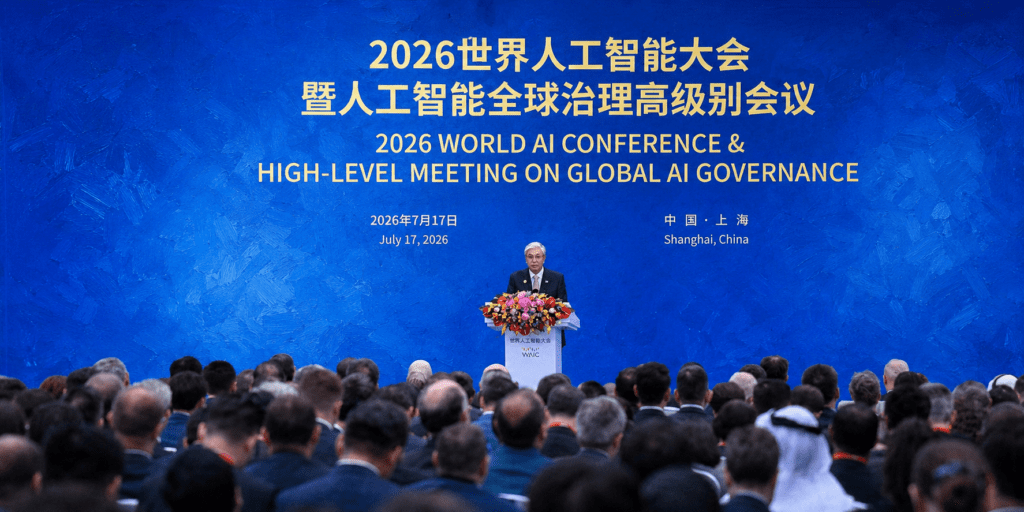
President Kassym-Jomart Tokayev put Astana forward at the opening of the World Artificial Intelligence Conference in Shanghai on July 17, saying that Kazakhstan is ready to host the first meeting of a new global AI organization. He also proposed placing the organization’s Central Asian office in Kazakhstan. Together, the offers set out Tokayev’s wider aim: Kazakhstan wants a role in writing AI rules as well as building the technology at home. Twenty-nine countries signed the agreement establishing the World AI Cooperation Organization on July 16. The founding states included Kazakhstan, Kyrgyzstan, Tajikistan and Uzbekistan, while Turkmenistan did not sign. China first proposed the Shanghai-based intergovernmental body at last year’s conference. Tokayev called the creation of the organization a historic decision and said it could underpin a universal framework for AI governance. “No country should remain merely a consumer of AI,” he said. “Every state must have the opportunity to develop its own human capital, digital infrastructure, and institutional capacity. Here too, the issue is fairness and integrity.” Tokayev also endorsed the conference’s guiding principle, “AI for good, AI for all,” arguing that technological progress should benefit people broadly rather than deepen inequalities within and between countries. His offer to host the new organization’s first meeting in Astana and to establish its Central Asian office in Kazakhstan were aimed at giving the country a role in shaping that agenda. [caption id="attachment_52389" align="aligncenter" width="2560"] Image: Akorda[/caption] Astana Bids for a Role in the New AI Body Tokayev’s proposals went beyond hosting a ceremonial gathering. He called for a permanent expert platform on AI regulation, standards and ethics. He also proposed an international network of schools, centers of excellence and academic partnerships. The Kazakh president urged members to develop common standards for testing and certifying AI systems. He said safeguards should address malicious uses, including cyberthreats, deepfakes and digital fraud. AI should remain under human control, he said. Tokayev placed those proposals within his wider diplomatic agenda. He argued that AI could help spot crises earlier and improve humanitarian work and peacekeeping. He said governments spend too much effort dealing with conflicts after they begin and too little preventing them. The new organization adds another layer to Kazakhstan’s technology policy. Citing a person familiar with the U.S. position, Reuters reported that Kazakhstan is the only country listed in both the 29-member body and Washington’s AI Opportunity Statement. Kazakhstan had already joined the U.S.-backed Pax Silica framework on June 25, which covers chips, critical minerals, energy and secure AI supply chains. That overlap carries Kazakhstan’s long-standing multi-vector diplomacy into AI policy. Astana is deepening ties with China while expanding ties to U.S.-linked technology and supply chains. Tokayev’s speech showed that Kazakhstan also wants a voice in the institutions shaping global AI rules. A Digital Bridge With China In Shanghai, Tokayev also proposed a “Kazakhstan-China Digital Bridge.” He said the project should promote digital trade and provide a working model for connecting digital economies through the Belt and Road Initiative. He asked China to support...

Kazakhstan and China Sign Deals Worth Over $15 Billion During Tokayev’s Shanghai Visit

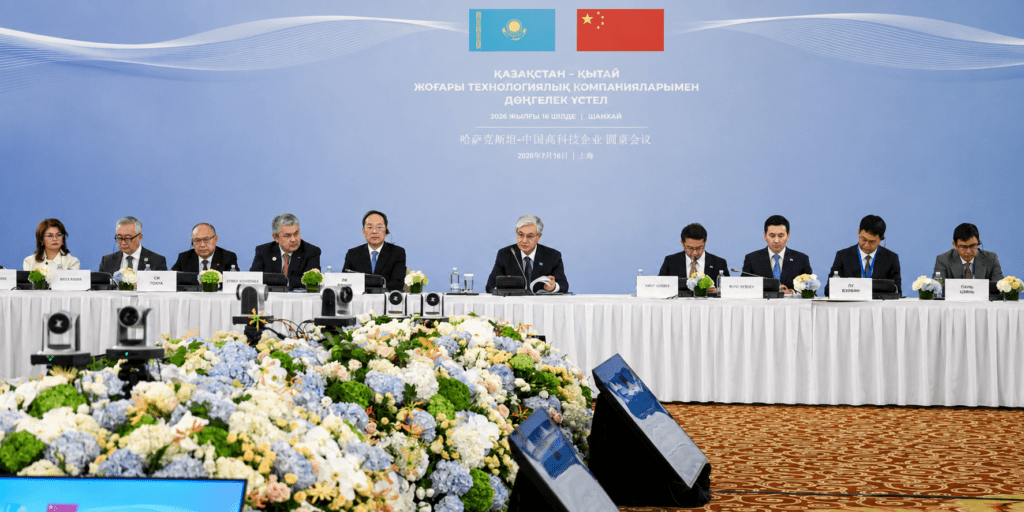
Kazakhstan and China signed more than 70 commercial agreements worth over $15 billion during President Kassym-Jomart Tokayev’s working visit to Shanghai on July 16. The package covers artificial intelligence, digital infrastructure, transport, finance, agriculture, vehicle production, and other high-technology industries. The documents were exchanged after a roundtable with Chinese executives. Akorda did not publish a full project-by-project valuation, and the package includes both agreements and memoranda. The headline figure represents the announced value of the documents rather than money already invested or spent. AI and Industrial Projects Among the main documents was a strategic partnership agreement between Kazakhstan’s Ministry of Artificial Intelligence and Digital Development and Huawei Technologies. The Samruk-Kazyna sovereign wealth fund signed a separate agreement to acquire Huawei technology and equipment. Samruk-Kazyna, Freedom Holding, the Astana city administration, and Geely Auto Group also signed a memorandum on electric-vehicle infrastructure and the use of artificial intelligence in Kazakhstan’s automotive industry. Kazakhtelecom and China’s HV & Submarine Hengtong Group agreed on the basic principles for developing the Data Center Valley project in Ekibastuz. The planned one-gigawatt cluster is intended to combine data centers, cloud services, supercomputing facilities, AI laboratories, research institutions, training programs, and technology startups. Further agreements covered robotics and research. Qazbot Technologies signed a strategic cooperation agreement with Agibot PTE, while the Almaty city administration, NERO Group, and UBTECH Robotics agreed to develop artificial intelligence and robotics in the city. Qazaq AI Research University and the Shanghai Innovation Institute signed a cooperation memorandum. The industrial package includes an agreement between Allur Group and Li Auto to produce Li Auto vehicles in Kazakhstan. Astana Group and Chery Holding signed a technology licensing agreement for OMODA and JAECOO production at the Astana Motors Manufacturing Kazakhstan plant. Qarmet, the Development Bank of Kazakhstan, and a Chinese engineering company also agreed to cooperate on new coke oven batteries and a gas purification system. Transport and Logistics An investment agreement was signed for the first phase of a multifunctional terminal at the Port of Kuryk. Another document covers cooperation on two logistics parks at Khorgos-Eastern Gate, while Kazakhstan’s Ministry of Industry and Construction and NUCTECH agreed to work on inspection systems at border checkpoints and expand local production. Tokayev said around 85% of rail freight between China and Europe passes through Kazakhstan and that the country has invested more than $35 billion in transport and logistics infrastructure over the past 15 years. He also promoted the Smart Cargo platform, which is designed to combine customs, logistics, and commercial services in one digital system. The president also invited Chinese companies to invest in the extraction and deeper processing of critical minerals, agricultural technology, and the development of Alatau City. The government wants the new city to become a regional center for digital finance, asset tokenization, artificial intelligence, and advanced telecommunications. Tokayev said bilateral trade reached a record $49 billion in 2025, cumulative Chinese investment in Kazakhstan exceeded $30 billion, and more than 8,500 companies with Chinese participation operate in the country. Existing joint projects...

Kazakhstan Says $10 Billion AI Data Center Project Is Moving Into Deployment

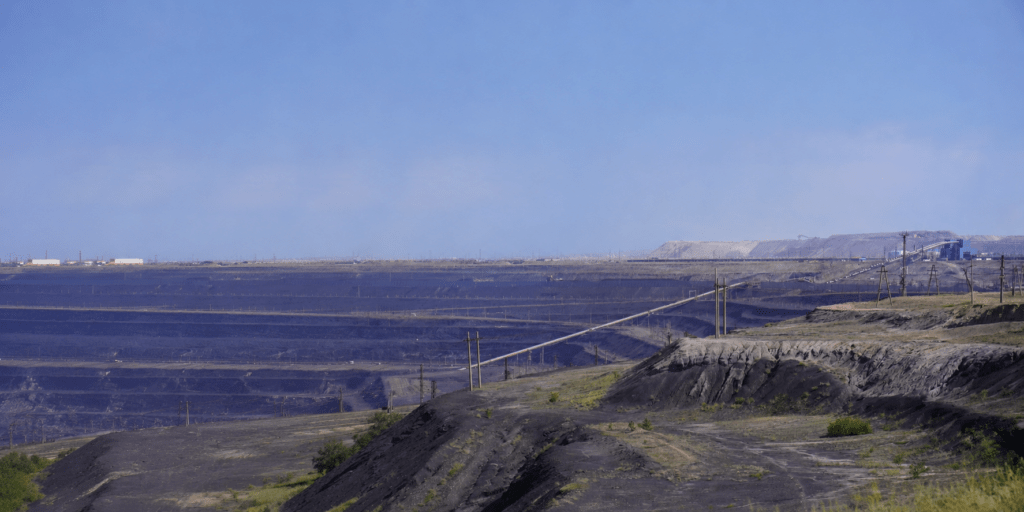
Kazakhstan says a $10 billion AI data center project in Ekibastuz is moving into deployment. Prime Minister Olzhas Bektenov told President Kassym-Jomart Tokayev on July 13 that partners were rolling out 250 megawatts of infrastructure. He said the project had attracted more than $10 billion in foreign investment. The statement gives firmer shape to a plan announced only six months ago. The northern-eastern Kazakh city of Ekibastuz grew around coal mines and giant power stations, but after the collapse of the Soviet Union, jobs disappeared, leaving the city to live in the shadow of its industrial peak. It has shared the wider population decline across the country’s north and east: despite fresh investment, the city lost more than 1,000 residents during 2025. The government now wants the city to export computing power as well as electricity, using its industrial grid to draw global AI companies to northern Kazakhstan. The site has moved beyond planning documents. By May 25, crews had completed geodetic work and started engineering and geological surveys. Workers were excavating pits for modular blocks, while equipment and personnel had reached the site. Tokayev announced the Data Center Valley in January as part of Kazakhstan's wider digital drive. The first 125 MW center is due in the first half of 2027, with a second facility of the same size planned for 2028. Bektenov has said all government data now sits in a 6 MW center in Astana, which shows the jump in scale. Those first two centers are only the beginning of a much larger development. Pavlodar officials have allocated 177 hectares, including 124.4 hectares for the opening phase. They expect later centers to enter service between 2029 and 2033, with up to ten facilities across the completed cluster. The site could eventually reach 1 GW, while an earlier government estimate put total investment near $30 billion. The first center will draw power from an existing 215 MW substation. Across the wider development, officials say 300 MW is already available, with capacity eventually rising to 1 GW. The Satpayev Canal will supply water for staff and site operations, with daily use estimated at 2,300 cubic meters. Separate reserves will be kept for fire protection. NVIDIA Vice President Rev Lebaredian put the case plainly in June: “Everything begins with energy. If you do not have energy, you cannot build the rest.” He added that Kazakhstan had energy “in abundance.” In Ekibastuz, cold that once made industrial life harder is being recast as a commercial advantage. The harsh winters can help cool server halls that produce vast amounts of heat. The planned Trans-Caspian fiber cable would then link the city’s abundant power to a faster international data route. That promise is still built on coal. Thermal plants generated 74.4% of Kazakhstan’s electricity in 2025, with the country still importing nearly 1.5 billion kilowatt-hours from Russia to cover the shortfall. A 250 MW data-center complex running day and night would consume about 2.19 billion kilowatt-hours a year, roughly 1.8% of Kazakhstan’s total...