• KGS/USD = 0.01144 0%
  • KZT/USD = 0.00202 0%
  • TJS/USD = 0.10685 0%
  • UZS/USD = 0.00008 0%
  • TMT/USD = 0.28571 0%
  • KGS/USD = 0.01144 0%
  • KZT/USD = 0.00202 0%
  • TJS/USD = 0.10685 0%
  • UZS/USD = 0.00008 0%
  • TMT/USD = 0.28571 0%
  • KGS/USD = 0.01144 0%
  • KZT/USD = 0.00202 0%
  • TJS/USD = 0.10685 0%
  • UZS/USD = 0.00008 0%
  • TMT/USD = 0.28571 0%
  • KGS/USD = 0.01144 0%
  • KZT/USD = 0.00202 0%
  • TJS/USD = 0.10685 0%
  • UZS/USD = 0.00008 0%
  • TMT/USD = 0.28571 0%
  • KGS/USD = 0.01144 0%
  • KZT/USD = 0.00202 0%
  • TJS/USD = 0.10685 0%
  • UZS/USD = 0.00008 0%
  • TMT/USD = 0.28571 0%
  • KGS/USD = 0.01144 0%
  • KZT/USD = 0.00202 0%
  • TJS/USD = 0.10685 0%
  • UZS/USD = 0.00008 0%
  • TMT/USD = 0.28571 0%
  • KGS/USD = 0.01144 0%
  • KZT/USD = 0.00202 0%
  • TJS/USD = 0.10685 0%
  • UZS/USD = 0.00008 0%
  • TMT/USD = 0.28571 0%
  • KGS/USD = 0.01144 0%
  • KZT/USD = 0.00202 0%
  • TJS/USD = 0.10685 0%
  • UZS/USD = 0.00008 0%
  • TMT/USD = 0.28571 0%
10 February 2026

Viewing results 1 - 6 of 20

Mandatory Participation in Elections Proposed in Kyrgyzstan

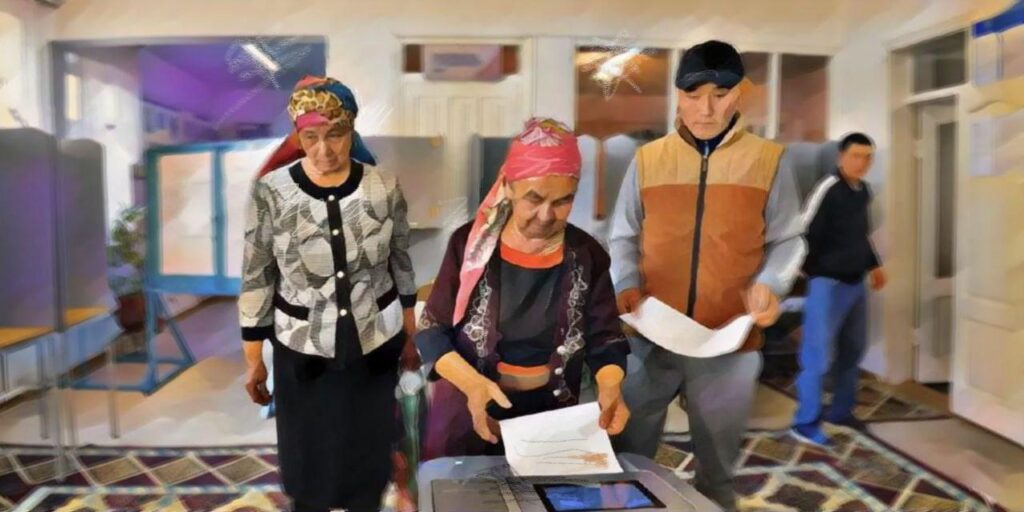
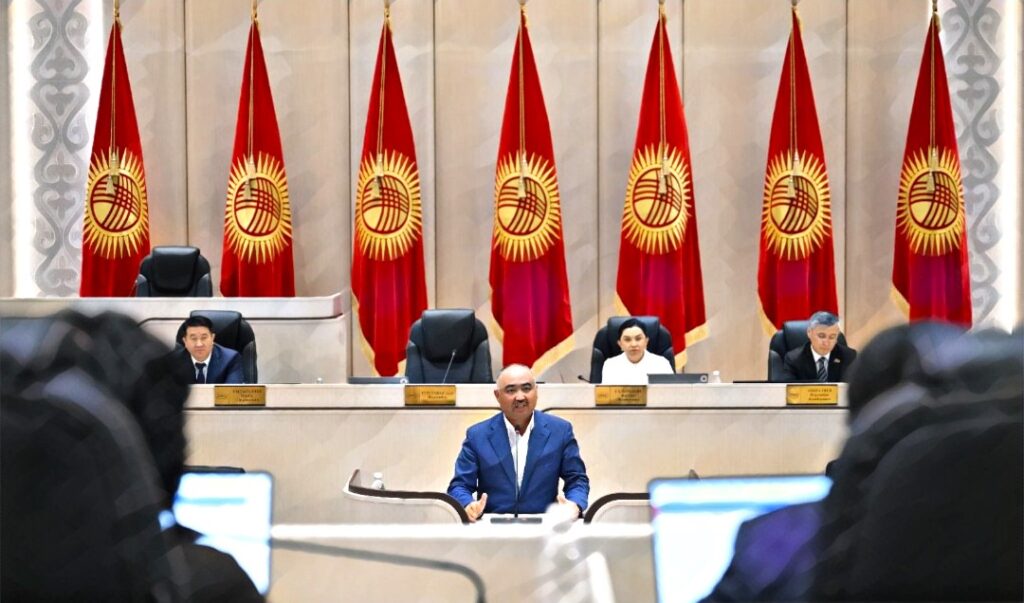
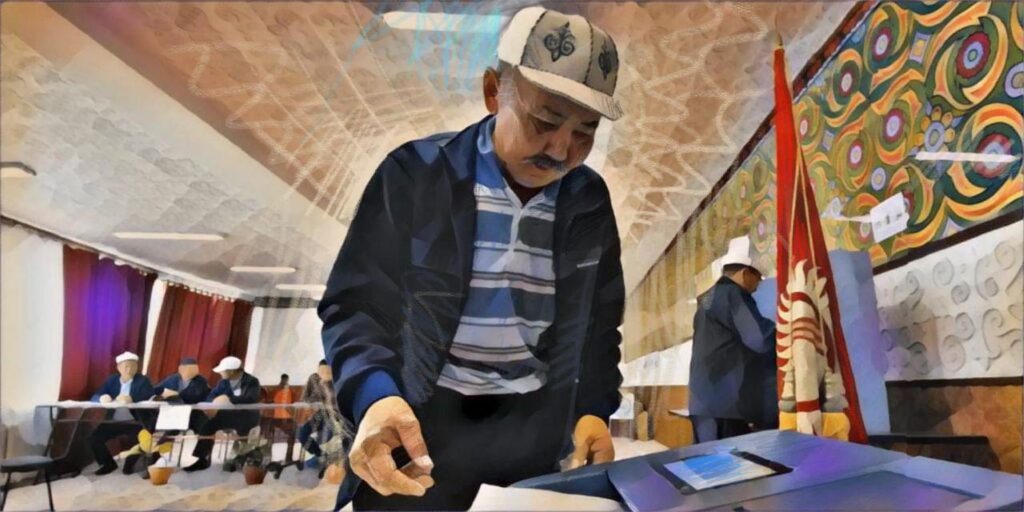
On January 13, Marlen Mamataliev, a member of Kyrgyzstan's parliament, the Jogorku Kenesh, introduced a bill proposing mandatory participation in elections and referendums, along with penalties for non-participation and incentives to encourage voting. The draft legislation has been submitted for public discussion. According to the bill, all Kyrgyz citizens registered as eligible voters would be required to participate in elections. However, the proposal affirms that freedom of political expression remains protected: voters would retain the right to support any candidate or to vote “against all”, as currently allowed on the ballot. The bill outlines several exemptions. Citizens over 70 years old, those legally deemed incapacitated, individuals outside Kyrgyzstan on election day, and voters who fail to appear due to valid reasons, such as illness, natural disasters, military service, or other emergencies, would not be penalized. Proposed penalties for non-participation without a valid excuse include: A written warning for the first offense; An administrative fine for repeat violations; A temporary ban of up to five years on running for elected office or holding public service positions for systematic evasion (defined as three or more violations). The bill also proposes incentives to boost voter engagement, including discounts on state and municipal services, and awarding additional points for candidates seeking public sector employment. Notably, the legislation includes a provision for issuing a lottery ticket along with each ballot, with the Central Commission for Elections and Referendums tasked with organizing state-sponsored lotteries and prize drawings during election periods. The bill’s explanatory note highlights declining voter turnout as one of the most serious challenges facing Kyrgyzstan’s electoral system. Turnout statistics illustrate a steady drop over the past 15 years. In the 2011 presidential election, participation was 61.28%; it fell to 56.11% in 2017, and to 39.16% in 2021. Parliamentary election turnout followed a similar trend: 59.19% in 2010, 39.78% in 2015, 54.38% in the contested 2020 vote, 34.61% in 2021, and just 36.9% in the most recent parliamentary elections held on November 30, 2025. The bill’s authors point to international examples of compulsory voting, in countries such as Belgium, Australia, Turkey, Singapore, and several Latin American nations, where turnout regularly exceeds 80-90%. This initiative follows concerns voiced by President Sadyr Japarov about low voter participation in the 2025 parliamentary elections. The president addressed the issue at the fourth People’s Kurultai (National Assembly), a national forum for direct dialogue between citizens and the state, held in Bishkek in December 2025, one month after the election.
Opinion: Kazakhstan’s Electoral Reforms – Why Officials and Experts Are Reconsidering Local Democracy

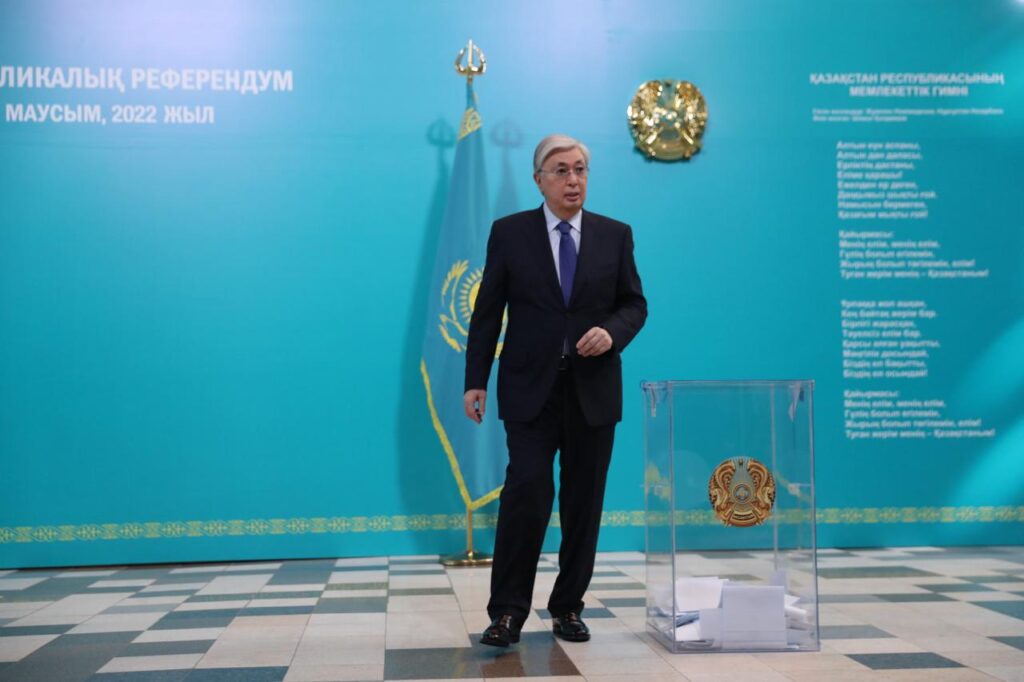
The metaphor that history moves in a spiral has resurfaced in Kazakhstan, where ongoing debates over electoral reform and information policy are testing the boundaries of the country’s democratic trajectory. Recent official messaging points toward a more managed model of political participation, framed as a necessary response to emerging challenges. This trajectory was articulated by State Councilor Erlan Karin in his article, "The Politics of Common Sense," published in the state-run Kazakhstanskaya Pravda. In the piece, Karin reflects on the formation of public values in Kazakhstan, portraying it as an evolutionary process. Simultaneously, Karin references government-led social programs, such as “Law and Order,” “Clean Kazakhstan,” and “Adal Azamat” - a program focused on building character, promoting civic responsibility, and fostering national unity - as instruments of state-directed civic education. Karin reiterates his previously stated position on the existence of “red lines” in public discourse, sensitive subjects such as interethnic relations, religion, language, and foreign policy. While insisting that these topics should not be off-limits, he calls for “common sense” in how they are discussed. “When it comes to public stability, the state will not compromise,” he asserts, adding that the government will lawfully oppose any attempts at “destructive information influence and incitement to hatred.” Karin also highlights what he describes as a new category of problematic actors: "This spring, I drew attention to a phenomenon known as ‘inforeket,’ in which certain bloggers and activists engage in outright extortion. This practice stems from past policies of appeasement toward disruptive elements, which encouraged the rise of pseudo-public figures, bloggers, and ‘tame oppositionists.’ Now abandoned by their once-powerful patrons and wealthy clients, they continue to seek income using outdated methods." In the same article, Karin names a group of experts, deputies, and public figures who contributed input to the new internal policy principles. Several of these individuals are currently advancing proposals to revise aspects of Kazakhstan’s electoral system—particularly the mechanisms for selecting district akims. Among them is Berik Abdygaliuly, political scientist, historian, and director of the National Museum of Kazakhstan. In a recent podcast, Abdygaliuly argued for reconsidering the model of electing district akims. He noted that while more than 3,000 rural akims and maslikhat deputies have been elected in recent years, the outcomes have been mixed. Voter fatigue is mounting, he said, and the financial costs of repeated campaigns - amounting to hundreds of millions of tenge - have not corresponded with visible improvements in local governance. His proposal is that district akims should be chosen not by direct popular vote but by maslikhats, the local representative bodies empowered to demand reports, assess performance, express no confidence, and initiate dismissals. This idea quickly gained support from other commentators participating in public discussions of governance reform. Political analyst Marat Shibutov wrote on his Telegram channel that the electorate is “simply getting tired of elections” after several consecutive voting cycles since 2021. Shibutov supported the idea of “revising or freezing” the election mechanism for district akims as “rational.” Meanwhile, political scientist Andrey Chebotarev highlighted...

Kyrgyzstan Elections 2025: Short Campaign, High Stakes

Campaigning for seats in Kyrgyzstan’s upcoming parliamentary elections is underway, and it is already shaping up to be a race unlike anything seen before in Kyrgyzstan. The 467 candidates competing for the 90 seats in parliament have only 20 days to make their cases to voters in their districts. Kyrgyz President Sadyr Japarov’s government has vowed to keep these elections clean and fair, and threatened severe punishment for those who attempt to cheat in any way. Uneven Electoral Landscape The country is divided into 30 voting districts, and in each district, the three candidates who receive the most votes will win seats. The level of competition varies, depending on the district. Electoral district 11, which is Manas city (formerly Jalal-Abad), has 155,023 eligible voters. Only five candidates are running in the district, three of whom are women. According to new election rules, a woman (or a man) must win at least one of the three seats available in each district. Name recognition is always important, and especially so in elections with many newcomers seeking seats in parliament. One of the candidates in District 11 is Shairbek Tashiyev, the brother of the current head of the State Committee for National Security (GKNB), Kamchybek Tashiyev. He is almost certain to win one of the seats. In electoral district 19 in Kyrgyzstan’s northern Chuy Province, with 138,373 eligible voters, there are 25 candidates competing. The two districts with the largest number of voters, district 15 in the Aksy area of western Kyrgyzstan with 160,218 voters, and district 28 in the Zhety-Oguz area of eastern Kyrgyzstan with 160,181 voters, have, respectively, 15 candidates and 17 candidates. In the districts where there are 15 or more candidates, the three winners might only receive around 10,000 votes, or even less. The candidates are out meeting with voters, but many are relying on social networks to promote their image and spread their message. Domestic television stations, ElTR and UTRK, are airing candidate debates that “will be distributed regionally, depending on the candidates' electoral districts.” Not Running Eleven of the current 90 deputies in parliament have opted not to run for reelection. Among them are Iskhak Masaliyev - currently in the Butun (United) Kyrgyzstan Party but previously the long-time head of Kyrgyzstan’s Communist Party - the son of Absamat Masaliyev, who was first secretary of the Communist Party of the “Kirghizia” Soviet Socialist Republic from 1985 until independence in August 1991. Another current member of parliament who is not running is Jalolidin Nurbayev, whose attempt to register was rejected due to two criminal cases having previously been opened against him, one in 2006, the other in 2021.” A new election rule prohibits people whose cases were “terminated on non-rehabilitating grounds” from being eligible to hold public office. Effectively, this means that any case against them has been closed without declaring the person innocent, but without restoring their reputation, even though they are no longer being prosecuted. Members of organized criminal groups and their family members have won seats...

Kyrgyzstan Election 2025: New Rules, New Map, Same High Stakes

Kyrgyzstan is conducting snap parliamentary elections on November 30. The deadline for would-be candidates to hand in their forms was October 30. Nearly 600 prospective contenders have submitted registration forms to run for the 90 seats in parliament. The Central Election Commission (CEC) now has until November to process candidates’ applications to ensure they meet all the requirements to participate in the upcoming poll. Those who qualify will then have 18 days to convince voters in their districts to cast their ballots for them. The Basics These will be the ninth parliamentary elections held in Kyrgyzstan since the country became independent in late 1991. The reason officials gave for moving elections forward from November 2026 is that the next presidential election is scheduled for January 2027. However, in June 2025, amendments to the electoral system came into effect that changed the voting system and redivided electoral districts, opening the way to hold early elections. Parliament voted to dissolve itself in late September, and shortly after, the date of the forthcoming election was announced. To be eligible to run for a seat in parliament, a Kyrgyz citizen must be at least 25 years old, have a higher education, and have lived continuously in Kyrgyzstan for the last five years. Anyone with a criminal record is barred from participating. In Kyrgyzstan’s parliamentary elections in the 1990s and early 2000s, some prominent opposition figures were convicted of what appeared to be politically motivated charges and imprisoned to prevent them from taking part in elections. This happened to so many opposition politicians that after Kyrgyzstan’s first revolution, the Tulip Revolution of March 2005, a rule was introduced that allowed people with previous convictions to run for office. Now, an exception is made only for those whose convictions were later overturned. What’s New? These elections will be decided through single-mandate voting. That is not new. It was the way Kyrgyzstan’s parliamentary elections were conducted until 2007. The constitutional referendum of October 2007 changed the electoral system and introduced voting by party-list. Then-President Kurmanbek Baliyev formed the Ak-Jol party immediately after the referendum, and the party went on to win more than 60% of seats in parliament in the elections in December 2007. Bakiyev’s attempts to concentrate power into his hands eventually backfired and played a role in his ouster in the revolution of April 2010. Elections continued to be conducted by party list in 2010, 2015, and 2020. However, the elections of 2020 were plagued by allegations of rigging and vote-buying during the campaign, and when two pro-government parties won the majority of seats, it sparked another revolution that saw current President Sadyr Japarov come to power. The deputies elected in 2015 remained in their posts for more than another year. The last parliamentary elections in November 2021 were held using a mixed system, whereby 36 seats were decided by single-mandate voting, and 54 by party lists. President Japarov signed amendments to the election laws in June 2025, one of which was to decide the...

Kyrgyzstan Snap Election: Democracy on Edge or Politics as Usual?

On September 25, Kyrgyzstan’s parliament voted to dissolve itself, clearing the way for snap elections. As previously reported by The Times of Central Asia, deputies approved the dissolution by an 84–0 vote, with five abstentions and one absence. The election will now take place on November 30, under revised electoral rules. The new system divides the country into 30 constituencies, each of which elects three deputies, at least one of whom must be a woman. Lawmakers justified the move by pointing to the costs and logistical burdens of overlapping parliamentary and presidential campaigns, arguing that holding parliamentary elections a year early would streamline preparations and reduce the administrative strain. Critics, however, have suggested the real motivation is political, noting that pro-government blocs stand to benefit from locking in deputies under the new majoritarian system by mobilizing local administrative resources, especially after years of pressure on opposition groups and independent media. “Regarding the early elections, I fully support this decision,” Eldar Turatbek, founder of the Legalize political party, told The Times of Central Asia. “There is no point in waiting another year until the end of the 7th convocation’s term, especially when you consider that after the 2020 revolution, most deputies spent a year in temporary status anyway. In essence, they have already ‘worked off’ their five-year term.” Japarov’s Centralization of Power The dissolution also fits into a broader cycle of political reshuffles across the region. Both Kyrgyzstan and Kazakhstan have undergone rapid personnel and institutional changes in recent months, with Bishkek’s early vote reflecting President Sadyr Japarov’s emphasis on electoral timing, and, analysts argue, designs to cement his grip on power. The step arrives in a political environment that has grown markedly more centralized since Japarov’s rise during the turmoil of 2020. New restrictions on online media and internet traffic have narrowed the space for civil society, measures the government frames as necessary to restore order and promote national values. Rights advocates, however, warn of democratic backsliding in a country once seen as the most pluralistic in Central Asia. Opposition journalist Bolot Temirov offered a blunt assessment as to the reasons why the authorities are holding early parliamentary elections. “In recent years, the president’s entourage and the head of the State Committee for National Security have acquired money, and now want to show off their deputy badges,” he told TCA. “Kamchybek Tashiyev will try to get as many of his people into parliament as possible to strengthen his position in the confrontation with Sadyr Japarov and his team. Mandates have long since become a commodity, and parliamentary seats are for sale.” International IDEA has recorded a decline in civil liberties and checks on executive authority under the current administration, and Kyrgyzstan’s trajectory makes this moment especially significant. The country has experienced three revolutions since independence - in 2005, 2010, and 2020 - each triggered by discontent over corruption, contested elections, and concentrated presidential power. These upheavals reshaped institutions but also entrenched a cycle of volatility that continues to cast a...

Kyrgyz Parliament Votes to Dissolve; Preparations for Early Elections Begin

Deputies in Kyrgyzstan’s parliament voted on September 25 to dissolve parliament, paving the way for early elections that will be conducted under a revised electoral format later this year. Deputies voted 84-0 in favor of dissolving parliament. Five other deputies abstained from voting, and one MP was absent from the session. Kyrgyz President Sadyr Japarov now has five days to name the date for snap parliamentary elections, though speaker of parliament Nurlanbek Turgunbek uulu said he expects the date will be November 30. The move was expected as a group of deputies started collecting signatures earlier in September to introduce a motion on dissolving parliament. The chairman of Kyrgyzstan’s Central Election Commission (CEC), Tynchtykbek Shaynazarov, said in an interview on September 2 that the CEC is ready to conduct parliamentary elections this year, “if [parliament] takes the decision to dissolve itself.” Shaynazarov explained the reason for advancing elections by one year. “According to the law, and plans, the elections for deputies to the Jogorku Kenesh (Kyrgyzstan’s parliament) will take place in November 2026.”  However, Shaynazarov said, “According to the constitutional regulations, the next presidential election is set for January 2027. If we have (parliamentary) elections… in November 2026, the CEC must release an official tally (of votes) within 20 days.” Shaynazarov continued, “Then there will be those who are dissatisfied with the elections and will file a lawsuit. Thus, the campaign for the election of deputies may drag on until December.” Shaynazarov pointed out this would overlap with campaigning for the presidential election. Member of Parliament Janar Akayev agreed the proximity of the two elections according to the current schedule could negatively impact the work of the CEC. Akayev also noted that Japarov signed a new law on procedures for electing parliamentary deputies in June this year.  That law changed the mixed system of electing deputies Kyrgyzstan used in 2021, whereby 36 MPs were elected in single-mandate districts and 54 by party lists. In the next elections, all 90 deputies will be chosen in single-mandate districts. “Since current MPs support the transition to a new system, new elections should be held,” Akayev said. Kyrgyzstan’s early parliamentary elections, in 1995, 2000, and 2005, were conducted via single-mandate districts. Election by party lists was first used in the 2007 snap elections, and continued to be used in the 2010, 2015, and 2020 elections. The new regulations for parliamentary elections have negative and positive aspects. The non-refundable fee to seek a seat in parliament favors the wealthy. The fee for independent candidates to run remains at 100,000 Kyrgyz som (about $1,115), which is still a high price in a country where the average monthly salary is just a bit over 41,000 som. Political parties can still participate in elections but must pay 9 million som (almost $103,000). Currently six parties have seats in parliament, but 21 parties fielded candidates in the 2021 elections. The prohibitively high cost of registering will make it difficult for many people who aspire to a seat in parliament...