
• KGS/USD = 0.01144 0%
  • KZT/USD = 0.00205 0%
  • TJS/USD = 0.10722 0%
  • UZS/USD = 0.00008 0%
  • TMT/USD = 0.28490 0%
  • KGS/USD = 0.01144 0%
  • KZT/USD = 0.00205 0%
  • TJS/USD = 0.10722 0%
  • UZS/USD = 0.00008 0%
  • TMT/USD = 0.28490 0%
  • KGS/USD = 0.01144 0%
  • KZT/USD = 0.00205 0%
  • TJS/USD = 0.10722 0%
  • UZS/USD = 0.00008 0%
  • TMT/USD = 0.28490 0%
  • KGS/USD = 0.01144 0%
  • KZT/USD = 0.00205 0%
  • TJS/USD = 0.10722 0%
  • UZS/USD = 0.00008 0%
  • TMT/USD = 0.28490 0%
  • KGS/USD = 0.01144 0%
  • KZT/USD = 0.00205 0%
  • TJS/USD = 0.10722 0%
  • UZS/USD = 0.00008 0%
  • TMT/USD = 0.28490 0%
  • KGS/USD = 0.01144 0%
  • KZT/USD = 0.00205 0%
  • TJS/USD = 0.10722 0%
  • UZS/USD = 0.00008 0%
  • TMT/USD = 0.28490 0%
  • KGS/USD = 0.01144 0%
  • KZT/USD = 0.00205 0%
  • TJS/USD = 0.10722 0%
  • UZS/USD = 0.00008 0%
  • TMT/USD = 0.28490 0%
  • KGS/USD = 0.01144 0%
  • KZT/USD = 0.00205 0%
  • TJS/USD = 0.10722 0%
  • UZS/USD = 0.00008 0%
  • TMT/USD = 0.28490 0%

Viewing results 1 - 6 of 9

GSMA M360 Eurasia in Samarkand Highlights Push for Faster Digital Growth

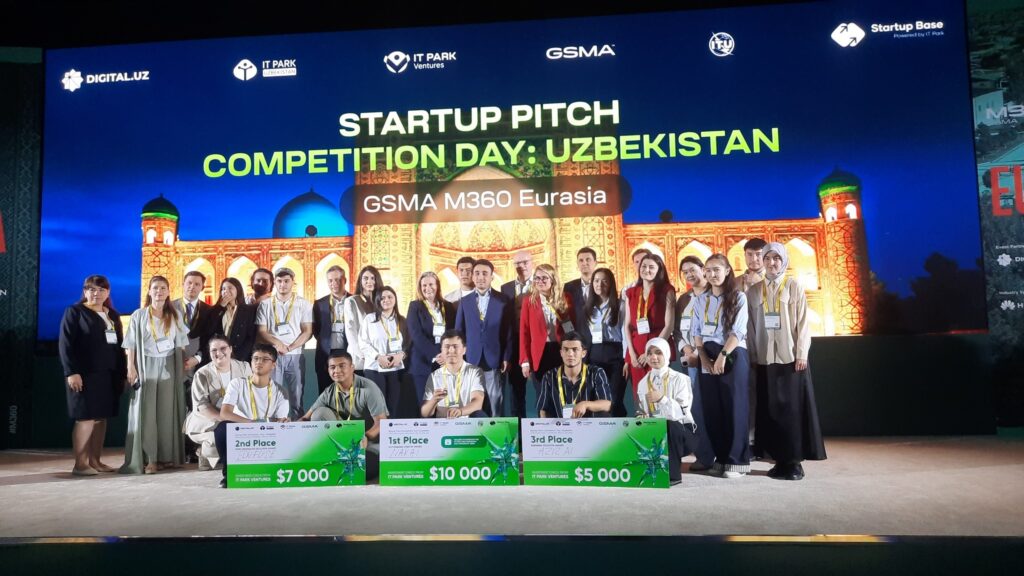
Government officials, telecom executives, investors and startup founders gathered in Samarkand this week for GSMA M360 Eurasia 2026, an event focused on one of the region’s biggest questions: how to turn expanding connectivity into long-term economic growth. Held on May 20-21, the summit brought together policymakers and technology companies to discuss artificial intelligence, 5G deployment, digital public services, investment and startup ecosystems. New data released by the GSMA during the event suggests the mobile industry is becoming an increasingly important economic engine across Eurasia. According to the newly published Mobile Economy Eurasia 2026 report, mobile technologies and services generated $270 billion in economic value across Eurasia in 2025, equivalent to 8.1% of regional GDP. That contribution is projected to reach $300 billion by 2030. Opening the event, John Giusti, Chief Regulatory Officer at the GSMA, said decisions made now on regulation, infrastructure and investment will shape Eurasia’s digital future. “The mobile industry is a powerful driver of growth across Eurasia, contributing around $270 billion to the regional economy today and set to reach $300 billion by 2030,” Giusti said during the keynote session. “Hosting M360 Eurasia in Samarkand is especially fitting. Uzbekistan’s rapid digital progress shows how mobile connectivity can modernize public services, boost productivity and improve lives across the region.” The GSMA report estimates that the mobile ecosystem supported approximately 750,000 jobs across Eurasia in 2025. By 2030, mobile’s economic contribution is expected to grow faster than overall regional GDP growth. Yet expansion remains uneven. Despite wider internet coverage, a significant usage gap persists: nearly 29% of people covered by mobile networks across Eurasia still do not use mobile internet. The report identified affordability, digital literacy and trust as the main barriers. [caption id="attachment_49256" align="aligncenter" width="2560"] Image: ТСА, Sadokat Jalolova[/caption] Uzbekistan’s 5G Push and Why 4G Still Matters One of the summit’s recurring themes was 5G deployment. The GSMA forecasts that by 2030, almost 30% of all mobile connections in Eurasia will use 5G technology. Uzbekistan is expected to exceed that average, with more than 40% of connections projected to run on 5G by the end of the decade. Still, Giusti cautioned against focusing exclusively on next-generation networks. In an interview with The Times of Central Asia, he said maintaining investment in existing technologies remains critical. “I think obviously Uzbekistan is leading in terms of 5G deployment,” Giusti said. “But I think it’s very important that we not lose sight of continued investment in 4G.” “We have a lot of 4G devices out there, and I think LTE is offering a huge amount of opportunity for citizens. So, I think it’s this complementary approach of making sure we invest both in the next generation of technology and continue to facilitate the growth of existing technologies.” His comments reflect a broader debate in emerging digital economies: whether governments and operators should prioritize cutting-edge infrastructure or maximize access through already established networks. For many consumers, especially outside major urban centers, 4G remains the primary gateway to digital services. Digital Services Beyond...

Alatau: Inside Kazakhstan’s $20 Billion “City of the Future”

Details about the ambitious plans for Alatau city were presented to a joint session of Kazakhstan’s parliament on March 20. Authorities are moving ahead full-speed on the project to build the new city that one day could be home to some two million people. According to the plans, Alatau will be a unique city, not only in Kazakhstan, but in the world. [caption id="attachment_45827" align="aligncenter" width="1704"] Image: Skidmore, Owings & Merrill (SOM) [/caption] From Village to Metropolis Alatau city is being built on the site of what was the village of Zhetygen, some 50 kilometers north of Almaty. It will occupy an area of some 88,000 hectares, “larger than both Singapore and Seoul.” Relieving the congestion of Kazakhstan’s commercial capital was one of the major concerns when selecting a site for the new city. Another consideration was Alatau’s location along the Middle Corridor, the developing East-West trade route linking Europe and China. Alatau city will have an airport and railway junctions. Alatau city will have four districts – Green, Growing, Golden, and Gate. [caption id="attachment_45826" align="aligncenter" width="1704"] Image: Skidmore, Owings & Merrill (SOM) [/caption] The Gate district will be the business and financial area and is where the airport and railways will be located. It will also be the southern-most area of the city and therefore closest to Almaty. The Golden district will be the “hub of knowledge, healthcare, and innovation,” the location of hospitals and other medical facilities, tech centers, and educational institutions able to take 40,000 students are planned for the district. The Growing district will be the industrial and logistics center for export-oriented trade. It will include clusters for food, chemicals, building materials, and light industry. The Green district, on the shore of Kapchagay Lake and with the Kaskelen River running through it, will be the recreational and tourist area of the city. [caption id="attachment_45828" align="aligncenter" width="1704"] Image: Skidmore, Owings & Merrill (SOM) [/caption] Alatau city lies along the main road between the cities of Almaty and Konayev (the “gambling capital of Kazakhstan"). Deputy Prime Minister Kanat Boumbayev told parliament on March 20 that testing of air taxis to ferry people between Almaty and Alatau would start this year, and within two to three years, operations would open to the public. Bozumbayev said the flight time would be 10-15 minutes. Additionally, expansion of the Almaty metro system is progressing with plans for the Green Line to eventually reach Alatau. Alatau will be a smart city and will be developed under the principle “digital by default,” meaning people will be encouraged to go online as much as possible for goods and services, but will still offer support for those who prefer to use traditional means. Financing The Kazakh authorities are expecting construction of Alatau city to require some 10 trillion tenge (about $20.836 billion) of investment by 2050. Kazakhstan is seeking foreign investment and offering advantageous conditions to foreign companies. Deputy Prime Minister Bozumbayev said, “The tax model is described separately: incentives are proposed to be granted only...

How Uzbekistan Plans to Lead Central Asia’s Digital Future – An Interview With the Minister of Digital Technologies

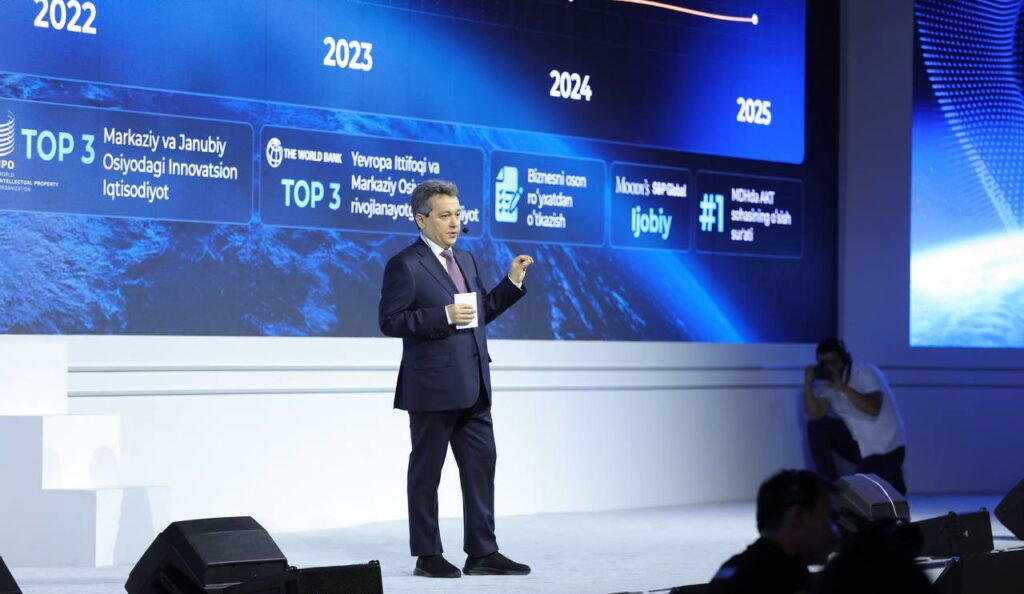
Uzbekistan’s ambitions to position itself as Central Asia’s digital powerhouse took center stage during ICT Week Uzbekistan 2025 this September - the country’s largest-ever technology forum, drawing more than 20 official delegations, 300 companies, and 20,000 participants from over 50 countries. With artificial intelligence and future technologies at its core, the event showcased how Tashkent aims to turn international partnerships into lasting investment, innovation, and talent pipelines. At the forefront of these efforts stands Sherzod Shermatov, Minister of Digital Technologies, who has overseen landmark initiatives extending IT Park incentives until 2040, launching the IT Visa for foreign specialists, and embedding AI education across Uzbekistan’s schools and universities. The Times of Central Asia spoke to Minister Shermatov to discuss how Uzbekistan plans to sustain investor confidence beyond ICT Week, prepare its workforce for an AI-driven economy, and balance rapid digitalization with data protection and national sovereignty. [caption id="attachment_37995" align="aligncenter" width="1280"] ICT Week 2025; image: The Ministry of Digital Technologies of the Republic of Uzbekistan[/caption] TCA: Uzbekistan showcased itself as a regional IT hub during ICT Week. What concrete steps will the Ministry take to ensure foreign investors and global tech firms remain engaged in Uzbekistan? Shermatov: In order to comprehensively stimulate and develop the activities of foreign investors and global technology companies in the Republic of Uzbekistan, a number of key preferences for IT Park residents have already been implemented. The Government of Uzbekistan has extended and reinforced the system of benefits and guarantees for foreign investors and IT Park residents, ensuring long-term stability and predictability of the investment climate. Among these measures, IT Park tax incentives have been officially extended until 2040, offering exemption from a range of taxes, a simplified foreign currency regime, and a 5% dividend tax for non-residents, provided that more than 50% of their revenue is generated from export activities. These reforms provide a reliable and attractive environment for both established global players and emerging startups. To further strengthen the country’s position as a regional digital hub, the Government has also introduced the IT Visa - a three-year visa designed for founders, investors, and foreign specialists of IT Park resident companies. The IT Visa facilitates simplified entry, residence, and employment procedures for international professionals and their family members, making Uzbekistan one of the most open and accessible markets for global technology talent. In parallel, a “One Stop Shop” service has been launched to streamline administrative procedures. It provides fast-track company registration, bank account opening, and work and residency permits, enabling investors and foreign specialists to begin operations in Uzbekistan with unprecedented efficiency. At the same time, the Ministry continues to expand cooperation between global technology partners and the national innovation ecosystem under the “ZERO Risk” and “Local to Global” mechanisms, as stated in the relevant decrees of the President of the Republic of Uzbekistan. These instruments create a foundation for long-term growth, stimulate venture financing, and support the international scaling of Uzbek startups. Also, comprehensive programs are being implemented to train highly qualified IT specialists to...
