• KGS/USD = 0.01143 0%
  • KZT/USD = 0.00205 0%
  • TJS/USD = 0.10724 0.09%
  • UZS/USD = 0.00008 0%
  • TMT/USD = 0.28571 0%
  • KGS/USD = 0.01143 0%
  • KZT/USD = 0.00205 0%
  • TJS/USD = 0.10724 0.09%
  • UZS/USD = 0.00008 0%
  • TMT/USD = 0.28571 0%
  • KGS/USD = 0.01143 0%
  • KZT/USD = 0.00205 0%
  • TJS/USD = 0.10724 0.09%
  • UZS/USD = 0.00008 0%
  • TMT/USD = 0.28571 0%
  • KGS/USD = 0.01143 0%
  • KZT/USD = 0.00205 0%
  • TJS/USD = 0.10724 0.09%
  • UZS/USD = 0.00008 0%
  • TMT/USD = 0.28571 0%
  • KGS/USD = 0.01143 0%
  • KZT/USD = 0.00205 0%
  • TJS/USD = 0.10724 0.09%
  • UZS/USD = 0.00008 0%
  • TMT/USD = 0.28571 0%
  • KGS/USD = 0.01143 0%
  • KZT/USD = 0.00205 0%
  • TJS/USD = 0.10724 0.09%
  • UZS/USD = 0.00008 0%
  • TMT/USD = 0.28571 0%
  • KGS/USD = 0.01143 0%
  • KZT/USD = 0.00205 0%
  • TJS/USD = 0.10724 0.09%
  • UZS/USD = 0.00008 0%
  • TMT/USD = 0.28571 0%
  • KGS/USD = 0.01143 0%
  • KZT/USD = 0.00205 0%
  • TJS/USD = 0.10724 0.09%
  • UZS/USD = 0.00008 0%
  • TMT/USD = 0.28571 0%

Viewing results 1 - 6 of 7

Uzbekistan AI and 5G Push in Focus at GSMA M360 Eurasia

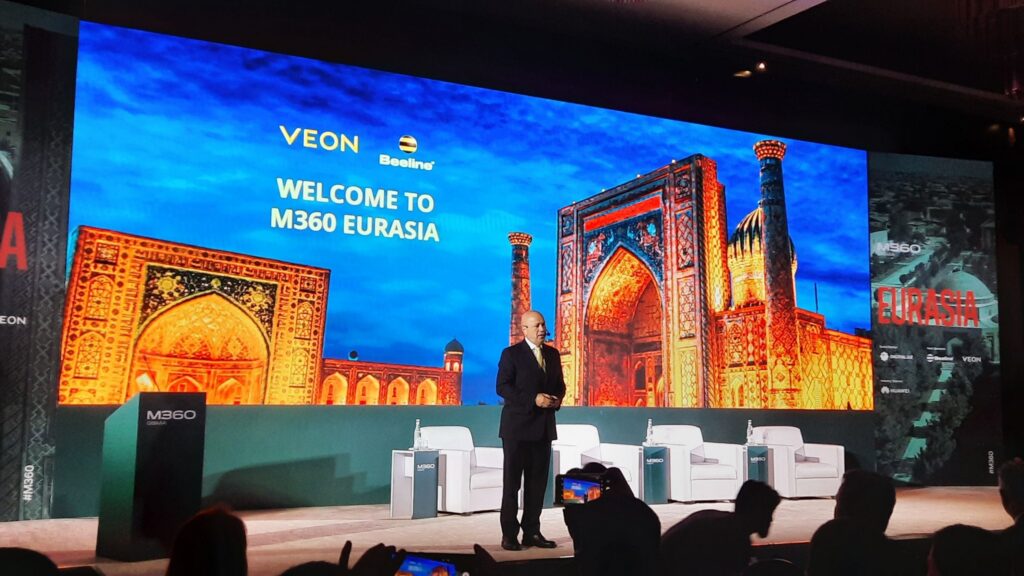
Policymakers, telecom executives, investors and technology leaders gathered in Samarkand on May 20-21 for GSMA M360 Eurasia 2026, a regional summit focused on digital transformation, artificial intelligence, connectivity and the future of telecommunications across Eurasia. The event brought together government representatives and industry figures to discuss how countries in Central Asia and neighboring regions can translate expanding mobile connectivity into long-term economic growth. Questions surrounding 5G deployment, AI infrastructure, education, startup ecosystems and digital skills featured prominently throughout the discussions. In an interview with The Times of Central Asia, Tair Ismailov, Strategic Engagement Director at the GSMA, discussed what governments should realistically expect from 5G, the challenges of building AI ecosystems and why education may ultimately determine whether countries benefit from rapid technological change. His comments come as Uzbekistan expands investment in telecommunications, data infrastructure and AI education while positioning itself as one of Central Asia’s fastest-growing digital economies. Why 5G May Matter More to Industry Than Consumers For many governments, 5G deployment has become a symbol of technological progress. Yet Ismailov said the economic benefits differ significantly depending on how countries adopt the technology. “Each country has its own path,” he said. “There are countries that have been pioneers in 5G, for example the U.S., South Korea and China, because they have ecosystems of equipment that they need to produce and drive.” Other countries, he argued, may benefit from moving later. “Sometimes it’s better for developing countries not to be in the avant-garde, but rather to follow examples and learn from existing cases,” he said. According to Ismailov, one of 5G’s most immediate functions is helping networks manage growing internet demand. Digital consumption patterns have changed dramatically over the last decade, he noted. “Back in the day, we never streamed videos, now we take it for granted,” Ismailov said. “Average internet consumption in the region is around 17GB per month per user. These are big numbers.” As traffic increases, networks require greater efficiency and capacity. “For networks simply to cope with this traffic, they need to be more productive, and 5G brings this productivity,” he explained. However, he suggested that the technology’s most significant economic impact may emerge outside consumer markets. “If you look at China and other markets, the biggest 5G benefits are granted to the B2B sector,” Ismailov said. “Businesses benefit from low latency and higher speeds.” Consumers may not immediately notice improvements, he added, but industries relying on automation, logistics, manufacturing or cloud services could see larger gains. “On the consumer side, you might not notice it,” he said, “but when you don’t have it, you start noticing it.” [caption id="attachment_49335" align="aligncenter" width="2560"] Image: TCA/Sadokat Jalolova[/caption] Building AI Requires More Than Data Generation As artificial intelligence expands globally, governments have begun viewing data as a strategic resource. Asked whether Uzbekistan has enough high-quality and accessible data to build a meaningful AI ecosystem, Ismailov argued that generating information is no longer the primary challenge. “I don’t think the question is generating data,” he said. “The question is...

GSMA M360 Eurasia in Samarkand Highlights Push for Faster Digital Growth

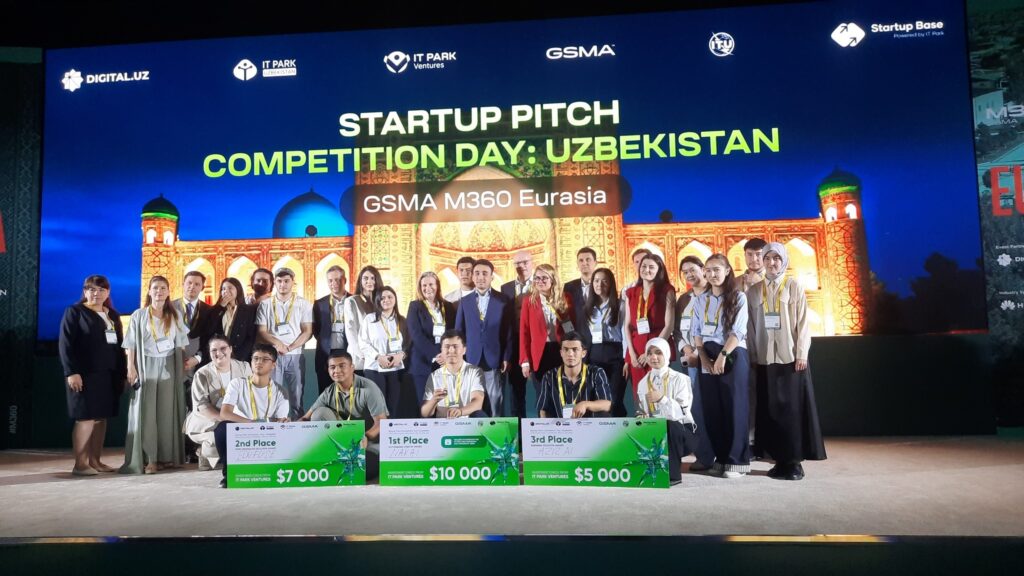
Government officials, telecom executives, investors and startup founders gathered in Samarkand this week for GSMA M360 Eurasia 2026, an event focused on one of the region’s biggest questions: how to turn expanding connectivity into long-term economic growth. Held on May 20-21, the summit brought together policymakers and technology companies to discuss artificial intelligence, 5G deployment, digital public services, investment and startup ecosystems. New data released by the GSMA during the event suggests the mobile industry is becoming an increasingly important economic engine across Eurasia. According to the newly published Mobile Economy Eurasia 2026 report, mobile technologies and services generated $270 billion in economic value across Eurasia in 2025, equivalent to 8.1% of regional GDP. That contribution is projected to reach $300 billion by 2030. Opening the event, John Giusti, Chief Regulatory Officer at the GSMA, said decisions made now on regulation, infrastructure and investment will shape Eurasia’s digital future. “The mobile industry is a powerful driver of growth across Eurasia, contributing around $270 billion to the regional economy today and set to reach $300 billion by 2030,” Giusti said during the keynote session. “Hosting M360 Eurasia in Samarkand is especially fitting. Uzbekistan’s rapid digital progress shows how mobile connectivity can modernize public services, boost productivity and improve lives across the region.” The GSMA report estimates that the mobile ecosystem supported approximately 750,000 jobs across Eurasia in 2025. By 2030, mobile’s economic contribution is expected to grow faster than overall regional GDP growth. Yet expansion remains uneven. Despite wider internet coverage, a significant usage gap persists: nearly 29% of people covered by mobile networks across Eurasia still do not use mobile internet. The report identified affordability, digital literacy and trust as the main barriers. [caption id="attachment_49256" align="aligncenter" width="2560"] Image: ТСА, Sadokat Jalolova[/caption] Uzbekistan’s 5G Push and Why 4G Still Matters One of the summit’s recurring themes was 5G deployment. The GSMA forecasts that by 2030, almost 30% of all mobile connections in Eurasia will use 5G technology. Uzbekistan is expected to exceed that average, with more than 40% of connections projected to run on 5G by the end of the decade. Still, Giusti cautioned against focusing exclusively on next-generation networks. In an interview with The Times of Central Asia, he said maintaining investment in existing technologies remains critical. “I think obviously Uzbekistan is leading in terms of 5G deployment,” Giusti said. “But I think it’s very important that we not lose sight of continued investment in 4G.” “We have a lot of 4G devices out there, and I think LTE is offering a huge amount of opportunity for citizens. So, I think it’s this complementary approach of making sure we invest both in the next generation of technology and continue to facilitate the growth of existing technologies.” His comments reflect a broader debate in emerging digital economies: whether governments and operators should prioritize cutting-edge infrastructure or maximize access through already established networks. For many consumers, especially outside major urban centers, 4G remains the primary gateway to digital services. Digital Services Beyond...

Central Asian and Pakistani Leaders Showcase Digital Future at GSMA Summit in Tashkent

The second day of the GSMA M360 Eurasia conference, held on May 21 in Tashkent, delivered a resounding message of partnership, innovation, and forward-looking digital strategies. Leaders from Kazakhstan, Uzbekistan, and Tajikistan, alongside delegates from other countries, shared insights on fostering resilient digital economies through collaboration and technology. Kazakhstan: Digital Leadership and AI Strategy Kazakhstan’s Minister of Digital Development, Innovation and Aerospace Industry, Zhaslan Madiyev, highlighted his country’s digital advancements. Over the past decade, Kazakhstan has ascended into the global top ten for online service quality and now ranks 24th in e-government development. “More than 90% of transactions are cashless,” he noted, “and over 35 personal documents are exclusively digital. Digital documents now carry the same legal weight as paper ones.” Citizens can even travel domestically using only a digital ID on their phones. Madiyev spotlighted Astana Hub, Kazakhstan’s primary IT cluster, which hosts over 1,600 startups and global tech firms, with outposts in Silicon Valley, Singapore, Saudi Arabia, and the UK. “We recently signed an agreement with Uzbekistan’s IT Park,” he said, “and we will soon open a joint mobile lab with Tcell in Uzbekistan.” He emphasized that cross-border collaboration enables startups to access global markets. Artificial intelligence (AI) featured prominently in Madiyev’s address. He announced the formation of a national AI committee and the adoption of a five-year strategy that includes ethical guidelines, product labeling, and a public AI platform. A newly acquired supercomputer, boasting two exaflops of processing power, will soon support universities, startups, and companies. Kazakhstan also plans to train one million individuals over five years, spanning schoolchildren to government employees. Madiyev invited Uzbekistan to join a regional AI collaboration centered around the forthcoming International Center of AI in Astana, which will host labs, exhibits, hackathons, and workspaces for startups and major tech firms. Uzbekistan: Building a 5G Future In an interview with The Times of Central Asia, Dmitriy Shukov, CEO of Perfectum, the first stand-alone 5G mobile network operator in Uzbekistan, discussed the company’s vision. Perfectum primarily serves the business sector with advanced network solutions. “We focus on B2B clients and will continue to develop cutting-edge services for a fast-growing economy,” Shukov stated. On expanding 5G access nationwide, Shukov pointed to device compatibility. “People need access to 5G stand-alone service. We hope GSMA can facilitate discussions with handset manufacturers to unlock all 5G features here,” he said, underscoring that broader access is essential for digital inclusivity. Perfectum’s pioneering role in the region sets a benchmark for others. Discussing Uzbekistan’s telecom infrastructure, Shukov expressed optimism. “Our population grows by 700,000 annually. Sixty percent are under 30, demanding high-speed, low-latency services. And the regulatory environment is now very favorable to investors,” he said. These dynamics, he concluded, set a strong foundation for the next three years. Tajikistan: Rethinking Telecom Models Tcell CEO Ozodkhon Davlatshoev, whose company serves over two million customers and is Tajikistan’s largest mobile operator, addressed the pressures facing the sector. “Our market share is about 14%, growing 7% annually, but with just 2% population...