• KZT/USD = 0.00217
  • TJS/USD = 0.10830
  • UZS/USD = 0.00008
  • TMT/USD = 0.29760
  • KZT/USD = 0.00217
  • TJS/USD = 0.10830
  • UZS/USD = 0.00008
  • TMT/USD = 0.29760
  • KZT/USD = 0.00217
  • TJS/USD = 0.10830
  • UZS/USD = 0.00008
  • TMT/USD = 0.29760
  • KZT/USD = 0.00217
  • TJS/USD = 0.10830
  • UZS/USD = 0.00008
  • TMT/USD = 0.29760
  • KZT/USD = 0.00217
  • TJS/USD = 0.10830
  • UZS/USD = 0.00008
  • TMT/USD = 0.29760
  • KZT/USD = 0.00217
  • TJS/USD = 0.10830
  • UZS/USD = 0.00008
  • TMT/USD = 0.29760
  • KZT/USD = 0.00217
  • TJS/USD = 0.10830
  • UZS/USD = 0.00008
  • TMT/USD = 0.29760
  • KZT/USD = 0.00217
  • TJS/USD = 0.10830
  • UZS/USD = 0.00008
  • TMT/USD = 0.29760
24 November 2026

Viewing results 1 - 6 of 3

Uzbekistan Media: 67% Privately Owned as Survey Highlights Press Freedom Concerns

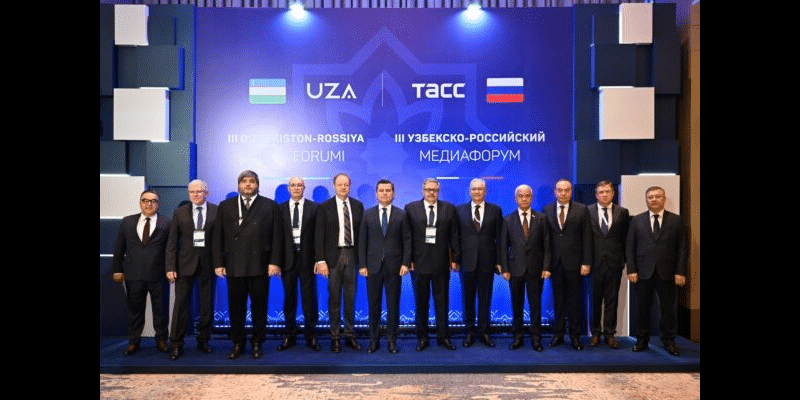
Privately owned outlets now account for 67% of Uzbekistan’s media, presidential press secretary Sherzod Asadov said at the third Uzbekistan-Russia Media Forum in Tashkent on November 9. He said internet coverage had reached 94% and discussed the development of digital content and the launch of what he described as Central Asia’s first national media bank, an online collection of photographs and videos. The forum was organized by the Uzbekistan National News Agency and Russia’s TASS news agency. Asadov identified journalist training, joint fact-checking, and the use of AI as areas for cooperation between the two countries. "Information attacks and fake news must not become a source of mistrust and disagreement between our countries and peoples," Asadov said. Uzbekistan ranks 147th out of 180 countries and territories in the 2026 World Press Freedom Index, published by Reporters Without Borders (RSF). RSF says censorship and self-censorship remain prevalent in the country. The National Study of Media Consumption in Uzbekistan, based on interviews with 1,411 adults in September, found that 56.5% considered stronger legal guarantees of freedom of speech necessary to improve media independence. Of those surveyed, 30.7% called for better professional training for journalists, and 25.9% supported the development of independent media platforms and private news agencies. Respondents also called for improved access to international news and tougher penalties for obstructing journalists’ work. Participants could select up to three measures to improve media independence. The survey also found that 51.6% of respondents used Telegram channels for domestic news, while television was the most trusted source of information for 44.3% of participants.
Telegram Leads News Consumption in Uzbekistan, but Television Remains Most Trusted

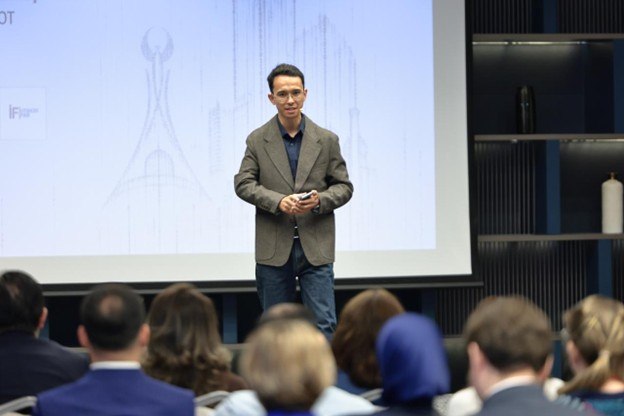
Telegram channels are Uzbekistan’s most widely used news source, but television remains the most trusted, a national survey has found. The study, presented by the Mass Media Foundation in Tashkent on November 2, found that 51.6% of respondents used Telegram channels for news. Television followed at 44.6%, while 41.6% used social media. Trust followed a different pattern. Television was the most trusted source for 44.3% of respondents, compared with 11.3% for Telegram channels and 7.4% for news websites. The findings also show demand for more reliable reporting and greater attention to everyday problems. Some 41.3% of respondents said they lacked information about prices, employment, and social support. Another 40.6% wanted more coverage of people’s everyday problems. A Generational Divide The gap between Telegram and television was particularly pronounced across age groups. Among respondents aged 18–24, 66.2% used Telegram channels for news. Television led among those aged 55 and older, cited by 77.4%. However, the audiences overlap. Respondents could select up to three news sources, so the findings do not represent separate groups. Among Telegram users, 40% also received news from television. The study also examined the languages people prefer when receiving information. Uzbek remains the leading choice, with 71.7% preferring publications in Uzbek Cyrillic and 49.8% also selecting Uzbek Latin. Russian was mentioned by 43.3% of respondents, while 11.3% said they prefer English-language information. Smaller shares selected Karakalpak (7%), Kazakh (5.6%), and Tajik (4.8%). Respondents could select more than one option. The preferences differ across generations. Older respondents are more accustomed to reading Uzbek in Cyrillic, reflecting the language and writing systems used during their education. Younger people are more oriented toward Latin-script Uzbek, while English is also more prominent among younger audiences. Telegram’s overall reach extended well beyond news consumption: 86.1% of respondents used the platform for communication or other activities. That figure should not be confused with the share using Telegram channels as a news source. Speed was the most frequently cited reason for choosing information sources, mentioned by 48.6% of respondents. Access at any time and from any location followed at 31%. Demand for Reliable Reporting Nearly half of social media users, 48.7%, said they had encountered false or unreliable information. Some 37.5% reported a shortage of verified news, while 31.6% wanted more objective coverage. These findings do not establish why television received higher trust ratings than Telegram, but they do show concerns about the quality of information available online. Across the full sample, 46.6% considered the spread of false information the main problem in the media environment. When asked what improvements they expected, 27.6% called for more in-depth analysis and 22.5% for an objective presentation of different viewpoints. Television viewers also identified shortcomings, including repetitive programming and excessive advertising. Rural respondents wanted more educational programs and coverage of life outside the capital, including everyday social and economic problems. How the Study Was Conducted Interviewers spoke face-to-face with 1,411 adults at their homes across all 14 regions from September 8 to 19, 2026. The organizers said the...

Kazakhstan’s Yenlik Brings Her Sound to COLORS

Kazakhstani singer and songwriter Yenlik has made history by becoming the first artist from Kazakhstan to be featured on the international music platform COLORSxSTUDIOS. Founded in Berlin in 2016, COLORSxSTUDIOS, commonly known as COLORS, has grown from a small creative experiment into one of YouTube’s most influential music platforms. Recognized for its minimalist visual style, each performance is filmed against a single-color backdrop without set design or special effects, placing the focus squarely on the music, the voice, and the artist. The channel now counts more than 8.2 million subscribers and over 3.5 billion views, cementing its status as a global tastemaker in contemporary music. Over the years, COLORS has showcased a wide range of talent, from emerging artists to international stars such as Billie Eilish, Drake, Doja Cat, and Joji. The platform describes its mission as an effort to “connect people, countries, and cultures on a creative and emotional level,” framing its global, genre-spanning approach as a form of cultural exchange as much as a musical one. Yenlik’s Voice: Rooted in Culture, Reaching Beyond Borders Yenlik, born Enlik Kurarbek, is one of the most prominent figures in Kazakhstan’s emerging musical wave. Her sound blends alternative pop with modern R&B influences, creating a style that feels both personal and closely tied to her cultural identity. The Kazakh language plays a central role in her work, not as a folkloric reference but as a contemporary form of expression. Her music reflects a broader shift in which Kazakh is increasingly present in global pop contexts without being confined to traditional or ethnic frameworks. Yenlik’s authorial sound, shaped by contemporary production and subtle national influences, is paired with an emotionally restrained vocal delivery that has become her signature. Observers suggest it was this originality that drew the attention of the COLORS curators. Known for prioritizing authenticity over commercial success, the platform seeks artists with strong individuality and a distinctive voice, qualities that align closely with Yenlik’s creative vision. From Rejection to Recognition For Yenlik, the invitation from COLORS marked a long-awaited milestone. She had previously applied to the project without receiving a response, making the eventual outreach from the platform all the more meaningful. “When the invitation came, I was overjoyed and burst into tears,” she recalled. “This project always felt so distant. Two years ago, we submitted an application with no response. And now, COLORS reached out to us first.” The performance was filmed outside Kazakhstan and completed within a few hours. Yenlik was struck by the production’s simplicity, defined by an absence of elaborate sets and large crews, and by the quiet intimacy that has become a hallmark of COLORS. The team fostered a welcoming atmosphere, and she was even able to choose the episode’s background color, which she described as symbolizing “true gentle strength,” a visual reflection of the emotional tone of her performance. Rising Digital Momentum Yenlik’s digital presence has continued to grow steadily, with her music gaining traction among younger audiences on social media. Her songs often circulate...
