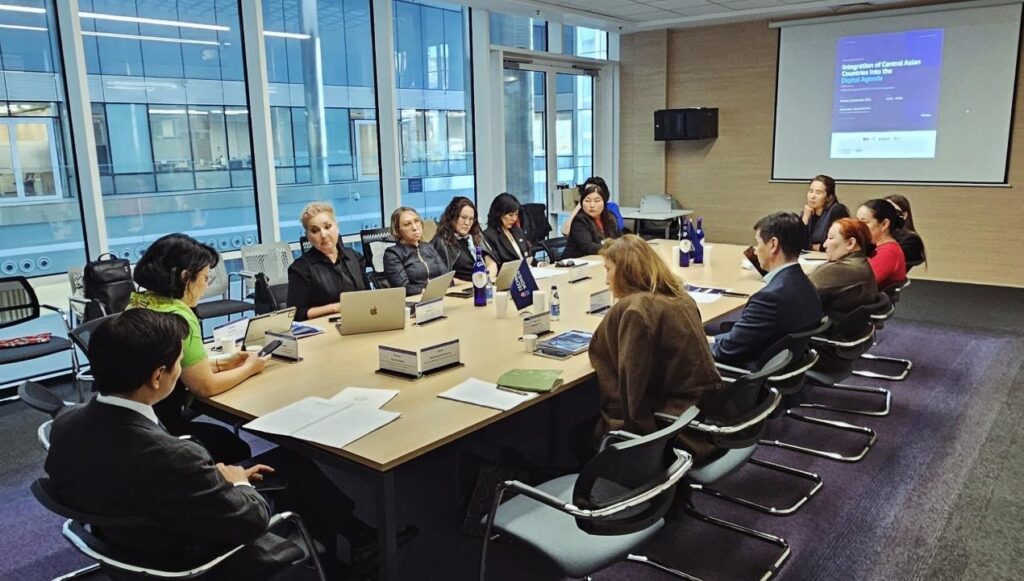
Central Asia Common Digital Space Proposed at Astana Roundtable
Experts and business representatives from across Central Asia have proposed mutual recognition of electronic documents to make cross-border business easier. Their draft agreement also calls for closer alignment of rules on data and artificial intelligence. The draft Agreement on Cooperation among Central Asian States in Digital Policy and Artificial Intelligence Governance was presented at a regional roundtable in Astana on September 28. The business-led proposal aims to connect the region’s five digital markets, serving more than 80 million people. The initiative is being developed within B5+1, a business cooperation platform linking the United States and the five Central Asian states and designed as a private sector counterpart to the diplomatic C5+1 format. E-commerce and information technology are among its priority areas. Over the past year, the regional IT & AI working group has held consultations with entrepreneurs, industry associations, and experts. In the previous cycle, consultations involved business communities representing more than 60 companies and organizations from Central Asia and the United States, including Meta, Mastercard, and Google. Under the draft, the five countries would retain their own regulations while making their digital systems and laws more compatible. It covers electronic document management, digital identification, personal data protection, cybersecurity, and AI regulation. The proposals would allow electronic documents, electronic signatures, and digital identification tools to be recognized across borders. This could reduce administrative barriers for companies expanding into neighboring markets. “Our task is not to create another layer of regulation. We need to build digital bridges between the countries of Central Asia. If electronic documents, digital identification, data rules, and approaches to AI are mutually compatible, it will become significantly easier for technology companies to scale across the entire region,” said Aziza Shuzheeva, Chair of the Board of the TechnoWomen non-profit organization. A draft Code of Ethics for the Responsible Use of Artificial Intelligence in Central Asia was also presented in Astana. The document is advisory and sets out common ethical principles for the use of AI across the five countries. Its authors propose that decisions significantly affecting a person’s rights and interests should not be left solely to algorithms. Practices identified as unacceptable include harmful manipulation, exploitation of the vulnerabilities of children and other groups, discrimination, unlawful use of personal data, and the creation of synthetic content for fraud or other harmful purposes. Another priority is the development of language resources and datasets for Kazakh, Kyrgyz, Uzbek, Tajik, and Turkmen. The aim is to improve the ability of AI systems to work with the region’s languages. Similar forms of digital integration are already being developed elsewhere. In the European Union, the European Digital Identity framework is designed to allow digital identity wallets to be used across borders to access public and private services. ASEAN, meanwhile, concluded negotiations at the end of May 2026 on its Digital Economy Framework Agreement, or DEFA, covering digital trade, data, cybersecurity, AI, and other areas of regional digital integration. The proposals also overlap with efforts to digitize transport and trade. On September 28, the...