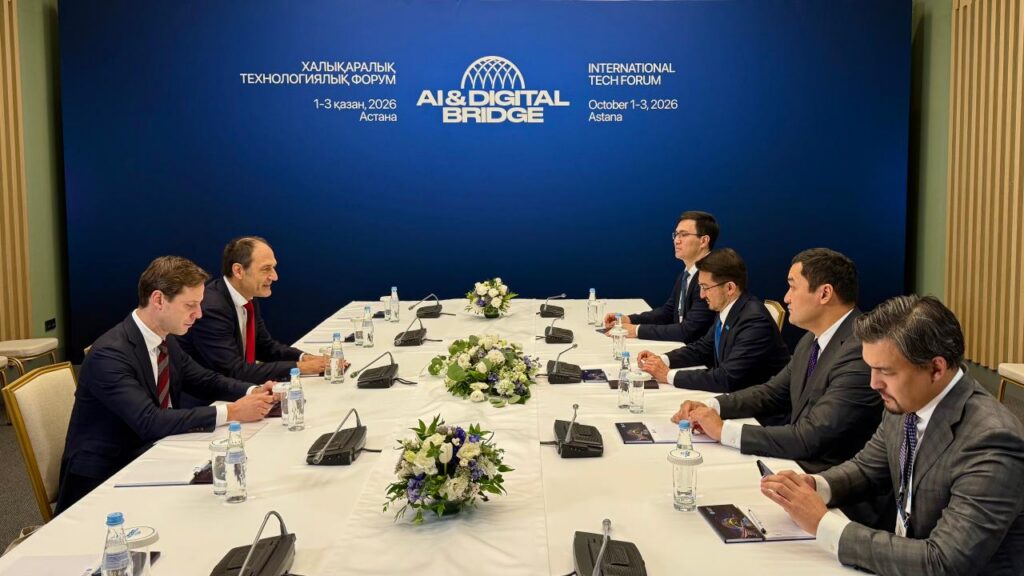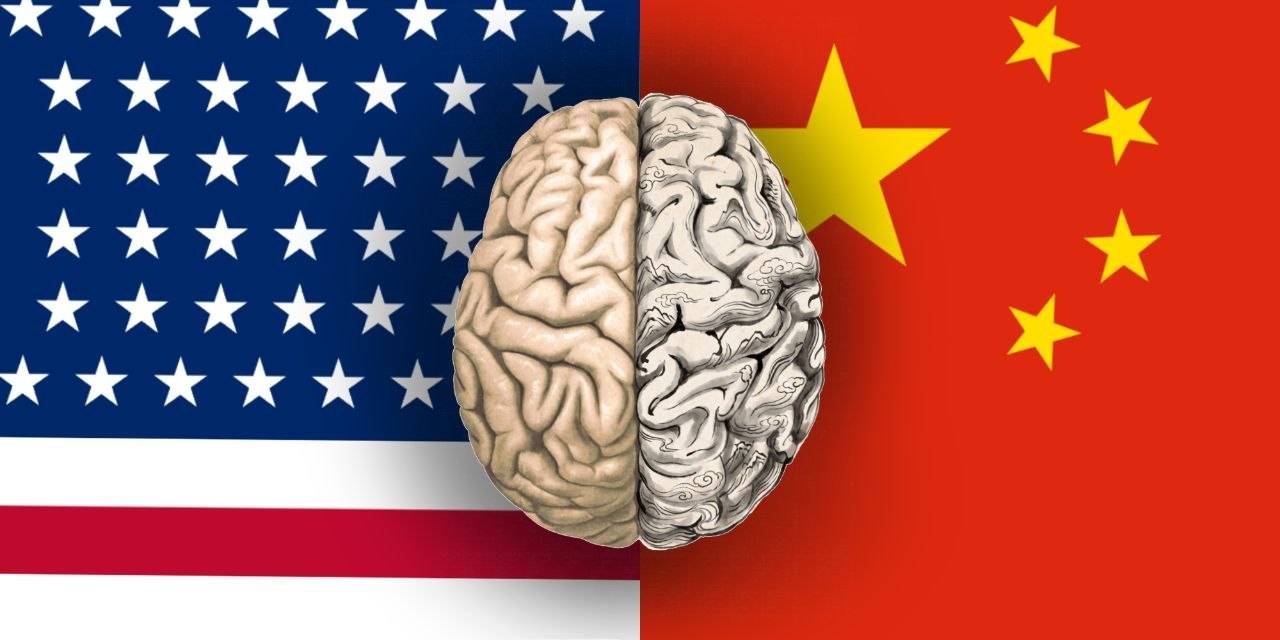
Kazakhstan has found itself in an unusual position as the technological rivalry between the United States and China intensifies. Within a matter of weeks, Astana first joined the U.S.-led Pax Silica initiative and then became a founding member of the Beijing-backed World Artificial Intelligence Cooperation Organization (WAICO). Washington is now preparing to warn countries aligned with its AI strategy that participation in competing frameworks may be incompatible, Reuters has reported.
For Kazakhstan, such a choice would be uncomfortable for more than political reasons. The United States is home to many of the world’s leading AI and semiconductor companies and offers access to investment and advanced technology. Kazakhstan, meanwhile, has critical mineral reserves that Washington is keen to bring into secure supply chains. China is next door, remains one of Kazakhstan’s leading trading partners, and offers countries without their own advanced technologies broader access to Chinese developments.
Zamir Karazhanov, a political scientist and director of the Kemel Arna Public Foundation, believes Kazakhstan is unlikely to abandon cooperation with China on artificial intelligence. Much, he says, will depend on how far Washington is prepared to go and whether technological alignment becomes a condition for continued partnership with the United States.
Pax Silica was launched by Washington in late 2025. Despite its name, the initiative goes far beyond silicon and chips. It covers the supply chains and physical infrastructure underpinning AI, including critical minerals, semiconductors, energy, and computing capacity.
Kazakhstan officially joined Pax Silica on June 25, 2026, becoming the first Central Asian country to enter the initiative. The accession declaration was signed in Washington by Deputy Prime Minister and Minister of Artificial Intelligence and Digital Development Zhaslan Madiyev. For Kazakhstan, participation also has a tangible economic dimension: the country has a substantial mineral resource base needed for high-tech manufacturing. The Times of Central Asia has previously examined why joining Pax Silica could help Kazakhstan attract foreign investment into mining, energy, data centers, and manufacturing for the AI economy.
U.S. interest in Kazakhstan’s mineral resources predates Pax Silica. In June, Astana hosted a C5+1 critical minerals dialogue involving representatives of all five Central Asian states and U.S. Special Envoy for South and Central Asia, Sergio Gor. The American side spoke openly about expanding cooperation with the region on secure supply chains.
But in July, Astana took another step, this time toward Beijing.
Kazakhstan became one of 29 founding members of the World Artificial Intelligence Cooperation Organization. The agreement establishing WAICO was signed in Shanghai, where the organization will also be headquartered.
Beijing has presented the new organization as a mechanism for international cooperation on AI governance and narrowing the technological gap between countries. Chinese President Xi Jinping has also promoted China’s open-weight AI models as a more accessible alternative for countries that cannot afford or easily access leading proprietary systems. However, Beijing is also considering restrictions on overseas access to some of China’s leading AI models. In July, Xi Jinping pitched WAICO as part of China’s effort to advance its own model of global AI governance as an alternative to the U.S.-led approach.
So far, Kazakhstan is the only known country participating in both Pax Silica and WAICO. Until recently, that had not produced an open conflict. However, it appears that Washington is now preparing to draw a line.
The draft State Department letter is addressed to the 35 countries that signed the U.S. AI Opportunity Statement in June, a group that includes Pax Silica members and other governments aligned with Washington on AI cooperation. It warns that participation in a competing initiative could jeopardize involvement in the U.S.-led coalition. The document is undated and could still be amended; the State Department declined to comment on its contents.
“The American side is moving away from open source, and there will be problems with technology sharing. The second point is that a geopolitical lever is being used here to put pressure on China. The Chinese initiative envisages open source without restrictions. As far as we know, when China proposed the initiative, it insisted that political objectives should be excluded. Kazakhstan is probably closer to the Chinese approach at the moment. Of course, the country also understands that the American framework will include the world’s most technologically advanced countries. Above all, the United States itself is a global leader in AI, and that naturally matters. However, I think an attempt to pressure Kazakhstan would be unsuccessful,” Karazhanov told TCA.
Karazhanov notes that Kazakhstan does not yet have the domestic technologies required for full technological independence. Developing AI requires far more than models and software, and Kazakhstan remains dependent on foreign partners for much of the advanced hardware and computing infrastructure it needs.
“Kazakhstan also does not want AI to be used as an instrument of politics, and on this point, we agree with China. Countries that do not yet possess advanced technologies will always suffer as a result of such actions. We support equal and transparent access to technology,” Karazhanov said.
That emphasis on broad access to technology is consistent with what Astana has said at other international forums. In July, at the first UN Global Dialogue on AI Governance, Kazakhstan called for open and equitable discussions, along with common approaches to data protection, security, transparency, and accountability.
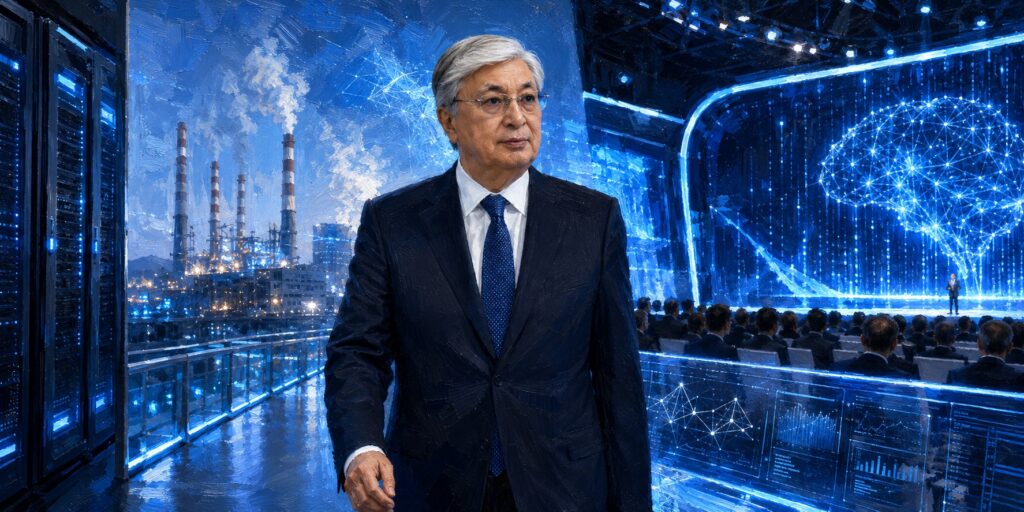
Kazakhstan’s relationship with China makes a rapid withdrawal from WAICO unlikely. In July, President Kassym-Jomart Tokayev attended the World Artificial Intelligence Conference in Shanghai, where he spoke about Kazakhstan’s intention to expand cooperation with China in this field. Kazakhstan became a founding member of the new organization during the same visit. The move therefore forms part of Astana’s relationship with Beijing at the highest political level.
Kazakhstan is simultaneously expanding cooperation with the United States. In June, U.S. and Kazakh representatives discussed deeper cooperation on critical minerals, including processing, investment, and broader supply-chain development. The Times of Central Asia has reported growing interest among U.S. businesses in building longer value chains inside Kazakhstan rather than simply purchasing raw materials.
“This speaks to the level of trust and mutual understanding. There are also agreements on developing deposits of critical materials that are important to the United States. In relationships of this kind, countries do not usually put pressure on one another. They try to reach an agreement,” Karazhanov said.
Until now, Kazakhstan has managed to build relations with competing centers of power without making a hard choice between them. In energy, mining, trade, and transportation, this model has worked for years. Maintaining the same balance in artificial intelligence may prove more difficult.
Technology is increasingly tied to national security. Advanced chips, computing capacity, software, and critical minerals are already subject to export restrictions and political agreements. If Washington does make Pax Silica incompatible with participation in China’s WAICO, Astana will have to see whether a compromise is possible in an area where it has so far cooperated with both sides.
For now, Kazakhstan’s actions point to a reluctance to choose. Within one month, the country joined the U.S.-led initiative and became a founding member of the Chinese-backed organization. Withdrawing from either one almost immediately after joining would be politically and economically uncomfortable for Astana.