• KGS/USD = 0.01144 0%
  • KZT/USD = 0.00212 0%
  • TJS/USD = 0.10543 -0.09%
  • UZS/USD = 0.00008 0%
  • TMT/USD = 0.28530 0%
  • KGS/USD = 0.01144 0%
  • KZT/USD = 0.00212 0%
  • TJS/USD = 0.10543 -0.09%
  • UZS/USD = 0.00008 0%
  • TMT/USD = 0.28530 0%
  • KGS/USD = 0.01144 0%
  • KZT/USD = 0.00212 0%
  • TJS/USD = 0.10543 -0.09%
  • UZS/USD = 0.00008 0%
  • TMT/USD = 0.28530 0%
  • KGS/USD = 0.01144 0%
  • KZT/USD = 0.00212 0%
  • TJS/USD = 0.10543 -0.09%
  • UZS/USD = 0.00008 0%
  • TMT/USD = 0.28530 0%
  • KGS/USD = 0.01144 0%
  • KZT/USD = 0.00212 0%
  • TJS/USD = 0.10543 -0.09%
  • UZS/USD = 0.00008 0%
  • TMT/USD = 0.28530 0%
  • KGS/USD = 0.01144 0%
  • KZT/USD = 0.00212 0%
  • TJS/USD = 0.10543 -0.09%
  • UZS/USD = 0.00008 0%
  • TMT/USD = 0.28530 0%
  • KGS/USD = 0.01144 0%
  • KZT/USD = 0.00212 0%
  • TJS/USD = 0.10543 -0.09%
  • UZS/USD = 0.00008 0%
  • TMT/USD = 0.28530 0%
  • KGS/USD = 0.01144 0%
  • KZT/USD = 0.00212 0%
  • TJS/USD = 0.10543 -0.09%
  • UZS/USD = 0.00008 0%
  • TMT/USD = 0.28530 0%

Viewing results 1 - 6 of 83

From Coasters to Code: Bermet Koshoeva’s Leap into Tech Entrepreneurship

Five years ago, spotting Kyrgyz tech entrepreneurs in global accelerators was almost unheard of. Even locally, tech founders were rare. Fast forward to today, and it feels like Kyrgyz innovators are making their mark, especially at Antler. Last year, the global startup accelerator welcomed several Kyrgyz founders in its Vietnam and Malaysia cohorts. Among them is Bermet Koshoeva, a marketing professional turned tech entrepreneur with her startup, Onion. An Unconventional Path Koshoeva’s path to becoming a founder is far from traditional. Her early years followed a familiar trajectory, earning a Bachelor’s degree in Business Administration from Turkey’s Fatih University and working in marketing roles. Things took a unique turn when she pursued a Master’s degree in Agriculture through the prestigious Erasmus Mundus Programme, studying in Denmark and France. The agricultural focus was symbolic, as both her father and grandfather worked in the sector. However, Koshoeva’s studies steered her in a different direction. During her Master’s thesis, Koshoeva had her first entrepreneurial experience. While exploring investment opportunities, she stumbled upon the potential for sellers on Amazon. With an initial investment of $1,000, she started selling mug coasters and managed to turn it into $2,500. “When my studies were coming to an end, I wondered what I would do next and how I would earn a living,” Koshoeva told The Times of Central Asia. “I wasn’t emotionally ready to jump into a full-time job after such an intense academic experience, so I decided to invest in something.” Her Amazon success, combined with her professional marketing background, established Koshoeva as a local marketing expert. She shared her expertise as both a professional consultant and an educator, teaching marketing at the American University of Central Asia and serving as the Head of Creative Business at Compass College, the first art and design college in Central Asia. Onion’s Mission Koshoeva founded Onion in October 2024, originally envisioning it as a platform for collecting and analyzing qualitative research data, such as interviews and surveys. This aligned closely with her marketing background. However, a pivotal experience at Antler Malaysia in April 2025 led her to refine Onion’s focus. During the accelerator program, she pivoted to addressing AI-powered search optimization. The new direction positions Onion in a rapidly evolving space as search trends shift away from traditional Google results to AI-driven tools like ChatGPT and Perplexity. These emerging tools are still refining their contextual accuracy, but they represent the future. Onion helps brands become visible in these AI-powered searches, ensuring they appear when it matters most. Challenges and Vision Although Antler Malaysia eventually decided not to invest in Onion, Koshoeva is determined to push forward. Her analytical skills, honed over years of market research, are guiding her through this emerging niche. “In recent years, I’ve conducted extensive market analyses across various industries, including IT and SaaS,” Koshoeva told TCA. “Through research, I’ve identified a promising niche that’s only beginning to take shape. While not everyone sees its potential yet — even Antler wasn’t ready to invest — I’m...

Opinion: Latecomer Advantage – Central Asia’s Prospects for Embracing Technology

Chinese President Xi Jinping's visit to Astana, Kazakhstan for the second China–Central Asia Summit marks another milestone in reviving a historic bond shaped by the ancient Silk Road — a shared civilizational journey linking China and Central Asia. Today, as the world enters an era dominated by technology as a key driver of development, Central Asian countries have the opportunity to leverage a latecomer advantage by narrowing the digital gap, cultivating technical talent, and harnessing technology for poverty reduction and inclusive growth. Closing the Digital Gap: Role of the Digital Silk Road The rise of the digital economy is reshaping the very foundation of modern development. Just as reliable electricity, transportation networks, and other essential infrastructure once formed the critical foundations for development, digital infrastructure has now become an indispensable pillar for economic and social advancement. The digital world is inherently shared, a phenomenon that can be understood as the ‘digital commons’. It refers to spaces where access and contribution are mutually reinforcing — the value of digital resources grows as more people use them, more knowledge is exchanged, and more services become interconnected. In light of this, Chinese President Xi Jinping proposed building the Digital Silk Road of the 21st Century as early as May 2017 to help close the digital gap among participating countries. For Central Asian countries, the task is to achieve more inclusive digital connectivity. This means not only expanding coverage and improving the quality and speed of connections but also embedding digital solutions more deeply into daily life — across education, commerce, healthcare, etc. These are essential steps toward fully realizing the shared benefits of the digital commons. Mature digital business models from other parts of the world offer valuable blueprints that can be directly adopted or adapted to local contexts. In education, mobile-based learning platforms and virtual classrooms have proven effective in overcoming limited local resources. Expanding access to vocational training, language courses, and digital literacy programs is essential to build a workforce ready for the modern economy. In commerce, the rapid rise of mobile payment systems and cross-border e-commerce platforms has the potential to fundamentally reshape the models small businesses operate. By replicating proven models in mobile finance and logistics management, Central Asian countries can open new pathways for local producers to connect with global markets. ln healthcare, telemedicine provides another avenue where digital solutions can directly address the challenges of limited medical resources and vast geographic distances. Online diagnostic services and remote consultations can expand access to basic healthcare services and help strengthen public health resilience. These models are especially applicable because they are already functioning effectively in comparable emerging markets. Many of today's digital solutions are highly scalable and transferable, requiring only sufficient connectivity and a capable user base. Seizing the latecomer advantage: Talent is the key While lagging in technology may seem a disadvantage, it can also serve as a strategic advantage when viewed differently. This is the essence of what is known as the latecomer advantage — the ability of less developed countries...

Central Asian and Pakistani Leaders Showcase Digital Future at GSMA Summit in Tashkent

The second day of the GSMA M360 Eurasia conference, held on May 21 in Tashkent, delivered a resounding message of partnership, innovation, and forward-looking digital strategies. Leaders from Kazakhstan, Uzbekistan, and Tajikistan, alongside delegates from other countries, shared insights on fostering resilient digital economies through collaboration and technology. Kazakhstan: Digital Leadership and AI Strategy Kazakhstan’s Minister of Digital Development, Innovation and Aerospace Industry, Zhaslan Madiyev, highlighted his country’s digital advancements. Over the past decade, Kazakhstan has ascended into the global top ten for online service quality and now ranks 24th in e-government development. “More than 90% of transactions are cashless,” he noted, “and over 35 personal documents are exclusively digital. Digital documents now carry the same legal weight as paper ones.” Citizens can even travel domestically using only a digital ID on their phones. Madiyev spotlighted Astana Hub, Kazakhstan’s primary IT cluster, which hosts over 1,600 startups and global tech firms, with outposts in Silicon Valley, Singapore, Saudi Arabia, and the UK. “We recently signed an agreement with Uzbekistan’s IT Park,” he said, “and we will soon open a joint mobile lab with Tcell in Uzbekistan.” He emphasized that cross-border collaboration enables startups to access global markets. Artificial intelligence (AI) featured prominently in Madiyev’s address. He announced the formation of a national AI committee and the adoption of a five-year strategy that includes ethical guidelines, product labeling, and a public AI platform. A newly acquired supercomputer, boasting two exaflops of processing power, will soon support universities, startups, and companies. Kazakhstan also plans to train one million individuals over five years, spanning schoolchildren to government employees. Madiyev invited Uzbekistan to join a regional AI collaboration centered around the forthcoming International Center of AI in Astana, which will host labs, exhibits, hackathons, and workspaces for startups and major tech firms. Uzbekistan: Building a 5G Future In an interview with The Times of Central Asia, Dmitriy Shukov, CEO of Perfectum, the first stand-alone 5G mobile network operator in Uzbekistan, discussed the company’s vision. Perfectum primarily serves the business sector with advanced network solutions. “We focus on B2B clients and will continue to develop cutting-edge services for a fast-growing economy,” Shukov stated. On expanding 5G access nationwide, Shukov pointed to device compatibility. “People need access to 5G stand-alone service. We hope GSMA can facilitate discussions with handset manufacturers to unlock all 5G features here,” he said, underscoring that broader access is essential for digital inclusivity. Perfectum’s pioneering role in the region sets a benchmark for others. Discussing Uzbekistan’s telecom infrastructure, Shukov expressed optimism. “Our population grows by 700,000 annually. Sixty percent are under 30, demanding high-speed, low-latency services. And the regulatory environment is now very favorable to investors,” he said. These dynamics, he concluded, set a strong foundation for the next three years. Tajikistan: Rethinking Telecom Models Tcell CEO Ozodkhon Davlatshoev, whose company serves over two million customers and is Tajikistan’s largest mobile operator, addressed the pressures facing the sector. “Our market share is about 14%, growing 7% annually, but with just 2% population...

Kazakhstan Unveils Central Asia’s Most Powerful Supercomputer

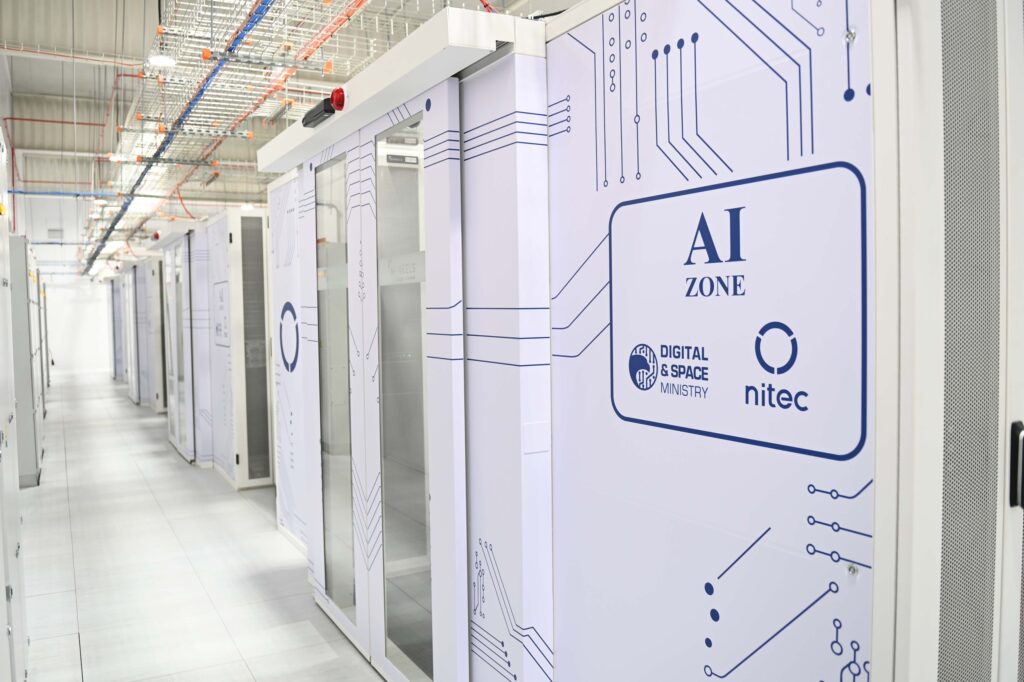
Kazakhstan has taken a major step in its digital transformation with the arrival of the most powerful supercomputer in Central Asia. The system, boasting a performance of approximately 2 exaflops, was delivered as part of a strategic agreement between the Ministry of Digital Development, Innovation, and Aerospace Industry (MDDIA) and Presight AI Ltd, an ADX-listed public limited company whose majority shareholder is Abu Dhabi company G42. This milestone follows an agreement signed in February 2024 to construct a supercomputer and a dedicated data center. The latest development includes the creation of a full-scale supercomputing cluster that will be installed in a state-of-the-art Tier III data center. The facility ensures high availability through dual data redundancy, independent power supplies, and the capability to upgrade equipment without interrupting operations. The new supercomputer is powered by the latest NVIDIA H200 graphics chips, optimized for artificial intelligence and high-performance computing. With a capacity of 2 exaflops, equivalent to a billion billion (10¹⁸) floating point operations per second, the system is expected to significantly bolster Kazakhstan’s digital infrastructure and AI capabilities. According to the MDDIA, the supercomputer is intended to benefit a wide range of users, not just a narrow group of specialists. “The supercomputer’s resources will be accessible to all: startups developing neural networks, universities conducting fundamental and applied research, scientific institutions, and businesses integrating AI into their operations,” the ministry stated. The project aligns with Kazakhstan’s broader digital strategy and its ambitions to become a regional technology hub. It also reflects deepening economic ties with the United Arab Emirates. As previously reported by The Times of Central Asia, during the official visit of Crown Prince Sheikh Khalid bin Mohammed bin Zayed Al Nahyan to Kazakhstan, the two countries signed over 20 commercial agreements worth approximately US$5 billion.

U.S. Tech Giant Honeywell Expands Operations in Uzbekistan

Honeywell, a global leader in integrated technology solutions, has expanded its footprint in Uzbekistan by establishing a new legal entity, Honeywell Industrial Automation LLC. The initiative aims to support the digital transformation and automation of key industrial sectors in Uzbekistan and reflects a broader commitment to strengthening U.S.-Uzbek commercial ties. The official launch was celebrated on March 25 at a reception hosted by U.S. Ambassador to Uzbekistan Jonathan Henick at his residence in Tashkent. The event was attended by Uzbekistan’s Minister of Energy, Jurabek Mirzamakhmudov. Ambassador Henick reiterated the U.S. Embassy’s strong support for Honeywell’s initiatives, stating he looked forward to "the continued growth and success of American businesses in Uzbekistan." Honeywell emphasized its dedication to advancing Uzbekistan’s digital and energy strategies. The company has long-standing partnerships with both government and private sectors, especially in oil and gas, petrochemicals, mining, and metallurgy. As part of its expansion, Honeywell announced plans to establish a Global Engineering Center (GEC) in Tashkent. The new center will serve as a regional hub for advanced engineering solutions, while also fostering local talent and innovation. Earlier, Honeywell representatives held talks with the leadership of Uzbekneftegaz JSC to discuss the integration of cutting-edge technologies into Uzbekistan’s oil and gas sector.

Kazakhstan to Crack Down on “Gray” Smartphones

Starting March 24, 2025, Kazakhstan’s Ministry of Digital Development, Innovation, and Aerospace Industry will require telecom operators to verify the IMEI codes of smartphones and disconnect illegally purchased devices. According to ministry officials, the new regulation will apply only to phones purchased after March 24, 2025. Under the new system, all smartphones in Kazakhstan will be categorized into three lists based on their IMEI codes: White List: Legally purchased smartphones. Gray List: Devices with suspicious IMEI codes, such as duplicates. Owners will have 30 days to confirm their device's legitimacy. Black List: Stolen or counterfeit phones, which will be blocked from network access. “The goal of these new regulations is to combat the circulation of illegal devices,” said Dias Tolegenov, head of the Monitoring and Development of Wireless Projects Department at the ministry’s Telecommunications Committee. Phones imported before March 24, 2025, will not be affected by the new rules. Buyers can already check a device’s IMEI code on a dedicated government portal to avoid purchasing illegal or counterfeit smartphones. Azamat Seriktaev, another ministry representative, noted that blocking stolen phones through IMEI registration will help reduce mobile device theft. Meanwhile, the regulations are expected to curb the flow of illegally imported or fraudulently registered devices. According to Mazhilis deputy Ekaterina Smyshlyaeva, 64% of mobile devices in Kazakhstan’s market are imported through illegal or “gray” schemes: “In 2024, the state lost nearly 100 billion tenge (approximately $196 million) in unpaid value-added tax (VAT) due to these illegal imports.” She outlined several common fraudulent practices, including: Customs Evasion: Phones are imported without proper customs clearance. Mislabeling: High-end smartphones are registered as budget models to reduce tax liabilities. IMEI Duplication: Fraudsters copy the IMEI numbers of legally imported devices and assign them to multiple smuggled phones - sometimes up to five or six per code. “Often, people check a new phone’s IMEI and find out that, according to the system, it was manufactured 10 years ago,” Smyshlyaeva noted. To further tighten control, Smyshlyaeva suggested: Integrating IMEI registration with customs data to detect fraudulent imports. Automatically cross-checking IMEI numbers with the Customs Register of Intellectual Property Objects. Limiting personal imports to two smartphones per year per individual to prevent bulk smuggling. Separately, Mazhilis deputy and former Education Minister Askhat Aimagambetov have proposed restrictions on children’s use of smartphones in schools. As The Times of Central Asia previously reported, Kyrgyzstan is considering similar measures in schools and universities.