• KGS/USD = 0.01144 0%
  • KZT/USD = 0.00212 0%
  • TJS/USD = 0.10543 -0.09%
  • UZS/USD = 0.00008 0%
  • TMT/USD = 0.28530 0%
  • KGS/USD = 0.01144 0%
  • KZT/USD = 0.00212 0%
  • TJS/USD = 0.10543 -0.09%
  • UZS/USD = 0.00008 0%
  • TMT/USD = 0.28530 0%
  • KGS/USD = 0.01144 0%
  • KZT/USD = 0.00212 0%
  • TJS/USD = 0.10543 -0.09%
  • UZS/USD = 0.00008 0%
  • TMT/USD = 0.28530 0%
  • KGS/USD = 0.01144 0%
  • KZT/USD = 0.00212 0%
  • TJS/USD = 0.10543 -0.09%
  • UZS/USD = 0.00008 0%
  • TMT/USD = 0.28530 0%
  • KGS/USD = 0.01144 0%
  • KZT/USD = 0.00212 0%
  • TJS/USD = 0.10543 -0.09%
  • UZS/USD = 0.00008 0%
  • TMT/USD = 0.28530 0%
  • KGS/USD = 0.01144 0%
  • KZT/USD = 0.00212 0%
  • TJS/USD = 0.10543 -0.09%
  • UZS/USD = 0.00008 0%
  • TMT/USD = 0.28530 0%
  • KGS/USD = 0.01144 0%
  • KZT/USD = 0.00212 0%
  • TJS/USD = 0.10543 -0.09%
  • UZS/USD = 0.00008 0%
  • TMT/USD = 0.28530 0%
  • KGS/USD = 0.01144 0%
  • KZT/USD = 0.00212 0%
  • TJS/USD = 0.10543 -0.09%
  • UZS/USD = 0.00008 0%
  • TMT/USD = 0.28530 0%

Viewing results 1 - 6 of 83

Uzbekistan to Host First-Ever Web Summit Spotlight in Central Asia

Uzbekistan will host its first Web Summit Spotlight on September 27 in Tashkent, marking a significant milestone for the country’s growing tech sector. The Ministry of Digital Technologies and IT Park Uzbekistan, co-organizers of the event, confirmed the announcement in an official press release. The event is being held in partnership with Web Summit, one of the world’s most prominent technology conferences, which draws more than 70,000 participants each year to its flagship gathering in Lisbon. In recent years, Web Summit has expanded globally with editions in Rio de Janeiro, Qatar, and Vancouver. Tashkent will now join this lineup, positioning Uzbekistan as a rising hub for innovation and international tech collaboration. According to organizers, Web Summit Spotlight: Uzbekistan will bring together leading global experts, venture capitalists, startup founders, and IT industry executives. The program will highlight Uzbekistan’s evolving role as a center for technological innovation, opportunities for international investment in emerging markets, and current trends in venture funding. President Shavkat Mirziyoyev has consistently stressed the importance of digital transformation for Uzbekistan’s future. “We are creating conditions for Uzbekistan to become a true center of innovation, where young people can turn their talent and energy into globally competitive projects,” the president said earlier this year while outlining the country’s digital development strategy. The forum comes amid rapid growth in Uzbekistan’s IT sector. As previously reported by The Times of Central Asia, revenues from IT outsourcing tripled to more than $300 million, following four consecutive years of annual doubling. The United States remains the primary destination for Uzbek IT exports, accounting for half of all outsourcing contracts. Authorities aim to grow outsourcing revenues to $5 billion by 2030, with a projected 300,000 people employed in the sector. IT Park Uzbekistan has played a pivotal role in this transformation. By the end of 2023, it was home to 1,652 resident companies, nearly half of which were founded that year. With attractive tax incentives and support services, the park has become a magnet for both domestic and international tech talent.

Bold Pavilions, Big Statements: Central Asia at Osaka Expo 2025

On a sweltering August day, The Times of Central Asia arrived at the Osaka Expo 2025. The theme, "Designing Future Society for Our Lives," set the stage for a carnival of new ideas and technology. Pavilions buzzed with invention, each one a world of its own. Central Asia turned heads - with all five countries represented - with vibrant stalls, bustling booths, and grand castle-like showpieces that drew crowds from every corner. [caption id="attachment_35420" align="aligncenter" width="2560"] Kazakhstan Pavilion; image: TCA, Stephen M. Bland[/caption] Kazakhstan’s pavilion presents the theme “Born Bold” in the “Connecting Lives” zone, alongside South Korea, Germany, Luxembourg, Nepal, Azerbaijan, Iran, Monaco, and Türkiye. At its heart rises the shanyrak, the sacred crown of the yurt, once a symbol of roots and now a beacon of unity, mirroring the Expo’s spirit of innovation and shared horizons. The story begins with the essence of the Kazakh people. Generations, history, culture, and traditions unfold from the Kazakh Khanate and the vast steppe to Abai’s poetry and the nation’s sporting heroes. It is a narrative of memory and strength, where the past is not closed, but carried forward as a living value. [video width="1280" height="720" mp4="https://timesca.com/wp-content/uploads/2025/08/KZ1-REMOVE-AUDIO-Videobolt.net_.mp4"][/video] From history, the focus shifts to unity. Every guest becomes part of the experience as their face is woven into a digital mosaic, a vivid symbol of belonging. Interactive technologies present Kazakhstan as a country where diversity does not divide but connects. From past to present, the spotlight then falls on a Kazakhstan that is inventive and future-ready. Visitors explore the country’s energy transition, green initiatives, digitalization, and work in artificial intelligence, alongside its rise as an investment hub. [caption id="attachment_35413" align="aligncenter" width="2560"] Prolonging life - ALEM at the EXPO; image: TCA, Stephen M. Bland[/caption] The final chapter places pride and place on the groundbreaking ALEM (Astana Life Ex-situ Machine) developed by Kazakh scientists. Created by the Heart Center Foundation, it is already redefining the possibilities of transplantation. The window for organ transplants is short, from just a few hours for a heart or lungs to more than a day for a kidney. ALEM changes the game. By replicating the body’s internal conditions, it can keep a donor heart alive for 24 hours, opening new possibilities. Only a few models currently exist, including the one on display in the pavilion. [caption id="attachment_35414" align="aligncenter" width="2560"] The Turkmenistan Pavilion; image: TCA, Stephen M. Bland[/caption] The Turkmenistan Pavilion dazzles with three lavish floors beneath an iconic, rounded-triangular ceiling that symbolizes circulation, sustainability, and the flow of life. On the ground level, an epic immersive video left the Japanese audience gasping as it honored Turkmenistan’s great men, legendary horses, and loyal dogs, while women appeared only in fleeting roles. [video width="1280" height="720" mp4="https://timesca.com/wp-content/uploads/2025/08/TK1.mp4"][/video] The second-floor shifts to the present, celebrating modern achievements, from the smart city of Arkadag to advances in industry, finance, and science. The space unfolds as an eclectic mix of books, jewelry, rugs, and even everyday objects like bottles of oil. At its center, a glowing...

Tokayev Urges Equal Education Standards Across Urban and Rural Kazakhstan

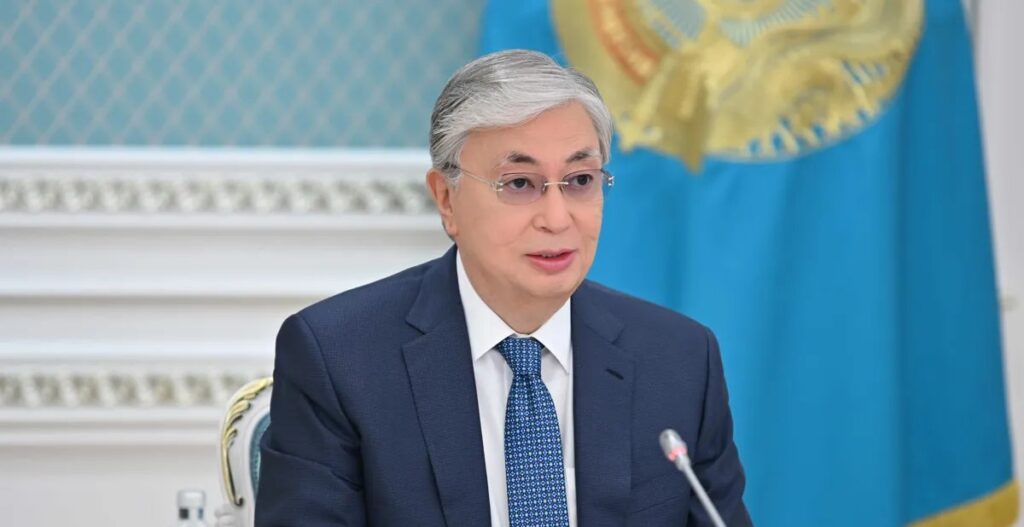
Kazakhstan's President Kassym-Jomart Tokayev has called for narrowing the gap in education quality between urban and rural schools and accelerating the integration of digital technologies and artificial intelligence (AI) into the country's education system. Speaking at the annual August Teachers' Conference, Tokayev emphasized that building a modern, inclusive nation requires equal opportunities for all children, regardless of geography. “All children must have equal opportunities. Therefore, an important task is to eliminate inequality in the quality of education in cities and villages,” he stated. Over the past four years, the material and technical infrastructure of more than 4,000 rural schools has been upgraded. Still, Tokayev stressed that this progress must be complemented by digital transformation, including the introduction of AI into the curriculum. “The concepts of ‘progressive nation’ and ‘technological nation’ are synonymous today,” he said, adding that digitalization is central to improving educational outcomes. Currently, over 95% of schools in Kazakhstan are connected to high-speed internet. Tokayev has instructed that this figure reach 100%, potentially through the use of Starlink satellite technology. “This is not just a technical issue, but a principle of social justice,” he added. The president also noted that advanced technologies will support the development of an inclusive education environment, particularly benefiting children with special needs. Several core educational services in Kazakhstan have already been digitized, including school and college admissions, inter-school transfers, and the Bilim service on the eGov mobile platform. However, Tokayev underscored the need to further equip schools with interactive tools and ensure universal access to digital platforms and electronic textbooks. The president placed particular emphasis on early instruction in AI technologies and continuous professional development for teachers. “Teachers must not only know their subject, but also be able to apply new technologies,” he said. As previously reported by The Times of Central Asia, the latest PISA assessment noted improvements in education access across Central Asia but highlighted a decline in academic performance among students in the region.

Kazakhstan Proposes Digital Platform for SCO Agricultural Trade

At a recent gathering of agricultural ministry officials from Shanghai Cooperation Organization (SCO) member states in Beijing, Kazakhstan’s Deputy Minister of Agriculture, Yermek Kenzhekhanuly, proposed establishing a unified digital platform to streamline and enhance agricultural trade across the bloc. According to the Ministry of Agriculture of the Republic of Kazakhstan, the country exported $5.1 billion worth of agricultural products in 2024, a 3.9% year-on-year increase to 16.1 million tons. Notably, 69% of this trade involved nine SCO member countries, underscoring both regional interdependence and the potential for expanded agricultural cooperation. The SCO includes Kazakhstan, China, Russia, Belarus, India, Iran, Kyrgyzstan, Pakistan, Tajikistan, and Uzbekistan. “We view the agricultural sector as an area for strategic partnership, not competition,” Kenzhekhanuly stated. He emphasized Kazakhstan's readiness to help develop a unified agricultural space grounded in trust, coordination, and complementarity. The proposed digital platform would incorporate tools for electronic certification, logistics tracking, and product traceability. The Kazakh delegation also stressed the importance of harmonizing technical regulations and phytosanitary standards to facilitate mutual trade and eliminate non-tariff barriers. The meeting concluded with the signing of the Protocol of the Tenth Meeting of SCO Ministers of Agriculture, reaffirming the member states' commitment to deepening cooperation in the agricultural sector. As previously reported by The Times of Central Asia, Kazakhstan is also working to diversify its agricultural export markets, including recent wheat shipments to North Africa.

Kazakhstan Launches Central Asia’s Most Powerful Supercomputer

Kazakhstan has officially launched the most powerful supercomputer in Central Asia, marking a significant milestone in its push for digital sovereignty. President Kassym-Jomart Tokayev attended the inauguration ceremony at the new data center operated by the Ministry of Digital Development, Innovation, and Aerospace Industry. According to the presidential press service, the computing cluster, built on NVIDIA H200 graphics processors, can deliver up to 2 exaflops (two quintillion operations per second) of performance, making it the region’s most advanced high-performance computing system. Tokayev emphasized that the launch will catalyze digital transformation across key sectors of the Kazakh economy. The system will be accessible to startups working in neural networks, universities, research institutions, and both public and private sector enterprises. “Having our own high-performance infrastructure will accelerate the adoption of artificial intelligence, reduce dependence on foreign IT resources, and ensure the country’s technological sovereignty,” said Zhaslan Madiev, Minister of Digital Development. Boosting Domestic Capabilities Madiev noted that many Kazakh companies, including fintech firms and startups, currently rely on foreign cloud providers such as Amazon and Google for computing resources. This dependence leads to capital outflows and heightens risks related to data security. He added that local engineers have received specialized training, and full operational control of the supercomputer will be transitioned to Kazakhstani specialists over the next five years. During his visit to the National Computer Center, Tokayev was introduced to a range of domestic digital initiatives in fields such as healthcare, education, governance, and urban infrastructure. These include: SmartCity Astana: A project aimed at creating a digital twin of the capital, incorporating over 100,000 AI-enabled surveillance cameras for real-time threat detection and public safety monitoring. AlemLLM: A large language model customized for local linguistic and cultural contexts. AI Kitap: An adaptive learning platform that offers personalized digital education based on student levels and preferences. Baspana Hub: A digital ecosystem for real estate, integrating government services, property evaluations, a marketplace, and renovation support. Tokayev also viewed presentations from emerging Kazakhstani tech startups. Among them was Surfaice.pro, a construction technology firm founded by Kazakhstani entrepreneurs in Silicon Valley. The company operates in five U.S. states and has raised $1.5 million in funding from Big Sky Capital and Shadow Ventures. A Strategic Investment in Digital Sovereignty As previously reported by The Times of Central Asia, the launch of the supercomputer aligns with Kazakhstan’s broader ambition to become a regional technology hub. It was developed under a strategic partnership between the Ministry of Digital Development and UAE-based Presight AI Ltd. With its enhanced digital infrastructure and growing ecosystem of AI innovation, Kazakhstan is positioning itself at the forefront of high-performance computing and artificial intelligence in Central Asia.

Silicon Steppes: Can Kazakhstan Become Eurasia’s Next Digital Nexus?

At this month’s Eurasian Economic Forum in Minsk, Kazakh President Kassym-Jomart Tokayev urged fellow Eurasian Economic Union (EAEU) leaders to reorient toward the future. “Digitalization and artificial intelligence… should become an absolute priority of the EAEU,” he told the plenary session, warning that “we are already living in the era of AI.” Tokayev cited forecasts that AI could contribute $15 trillion to global GDP and displace 300 million jobs by 2030, arguing the EAEU bloc has a “historic opportunity” to act now. “It is important to use this window of opportunity in a timely manner… to strengthen our role in the emerging digital world order,” he stated. “A small group of countries will emerge as leaders in this field… others may be left behind. The EAEU must lead — or, at the very least, avoid lagging behind.” Tokayev’s remarks capped a speech outlining Kazakhstan’s sweeping digital agenda, which includes a national supercomputer, a high-profile artificial intelligence hub, and a “CryptoCity” pilot zone. These efforts signal not only a pivot away from extractive industries but a push to establish Kazakhstan as the heart of Central Asia’s digital and data infrastructure. Once seen as an economic hindrance, Kazakhstan’s landlocked geography is now being leveraged as a potential asset. A 3,700 km West–East Fiber-Optic Highway is under construction, connecting China’s Xinjiang province to the Caspian Sea. The project, expected to be completed in 2026, aims to provide a secure, high-speed terrestrial route for global data flows between Europe and East Asia. By pairing this with expanded redundancy and data center capacity, Kazakhstan hopes to serve as a neutral, cost-effective host for hyperscale data centers supporting global cloud providers and sovereign clients alike. With abundant energy, political stability, and growing fiber capacity, officials argue Kazakhstan can reduce regional dependence on submarine cables routed through politically sensitive chokepoints. Kazakhstan’s infrastructure investments are central to Tokayev’s vision. In Astana, the futuristic Nur Alem sphere — originally built to host the 2017 World Expo — is being converted into Alem.AI, an international artificial intelligence center focused on education, research, and applied technology. The facility will host labs, training academies, and co-working space for startups, to produce 10,000 AI specialists per year and generate $5 billion in AI-driven exports by 2029. Complementing this is the new national AI supercomputer, developed in partnership with UAE-based Presight AI. Launched in May 2025, the system is rated at up to 2 exaflops, powered by NVIDIA H200 chips, and installed within a Tier III-certified data center. Government officials say it will be used for machine learning, scientific modeling, LLM development, and cybersecurity testing, and will eventually be made available to Kazakh universities and private sector firms. Meanwhile, the CryptoCity pilot zone near Alatau will allow the regulated use of cryptocurrencies in daily life, from shopping to property purchases, within a restricted environment. It is being developed under the supervision of Kazakhstan’s Ministry of Digital Development and Samruk-Kazyna, the country’s sovereign wealth fund. Though crypto transactions currently remain largely banned in the country,...