• KGS/USD = 0.01144 0%
  • KZT/USD = 0.00213 0%
  • TJS/USD = 0.10560 0%
  • UZS/USD = 0.00008 0%
  • TMT/USD = 0.28530 0%
  • KGS/USD = 0.01144 0%
  • KZT/USD = 0.00213 0%
  • TJS/USD = 0.10560 0%
  • UZS/USD = 0.00008 0%
  • TMT/USD = 0.28530 0%
  • KGS/USD = 0.01144 0%
  • KZT/USD = 0.00213 0%
  • TJS/USD = 0.10560 0%
  • UZS/USD = 0.00008 0%
  • TMT/USD = 0.28530 0%
  • KGS/USD = 0.01144 0%
  • KZT/USD = 0.00213 0%
  • TJS/USD = 0.10560 0%
  • UZS/USD = 0.00008 0%
  • TMT/USD = 0.28530 0%
  • KGS/USD = 0.01144 0%
  • KZT/USD = 0.00213 0%
  • TJS/USD = 0.10560 0%
  • UZS/USD = 0.00008 0%
  • TMT/USD = 0.28530 0%
  • KGS/USD = 0.01144 0%
  • KZT/USD = 0.00213 0%
  • TJS/USD = 0.10560 0%
  • UZS/USD = 0.00008 0%
  • TMT/USD = 0.28530 0%
  • KGS/USD = 0.01144 0%
  • KZT/USD = 0.00213 0%
  • TJS/USD = 0.10560 0%
  • UZS/USD = 0.00008 0%
  • TMT/USD = 0.28530 0%
  • KGS/USD = 0.01144 0%
  • KZT/USD = 0.00213 0%
  • TJS/USD = 0.10560 0%
  • UZS/USD = 0.00008 0%
  • TMT/USD = 0.28530 0%

Viewing results 1 - 6 of 83

Kazakhstan Launches New Online Marketplace

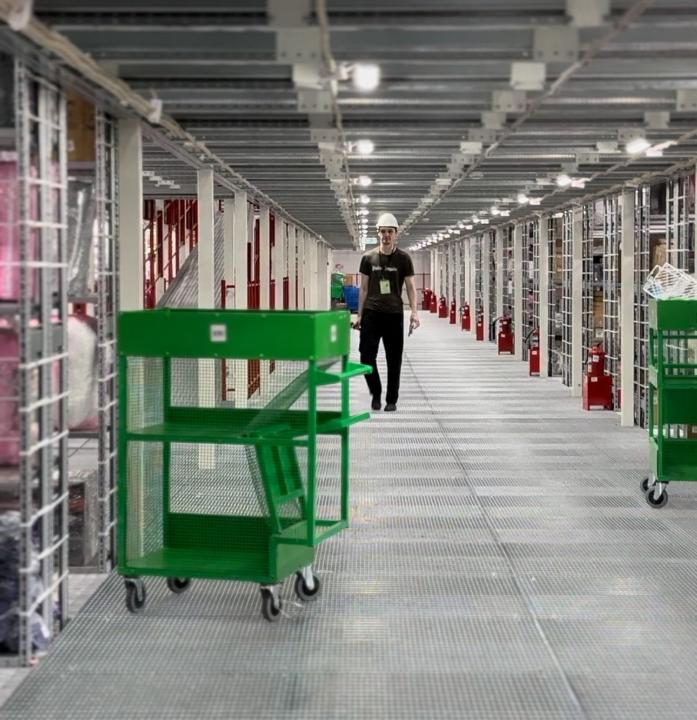
A new domestic online marketplace, Teez, has commenced operations in Karaganda, the central city of Kazakhstan’s Karaganda region. The platform, offering next-day delivery, has opened pick-up points in 24 cities nationwide. On November 29, Kazakhstan’s Minister of Trade and Integration, Arman Shakkaliyev, visited the marketplace's main warehouse. Teez co-founder Linar Khusnullin informed the minister that the platform currently operates 40 pick-up points and plans to expand this network to 127. The marketplace offers 50,000 product types, and its customer application has already been downloaded by 170,000 users. The company’s warehouse spans 25,000 square meters, but by 2030, it aims to expand to a 120,000-square-meter facility. Teez aspires to become Kazakhstan’s leading e-commerce platform. Shakkaliyev highlighted the rapid growth of e-commerce in Kazakhstan, noting a 20% increase in electronic trade volume from January to October 2024 compared to the same period in 2023. He emphasized that Karaganda, with its central location and developed infrastructure, has the potential to become a vital trade and logistics hub not just for Kazakhstan but for the entire Central Asian region. The Times of Central Asia reported that in 2023, the volume of e-commerce in Kazakhstan exceeded 2.2 trillion KZT ($4.8 billion), accounting for 13% of all retail trade, a 0.5% increase from the previous year. The country aims to raise its share of e-commerce to 20% by 2030.

Redefining Work and Innovation: The Impact of AI and Its Rise in Kazakhstan

Will artificial intelligence be able to replace humans? What professions will disappear in the future, and will mankind face an “aggressive” neural network? Aigerim Abdenbayeva, head of educational programs at the Institute of Smart Systems and Artificial Intelligence (ISSAI) at Nazarbayev University (NU), answers these questions and discusses how AI is developing in Kazakhstan. TCA: Most people have heard the term “artificial intelligence” in one way or another, but only a small proportion know about the practical possibilities of AI. In your view, what is artificial intelligence? Artificial intelligence can be characterized as the ability of machines to perform tasks that traditionally require human intelligence. This includes recognizing images, understanding language, making decisions, and solving complex problems. In everyday life, we encounter AI in many different forms, from voice assistants like Siri and Google Assistant to recommendations on streaming platforms like Netflix, which suggests movies based on your preferences. The term “artificial intelligence” was coined in 1956 by American scientist John McCarthy, who is considered one of the field's founders. Although the concept of AI was proposed more than half a century ago, its modern form only began to develop in the 1980s, when so-called expert systems emerged. These systems used rules and knowledge bases to solve specific problems, such as disease diagnosis or financial forecasting. Since then, AI has gone through several stages of development. The 2010s saw a significant breakthrough with the emergence of deep learning and big data technologies. Based on neural networks, deep learning has allowed computers to process and analyze vast amounts of information, dramatically improving their ability to recognize patterns and understand speech. This progress has made AI more accessible to a broader audience and has become an integral part of our daily lives. Several trends in the field of artificial intelligence can be distinguished: "Narrow AI"  is a specialized system for specific tasks. For example, algorithms are used to recognize faces or diagnose diseases. They outperform humans in a narrow domain, but cannot perform functions outside their specialization. “General AI” involves creating machines that can perform any intellectual task at a level comparable to humans. General AI remains a theoretical concept and has not been achieved in reality. "Generative AI" is a field that deals with creating new data based on existing data. Examples include generating text, images, and music. Algorithms such as GPT (Generative Pre-trained Transformer) can create text that looks like a human wrote it, and they are already being used extensively in various applications. Generative AI, in particular, has become popular due to its ability to make human life more manageable. For example, platforms like ChatGPT can help with writing articles, creating content for social media, and automating routine tasks, saving users a lot of time and effort. Other AI applications have already become part of our daily lives. For example, in medicine, AI is used to analyze medical images, which helps doctors in diagnosis and treatment selection. In finance, AI helps analyze market data and predict trends, allowing investors...

Kazakh AI Startup Enters U.S. and Japanese Transportation Markets

Astana-based startup Call2action.ai, a resident of the Astana Hub International Technology Park, is making strides in the US market. Currently, over 40 transportation companies in the United States have expressed an interest in the startup’s product. Two companies have already become commercial clients, and three others are engaged in pilot projects. Call2action.ai has developed the world’s first SaaS solution based on Generative Artificial Intelligence for automating hiring in the transportation and logistics sectors. This innovative platform streamlines the hiring process, making it more efficient and cost-effective. Following the successful validation of its project hypotheses, Call2action.ai has launched an investment round and entered negotiations with venture capital funds and business angels, some of whom are already supporting the startup and planning investments. “The American market is vastly different from the Kazakh market, but its potential for revolutionizing hiring processes is enormous,” said Ersultan Dzhusakinov, CEO and co-founder of Call2action.ai. “Participation in the Silicon Valley Residency Program, supported by Astana Hub and the Ministry of Digitalization, has allowed us to accelerate our progress in Silicon Valley. Within a few months, we’ve secured contracts with two companies, three pilot projects, and attracted interest from major Japanese corporations like Persol Group and Mitsui Group. We expect our product to reach a valuation of $1 billion in the coming years.” The startup collaborates with US innovation hubs, including the Silkroad Innovation Hub, and actively participates in international trade shows such as TechCrunch Disrupt and CESV 2024. Additionally, Call2action.ai has been selected to join Mitsui Group’s accelerator program, which begins in 2025. Call2action.ai is among 22 Central Asian startups that participated in accelerator programs in Silicon Valley under the AlchemistX and Silicon Valley Residency Program initiatives. These programs were organized by Astana Hub and Silkroad Innovation Hub, with support from the World Bank and FPIP projects. Kazakhstani startups are becoming competitive on global markets. For example: •  ZebraEye project, led by Yana Ten, specializes in diagnosing ophthalmic diseases using artificial intelligence and attracted investor attention at Web Summit Qatar 2024. • ClickLog, which develops freight optimization software, has established companies in Estonia and Poland to target European markets. • Dereknet plans to expand into the Middle East and Europe, including Kuwait, Qatar, Norway, the UK, and the US.

AI Facial Recognition System Being Tested in Two Cities in Kazakhstan

Kazakhstan has launched a national video monitoring system powered by artificial intelligence technologies. The project, developed by the Ministry of Internal Affairs, the National Security Committee, and the Ministry of Digital Development, Innovation, and Aerospace Industry, aims to enhance surveillance capabilities across key locations in the country. The system is designed to recognize faces, detect abandoned objects, capture offenses, and identify vehicles by make, model, and color. Critical sites such as railway stations, airports, hotels, streets, intersections, and shopping malls are priority areas for implementation. During the World Nomad Games in Astana, the technology was reportedly instrumental in locating lost children and missing persons. Authorities also noted that the system helped detain 46 wanted individuals in Astana and 30 in Almaty. Proponents argue that these technologies could contribute to improving public safety and reducing crime. Kazakhstan’s initiative follows a broader global trend of integrating AI into “smart city” systems, similar to developments in China, Russia, and some European countries. Officials say the system will be expanded with additional cameras nationwide to increase monitoring coverage. To date, more than 1.3 million video cameras have been installed in Kazakhstan, with 310,000 of them connected to operational control centers and police duty stations. Advocates of the system highlight its potential to deter crime and bolster public security, although concerns about privacy and misuse of surveillance technology have been raised internationally. Worldwide, AI video surveillance systems are being adopted to improve law enforcement and public safety. In China, they are used for facial recognition to track criminals and prevent offenses. Russia has integrated AI into its video systems to detect potential threats, while in the UK, intelligent cameras are used for crowd management and event security. While supporters emphasize the benefits of such systems in enabling faster responses to incidents and reducing crime, the deployment of AI in surveillance has sparked ongoing debates over privacy, civil liberties, and the potential for misuse.

Kyrgyzstan’s High Technology Park Confirms Indefinite Preferential Tax Regime

Kyrgyzstan’s President Sadyr Japarov has signed amendments to the Law "On the High Technology Park of the Kyrgyz Republic," extending the Park’s preferential tax regime indefinitely. Established in 2011, the High Technology Park was designed to foster IT businesses by drastically reducing or eliminating tax burdens for companies exporting digital goods and services. Previously, the High Technology Park offered tax exemptions for export-oriented IT companies for a 15-year period, set to expire in 2026. Under the new amendments, this regime is now permanent. Currently, resident companies of the Park benefit from exemptions on sales tax, profit tax, and value-added tax (VAT). Employees of these companies enjoy a reduced income tax rate of 5%, while the social insurance tax is 12% of their average monthly wage. The amendments also grant the Park's supervisory board the authority to independently elect its chairperson, a change expected to enhance the Board's efficiency. This move significantly boosts the Park's appeal to both domestic and international IT businesses. Kyrgyzstan’s IT sector is among the country’s fastest-growing industries. In 2021, Kyrgyzstan established the Ministry of Digital Development, tasked with advancing e-government initiatives and expanding the range of government services available online.

Kazakhstan Leads Central Asia in AI Readiness

According to IMF data analyzed by Ranking.kz, Kazakhstan ranks as the leading Central Asian country in global artificial intelligence (AI) readiness, while Uzbekistan and Tajikistan are at the bottom of the regional standings. The AI readiness index, which covers 174 countries, evaluates factors such as digital infrastructure, human capital, technological innovation, and legal regulation. It draws on data from the World Bank, the International Labor Organization, and other sources. Kazakhstan ranks within the top 50 countries for AI readiness, holding 48th place with an index score of 0.55, just behind Russia, which ranks 47th. McKinsey & Company has noted Kazakhstan’s use of AI to enhance public services, particularly through geographic information systems and spatial data. For instance, Kazakhstan has employed a statistical model that integrates geographic, demographic, and economic data to assess infrastructure needs across 6,293 villages, identifying 3,500 villages with the highest potential to cover 90% of the rural population. This approach enables the government to deliver essential services and infrastructure more effectively to rural areas. Following Kazakhstan in 48th place, with a noticeable gap, is Kyrgyzstan (99th with 0.43). Tajikistan ranks 123rd with an index of 0.37, and neighboring Uzbekistan is in 131st place with an index of 0.35, placing it last among Central Asian and EAEU countries. Turkmenistan was not included in the IMF index.