• KGS/USD = 0.01143 0%
  • KZT/USD = 0.00202 0%
  • TJS/USD = 0.10599 -0.19%
  • UZS/USD = 0.00008 0%
  • TMT/USD = 0.28575 0%
  • KGS/USD = 0.01143 0%
  • KZT/USD = 0.00202 0%
  • TJS/USD = 0.10599 -0.19%
  • UZS/USD = 0.00008 0%
  • TMT/USD = 0.28575 0%
  • KGS/USD = 0.01143 0%
  • KZT/USD = 0.00202 0%
  • TJS/USD = 0.10599 -0.19%
  • UZS/USD = 0.00008 0%
  • TMT/USD = 0.28575 0%
  • KGS/USD = 0.01143 0%
  • KZT/USD = 0.00202 0%
  • TJS/USD = 0.10599 -0.19%
  • UZS/USD = 0.00008 0%
  • TMT/USD = 0.28575 0%
  • KGS/USD = 0.01143 0%
  • KZT/USD = 0.00202 0%
  • TJS/USD = 0.10599 -0.19%
  • UZS/USD = 0.00008 0%
  • TMT/USD = 0.28575 0%
  • KGS/USD = 0.01143 0%
  • KZT/USD = 0.00202 0%
  • TJS/USD = 0.10599 -0.19%
  • UZS/USD = 0.00008 0%
  • TMT/USD = 0.28575 0%
  • KGS/USD = 0.01143 0%
  • KZT/USD = 0.00202 0%
  • TJS/USD = 0.10599 -0.19%
  • UZS/USD = 0.00008 0%
  • TMT/USD = 0.28575 0%
  • KGS/USD = 0.01143 0%
  • KZT/USD = 0.00202 0%
  • TJS/USD = 0.10599 -0.19%
  • UZS/USD = 0.00008 0%
  • TMT/USD = 0.28575 0%
14 February 2026

Viewing results 1 - 6 of 7

Kazakh Military Advances Domestic Drone Production

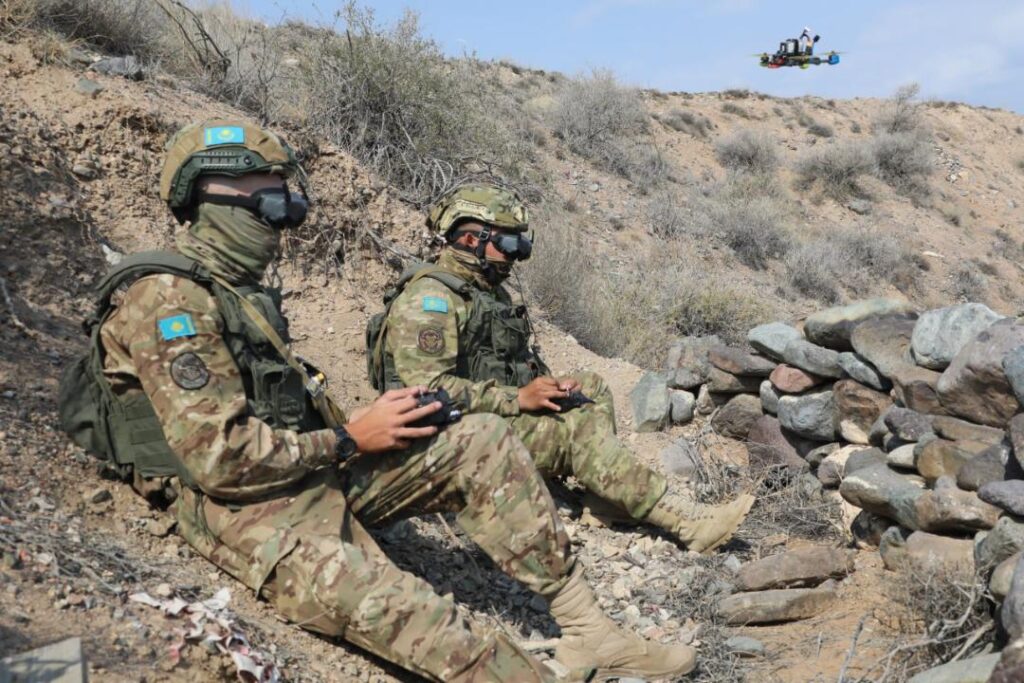
Kazakhstan’s Airborne Assault Forces (AAF) are establishing an independent production base for unmanned aerial systems (UAS), signaling a strategic shift toward greater self-reliance in military technology. According to the Ministry of Defense, approximately 100 drones have already been assembled and deployed across various branches of the armed forces. Unmanned units were formally established within the AAF two years ago. Since then, military personnel have gained hands-on experience in drone operations and developed in-house capabilities for maintenance, repair, and assembly. This has significantly reduced dependence on foreign supplies and accelerated the integration of unmanned systems into the military structure. A dedicated workshop for the production and servicing of drones began operations in December 2025. Within two months, the facility had launched a full production cycle from hardware assembly and software configuration to testing and delivery. “The 100th drone was recently assembled here,” the Ministry of Defense reported in a statement. The facility is staffed by contract personnel who have completed specialized technical training. All drones undergo mandatory testing before being dispatched to military units. Military experts note that the development of domestic UAV production is driven by the evolving nature of warfare. Recent armed conflicts have underscored the growing role of drones in reconnaissance, fire correction, target designation, and unit coordination. In 2026, systematic training of UAV operators will begin at the AAF’s training center. Instruction will be led by specialists with operational experience across various UAV platforms. Kazakhstan’s UAV units have already seen active deployment during the Desant-2025 military exercises, held from September 2-12, 2025, at the Koktal training ground in the Zhetysu region. More than 3,000 AAF personnel participated in the drills. The military's drone development effort mirrors a broader trend in Kazakhstan, where drones are increasingly used in civilian sectors. As previously reported by The Times of Central Asia, a pilot project for drone-based delivery services is set to launch in Almaty in 2026. Elsewhere, researchers in East Kazakhstan are employing drones and artificial intelligence to monitor soil and crop conditions, while engineers in Karaganda have unveiled prototypes of safety-enhancing UAVs for public use.

Tajikistan Revises Export Duties to Boost Domestic Processing

The government of Tajikistan has approved revised export duties on raw materials and semi-processed goods, a move that has prompted considerable discussion within the business community. The changes, which directly affect exporters and producers, are intended to stimulate domestic processing and reduce the export of unrefined resources. The key reform replaces fixed tariffs with duties calculated as a percentage of a product’s market value. Previously, export duties were set at: €300 per ton for leather 20% or €100 per ton for silk and cocoons 10% for cotton fiber Under the new rules, export duties fluctuate with global market prices, allowing for more adaptive regulation. According to the Ministry of Economic Development and Trade, the reform is designed to promote higher-value production within Tajikistan. “The goal of this resolution is to reduce the export of raw materials and support the production of high-value goods,” said First Deputy Minister of Economic Development and Trade Ashurboy Solekhzoda. The revised duties apply to a range of commodities including cotton fiber, leather, silk, cocoons, minerals, concentrates, plant juices, and other semi-processed goods. However, around 34 categories of raw materials remain exempt from export duties. Tajikistan’s approach mirrors policies implemented in neighboring states. Kazakhstan imposes export duties on 44 product categories, including leather, wool, scrap metal, sunflower seeds, and oil. In Uzbekistan, export duties apply to over 86 types of goods, with some rates reaching as high as 100%. Such measures aim to reduce reliance on raw material exports, stimulate domestic value-added industries, and enhance export competitiveness. Economists and industry observers say the new policy could incentivize companies to expand local processing operations and reduce dependence on commodity exports. It may also enhance Tajikistan’s attractiveness to foreign investors interested in long-term, value-driven partnerships. Over time, the revised export framework is expected to help strengthen the national economy and integrate Tajikistan more deeply into regional supply chains across Central Asia.

Kazakhstan’s Automotive Industry Boosts Revenues by Over 50% in July

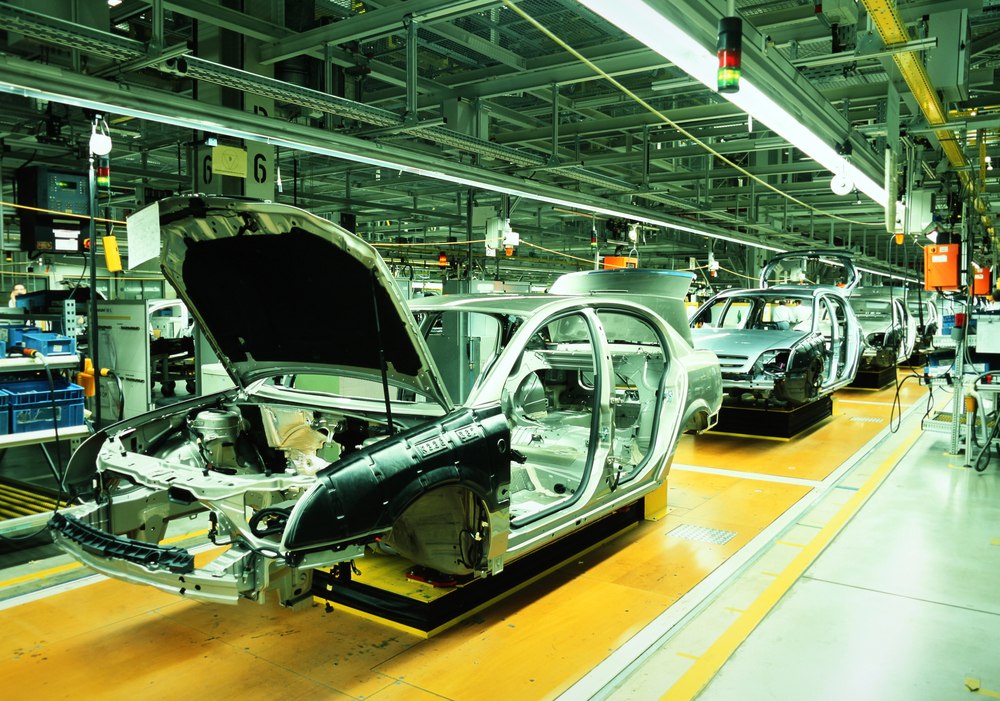
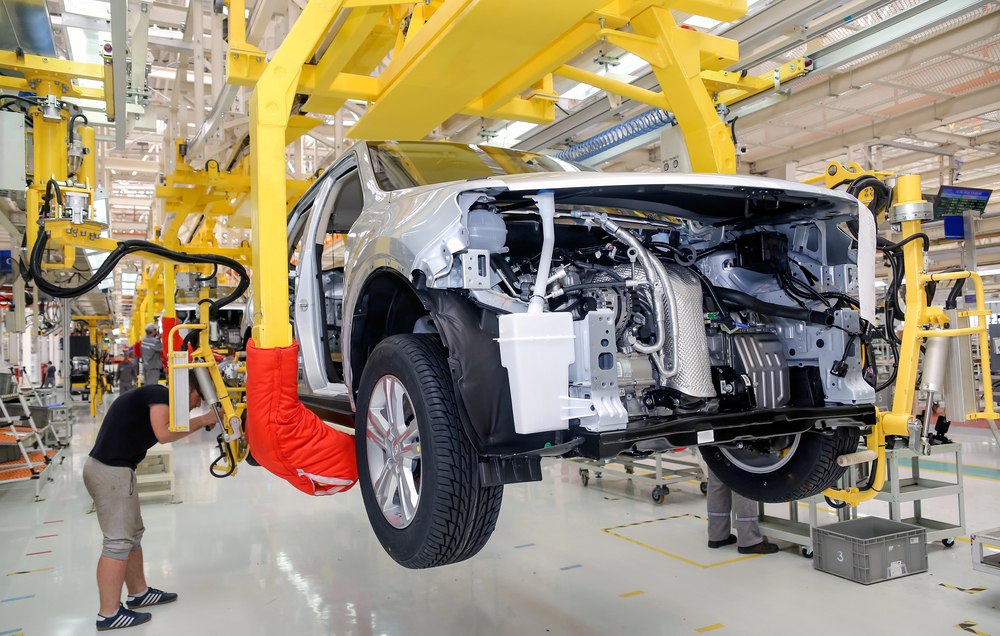
Kazakhstan’s automotive industry posted strong growth in July 2025, producing 11,700 vehicles valued at KZT 164.9 billion ($305.3 million), according to the Kazakhstan Automobile Union. This represents a 50.1% increase in production volume compared to July 2024. Data from the National Statistics Bureau shows that in July 2024, the country produced 7,800 vehicles worth KZT 100.9 billion ($186.8 million). Over the past year, the industry has not only expanded output but also significantly boosted revenue. From January to July 2025, Kazakhstan produced 83,200 vehicles valued at KZT 1.16 trillion ($21.4 billion), marking a 16.7% year-on-year increase. The automotive sector now accounts for 40.7% of the national engineering industry. Passenger cars led the growth, with 75,400 units produced, up 19% from the same period last year. Bus production also saw a 5.5% uptick, totaling more than 1,300 units. In contrast, truck output declined by 10.5% to 4,100 vehicles. Manufacturers also turned out 1,900 trailers and semi-trailers, along with 453 special-purpose vehicles. Regional Breakdown Kostanay remains the top manufacturing hub, producing 45,700 vehicles, a 6.9% increase, at Allur’s facilities. In Almaty, the Hyundai Trans Kazakhstan and Hyundai Trans Almaty plants reported a record 41.8% increase, assembling 31,200 vehicles. Production trends varied in other regions: Semey: Down 17.5% (2,400 units) Karaganda region (QazTehna): Up 28.1% Kokshetau (KAMAZ-Engineering): Up 34.6% Top Brands and Models The most produced brands from January to July were: Hyundai: 30,800 units Chevrolet: 16,500 Kia: 14,800 Jetour: 7,100 Jac: 5,600 Leading models included the Chevrolet Cobalt (13,600 units), Hyundai Tucson (11,900), Kia Sportage (nearly 7,000), Hyundai Elantra (4,900), and Hyundai Mufasa (4,600). Anar Makasheva, President of the Kazakhstani Automobile Union, credited the industry's progress to the expertise of more than 8,000 specialists: “The growth in production strengthens the position of the domestic automotive industry and opens up new opportunities for enterprises.” She also announced the upcoming launch of two new plants: the multi-brand Astana Motors Manufacturing Kazakhstan facility in Almaty and a new KIA production line in Kostanay. Together, these projects are expected to create over 5,000 jobs. As previously reported by The Times of Central Asia, Kazakhstan set a record for car sales in 2024. Domestic automotive production is projected to reach approximately 150,000 vehicles in 2025.

Tajikistan Launches National Food Reform to Boost Nutrition

A large-scale food reform program titled “Changing the Food System to Improve Nutrition” has been launched in Tajikistan, aiming to improve dietary practices and enhance national food security. The initiative is a collaborative effort between the Tajik government and several United Nations agencies, including the Food and Agriculture Organization (FAO), the United Nations Children's Fund (UNICEF), the World Health Organization (WHO), and the World Food Programme (WFP). Sustainability and Coordination at the Core With a budget of $2 million, the program targets over 2.8 million people across both urban and rural areas. The central goals include fostering sustainable agricultural practices, promoting healthy eating habits, and strengthening food governance systems. Parvati Ramaswamy, the UN Resident Coordinator in Tajikistan, described the project as a unifying platform for agencies, donors, and international partners. “Changing the food system is one of the government's priorities for achieving the Sustainable Development Goals,” she stated. The program is implemented in coordination with the Tajikistan Food Security Committee and various national ministries. “By transforming food systems through innovation, inclusiveness, and sustainability, we can raise a healthy generation,” added Mahmoud Shirindjonzoda, First Deputy Chairman of the Food Security Committee. Four Pillars of the Program The initiative is structured around four main components: National Nutrition Standards ($650,000): This includes training seminars, updated dietary guidelines for schools and hospitals, and the introduction of comprehensive nutrition standards. Building a Culture of Nutrition ($300,000): Funds will support mass awareness campaigns, educational programs, and regional outreach to encourage healthy dietary habits. Sustainable Agriculture and Green Products ($850,000): Efforts will focus on training farmers, developing school gardens, and promoting eco-friendly local products. Support will also be extended to women and youth in agribusiness, with a new certification system for environmentally sustainable goods. Monitoring and Strategic Planning ($200,000): This component will develop a national nutrition assessment system and data-driven policy frameworks. Support for Vulnerable Populations and Local Production A key objective of the program is to strengthen state mechanisms for supplying nutritious food to vulnerable population groups. It also includes the preparation of policy recommendations and methodologies to enhance national food security. Promoting local, eco-friendly alternatives to imported goods is another major element of the project, aimed at reducing reliance on external supplies while supporting domestic producers. With its comprehensive approach, the program aspires not only to improve nutrition but also to establish a long-term foundation for sustainable development in Tajikistan, where food security and public health remain pressing concerns.

Kazakhstan’s Automotive Industry to Produce Nearly 150,000 Vehicles in 2025

Kazakhstan's automotive industry is projected to manufacture approximately 149,000 vehicles in 2025, according to government forecasts. This figure represents a 5% increase over 2024, when the country produced 134,000 vehicles. "This year, the automotive industry is expected to increase domestic car production to 149,000 units, or 5% more than in 2024," the government stated. The growth is being driven by several new car assembly projects initiated in 2025, including the construction of the Astana Motors Manufacturing Kazakhstan multi-brand plant in Almaty. Located in Kazakhstan’s largest city, the Almaty facility will begin assembling Chinese automotive brands such as Chery, Haval, and Changan. The project has attracted investments totaling KZT 202 billion (approximately USD 397.3 million) and is expected to produce up to 120,000 cars annually while creating more than 3,600 jobs. The development is also expected to stimulate related industries, particularly in auto parts manufacturing. Meanwhile, in Kostanay, the construction of a new KIA Kazakhstan plant is underway. With a projected capacity of 70,000 vehicles per year, the project has received KZT 90 billion (USD 177 million) in investment and will employ around 1,500 workers. According to the Kazakhstan Automobile Union, 33,100 new vehicles were produced nationwide in the first quarter of 2025. Of these, 18,000 were assembled in Kostanay, 12,900 in Almaty, and the remainder in Semey, the Karaganda Region, Kokshetau, and other locations. In a sign of the sector’s vertical development, the Almaty Autoparts Production enterprise has commenced operations in the city’s industrial zone. It will manufacture up to 100,000 car seat sets annually for Hyundai vehicles. The government's report underscores the role of state policy in advancing Kazakhstan’s machine-building industry, particularly through the formation of investment clusters. “Of the 17 major projects that form the industrial backbone of the economy, nine are overseen by the Ministry of Industry and Construction,” the report noted. The government’s focus on investment and localization is bearing fruit. In 2023, KZT 115 billion (USD 226 million) was invested in machine building, a figure that more than doubled in 2024 to KZT 282 billion (USD 554 million). Currently, over 4,000 enterprises are active in Kazakhstan’s machine-building sector. These include 66 large companies, 105 medium-sized firms, and 3,998 small businesses. As previously reported by The Times of Central Asia, the country set a new record for new car sales in 2024.