• KZT/USD = 0.00215
  • TJS/USD = 0.10810
  • UZS/USD = 0.00008
  • TMT/USD = 0.29850
  • KZT/USD = 0.00215
  • TJS/USD = 0.10810
  • UZS/USD = 0.00008
  • TMT/USD = 0.29850
  • KZT/USD = 0.00215
  • TJS/USD = 0.10810
  • UZS/USD = 0.00008
  • TMT/USD = 0.29850
  • KZT/USD = 0.00215
  • TJS/USD = 0.10810
  • UZS/USD = 0.00008
  • TMT/USD = 0.29850
  • KZT/USD = 0.00215
  • TJS/USD = 0.10810
  • UZS/USD = 0.00008
  • TMT/USD = 0.29850
  • KZT/USD = 0.00215
  • TJS/USD = 0.10810
  • UZS/USD = 0.00008
  • TMT/USD = 0.29850
  • KZT/USD = 0.00215
  • TJS/USD = 0.10810
  • UZS/USD = 0.00008
  • TMT/USD = 0.29850
  • KZT/USD = 0.00215
  • TJS/USD = 0.10810
  • UZS/USD = 0.00008
  • TMT/USD = 0.29850
13 August 2026

Viewing results 1 - 6 of 15

Turkmenistan Fuel Duties Force Truck Drivers to Dump Diesel

Since early April, Turkmenistan has imposed restrictions limiting the amount of fuel in the tanks of trucks leaving the country to no more than 300 liters. Any excess fuel may be retained only upon payment of a duty of $5.72 per liter, about 20 times higher than the official domestic price. Faced with these costs, many drivers have opted to dispose of surplus diesel instead. On April 5, turkmen.news posted a video on its Telegram channel showing foreign truck drivers dumping large quantities of diesel directly onto the ground. According to the outlet, the practice is a response to the country’s fuel regulations. Foreign truck drivers are required to pay the duty in U.S. dollars at the official exchange rate, rather than in the local currency. As a result, each additional liter effectively costs about $5.70. By comparison, diesel prices in Hong Kong, often cited among the highest globally, are nearly $2 lower per liter. In Kazakhstan, diesel costs approximately $0.70 per liter, while in Uzbekistan it is around $1. Within Turkmenistan, domestic fuel prices remain heavily subsidized at roughly $0.05 per liter. Only citizens of Turkmenistan are permitted to pay the duty in the national currency, the Turkmen manat. All others must pay in dollars, which are then converted into manats at the official exchange rate of 3.5 manats per dollar. Experienced drivers transiting Turkmenistan typically obtain manats in advance for local expenses. In this case, however, the requirement to pay in foreign currency appears to serve an additional fiscal purpose. As a result, rather than preventing fuel shortages, the policy has caused environmental damage, with significant quantities of diesel dumped onto the soil. Turkmenistan drivers are also reported to engage in similar practices, particularly those traveling to or through Kazakhstan, where refueling is cheaper than paying approximately $1 per excess liter at home. The impact is not limited to environmental concerns. Freight carriers operating within Turkmenistan have already begun increasing logistics prices, reflecting the added costs associated with the new regulations.
Kyrgyzstan Suspends Private Driving Schools in Bid to Improve Road Safety

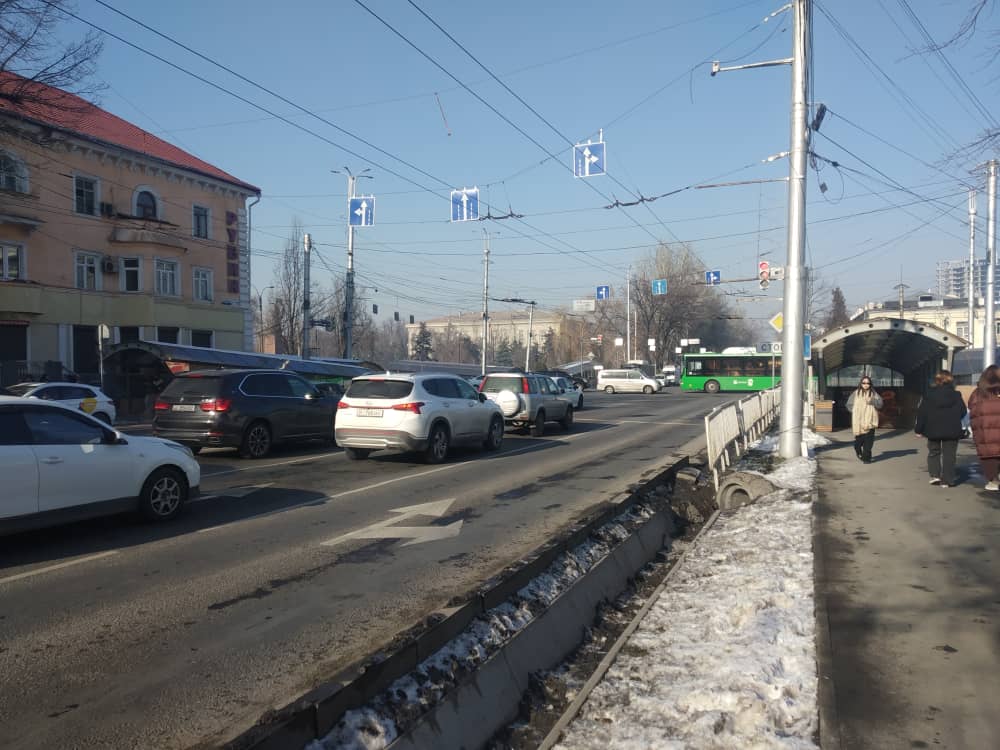
Kyrgyzstan has temporarily suspended the operations of all private driving schools as part of a sweeping reform aimed at improving driver education and road safety. On January 29, President Sadyr Japarov signed a decree introducing a trial period, effective until August 30, 2026, during which driver training will be conducted exclusively through state-run driving schools.  The reform also mandates a significant extension of the training period from the current 2.5 months to 10 months. Authorities say the new measures are designed to reduce traffic accidents and eliminate corruption in the issuance of driver's licenses. As of 2025, Kyrgyzstan had 340 driving schools, including 74 state-run institutions and 266 privately operated ones. Officials cite systemic issues in the private sector, including substandard instruction, widespread corruption, and the illegal sale of licenses. Daiyrbek Orunbekov, Head of the Information Policy Service under the Presidential Administration, addressed public concerns over the extended training period in a Facebook post on January 29.  He emphasized that the 10-month program is intended solely to improve driver competence and reduce accidents. “A driver who has acquired sufficient knowledge poses no danger to themselves, passengers, or other road users,” Orunbekov wrote. Under the new model, instruction will include both theoretical and practical training held two to three times per week, with each session lasting two to three hours. Some classes may be offered online. The curriculum will also cover psychological preparation and road ethics. In response to critics who argue that the current 2.5-month course is adequate, Orunbekov said that meaningful learning cannot occur in such a short timeframe. He cited international practices, noting that in many developed countries, driver training takes significantly longer. In Finland, the process can last up to a year and includes a probationary license period; in Germany, it ranges from six to twelve months; in Sweden and Norway, up to a year; and in the United Kingdom, Canada, the U.S., Australia, and New Zealand, it can take up to two years. The reform follows concerning national road safety data. In 2025 alone, Kyrgyzstan recorded 8,456 traffic accidents, resulting in 900 deaths and 12,169 injuries. Over the past decade, more than 75,000 accidents have claimed over 9,000 lives. According to Orunbekov, many current drivers lack even basic knowledge of traffic regulations and, in some cases, cannot recall where they were trained. He described this as a lingering consequence of a flawed and often corrupt driver education system.

Kazakh Politician Proposes Allowing Private Laboratories to Conduct Driver Intoxication Tests

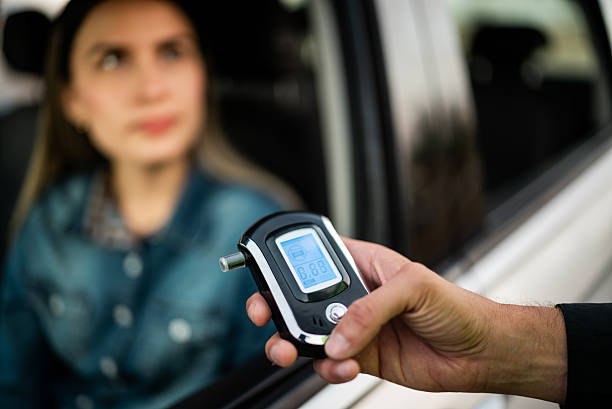
Zhanna Asanova, a member of the Senate, the upper house of Kazakhstan’s parliament, has proposed allowing private medical laboratories to conduct examinations for alcohol and drug intoxication in drivers. The proposal was submitted as a parliamentary inquiry addressed to the government. At present, such medical examinations are conducted exclusively by state-run medical institutions equipped with laboratory facilities. However, Asanova argued that the capacity of this system is severely limited. Citing Almaty as an example, she noted that Kazakhstan’s largest city, with a population exceeding two million, currently has only two state laboratories handling all intoxication-related cases. This, she said, hinders the timely processing of examinations. Asanova emphasized that the current centralized model creates both procedural delays and corruption risks. The absence of alternative institutions undermines public trust in the objectivity of results and creates opportunities for abuse. “The remoteness and overload of laboratories mean that individuals remain in a vulnerable procedural position for hours, while police officers waste time and resources. This undermines the overall effectiveness of the law enforcement system,” she said. The senator also noted that citizens currently have no right to choose their testing institution or request an independent re-examination, which restricts their ability to mount an effective legal defense. Another risk, according to Asanova, stems from the heavy workload and outdated equipment in some state laboratories. These limitations can lead to procedural violations during sample collection, storage, and analysis, ultimately compromising the reliability of evidence presented in court. She also pointed out that existing equipment in state labs is not always capable of detecting a broad spectrum of psychoactive substances, including synthetic, combined, and toxic compounds such as so-called “salts”, which require more advanced testing technologies. Meanwhile, Kazakhstan has a network of private laboratories equipped with modern diagnostic tools and staffed by qualified professionals, but their resources remain largely untapped within the current system. As a solution, Asanova proposed creating a new model that would allow accredited private laboratories to conduct medical examinations on equal footing with state institutions, and to include them in a unified national register. She also called for granting citizens the right to independently select a laboratory for repeat testing. The initiative aligns with broader efforts to reform Kazakhstan’s road safety system. Previously The Times of Central Asia reported that Senator Marat Kozhaev had proposed introducing an “idiocy test” for repeat traffic offenders as a potential basis for revoking their driving licenses.

Daines, Gor, Meredov Launch C5+1 Talks on Next-Gen U.S.–Central Asia Ties

Washington, D.C. — The United States and the five nations of Central Asia – Kazakhstan, Kyrgyzstan, Tajikistan, Turkmenistan and Uzbekistan – marked a decade of partnership on Thursday with an opening panel at the C5+1 Tenth Anniversary Business Conference hosted by the U.S. Department of State. U.S. Senator Steve Daines (Montana), Sergio Gor, the newly appointed U.S. Special Envoy for South and Central Asia and Ambassador to India and Rashid Meredov, Turkmenistan’s Foreign Minister kicked things off with a bold forward-looking vision centered on deeper economic cooperation, net two-way investment flows, and a bolstered U.S. commitment to the region. Held at the Kennedy Center’s REACH campus, the session brought together senior U.S. officials, and Central Asian leaders and private sector companies to deepen a decade of growing cooperation, building on Trump’s transactional approach and first term achievements. Celebrating a Decade of Cooperation U.S. Senator Steve Daines, who moderated the session, not only praised the C5+1 platform’s record of achievements since 2015 but went further. He called the anniversary “a momentous occasion for our nations” to move forward in friendship and a sense of pragmatism, anchored in growing commerce, new investments, cultural exchange, and security cooperation. Daines emphasized that relations with the C5 countries are “vitally important for our national security and prosperity,” adding that the event aimed to pave the way for stronger, results-driven partnerships. Turning to the next speaker, Ambassador Sergio Gor, Daines offered unusually personal remarks, describing him as “truly one of the closest confidants of President Trump.” He noted that “Mr. Gor’s nomination demonstrates President Trump and his administration’s commitment to fostering closer ties between all of our nations.” Daines expressed eagerness to work with  “Sergio and the rest of President Trump’s team” to build upon the successes of previous US-Central Asian relations. U.S. Envoy Stresses Renewed Engagement In his address, Ambassador Sergio Gor,  underscored the administration’s renewed commitment to the region. He recounted that he and Deputy Secretary of State Christopher Landau had visited Kazakhstan and Uzbekistan just last week, praising the hospitality and partnership shown by both governments. Gor extended his appreciation to Kazakhstan, which he noted had “recently become a sponsor of the Kennedy Center,” and thanked Ambassador Richard Grenell for hosting the forum. Gor emphasized that “this President is making this partnership a top priority,” adding that the focus on the five Central Asian nations “is something that has been ignored in past administrations.” According to Gor, President Trump “has made a commitment and has instructed every individual here within the U.S. government to make sure [Central Asia] gets the priority that it deserves.” He emphasized the need to ramp up energy cooperation, open new trade avenues, and secure supply chains for critical minerals. “We are committed to further developing Central Asia’s vast mineral wealth and advancing critical-mineral security,” Gor underscoring C5+1’s shift from dialogue to deliverables and mutual cooperation. He also previewed the White House leaders’ meeting and dinner scheduled for later in the day, noting that several “historic deals” in commerce...

Kyrgyzstan to Nationalize Driving Schools and Reform Driver Training

Kyrgyzstan has announced sweeping reforms to its driver training system, set to take effect at the beginning of 2026. All private driving schools will be brought under state control, and the duration of driver training will be extended from three months to fourteen. The reform was presented at a press conference in Bishkek by Kanybek Tumanbaev, Chief of Staff to the President. He stated that the initiative aims to improve road safety and curb corruption in the issuance of driver’s licenses. “There are too many traffic accidents in Kyrgyzstan today. Young people admit to purchasing driver’s licenses through private driving schools, where practical training often lasts just two or three hours,” Tumanbaev said. Under the new system, practical instruction will take place across different seasons, including both summer and winter driving conditions. The curriculum will also include courses on vehicle maintenance and driving etiquette. All exams will be administered under state supervision to prevent bribery and ensure consistent standards. Private driving instructors will not lose their jobs; instead, they will be integrated into the new state-run driving schools. The cost of training for citizens is expected to remain unchanged. Authorities also plan to introduce a partially online format for theoretical classes. As part of the reform, Kyrgyzstan will abolish indefinite driver’s licenses. Beginning in 2026, all newly issued licenses will be valid for 10 years, aligning with international standards. Citizens holding permanent licenses will be required to exchange them for the new format starting in January 2026. The replacement process will be free of charge and will not require retesting. The reforms are a response to persistently high accident rates and what officials describe as inadequate driver education. In 2024, Kyrgyzstan recorded 7,423 traffic accidents resulting in 514 deaths. In the first nine months of 2025, that figure rose to 9,078 accidents with 636 fatalities.

New Russian Border Rules Cause ‘Probka’ for Kazakhs at the Border

Russia’s introduction of a trial of new entry procedures for foreign citizens, including Kazakhs, on June 30, 2025, has led to massive traffic jams at border crossings, despite official claims that registration through the ruID app is voluntary. In practice, drivers without a required QR code have been turned back at the border, stranding cargo and sparking frustration on both sides. Bureaucracy Meets Gridlock Under the updated rules, citizens from visa-free countries, including Kazakhstan, must present a QR code generated no later than 72 hours before arriving at the border. Officially described as voluntary, the requirement has effectively become mandatory. At the Zhaisan border crossing in Kazakhstan’s Aktobe region, dozens of heavy trucks have lined up, with queues reportedly stretching 10 kilometers. Aslan Arzymbekov, head of the regional emergency response department, attributed the delays directly to the new QR code requirement. Many drivers had not registered in advance and were left waiting for hours or even days. Local emergency services and military personnel have been providing food, water, and medical assistance to stranded drivers, who have been sleeping in their vehicles amid poor sanitary conditions. “I’ve been standing here since yesterday. My electronic queue is about to expire,” said truck driver Mikhail Khegai. “Reservations Are Expiring. There Is No Passage.” Drivers say they had secured a place in the electronic queue but were unable to reach the checkpoint in time. As a result, trucks carrying time-sensitive or perishable goods are missing delivery deadlines, causing financial losses and fraying business relationships. “It’s a terrible mess. We've been stuck here for seven kilometers. There's nothing to eat. Everyone is waiting,” said carrier Farkhatbek Tursynaliev. According to Kazakhstan’s Ministry of Internal Affairs, congestion has also been reported at the Zhana Zhol checkpoint in North Kazakhstan and the Bokei Khan crossing in Atyrau region. While local police are attempting to manage traffic and assist drivers, the core issues remain unresolved. Officials Offer Conflicting Explanations Kazakhstan’s State Revenue Department in Aktobe region cited roadworks on the Samara-Shymkent highway, ongoing since May 13, as a contributing factor. Temporary traffic lights and barriers have reduced throughput, with completion expected in early July. Entrepreneurs, however, have lodged nearly 200 complaints in the first three days of the new rules, according to the National Chamber of Entrepreneurs “Atameken.” Ruslan Kuishinov, the chamber’s deputy director for legal affairs, called for a more transparent and organized system. “We would like to have a visual storage display so drivers can see their status and proceed calmly,” he said. The Russian Embassy in Kazakhstan has rejected claims that QR codes are mandatory, attributing the delays to seasonal increases in border traffic. “No additional requirements, including QR codes, are being imposed on citizens,” the embassy stated via its official Telegram channel. Nevertheless, drivers and border officials on the ground continue to assert that without a QR code, entry is denied, regardless of what official statements claim. While framed as a voluntary digital upgrade, the ruID system has effectively created a bottleneck for both people...