Viewing results 1 - 6 of 15
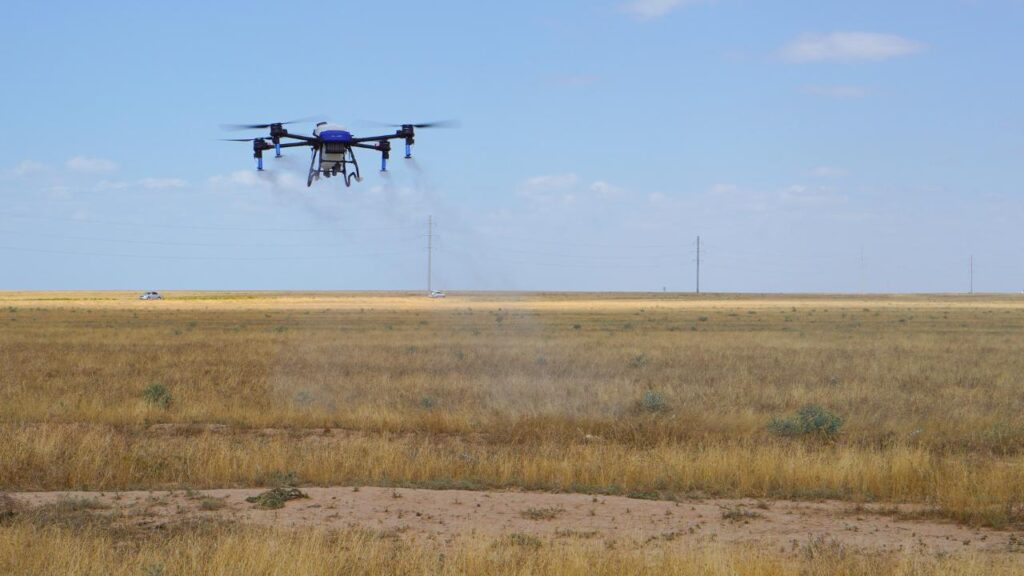
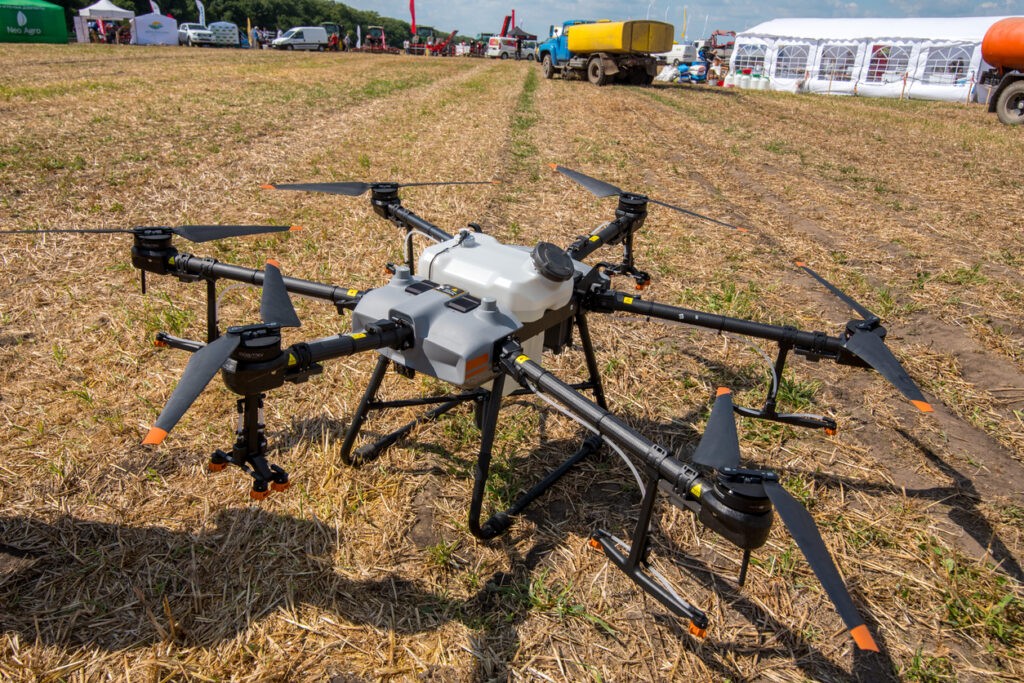
Kazakhstan plans to double its machinery and equipment for combating locust infestations during the 2025 growing season. The expansion of locust control measures and preparations for spring fieldwork were key topics discussed at a government meeting on January 9. Deputy Minister of Agriculture Ermek Kenzhekhanuly reported that 247 pieces of equipment were deployed for chemical field treatments in 2024. This number will rise to 443 in 2025, including 46 agro drones and 7 monitoring drones newly acquired by the Ministry of Agriculture. Enhanced Strategies and Subsidies Building on a successful pilot project in the Turkestan region last spring, the Ministry has adopted centralized services for the purchase, transport, and storage of pesticides and field treatment. The program tested agro drones for spraying fields and operated under a unified "one supplier - all work" principle. To further support farmers and service providers, the government will reimburse 25% of the cost of wheeled spraying machinery and agro drones, making these technologies more accessible. Deputy Prime Minister and Minister of National Economy Serik Zhumangarin emphasized the need to restructure sown areas, reducing wheat cultivation in favor of oilseed and other high-margin crops. Results and Regional Cooperation Kazakhstan’s locust control measures proved effective in 2024, with over 3.1 million hectares treated - 23% more than the planned 2.5 million hectares. This protected agricultural crops from significant damage by grasshopper swarms. Locust infestations in Kazakhstan have escalated in recent years, affecting 514,000 hectares in 2020 and rising to 1.6 million hectares by 2023. According to the UN’s Food and Agriculture Organization, locust outbreaks threaten agriculture across Central Asia and the South Caucasus, endangering over 25 million hectares of farmland and impacting approximately 20 million people. To address the issue, Kazakhstan continues close cooperation with neighboring countries, including Russia, to monitor and mitigate the potential spread of locusts.
The potential of drones to transform agriculture in Kazakhstan was a key topic at a government meeting on November 26. Officials discussed the environmental and economic advantages of adopting agro-drones over traditional spraying equipment. International examples demonstrate that agro-drones can significantly reduce water usage, lower CO2 emissions, and access hard-to-reach areas more effectively. Sanzhar Nurgazinov, representing a company that operates agro-drones, highlighted their efficiency: while wheeled sprayers require 150 liters of water per hectare—amounting to 750,000 liters for 5,000 hectares—a drone uses just 50,000 liters for the same area, reducing water consumption more than 15-fold. Additionally, drones prevent the 6% crop loss caused by the tracks of wheeled sprayers, ensuring higher harvest yields. To advance drone adoption, Kazakhstan’s Ministry of Agriculture has partnered with the Chinese company Eavision to import 80 drones for pest and disease management. Furthermore, a joint venture, Sunkar Eavision International LLP, has been established to assemble drones locally in the Alatau Special Economic Zone near Almaty. The Ministry has been tasked with creating a roadmap by February 2025 for integrating agro-drones into the country’s agricultural practices. This plan includes establishing service centers, training specialists, and developing financial support programs to help farmers acquire this cutting-edge technology. By embracing agro-drones, Kazakhstan aims to modernize its agricultural sector, boosting efficiency and sustainability while addressing the challenges of water conservation and crop protection.
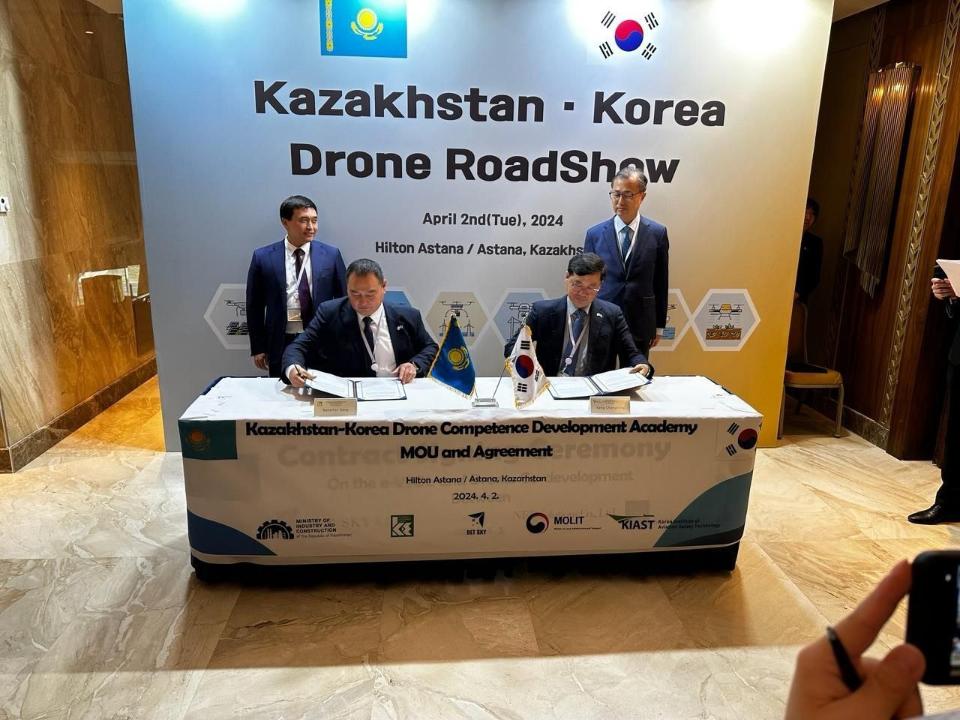
On April 2nd, Astana hosted the “2024 Kazakhstan-Korea Drone Roadshow” which included a seminar on the development of UAVs and the creation of the Kazakhstan-Korea Drone Competence Development Academy. As reported by the Kazakh Ministry of Industry and Construction, advanced solutions were presented for the use of drones in various fields, training of drone operators, and the control and supervision of the use of UAVs. The seminar also covered the development and improvement of regulatory documents and discussions on Kazakh-Korean cooperation in UAV development. According to the ministry, the event will help Kazakhstan join the leading number of countries involved in the development and use of unmanned aerial systems.