• KZT/USD = 0.00222
  • TJS/USD = 0.10820
  • UZS/USD = 0.00009
  • TMT/USD = 0.29760
  • KZT/USD = 0.00222
  • TJS/USD = 0.10820
  • UZS/USD = 0.00009
  • TMT/USD = 0.29760
  • KZT/USD = 0.00222
  • TJS/USD = 0.10820
  • UZS/USD = 0.00009
  • TMT/USD = 0.29760
  • KZT/USD = 0.00222
  • TJS/USD = 0.10820
  • UZS/USD = 0.00009
  • TMT/USD = 0.29760
  • KZT/USD = 0.00222
  • TJS/USD = 0.10820
  • UZS/USD = 0.00009
  • TMT/USD = 0.29760
  • KZT/USD = 0.00222
  • TJS/USD = 0.10820
  • UZS/USD = 0.00009
  • TMT/USD = 0.29760
  • KZT/USD = 0.00222
  • TJS/USD = 0.10820
  • UZS/USD = 0.00009
  • TMT/USD = 0.29760
  • KZT/USD = 0.00222
  • TJS/USD = 0.10820
  • UZS/USD = 0.00009
  • TMT/USD = 0.29760
13 September 2026

Viewing results 1 - 6 of 17

One Target, 145 Meters: Kyrchyn’s Archers Take on Korea’s Long-Range Test

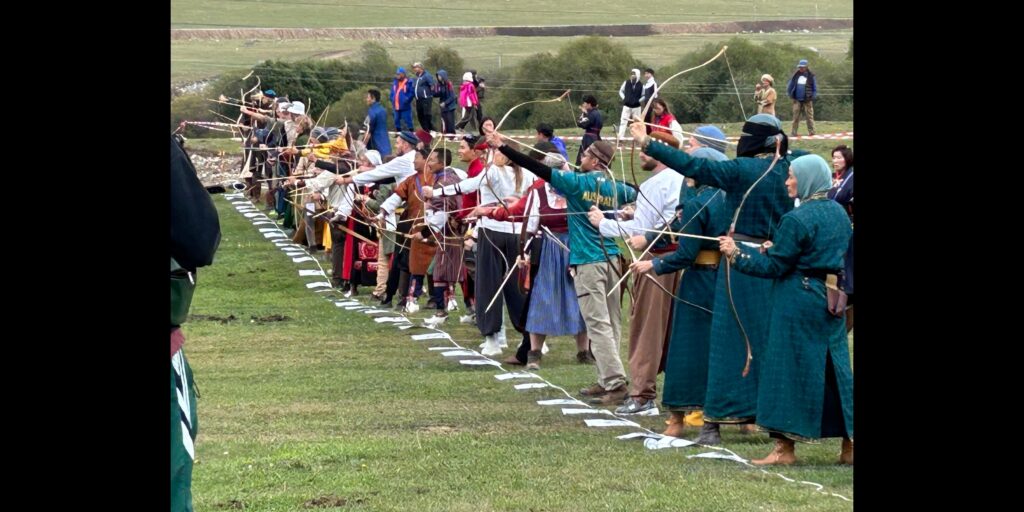
The archers formed a long, uneven line across the grass at Kyrchyn Gorge on Friday, bows rising almost in unison beneath a bank of clouds. Their target was 145 meters away, far enough for the arrows to climb visibly before dropping back toward the range. It was the final and most unfamiliar test in the World Nomad Games’ traditional ground archery program: a Korean-style competition at a distance many of the international entrants had never attempted before. [video width="1024" height="576" mp4="https://timesca.com/wp-content/uploads/2026/09/WhatsApp-Video-2026-09-04-at-17.18.45.mp4"][/video] A total of 196 archers from 51 countries took part in the traditional archery program at Kyrchyn. The first two days used Kyrgyz and Turkish targets at shorter distances. Friday’s Korean round pushed both men and women out to 145 meters. Under the special Korean rules, each competitor shoots 15 qualification arrows across three rounds. The top 16 men and top 16 women advance to a 10-arrow final. Korean national team archers served as judges and officials rather than competing, leaving international archers to take on one of Korea’s defining traditional distances. For Kristina Dolgilevica, coach of Great Britain’s ground-archery team and president of the UK Traditional Archers’ International Association, the distance changes almost everything. “You have to adjust and adapt in so many ways,” she told The Times of Central Asia. “Not just your technique, not just your aim. You have to also adjust and tweak your equipment.” The British longbows were only one part of a field whose equipment, experience, and expectations varied widely. Germany’s Jürgen Junkmanns had at least faced the problem before. The German prehistoric-archery specialist and bowyer has spent decades studying historical bows and said he had travelled to Korea several times to shoot there. Even so, he described the distance as unusual at home. “In Germany we don’t shoot these distances, so we’re not used to it,” he said. For Canada, there was no opportunity to practice it at all. Vancouver-based Patricia Gonsalves, founder of Lykopis Archery, has more than three decades of experience in traditional archery and was accompanying Canada’s sole competitor. “We can’t train this distance in Canada,” she said. “There’s nowhere that we can train for this.” The weather added another variable. Gonsalves said archers from British Columbia were accustomed to rain, but Kyrchyn’s rapid changes had forced them to think differently about their arrows and fletching. A strong gust matters more when an arrow remains airborne for so long. Austria’s Kunda Kiba came to Kyrchyn with far less experience. She said this was her first World Nomad Games and her first competition in this form of archery. Her assessment was simpler: “It was wonderful. It’s very fun, and that’s what I wanted.” The international mix was part of the appeal for Britain’s John Stanley, who was also writing about the Games for World Archery. He had only shot 145 meters once before, but the distance was not what made the week feel unusual. “Every 20 minutes, there’s some brand-new experience you’ve never had before,” Stanley said. “You’re sitting on...
Kazakhstan and South Korea Forward Cooperation in Forestry

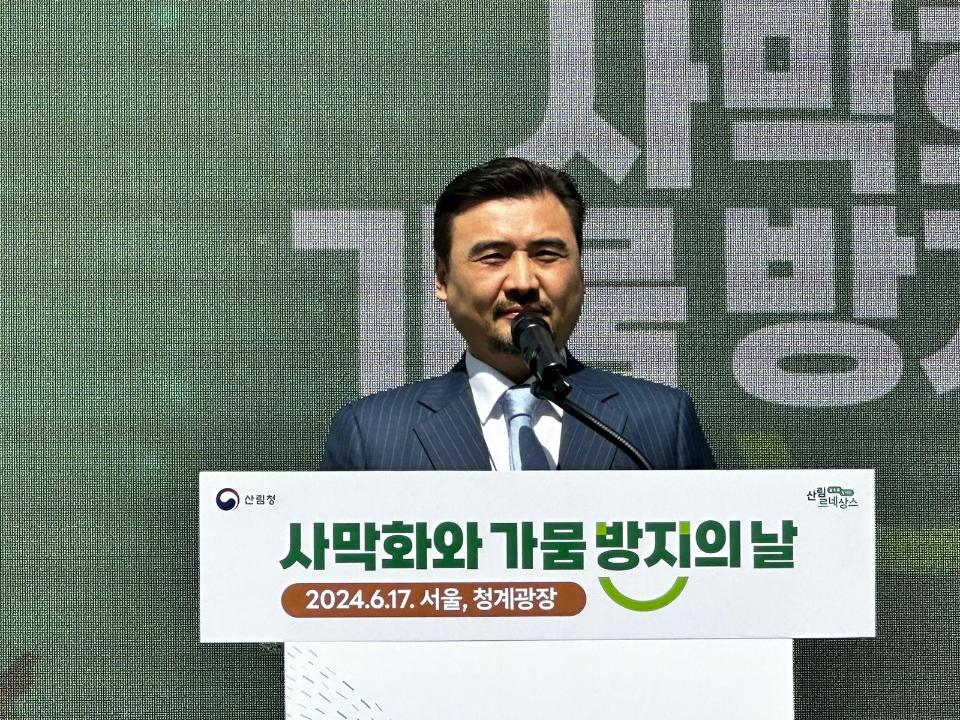
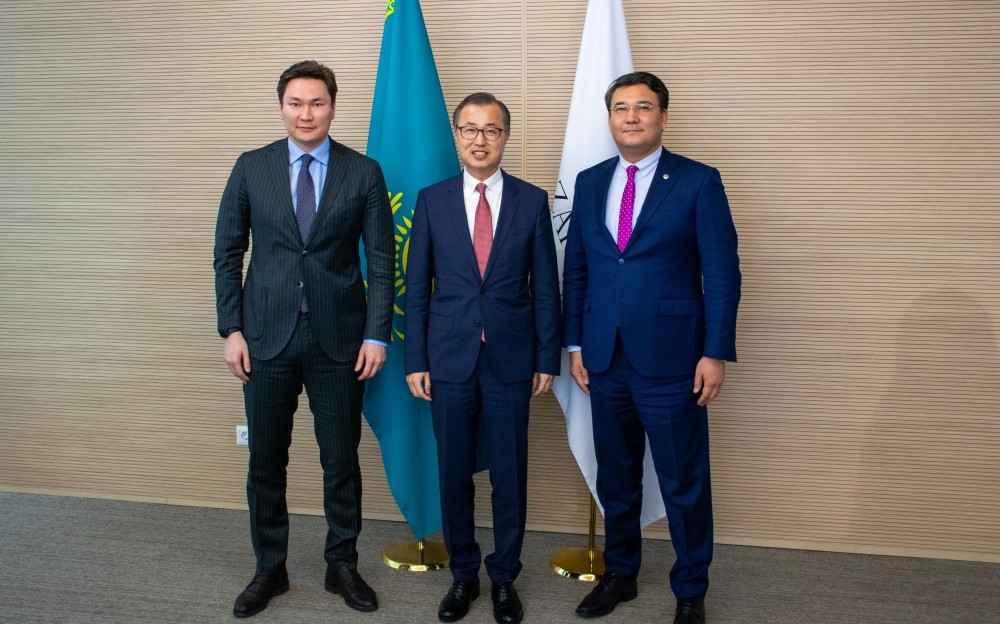
On June 17, Kazakhstan’s ambassador to South Korea, Nurgali Arystanov, participated in a celebration of the World Day to Combat Desertification and Drought, established by a UN General Assembly resolution in 1994. Organized in Seoul by the Korea Forest Service, the event was attended by major Korean companies, private and international organizations including the Asian Forest Cooperation Organization (AFoCO), as well as students from ecological clubs promoting anti-desertification activities. In his speech, reported by Kazakhstan’s Foreign Ministry, Arystanov noted the successful cooperation between Kazakhstan and the Republic of Korea in the development of forestry, including a joint project to plant saxaul on the desiccated bed of the Aral Sea. He also hailed Astana’s Kazakhstan-Korea Friendship Garden a “symbol of friendship between the Kazakh and Korean peoples.” The ambassador expressed his appreciation of the signing of a Memorandum of Understanding between the Ministry of Ecology and Natural Resources of Kazakhstan and the Korea Forest Service during Korean President Yoon Suk Yeol’s state visit to Kazakhstan on June 11-13. The document provides for cooperation in combating forest fires and the introduction of advanced technologies for monitoring forests using drones, artificial intelligence, and satellites. Progress on cooperation in the forestry sector was further discussed by Ambassador Arystanov and the Minister of the Korea Forest Service, Nam Sung-Hyun, during the former’s visit to Seoul.    

Kazakhstan Seeks Investment from South Korea

Over the past ten years, South Korea's investments in Kazakhstan's economy have exceeded $6.8 billion and several joint Kazakh-Korean projects with investments of about $1 billion are currently under implementation. The potential to increase and diversify bilateral trade and expand investment cooperation was the focus of a meeting on 16 April between Gabidulla Ospankulov, Chairman of the Investment Committee of the Ministry of Foreign Affairs of Kazakhstan, Yerzhan Yelekeyev, Chairman of the Management Board of National Company Kazakh Invest, and Joe Tae-Ik, Ambassador of the Republic of Korea to Kazakhstan. During the meeting, Ospankulov spoke of the large number of Korean companies working in Kazakhstan and emphasizing that developing economic and investment relations with South Korea is a priority, pledged comprehensive support to companies implementing projects in the country. Kazakh Invest’s Yelekeyev gave thanks to Korean car brands for their input into the Kazakhstan’s successful development of the domestic automotive industry and reported on the high potential for strengthening partnerships in tourism, energy, and petrochemistry. Looking ahead, he stated, “South Korean entrepreneurs work in an export-oriented economy and create competitive, innovative products. We want to adopt this expertise and technology in developing priority sectors in Kazakhstan. In this regard, we are ready to provide a full range of support services, including an existing package of preferences." In return, Ambassador Joe Tae-Ik confirmed his intention to assist in implementing new joint investment projects.

Kazakhstan-Korea Drone Roadshow in Astana

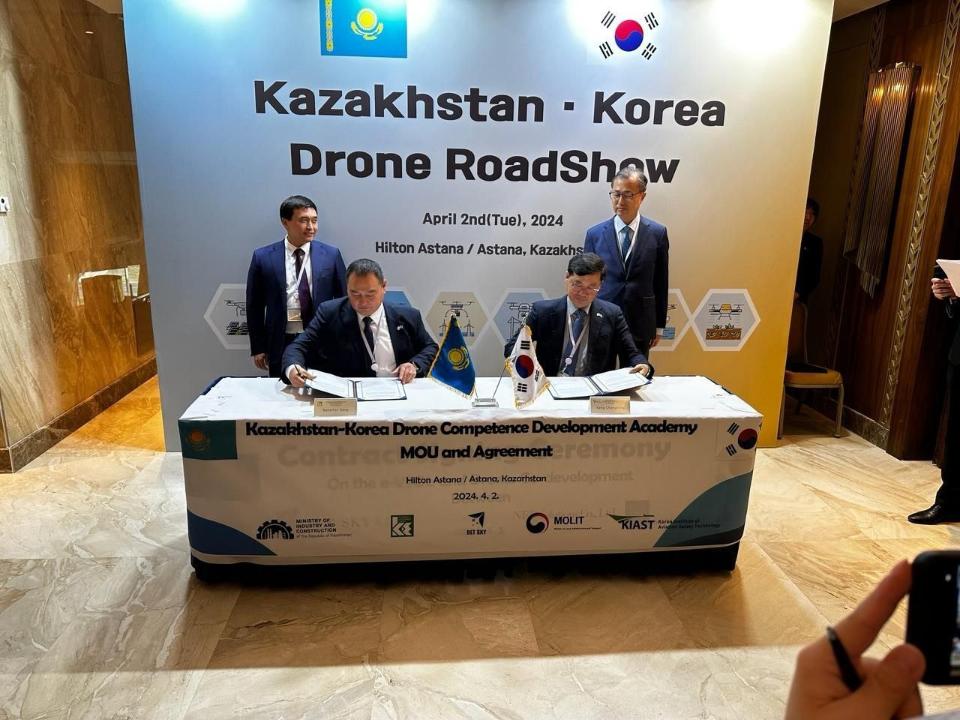
On April 2nd, Astana hosted the “2024 Kazakhstan-Korea Drone Roadshow” which included a seminar on the development of UAVs and the creation of the Kazakhstan-Korea Drone Competence Development Academy. As reported by the Kazakh Ministry of Industry and Construction, advanced solutions were presented for the use of drones in various fields, training of drone operators, and the control and supervision of the use of UAVs. The seminar also covered the development and improvement of regulatory documents and discussions on Kazakh-Korean cooperation in UAV development. According to the ministry, the event will help Kazakhstan join the leading number of countries involved in the development and use of unmanned aerial systems.

Asian economies scale up direct investments in EEU — report

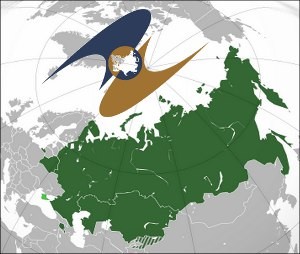
BISHKEK (TCA) — Eurasian Development Bank’s (EDB) researchers believe that in 2017 direct investors from Eurasian countries will be more active in the Eurasian Economic Union (EEU) countries of Armenia, Belarus, Kazakhstan, Kyrgyzstan and Russia, EDB’s press office said on December 27. The development of China’s “One Belt, One Road” initiative is expected to become one of the stimuli for FDI inflows. Chinese investors have already begun to show interest not only in hydrocarbon production, but also in transport, infrastructure, and the power sector, says a report prepared by Eurasian Development Bank’s Centre for Integration Studies. Continue reading

Korea, WFP partner to promote food security, reduce poverty in Kyrgyzstan

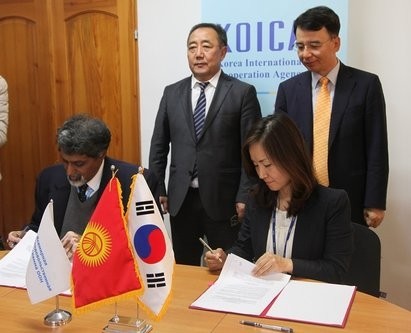
BISHKEK (TCA) — The Korea International Cooperation Agency (KOICA) and the United Nations World Food Programme (WFP) on October 4 signed a three-year agreement to improve food security, nutrition and resilience to climate-related and economic shocks for more than 80,000 vulnerable people in four Kyrgyz provinces, the two organizations said in a joint news release. Continue reading