• KZT/USD = 0.00215
  • TJS/USD = 0.10810
  • UZS/USD = 0.00008
  • TMT/USD = 0.29760
  • KZT/USD = 0.00215
  • TJS/USD = 0.10810
  • UZS/USD = 0.00008
  • TMT/USD = 0.29760
  • KZT/USD = 0.00215
  • TJS/USD = 0.10810
  • UZS/USD = 0.00008
  • TMT/USD = 0.29760
  • KZT/USD = 0.00215
  • TJS/USD = 0.10810
  • UZS/USD = 0.00008
  • TMT/USD = 0.29760
  • KZT/USD = 0.00215
  • TJS/USD = 0.10810
  • UZS/USD = 0.00008
  • TMT/USD = 0.29760
  • KZT/USD = 0.00215
  • TJS/USD = 0.10810
  • UZS/USD = 0.00008
  • TMT/USD = 0.29760
  • KZT/USD = 0.00215
  • TJS/USD = 0.10810
  • UZS/USD = 0.00008
  • TMT/USD = 0.29760
  • KZT/USD = 0.00215
  • TJS/USD = 0.10810
  • UZS/USD = 0.00008
  • TMT/USD = 0.29760
12 August 2026

Viewing results 1 - 6 of 25

Kyrgyz Citizens to Be Allowed to Pass On E-Wallet Funds to Heirs

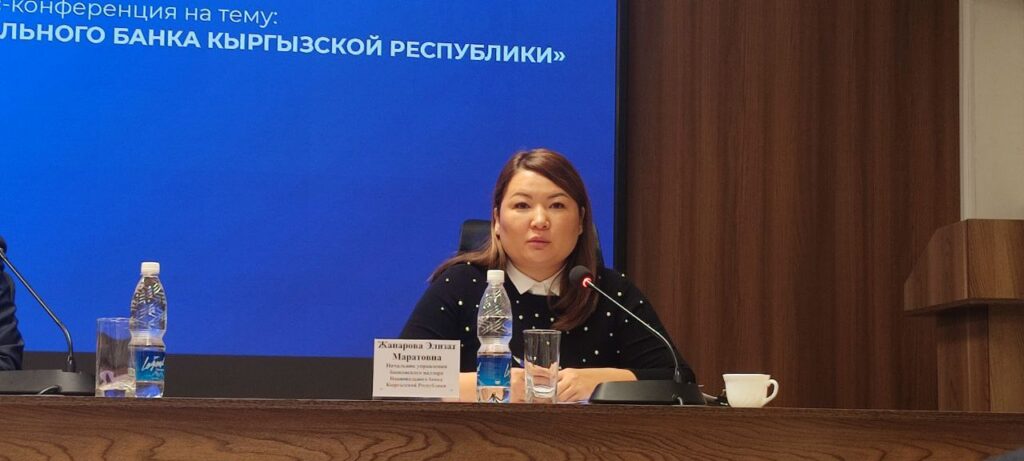
Kyrgyzstan’s parliament, the Jogorku Kenesh, has approved a government initiative to regulate the inheritance of electronic money, with the National Bank also backing the proposal. According to the regulator, the popularity of electronic wallets in the country continues to grow. Their number has exceeded 6.5 million, marking an annual increase of about 20%. In the first six months of last year alone, the volume of electronic wallet transactions reached $3.2 million, while the total number of transactions amounted to 132 million. At the same time, there have been no unified rules governing the inheritance of electronic funds, leading to disputes, including legal conflicts. The National Bank noted that many e-wallets remain unidentified and that legislation has lagged behind the rapid development of digital financial instruments. Following the completion of public consultations, amendments are expected to be introduced to the Civil Code of Kyrgyzstan recognizing electronic money as part of a citizen’s property. This would allow funds held in electronic wallets to be inherited on an equal basis with bank accounts. Previously, commercial banks were required to resolve such matters independently, which often resulted in legal disputes. In some cases, after the death of an e-wallet owner, funds were transferred to only one heir, typically the first to contact the bank. The new law is intended to establish a clear and uniform inheritance procedure. Under the draft amendments, once notified of a customer’s death, a bank will be required to block transactions on the e-wallet account at the request of a notary. After heirs’ rights are verified, the funds will be distributed in accordance with the procedure established by law. Financial institutions will also be required to provide notaries with information not only about the deceased’s bank deposits but also about their electronic wallets and other financial assets. In comments to The Times of Central Asia, representatives of the National Bank said that the sums citizens hold in electronic wallets have become significant, prompting the regulator to support the initiative put forward by the Ministry of Justice. Elizat Zhaparova, head of the banking supervision department, noted that amendments to the law on the protection of bank deposits were adopted last year, and the National Deposit Protection Agency now guarantees the safety of bank deposits. She added that extending similar inheritance provisions to electronic wallets is a logical step. The reform marks a move toward aligning Kyrgyzstan’s digital financial sector with civil law, closing a regulatory gap and reducing the risk of disputes among heirs.

Will E-Commerce Become the New Oil for Kazakhstan?

On February 26, Almaty will host Ranking Business Day, a professional Open Talk discussion titled “Will E-Commerce Become the New Oil for Kazakhstan?” Amid ongoing structural economic transformation and the search for new growth drivers, e-commerce has emerged as one of the country’s most dynamic sectors. Online commerce is already exerting a significant impact on retail, logistics, banking, and the development of small and medium-sized enterprises. However, a central question remains: can e-commerce evolve into a strategic pillar of the economy, comparable in importance to the raw materials sector? As part of the event, Ranking.kz will present a comprehensive industry study examining the current state and future prospects of Kazakhstan’s marketplace sector. The analysis covers market structure and dynamics, the positioning of domestic and foreign players, the economic and social impact of e-commerce, and the role of state regulation. Participants will address the following issues: the current state of e-commerce in 2025-2026; the impact of cross-border trade and intensifying competition with international platforms; the implications of new consumer protection legislation for the market; risks and potential scenarios for the sector’s sustainable development in 2026. Special attention will be given to balancing the interests of the state, businesses, and consumers, as well as fostering a competitive environment that supports the growth of domestic companies. Ranking Business Day will bring together representatives of government agencies, the financial sector, industry associations, marketplaces, and logistics companies for an open professional dialogue. The event will take place at the Mercure Almaty City Center and will begin at 9:00 a.m. Information partners of the event include The Times of Central Asia, Kapital.kz, Kursiv.Media, Tengrinews, National Business, Bluescreen.kz, and Profit.kz.

Kazakhstan to Ban Untrustworthy Sellers from E-Commerce Marketplaces

Kazakh authorities are moving to strengthen regulations for sellers operating on online marketplaces. According to Bolat Tanabergenov, chairman of the Consumer Protection Committee under the Ministry of Trade and Integration, sellers found to have violated consumer rights could be banned from conducting business on online platforms. A surge in complaints related to online commerce is driving the proposed reforms. Between 2022 and 2024, the number of consumer complaints rose 5.5 times, from 2,500 to 14,500, according to ministry data. In the first ten months of 2025 alone, over 15,000 complaints were filed against sellers in the e-commerce sector. With digital trade expanding rapidly, Tanabergenov warned that the volume of complaints is likely to increase further. The committee has proposed legal amendments that would require marketplaces to sign agreements with sellers that mandate compliance with the Consumer Protection Law. This would make both the seller and the hosting platform jointly liable for any violations. Under the new framework, businesses that break consumer protection rules could be barred from accessing e-commerce platforms altogether. The expanding role of digital trade in Kazakhstan’s economy underpins the urgency of the reforms. As previously reported by The Times of Central Asia, the country’s e-commerce turnover exceeded $4.2 billion in 2023, rising to $6.1 billion in 2024, according to the National Statistics Bureau. Meanwhile, total consumer complaints continue to rise. Tanabergenov reported that in 2020, authorities registered around 21,000 complaints. That number climbed to 62,500 in 2024, and in the first ten months of 2025, approximately 68,000 complaints had already been recorded. In offline retail, consumers most commonly report refusals to exchange goods or issue refunds for defective products. Online complaints tend to focus on a lack of product or seller information, discrepancies between advertised and delivered goods, refusal to refund payments, and fraudulent activity. According to the Consumer Protection Committee, 37% of complaints were fully resolved, with one in three consumers receiving compensation. Another 34% received legal advice or clarification, while 23% of complaints were transferred to other government bodies for further investigation.

Kazakhstan Targets 20% E-Commerce Share by 2030

Kazakhstan aims to increase the share of e-commerce to 20% of total retail trade by 2030, according to Galya-Banu Meirbayeva, Director of the Department of Electronic and Exchange Trade at the Ministry of Trade and Integration. The announcement was made during the international summit “Access to Logistics and Business through E-Commerce,” held recently in Pakistan. Meirbayeva emphasized that advancing e-commerce is a strategic priority for Kazakhstan. She noted that implementing digital solutions, including artificial intelligence and virtual assistants, will improve cross-border trade, enhance customer experiences, and accelerate economic modernization. Over the past five years, Kazakhstan’s e-commerce sector has grown sevenfold, reaching KZT 3.2 trillion (approximately $6.1 billion) in 2024. E-commerce now accounts for 14.1% of the country's retail trade, with more than 8 million active online shoppers, predominantly younger users. “The potential for further growth is huge, and we have set an ambitious goal. By 2030, every fifth purchase in the country should be made online,” a ministry representative stated. National Strategy for E-Commerce Development In March 2025, Kazakhstan approved a national development plan for e-commerce. The plan outlines key priorities: improving legislation, expanding public education initiatives, supporting entrepreneurship, and developing modern logistics infrastructure. Ensuring consumer protection and fair market conditions for all participants are also central goals. The strategy builds on existing momentum, with a focus on equipping the population and businesses for the digital economy. In particular, the government aims to remove regulatory bottlenecks and foster innovation in digital trade. International Engagement and Regional Partnerships Kazakhstan has also been active in promoting digital trade through multilateral platforms such as the World Trade Organization (WTO), United Nations (UN), Shanghai Cooperation Organisation (SCO), and Eurasian Economic Union (EAEU). In April 2025, Kazakhstan and Pakistan signed a memorandum of understanding on e-commerce, marking a step toward deeper strategic cooperation between the two countries. “The exchange of experience and coordination of actions on international platforms will contribute to building a sustainable and inclusive digital trade architecture in the region,” the Ministry of Trade and Integration said in a statement. Earlier, the ministry had set a target of increasing e-commerce to 18% by 2029, as reported by The Times of Central Asia. However, domestic businesses continue to express concern over competitive imbalances. Many argue that foreign e-commerce platforms benefit from favorable tax regimes that disadvantage local companies in Kazakhstan’s domestic market.

Kazakhstan’s E-Commerce Sector Expands Fivefold Since 2020

Kazakhstan’s e-commerce sector reached a volume of approximately KZT 3.2 trillion ($6.2 billion) in 2024, marking a fivefold increase since 2020, according to Deputy Minister of Trade and Integration Aset Nusupov. The announcement was made at the Astana International Trade Forum. Nusupov emphasized that digital trade has become a strategic pillar of Kazakhstan’s economic development, export diversification, and integration into global value chains. “At the end of 2024, e-commerce in Kazakhstan amounted to about KZT 3.2 trillion, with volumes increasing fivefold since 2020,” he stated. “The potential for growth remains high, given our strong digital infrastructure, advanced fintech ecosystem, and more than 8 million young, active users.” E-commerce currently accounts for 14.1% of Kazakhstan’s total retail trade. The Ministry aims to raise this figure to 18.5% by 2029, more than double the current level. Authorities acknowledge that the COVID-19 pandemic served as a major catalyst for growth in the sector, as lockdowns and social distancing measures accelerated the shift toward contactless commerce. Nusupov highlighted the sector’s global trajectory, noting that roughly 30% of the world’s population now shops online. The global e-commerce market is valued at $6.3 trillion as of 2024 and is expected to grow to $8.3 trillion in the coming years. Kazakhstan’s participation in this trend has had tangible economic benefits. According to the deputy minister, the country's trade deficit in services, reflecting a surplus of imports over exports, fell from $3.65 billion in 2016 to $1.81 billion in 2023, partly due to the expansion of e-commerce. To maintain momentum, Kazakhstan has adopted a national plan for e-commerce development through 2027. The strategy prioritizes legislative reform, educational programs, financial support for entrepreneurs, and investment in logistics infrastructure. Legislative initiatives aim to strengthen consumer protection and establish regulatory parity between online and offline retail sectors. Kazakhstan is also engaged in international efforts to expand cross-border e-commerce. Meanwhile, as previously reported by The Times of Central Asia, domestic debates continue over increasing taxation on foreign e-commerce platforms, an issue that has gained traction in recent years.

Kyrgyzstan Prepares for Rapid Growth in E-Commerce

Speaking at the 11th Bishkek International Finance Forum (BIFF 2025), Prime Minister Adylbek Kasymaliyev stated that Kyrgyzstan is open to cooperation in digital finance, welcomes investment in the banking sector, and seeks to exchange expertise with international partners. Kasymaliyev emphasized that digital transformation is integral to the global sustainable development agenda and that Kyrgyzstan is steadily implementing digital solutions to build a modern, trust-based financial ecosystem. “Today, we stand at the threshold of a new digital era, where data processing technologies are transforming not only the financial system but also the foundations of public administration and socio-economic development. That is why digitalization is a strategic priority of the Kyrgyz Republic’s state policy,” said the head of the Cabinet. Since 2023, Kyrgyzstan has actively promoted a cashless payment system using QR codes integrated with bank cards, e-wallets, and mobile applications. QR code payments have become routine for many citizens. The government is also developing digital platforms to support small and medium-sized businesses and expanding infrastructure for fintech startups. Kasymaliyev noted that the introduction of the digital som will mark a key milestone in the country's digital transformation. “After President Sadyr Japarov signed the law introducing the digital som, the implementation of this strategic initiative began. It will affect virtually all sectors of the economy and represents a significant step in developing the national digital economy,” he said. Banking sector representatives stressed that forums like BIFF are essential not only for advancing electronic finance but also for addressing cybersecurity challenges. The forum has emerged as a platform for discussing innovative strategies to combat digital fraud. Anna Kulashova of the Russian cybersecurity company, Kaspersky Lab, highlighted that the widespread adoption of digital financial technologies also increases exposure to cyber threats. “We are ready to share our knowledge and experience in the field of cybersecurity. We are open to developing cooperation in this area,” she said. Visa representatives praised Kyrgyzstan’s pace of digitalization. According to Visa’s Evgeny Lesnyak, the country is frequently used as a testbed for innovative financial solutions. “In many countries, paying for public transport with contactless methods is still difficult. In Kyrgyzstan, this service has been available for four years via QR codes using Visa cards. That’s rare even in developed markets. We see Kyrgyzstan as a platform for testing innovations. Your solutions are exportable and help launch new services in other countries,” he said. Aibek Kurenkeev, President of the E-Commerce Association and moderator of the forum, told The Times of Central Asia that Kyrgyzstan has gained valuable experience in modernizing its financial system. However, he stressed that rapid technological development requires greater openness and regional knowledge exchange. “We heard engaging presentations on the stock market, Kyrgyzstan’s entry into international capital markets, protection against cyber threats, new payment solutions, and mechanisms such as the self-prohibition system for issuing loans. The forum brought together diverse experts, and I believe we’ve laid a solid foundation for a sustainable, transparent, and inclusive digital future,” he said. Kurenkeev noted that fintech is one of Kyrgyzstan’s...