
• KGS/USD = 0.01143 0%
  • KZT/USD = 0.00205 0%
  • TJS/USD = 0.10433 0.1%
  • UZS/USD = 0.00008 0%
  • TMT/USD = 0.28577 0%
  • KGS/USD = 0.01143 0%
  • KZT/USD = 0.00205 0%
  • TJS/USD = 0.10433 0.1%
  • UZS/USD = 0.00008 0%
  • TMT/USD = 0.28577 0%
  • KGS/USD = 0.01143 0%
  • KZT/USD = 0.00205 0%
  • TJS/USD = 0.10433 0.1%
  • UZS/USD = 0.00008 0%
  • TMT/USD = 0.28577 0%
  • KGS/USD = 0.01143 0%
  • KZT/USD = 0.00205 0%
  • TJS/USD = 0.10433 0.1%
  • UZS/USD = 0.00008 0%
  • TMT/USD = 0.28577 0%
  • KGS/USD = 0.01143 0%
  • KZT/USD = 0.00205 0%
  • TJS/USD = 0.10433 0.1%
  • UZS/USD = 0.00008 0%
  • TMT/USD = 0.28577 0%
  • KGS/USD = 0.01143 0%
  • KZT/USD = 0.00205 0%
  • TJS/USD = 0.10433 0.1%
  • UZS/USD = 0.00008 0%
  • TMT/USD = 0.28577 0%
  • KGS/USD = 0.01143 0%
  • KZT/USD = 0.00205 0%
  • TJS/USD = 0.10433 0.1%
  • UZS/USD = 0.00008 0%
  • TMT/USD = 0.28577 0%
  • KGS/USD = 0.01143 0%
  • KZT/USD = 0.00205 0%
  • TJS/USD = 0.10433 0.1%
  • UZS/USD = 0.00008 0%
  • TMT/USD = 0.28577 0%

Viewing results 1 - 6 of 4

Attempting to Build a Litter-Free Kazakhstan: An Interview with Ecologist Kamila Akimbekova

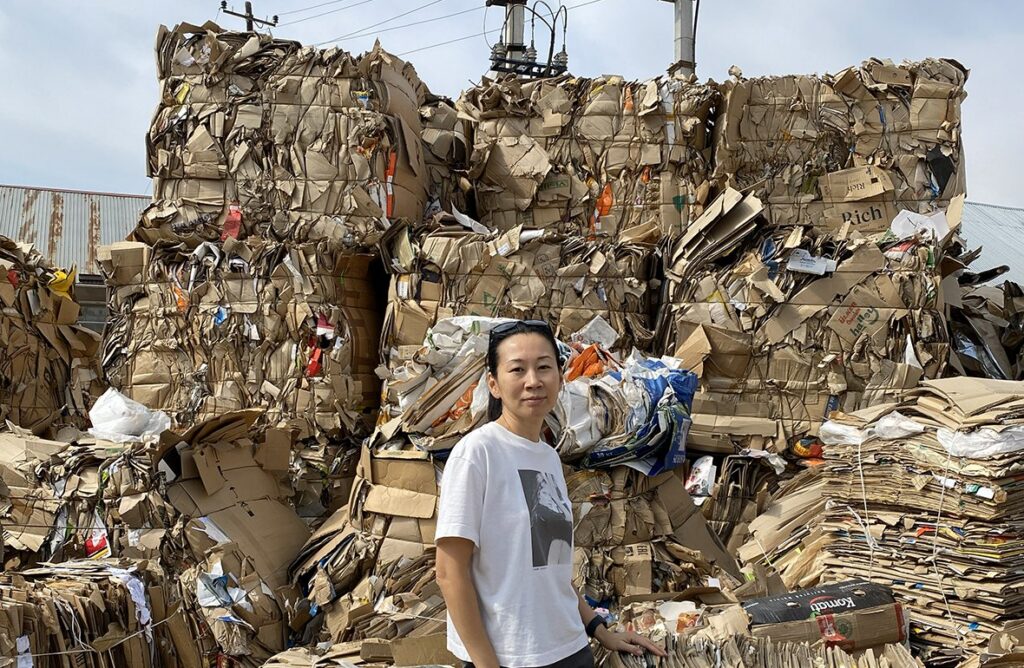
Ten years ago, waste recycling in Almaty was largely the domain of individual enthusiasts. Today, environmental campaigns draw thousands, and conversations about responsible consumption have become part of daily life for many city residents. One of the pioneers of this movement is Kamila Akimbekova, an eco-influencer and co-organizer of environmental initiatives. In an interview with The Times of Central Asia, she reflects on the evolution of Almaty’s eco-community, the principles behind the zero waste concept, and how small, consistent changes can reshape a city. TCA: Kamila, you had a successful career in banking. What prompted your transition to environmental activism?  Kamila: I think my interests evolved. People often think recycling is a new trend, but it actually existed in the USSR: students collected waste paper, and people returned glass for reuse. It was an effective circular economy. When I became a mother for the second time, I began thinking more deeply about my impact on the world. I started researching whether Almaty had recycling facilities. At the time, information was scarce, and it wasn’t easy to locate collection points, but I didn’t give up. TCA: Was access to information more limited 10-15 years ago? Kamila: Absolutely. Social media was less developed, and online information was often outdated or unreliable. I started looking for people who shared my values and eventually connected with Almaty’s early eco-activists. They were scattered individuals with a shared desire for change. Over time, we formed a real community, launched joint projects, and I began sharing what I learned on my blog. That’s how I transitioned to eco-influencing. Today, I have around 30,000 Instagram followers, an engaged audience concerned about the environment. TCA: Is the eco-community large now? Kamila: It’s grown significantly, especially in Almaty, though we’re also connected with activists across Kazakhstan. Participation has multiplied. Our early events drew 20-50 people. Now we see around 2,000. There’s strong interest from students and school-children, I lecture regularly and see growing volunteerism. At our last campaign, electronic sensors showed that 1,900 people attended. TCA: Is it true that women form the core of the eco-community? Kamila: Yes, that’s backed by studies. Women tend to be more environmentally conscious, likely due to traditional roles as caretakers of the home and future generations. TCA: Today, people can recycle much more than just paper, glass, and plastic. How did that expansion come about? Kamila: I wanted a convenient way to dispose of multiple waste types, old medicines, unused items, plastics, metals, e-waste, etc. In 2019, we invited companies like Rocket Plastic and an e-waste recycler to set up at our events. We also partnered with the Almaty Pop-Up Store and expanded through collaborations with the Darmarka project and the Recycle Birge team. TCA: I was surprised to learn you accept unusual items, used cooking oil, expired candy, even food scraps for farmers. Kamila: We follow the zero waste concept, which aims to reduce waste to zero. Many newcomers think sorting is the most important part, but recycling is actually the last...


Russian Eco-Blogger to Fund Forest Restoration in Northern Kazakhstan

A major reforestation campaign will launch later this month on the northwestern outskirts of Petropavlovsk, near the Voroniy Island neighborhood, to restore forestland damaged by fire. Approximately 10,000 trees will be planted with the help of local residents, volunteers, and activists. The initiative is fully financed by Russian eco-blogger Alexei Sibirsky. Grassroots Support and Cross-Border Solidarity The project was initiated by concerned residents of Petropavlovsk. Local activist Dinara Omurzakova reached out to Sibirsky after learning of his successful reforestation work around Semey, in the east of the country. Sibirsky responded positively, agreeing not only to fund the purchase of seedlings and soil preparation but also to take part in the planting personally. “I had been following Alexei for a long time. When I saw that he was involved in a similar project in East Kazakhstan, I wrote to him, and he agreed to come to us,” Omurzakova said. Eco-Activism Without Borders Alexei Sibirsky is among the most prominent Russian-speaking environmental bloggers, with a following in the millions. His initiatives span multiple countries, focusing on reforestation and the clean-up of water bodies. He funds these efforts through advertising and income from his eco-services platform, which offers tree planting and environmental clean-up. Sibirsky began his environmental mission following a life-changing accident. Since then, he has implemented green projects worldwide, including several in Kazakhstan. In 2022, after Russia’s partial mobilization, he relocated to Uralsk with his family. As a gesture of gratitude for the city's hospitality, he organized a clean-up along the Ural River. In 2024, he participated in a river clean-up in Almaty. A Collective Effort Toward a Greener Future The Petropavlovsk campaign will be the largest privately supported environmental initiative to date in the North Kazakhstan region. The local forestry authority will manage land preparation, while regional environmentalists, including activist Timur Zveryachenko, are also involved. Organizers are inviting community members to join the planting on April 26 and 27. “Every resident of our city can participate with their family and children. If this event is successful, we’ll definitely do it again,” said Omurzakova. Reforestation as a Strategic Priority North Kazakhstan region has one of the lowest forest coverage rates in the country, just 5.5%. The regional akimat (council) manages over 550,000 hectares of forest land. Since 2021, the region has been implementing a long-term reforestation program that runs through 2027, aiming to plant 122 million seedlings across 20,000 hectares. From 2021 to 2023 alone, 28.2 million trees were planted. The Voroniy Island reforestation effort is not just a standalone event but part of a broader strategy to tackle one of the region’s most pressing environmental challenges. Support from both grassroots activists and private benefactors adds critical momentum to these efforts.