


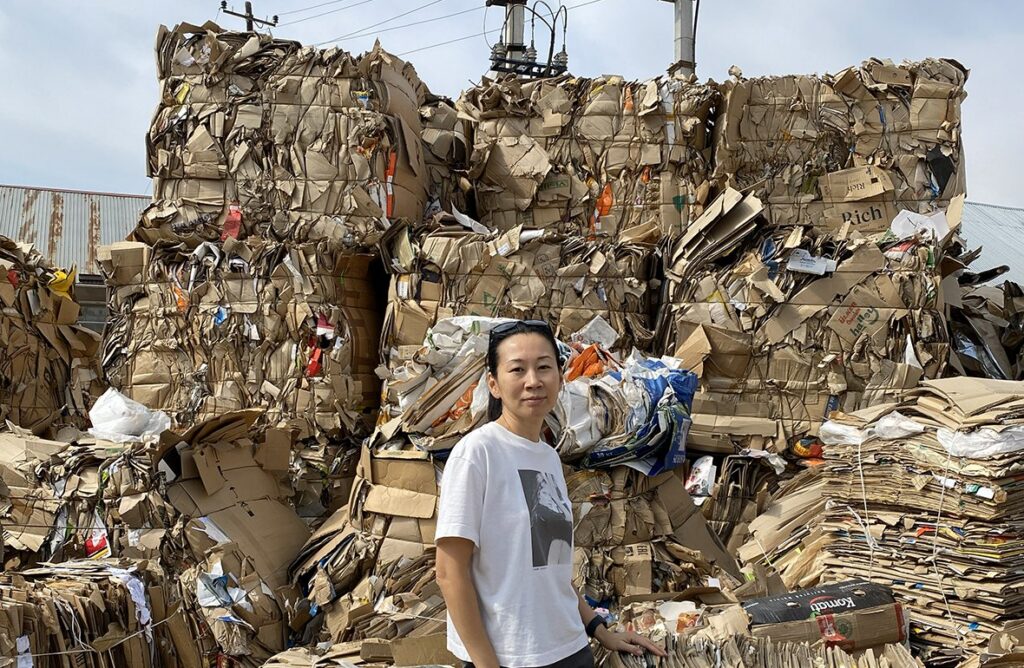
Attempting to Build a Litter-Free Kazakhstan: An Interview with Ecologist Kamila Akimbekova
Ten years ago, waste recycling in Almaty was largely the domain of individual enthusiasts. Today, environmental campaigns draw thousands, and conversations about responsible consumption have become part of daily life for many city residents. One of the pioneers of this movement is Kamila Akimbekova, an eco-influencer and co-organizer of environmental initiatives. In an interview with The Times of Central Asia, she reflects on the evolution of Almaty’s eco-community, the principles behind the zero waste concept, and how small, consistent changes can reshape a city. TCA: Kamila, you had a successful career in banking. What prompted your transition to environmental activism? Kamila: I think my interests evolved. People often think recycling is a new trend, but it actually existed in the USSR: students collected waste paper, and people returned glass for reuse. It was an effective circular economy. When I became a mother for the second time, I began thinking more deeply about my impact on the world. I started researching whether Almaty had recycling facilities. At the time, information was scarce, and it wasn’t easy to locate collection points, but I didn’t give up. TCA: Was access to information more limited 10-15 years ago? Kamila: Absolutely. Social media was less developed, and online information was often outdated or unreliable. I started looking for people who shared my values and eventually connected with Almaty’s early eco-activists. They were scattered individuals with a shared desire for change. Over time, we formed a real community, launched joint projects, and I began sharing what I learned on my blog. That’s how I transitioned to eco-influencing. Today, I have around 30,000 Instagram followers, an engaged audience concerned about the environment. TCA: Is the eco-community large now? Kamila: It’s grown significantly, especially in Almaty, though we’re also connected with activists across Kazakhstan. Participation has multiplied. Our early events drew 20-50 people. Now we see around 2,000. There’s strong interest from students and school-children, I lecture regularly and see growing volunteerism. At our last campaign, electronic sensors showed that 1,900 people attended. TCA: Is it true that women form the core of the eco-community? Kamila: Yes, that’s backed by studies. Women tend to be more environmentally conscious, likely due to traditional roles as caretakers of the home and future generations. TCA: Today, people can recycle much more than just paper, glass, and plastic. How did that expansion come about? Kamila: I wanted a convenient way to dispose of multiple waste types, old medicines, unused items, plastics, metals, e-waste, etc. In 2019, we invited companies like Rocket Plastic and an e-waste recycler to set up at our events. We also partnered with the Almaty Pop-Up Store and expanded through collaborations with the Darmarka project and the Recycle Birge team. TCA: I was surprised to learn you accept unusual items, used cooking oil, expired candy, even food scraps for farmers. Kamila: We follow the zero waste concept, which aims to reduce waste to zero. Many newcomers think sorting is the most important part, but recycling is actually the last...

