
• KGS/USD = 0.01144 0%
  • KZT/USD = 0.00201 0%
  • TJS/USD = 0.10464 0%
  • UZS/USD = 0.00008 0%
  • TMT/USD = 0.28490 0%
  • KGS/USD = 0.01144 0%
  • KZT/USD = 0.00201 0%
  • TJS/USD = 0.10464 0%
  • UZS/USD = 0.00008 0%
  • TMT/USD = 0.28490 0%
  • KGS/USD = 0.01144 0%
  • KZT/USD = 0.00201 0%
  • TJS/USD = 0.10464 0%
  • UZS/USD = 0.00008 0%
  • TMT/USD = 0.28490 0%
  • KGS/USD = 0.01144 0%
  • KZT/USD = 0.00201 0%
  • TJS/USD = 0.10464 0%
  • UZS/USD = 0.00008 0%
  • TMT/USD = 0.28490 0%
  • KGS/USD = 0.01144 0%
  • KZT/USD = 0.00201 0%
  • TJS/USD = 0.10464 0%
  • UZS/USD = 0.00008 0%
  • TMT/USD = 0.28490 0%
  • KGS/USD = 0.01144 0%
  • KZT/USD = 0.00201 0%
  • TJS/USD = 0.10464 0%
  • UZS/USD = 0.00008 0%
  • TMT/USD = 0.28490 0%
  • KGS/USD = 0.01144 0%
  • KZT/USD = 0.00201 0%
  • TJS/USD = 0.10464 0%
  • UZS/USD = 0.00008 0%
  • TMT/USD = 0.28490 0%
  • KGS/USD = 0.01144 0%
  • KZT/USD = 0.00201 0%
  • TJS/USD = 0.10464 0%
  • UZS/USD = 0.00008 0%
  • TMT/USD = 0.28490 0%

Viewing results 1 - 6 of 14

What Is Happening to Tajikistan’s Main Nature Reserve?

International experts have warned of a potential water crisis in the Tigrovaya Balka nature reserve, while Tajik authorities maintain that the situation remains stable and that systematic measures are underway to preserve the ecosystem. At the center of the debate are the water regime of the Vakhsh River, the condition of the tugai forests, and growing anthropogenic pressure. In November 2025, the International Union for Conservation of Nature (IUCN) published an assessment describing the state of the reserve, a UNESCO World Heritage Site, as “alarming.” Experts link the primary risks to changes in the river’s hydrological regime. Regulation of the Vakhsh River through reservoirs and the redistribution of water for agricultural use have significantly reduced natural seasonal flooding, which historically sustained the tugai forests. According to the IUCN, the ecosystem has become increasingly dependent on surface and drainage groundwater, volumes of which may be insufficient to maintain ecological balance.  The report also notes that approximately one-third of the Vakhsh River’s flow is diverted for irrigation, while part of the remaining water contains wastewater with elevated concentrations of chemical substances. Authorities Assert the Situation Is Stable Tajikistan’s Environmental Protection Committee disputes the severity of the assessment. According to data from the country’s Hydrometeorological Agency, the average annual flow of the Vakhsh River in 2025 reached 468 cubic meters per second, equivalent to 89% of the long-term average. Officials state that such fluctuations fall within acceptable limits. Water quality monitoring, conducted across 47 chemical indicators, reportedly showed only slight exceedances in sulphates and nitrites. Authorities report no recorded cases of water shortages, mass fish die-offs, or the complete drying of lakes within the reserve. Committee representatives argue that the international evaluation relies heavily on data from 2017-2019 and does not sufficiently account for more recent developments. Infrastructure and Anthropogenic Pressure Scientists also point to historical infrastructure problems as a contributing factor. Particular concern surrounds a 13-kilometer bypass canal along the northern border of the reserve, which was reportedly not cleaned for nearly three decades following the dissolution of the Soviet Union. As a result, silt accumulation led to rising water levels in certain lakes, flooding tugai forests and rendering parts of the territory unsuitable for species such as the Bukhara deer and pheasants. Some areas reportedly became marshy and overgrown with reeds. Additional pressure stems from the expansion of settlements along the reserve’s northern boundary. Monitoring data indicate household waste contamination along 13.2 kilometers of shoreline. Ecological Significance The Tigrovaya Balka Reserve was established on November 4, 1938, becoming Tajikistan’s first state nature reserve. It covers 49,700 hectares, including 21,400 hectares of wetlands and more than 24,000 hectares of tugai forest. The reserve is home to more than 30 rare animal species, including the Bukhara deer, gazelle, striped hyena, Central Asian monitor lizard, and Amu Darya shovelnose sturgeon. Over 50 bird species winter in the reserve annually. In 2023, the site was inscribed on the UNESCO World Heritage List as part of the “Tugai Forests of Tigrovaya Balka” property.
Choking on Smog: Air Crisis in Öskemen Deepens

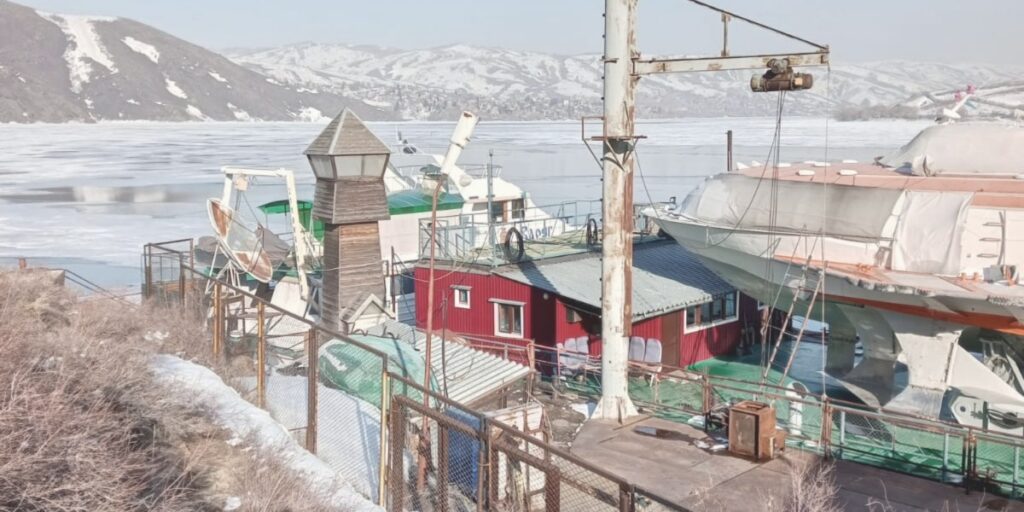
Heavy smog and sustained NMU-II adverse meteorological conditions reported by Kazhydromet continue to affect the city of Öskemen (Ust-Kamenogorsk) in eastern Kazakhstan, after authorities moved all students in grades 0–11 to remote learning on February 2. The decision followed several days of windless weather and a temperature inversion that trapped pollutants close to the ground. According to Kazhydromet forecasts, unfavorable meteorological conditions are likely to remain in place, limiting dispersion. Air quality monitoring platforms show persistent spikes in fine particulate matter, raising renewed health concerns among residents. Data from IQAir indicates that PM2.5 concentrations in Öskemen have at times reached levels classified as “hazardous,” significantly exceeding World Health Organization guidelines. Live readings continue to fluctuate depending on wind and temperature shifts, but pollution levels remain elevated compared to recommended norms. Local authorities say the health of students remains the priority. The regional Department of Education confirmed that distance learning was introduced as a precautionary measure during the NMU-II period. Environmental specialists have advised residents to reduce outdoor activity, particularly children, the elderly, and those with respiratory conditions. What’s Behind the Smog? Specialists attribute the pollution to a combination of meteorological and structural factors. A temperature inversion has created what meteorologists describe as a “thermal cap,” with warmer air overlaying colder surface air, preventing pollutants from dispersing. The absence of sustained wind has compounded the buildup. Öskemen is also one of Kazakhstan’s most industrialized cities, home to major metallurgical enterprises, a coal-fired thermal power plant, and titanium-magnesium production facilities. Vehicle emissions and winter heating from coal and firewood in private homes add to the concentration of fine particulate matter. The city’s geography further complicates the situation. Surrounded by mountainous terrain, Öskemen experiences restricted air circulation during stagnant winter conditions, allowing pollution to accumulate. Monitoring and Mitigation The East Kazakhstan Department of Ecology reported that an interagency task force, including Kazhydromet meteorologists and sanitary inspectors, conducted mobile laboratory monitoring during the peak of the episode. Authorities said industrial facilities reduced output under NMU protocols and that transport and municipal services were instructed to limit emissions. Officials stated that monitored pollutants, including carbon monoxide, nitrogen oxides, sulfur compounds, chlorides, and suspended particles, were measured daily. While authorities described overall average indicators as remaining within permissible limits, independent monitoring services recorded significantly higher short-term PM2.5 spikes. Public Reaction Residents have expressed frustration online, posting photos and videos showing the city enveloped in haze. In comments responding to official statements, users described sore throats, headaches, and difficulty breathing. One resident wrote: “It’s impossible to breathe in the city. This isn’t exaggeration, it’s reality. You, your children, your loved ones are breathing this air.” Others questioned the official assessment, asking why schools were closed if pollution posed no threat to public health. What Comes Next? Kazhydromet forecasts suggest that wind and snowfall could help disperse accumulated pollutants in the coming days. However, recurring winter smog episodes have reignited debate over industrial emissions, household coal use, and long-term urban air quality policy. In early February, regional Maslikhat...

Kazakhstan Urges Regional Cooperation to Save the Aral Sea

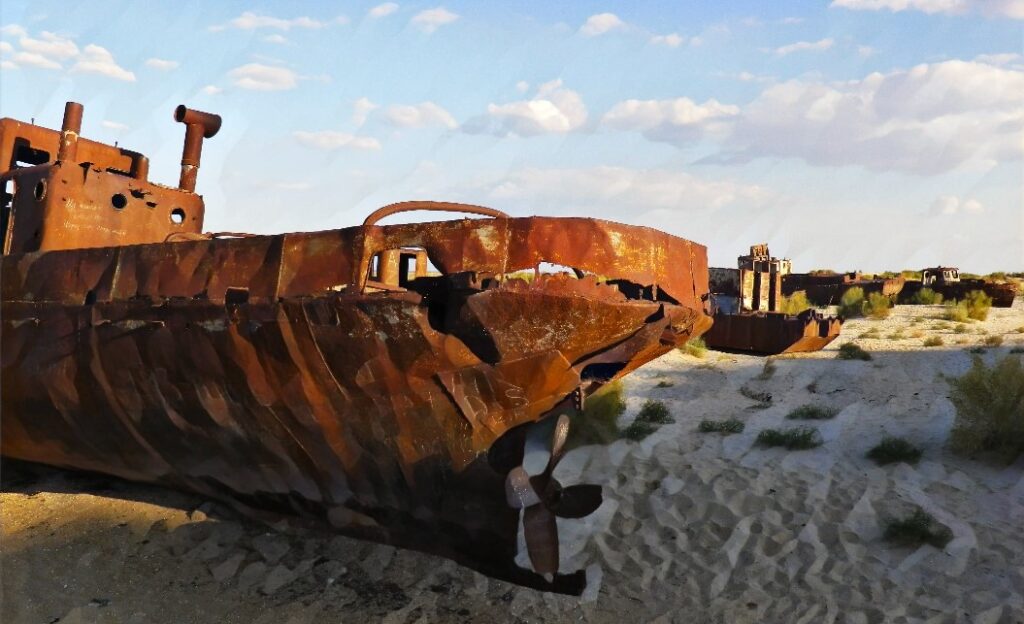
Kazakhstan has intensified its efforts to restore its portion of the former Aral Sea, calling on neighboring Central Asian states to increase their participation in regional environmental cooperation. Once the world’s fourth-largest lake, the Aral Sea has become a symbol of ecological catastrophe. Experts warn that international efforts remain inadequate. How the Sea Died Straddling the border between Kazakhstan and Uzbekistan, the Aral Sea began to shrink in the 1960s when large-scale irrigation projects diverted water from its two main tributaries, the Amu Darya and Syr Darya rivers, to support cotton production and agriculture. A growing regional population added further strain. By 1989, the sea had split into the Northern (Small) and Southern (Large) Aral Seas. In 2014, the eastern basin of the Southern Aral Sea dried up completely. Today, the Aralkum Desert occupies much of what was once open water. Kazakhstan has since focused on restoring the Northern Aral Sea. [caption id="attachment_37684" align="aligncenter" width="2560"] A ship stranded in the desert, Moynaq, Uzbekistan; image: TCA, Stephen M. Bland[/caption] The restoration of the Northern Aral Sea has already yielded visible environmental and social benefits. Rising water levels have lowered salinity, allowing several native fish species to return. Local fisheries, once thought lost, are now active again in communities such as Aralsk. According to the Ministry of Ecology, the annual fish catch in the North Aral has risen more than tenfold since the early 2000s, reviving local employment and boosting food security. Experts note that even small ecological gains have had a profound psychological impact on residents who once witnessed the sea’s disappearance. Call for Renewed Efforts On October 15, Kazakhstan called for expanded international cooperation to protect both the Aral and Caspian Seas. First Deputy Minister of Foreign Affairs, Yerzhan Ashikbayev, speaking at the International Astana Think Tank Forum-2025, emphasized Kazakhstan’s contribution to the global climate agenda. He noted that a regional climate summit, set to be held in Astana in 2026, would provide a platform for coordinated strategies and joint decision-making among Central Asian nations. “Astana also calls for increased international participation in solving environmental problems and preserving the water resources of the Aral and Caspian Seas,” Ashikbayev said. Earlier, on October 10, Prime Minister Olzhas Bektenov met with senior officials from Tajikistan, Uzbekistan, and Turkmenistan during the second meeting of the Board of the International Fund for Saving the Aral Sea (IFAS), chaired by Kazakhstan. The event highlighted the need for a united regional approach, noting that restoration of the Aral Sea can be achieved through collective action. Bektenov acknowledged the challenges of the recent growing season, but said regional cooperation had helped maintain a stable water regime in the basin. “Each country has its own national interests, and we are obliged to defend them and will always do so. But I am convinced that our common strategic, long-term priority is good neighborly relations. In solving everyday short-term tasks, we must not undermine long-term priorities. I think that we will take joint measures to ensure that issues are always...

Kazakhstan Initiates International Program to Save the Caspian Sea

The ongoing shallowing of the Caspian Sea is no longer a national issue, it is emerging as a significant international challenge. Kazakh President Kassym-Jomart Tokayev emphasized that the crisis requires collective action and the adoption of an intergovernmental program. Since the early 2000s, the Caspian Sea’s water level has been steadily declining. As previously reported by The Times of Central Asia, by the summer of 2025, the sea had fallen below 29 meters relative to global sea level, marking a historic low. The northern basin, which borders Russia and Kazakhstan, is drying up particularly rapidly, due in large part to decreased flow from the Volga River. This is not the first time Kazakhstan has raised concerns about the Caspian Sea on the international stage. According to Tokayev, “the need to develop an intergovernmental program to preserve the Caspian Sea has matured.” The president believes that participation should extend beyond the five littoral states, Russia, Iran, Azerbaijan, Turkmenistan, and Kazakhstan, to include other nations invested in the region’s environmental health. He recalled that during his visit to China in early September, he proposed the creation of a specialized international organization. “This is not only a problem for one country, but for a number of states,” Tokayev stressed in his annual address to the nation. At the same time, the president acknowledged that Kazakhstan faces its own internal water management challenges. Losses in some irrigation and water channels reach 50-60%, and resource accounting is still being carried out using outdated technologies. “As for the culture of conserving natural resources, especially water, we must admit that we have big problems here: as they say, the horse didn’t lie down,” Tokayev remarked. To address these issues, he proposed creating a unified digital platform for water resources, powered by artificial intelligence. This platform would enable accurate hydrogeological monitoring and the development of a national water balance. Tokayev said this system would provide the foundation for a long-term water policy and help attract investment into the sector. Tokayev also stressed that environmental safety should become part of Kazakhstan’s national ideology. He highlighted the ongoing Taza Kazakhstan (“Clean Kazakhstan”) initiative, which began in 2024. Under this project, approximately 860,000 hectares of land have been cleaned and over 4 million trees planted. “If such active work continues, Kazakhstan will become a truly green country, an inspiring example and a valuable legacy for future generations,” Tokayev said. He also called for the introduction of a unified standard for environmental education, from schools to universities.

Kyzyl-Ompol Mining Resumes Under New Law, Public Concern Persists

Trial production of titanomagnetite has commenced at the Kyzyl-Ompol deposit near Balykchy in Kyrgyzstan’s Issyk-Kul region, First Deputy Prime Minister Bakyt Torobaev announced in a recent interview with local media. According to Torobaev, the deposit holds an estimated 20 million tons of titanomagnetite, and the total value of useful elements in the subsoil could approach $1 billion. “When this project was just starting, few believed in it. Today we see concrete results: experimental development has begun, infrastructure and technology are being developed. The potential of the deposit is enormous,” he said. Torobaev added that the site is also being used to test new technological solutions that could be implemented elsewhere in the country. A Controversial Resource and Legal Shifts Mining at Kyzyl-Ompol was previously prohibited due to the presence of uranium and thorium, radioactive elements often found alongside titanomagnetite. Their extraction has been banned in Kyrgyzstan since 2019, following widespread public protests over environmental and health concerns. However, a 2023 law lifted the ban under strict environmental compliance conditions. The bill’s explanatory note cited the need for alternative revenue sources in light of economic challenges stemming from the COVID-19 pandemic and regional sanctions. President Sadyr Japarov emphasized that titanomagnetite comprises roughly 95% of the deposit’s reserves. The Ministry of Natural Resources, Ecology, and Technical Supervision has assured the public that current extraction technologies meet all safety and environmental standards and pledged ongoing oversight. Economic Potential and Public Concerns Government estimates suggest that the project’s initial phase could contribute approximately $150 million to the state budget and generate around 1,000 jobs. Torobaev described Kyzyl-Ompol as having the potential to become a “second Kumtor”, a reference to the country’s largest and most profitable gold mine. Nonetheless, public debate continues. Critics caution that the area’s known uranium reserves could pose environmental risks if disturbed, particularly in the ecologically sensitive Issyk-Kul region. Titanomagnetite is used in metallurgy, particularly for producing specialized steels, and also has applications in the chemical and energy sectors. Discovered in 1951, the Kyzyl-Ompol deposit comprises five sites. To date, detailed geological surveys have been conducted on only one, with its reserves officially registered in the state balance.

Almaty Grapples with Year-Round Nitrogen Dioxide Crisis, Study Warns

A new study has revealed persistently dangerous levels of nitrogen dioxide (NO₂) pollution in Almaty, Kazakhstan’s largest city, with motor vehicles identified as the primary source. Conducted by the Almaty Air Initiative over 2023-2024, the research highlights aging vehicles, inadequate emissions oversight, and coal-based heating as key contributors to chronically high NO₂ levels throughout the year. With more than 600,000 vehicles on the roads daily, Almaty’s outdated and poorly regulated transport fleet is having a significant environmental impact. According to the Ministry of Internal Affairs, nearly one-third of the city’s vehicles are over 20 years old, many lacking catalytic converters that are standard in other countries. NO₂ Levels Far Exceed Global Health Standards Data from over 50 monitoring stations, installed as part of an Asian Development Bank-supported program, show that annual NO₂ concentrations in Almaty were 4.6 times higher than the World Health Organization’s recommended limits in 2023, and 4.2 times higher in 2024. Only 16 days in 2024 met the WHO’s daily NO₂ threshold of 25 µg/m³. On 143 days, concentrations exceeded 40 µg/m³, posing health risks to vulnerable groups such as children, the elderly, and people with respiratory issues. On seven days, levels surpassed 100 µg/m³, considered extremely hazardous for the general population. Kazhydromet, Kazakhstan’s national weather agency, documented over 11,000 violations of the country’s maximum permissible concentration (MPC) for NO₂ in 2024, an average of nearly 30 per day. Pollution Persists Across All Seasons Unlike particulate matter (PM2.5), which typically spikes during the heating season, NO₂ pollution remains elevated year-round. Peak monthly averages reached nearly 100 µg/m³ in January 2023 and 80 µg/m³ in December 2024. Even in summer, concentrations hovered around 30-35 µg/m³, well above WHO guidelines. In 2024, Almaty recorded 164 “clean” days based on PM2.5 levels (below the WHO’s 15 µg/m³ threshold), but just 16 days met the corresponding standard for NO₂, underscoring the pollutant’s persistent presence and underrecognized health risks. Additional Contributors: Coal and Industry Beyond traffic emissions, NO₂ levels are exacerbated by emissions from two coal-fired thermal power plants, as well as numerous private heating systems and small-scale boiler houses. The study also criticized Kazakhstan’s vehicle inspection system, which it says fails to identify or enforce emissions violations. Study Urges Comprehensive Action To tackle the NO₂ crisis, researchers recommend a suite of policy measures, including: Transitioning public transport to gas and electric power Phasing out coal-based heating in favor of gas Installing emissions filters at thermal power plants and residential heating units Establishing low-emission zones across Almaty Encouraging walking and cycling for short trips Strengthening vehicle inspection and emissions monitoring systems With NO₂ now considered one of the most serious and persistent air quality threats in Central Asia, Almaty’s situation serves as a stark warning for other rapidly urbanizing cities in the region.
