• KGS/USD = 0.01144 0%
  • KZT/USD = 0.00193 -0%
  • TJS/USD = 0.10811 -0.28%
  • UZS/USD = 0.00008 0%
  • TMT/USD = 0.28490 0%
  • KGS/USD = 0.01144 0%
  • KZT/USD = 0.00193 -0%
  • TJS/USD = 0.10811 -0.28%
  • UZS/USD = 0.00008 0%
  • TMT/USD = 0.28490 0%
  • KGS/USD = 0.01144 0%
  • KZT/USD = 0.00193 -0%
  • TJS/USD = 0.10811 -0.28%
  • UZS/USD = 0.00008 0%
  • TMT/USD = 0.28490 0%
  • KGS/USD = 0.01144 0%
  • KZT/USD = 0.00193 -0%
  • TJS/USD = 0.10811 -0.28%
  • UZS/USD = 0.00008 0%
  • TMT/USD = 0.28490 0%
  • KGS/USD = 0.01144 0%
  • KZT/USD = 0.00193 -0%
  • TJS/USD = 0.10811 -0.28%
  • UZS/USD = 0.00008 0%
  • TMT/USD = 0.28490 0%
  • KGS/USD = 0.01144 0%
  • KZT/USD = 0.00193 -0%
  • TJS/USD = 0.10811 -0.28%
  • UZS/USD = 0.00008 0%
  • TMT/USD = 0.28490 0%
  • KGS/USD = 0.01144 0%
  • KZT/USD = 0.00193 -0%
  • TJS/USD = 0.10811 -0.28%
  • UZS/USD = 0.00008 0%
  • TMT/USD = 0.28490 0%
  • KGS/USD = 0.01144 0%
  • KZT/USD = 0.00193 -0%
  • TJS/USD = 0.10811 -0.28%
  • UZS/USD = 0.00008 0%
  • TMT/USD = 0.28490 0%
10 December 2025

Viewing results 1 - 6 of 71

Turning the Tide and Tackling Pollution in Uzbekistan: Insights from the Head of Environmental Policy

In recent years, air pollution in Uzbekistan has become an issue of growing concern, while the drying up of the Aral Sea continues to draw global attention. The Times of Central Asia spoke with Farruh Sattarov, Head of the Environmental Policy Department at the Ministry of Ecology, Environmental Protection and Climate Change of the Republic of Uzbekistan, about the country’s environmental challenges and the ministry’s efforts to raise public awareness. TCA: Can you briefly describe the main projects currently being implemented by the Ministry of Ecology? Sattarov: To improve the environmental situation, we are working on several major projects. One key initiative is a $115 million investment project with the U.S. company, Sayar LLC, to generate alternative thermal energy from medical waste. This project will process 96,000 tons of medical waste annually, producing 320 GWh of thermal energy. Another significant effort focuses on improving air quality in Tashkent. In collaboration with South Korea’s Sejin G&E Co., Ltd, we are investing $55 million to generate 16 MW of electricity per year from landfill gas at the Akhangaran and Maydontol municipal waste sites. Additionally, we are partnering with the Asian Development Bank on a $60 million waste management project. This includes supplying special equipment, mobile laboratories, and waste containers to sanitation enterprises in Karakalpakstan and other regions. [caption id="attachment_28298" align="aligncenter" width="1280"] Farruh Sattarov; image: Ministry of Ecology of Uzbekistan[/caption] TCA: What are the priority areas for improving Uzbekistan’s environmental policy? Sattarov: Our environmental strategy is guided by the Concept of Environmental Protection of the Republic of Uzbekistan until 2030, which was approved in 2019. Its main goals include improving air quality, promoting sustainable economic growth through eco-friendly technologies, and ensuring efficient natural resource management. In 2025, our focus will be on the “Year of Environmental Protection and Green Economy.” As part of the “Uzbekistan - 2030” strategy, we are developing 30 environmental protection laws, which are currently open for public discussion. TCA: What measures are being taken to combat air pollution? Sattarov: In 2024, we took several key steps. We installed or upgraded dust and gas cleaning equipment at 188 enterprises and required 99.5% efficiency filtration systems at 24 new factories, preventing 8,500 tons of harmful emissions. In terms of targeting vehicle emissions, during the “Clean Air” campaign, we inspected 407,000 vehicles, preventing 256.9 tons of pollutants from entering the atmosphere. As part of the “Green Space” project, we planted 11.8 million trees around high-emission industrial sites. We also staged “Carless Day” events in Tashkent, Nukus, and other cities which helped reduce emissions by 5,800 tons, and eased traffic congestion. In 2025, we plan to modernize pollution controls at 122 major enterprises, inspect 500,000 vehicles as part of a new “Clean Air” campaign, and plant ten million more trees in and around industrial areas. TCA: What international initiatives does Uzbekistan support on climate change? Sattarov: Uzbekistan is actively involved in both global and regional climate initiatives. In regards to the Paris Agreement, we are developing our third Nationally Determined Contribution (NDC 3.0)...

Kyrgyz Authorities Aim to Improve Air Quality in Bishkek

Kyrgyzstan’s Minister of Natural Resources, Ecology, and Technical Supervision, Meder Mashiev, has outlined plans to tackle air pollution in Bishkek. Speaking at a meeting with representatives of an interdepartmental commission tasked with addressing environmental issues, Mashiev announced that the government is prepared to issue interest-free loans for environmental projects, with a particular focus on improving air quality in the capital. Bishkek ranks among the worst cities globally for air pollution, placing fifth from the bottom in terms of air quality. According to some reports, funding for these projects will come from the World Bank. Similar loan programs are expected to be introduced in the cities of Jalal-Abad and Osh. As part of efforts to combat pollution, the Ministry of Natural Resources is considering building facilities to process coal from the Kara-Keche open-pit mine in Naryn Oblast. This coal is used to heat most of Bishkek, including its thermal power plant. Many environmentalists argue that the primary cause of the city's poor air quality is the widespread use of coal for heating by private households. “In addition, the use of nanotechnology to improve air quality is being explored, including the installation of catalytic converters on vehicles,” the ministry stated. Separately, Mashiev met with members of Kyrgyzstan’s scientific community to discuss the role of research in addressing air pollution. He emphasized that science should play a key role in developing solutions and pledged to allocate funding for research on the issue. Experts at the meeting urged the ministry to conduct a comprehensive study of the problem, including an analysis of the impact of vehicle emissions compared to coal burning.

Bishkek Tests Chinese Catalytic Converters in Effort to Reduce Air Pollution

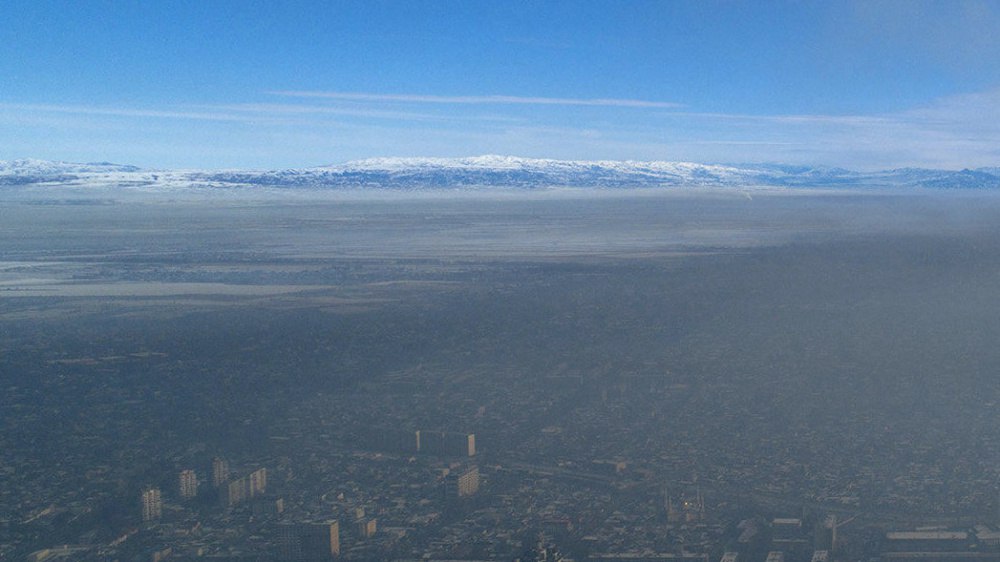
The Bishkek municipality has launched an experiment to assess the effectiveness of catalytic converters developed by China’s Qingdao State University in reducing vehicle emissions. The initiative is part of broader efforts to combat air pollution in Kyrgyzstan’s capital. A lack of catalytic converters in 85% of vehicles operating in Kyrgyzstan is a major contributor to air pollution. These devices play a crucial role in reducing the toxicity of vehicle emissions by converting harmful compounds into less hazardous ones. As part of the experiment, Chinese catalytic converters have been installed in cars provided by three public figures - a deputy chairman of the Bishkek City Council and two popular bloggers. Specialists from the Ministry of Natural Resources, Ecology, and Technical Supervision will measure the vehicles’ emissions before and after installation using an exhaust gas analyzer to determine the impact of the devices. The results of the experiment will help authorities decide whether to implement a broader rollout of Chinese-made catalytic converters in Bishkek. Vehicle Pollution in Bishkek Bishkek has over 600,000 registered vehicles, nearly double the city’s road capacity of 350,000. According to the Ministry of Natural Resources, Ecology, and Technical Supervision, motor transport accounts for 27% of the city’s total air pollution. Additionally, 333,801 vehicles in Bishkek are more than 15 years old, contributing significantly to deteriorating air quality. Air pollution remains a persistent issue in Bishkek, a city of over one million residents. The problem worsens in winter when coal burning for household heating - responsible for 40% of the city’s air pollution - intensifies. As a result, Bishkek frequently ranks among the world’s top 10 most polluted cities on IQAir’s global air quality index.

Bishkek Residents Can Now Monitor Air Quality in Real Time

Residents of Bishkek can now track air quality in real-time, thanks to a new initiative by Kyrgyzstan’s Ministry of Natural Resources, Ecology, and Technical Supervision in partnership with Kyrgyztelecom OJSC. Cameras have been installed at strategic locations, including Mount Boz-Boltok, south of the capital, and the Sovmin residential complex in the southern part of Bishkek. The live camera feeds, available at online.kt.kg, provide the public with a real-time view of air quality and smog levels in the city. According to the Ministry, the project aims to raise public awareness about Bishkek’s environmental challenges and encourage environmentally responsible behavior among residents. The initiative also serves a broader purpose by creating a database for environmental monitoring and scientific research. Additionally, the availability of real-time footage helps prevent the spread of misinformation, such as the use of outdated video materials to manipulate public opinion. Air pollution remains a serious issue for Bishkek, a city with over one million residents. The problem worsens during winter, as many households rely on coal for heating, significantly increasing harmful emissions. Bishkek regularly ranks among the world’s top 10 most polluted cities on IQAir’s global air quality index. This initiative marks a step toward greater transparency and public engagement in addressing Bishkek’s air quality issues. By providing residents with accessible, real-time data, authorities hope to inspire collective action to combat pollution in the Kyrgyz capital.

Kazakhstan Continues Afforestation Efforts on the Aral Sea

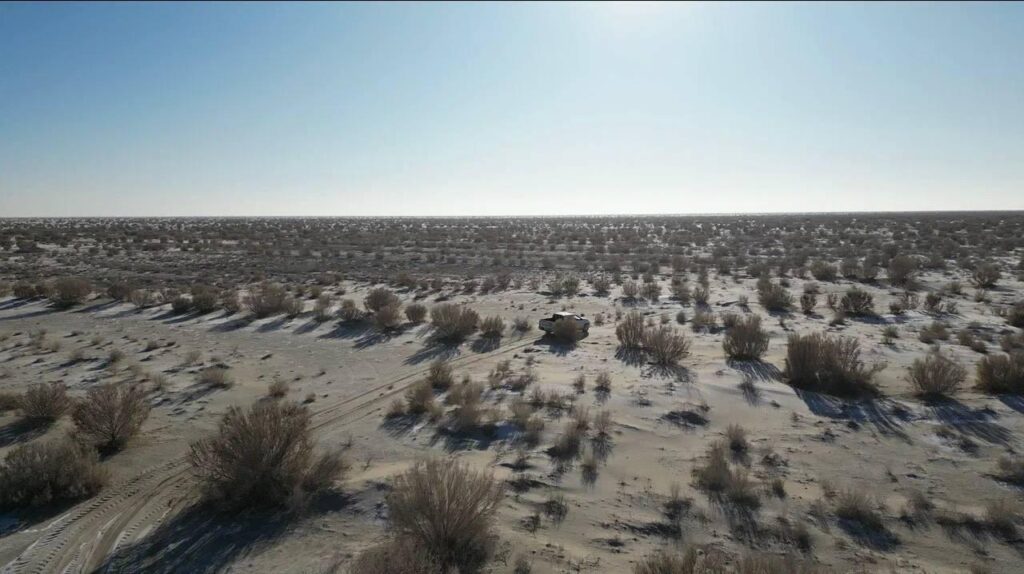
Kazakhstan is pressing ahead with a large-scale afforestation project aimed at restoring the ecosystem on the dried bed of the Aral Sea. The initiative brings together KATCO - a joint venture between the French state-owned company Orano and Kazakhstan’s national atomic company Kazatomprom - and other state and private entities to create artificial forests, combat land degradation, and improve environmental conditions in the Aral region. The Decline of the Aral Sea Once the world’s fourth-largest inland body of water, the Aral Sea spanned 68,000 square kilometers, straddling Kazakhstan and Uzbekistan. However, starting in the 1960s, extensive water diversion from its feeder rivers - the Amu Darya and Syr Darya - for cotton irrigation caused the sea to dry up rapidly. By 2007, the Aral had shrunk to just 10% of its original size. The environmental fallout has been catastrophic. Over 100 million tons of salt, sand, and dust are carried annually by winds from the exposed seabed, damaging nearby ecosystems and posing significant health risks to residents of the surrounding areas. Progress in Afforestation According to Kazakhstan's Ministry of Ecology and Natural Resources, significant strides have been made in afforestation efforts. Between December 16 and 30, 2024, sowing was completed on 12,000 hectares of the former seabed. Efforts are continuing, with plans to sow seeds across 108,000 hectares in January and February 2025. By March 2025, an additional 16,492 hectares will be planted with saxaul shrubs, a hardy plant well-suited to the region’s arid conditions. The ultimate goal is to plant saxaul shrubs on 1.1 million hectares of the dried-up Aral Seabed. Between 2021 and 2024, afforestation was completed on 475,000 hectares, including 127,000 hectares in 2024 alone. For 2025, Kazakhstan plans to plant saxaul on an ambitious 428,000 hectares. Nationwide Tree-Planting Initiative Kazakhstan’s efforts to restore the Aral Sea ecosystem are part of a broader national afforestation program. The country aims to plant 2 billion trees by 2027. From 2021 to 2024, 1.1 billion seedlings were planted over a total of 736,800 hectares, including 306 million seedlings planted in 2024 on 205,200 hectares. For 2025, the goal is to plant 336.5 million seedlings across 494,000 hectares. Beyond rural afforestation, 15 million trees are planned for urban and village areas, with more than 12 million already planted between 2021 and 2024. A Step Toward Environmental Recovery Kazakhstan’s afforestation efforts represent a critical step toward mitigating the environmental damage caused by the desiccation of the Aral Sea. By stabilizing the exposed seabed with saxaul shrubs and increasing tree cover nationwide, the country aims to reduce airborne pollutants, improve regional biodiversity, and enhance the quality of life for affected communities. The project is not only an environmental undertaking but also a testament to Kazakhstan's commitment to sustainable development and ecological restoration on a massive scale.

Kyrgyz Deputy Maripov Proposes Moving Capital Away From Bishkek

Jogorku Kenesh (Parliament) deputy Bakytbek Maripov has proposed moving Kyrgyzstan’s capital away from Bishkek, presenting the idea during a parliamentary session on January 22. Maripov argued that even radical measures to improve Bishkek’s infrastructure - such as reforming the city’s management system or developing transportation networks - would be insufficient to solve its persistent issues with smog and traffic congestion. The deputy suggested that relocating the capital could offer an effective long-term solution, particularly when viewed in the context of large-scale investment opportunities. He cited a comparison of major infrastructure costs: for instance, the construction of the planned city of Asman on the coast of Issyk-Kul is already drawing $10 billion in investments. Meanwhile, relocating Bishkek’s railroad infrastructure would cost $550 million, and building a ring road around the city would require approximately $1 billion. “If the capital were moved, the problems of traffic congestion and air pollution could be avoided,” Maripov emphasized. Although the proposal to move the capital remains at an early stage, it has sparked significant debate among lawmakers and the public. Bishkek’s Challenges: Traffic and Smog Bishkek is grappling with severe traffic congestion and air pollution, which are fueling calls for drastic action. According to data from the 2GIS navigation service, residents spent 777 hours stuck in traffic during July, August, and September of 2024. In October, congestion levels in the city reached nine out of 10 points. The primary factors contributing to traffic jams include a surge in the number of vehicles, insufficient road capacity, and inefficient traffic light management. The city’s air pollution problem is equally pressing. In November 2024, Bishkek ranked among the top 10 most polluted cities in the world. Key sources of pollution include emissions from motor vehicles, the use of low-quality fuels for heating private homes, and unfavorable meteorological conditions that trap pollutants. Government Efforts and Public Concerns Authorities have introduced several initiatives to address Bishkek’s environmental and transportation challenges. In January 2025, the Jogorku Kenesh discussed measures aimed at reducing smog and alleviating traffic congestion in both Bishkek and Osh. However, despite ongoing efforts, the situation remains critical, underscoring the need for a comprehensive and systemic approach to improving urban infrastructure and environmental conditions. While the idea of relocating Kyrgyzstan’s capital is far from finalized, it has already opened up discussions about long-term solutions to Bishkek’s chronic problems. For now, the debate continues as the city’s residents and lawmakers consider the potential benefits and challenges of such a monumental shift.