• KGS/USD = 0.01143 0%
  • KZT/USD = 0.00216 0%
  • TJS/USD = 0.10684 -0.28%
  • UZS/USD = 0.00008 0%
  • TMT/USD = 0.28571 0%
  • KGS/USD = 0.01143 0%
  • KZT/USD = 0.00216 0%
  • TJS/USD = 0.10684 -0.28%
  • UZS/USD = 0.00008 0%
  • TMT/USD = 0.28571 0%
  • KGS/USD = 0.01143 0%
  • KZT/USD = 0.00216 0%
  • TJS/USD = 0.10684 -0.28%
  • UZS/USD = 0.00008 0%
  • TMT/USD = 0.28571 0%
  • KGS/USD = 0.01143 0%
  • KZT/USD = 0.00216 0%
  • TJS/USD = 0.10684 -0.28%
  • UZS/USD = 0.00008 0%
  • TMT/USD = 0.28571 0%
  • KGS/USD = 0.01143 0%
  • KZT/USD = 0.00216 0%
  • TJS/USD = 0.10684 -0.28%
  • UZS/USD = 0.00008 0%
  • TMT/USD = 0.28571 0%
  • KGS/USD = 0.01143 0%
  • KZT/USD = 0.00216 0%
  • TJS/USD = 0.10684 -0.28%
  • UZS/USD = 0.00008 0%
  • TMT/USD = 0.28571 0%
  • KGS/USD = 0.01143 0%
  • KZT/USD = 0.00216 0%
  • TJS/USD = 0.10684 -0.28%
  • UZS/USD = 0.00008 0%
  • TMT/USD = 0.28571 0%
  • KGS/USD = 0.01143 0%
  • KZT/USD = 0.00216 0%
  • TJS/USD = 0.10684 -0.28%
  • UZS/USD = 0.00008 0%
  • TMT/USD = 0.28571 0%

Viewing results 1 - 6 of 89

Uzbekistan Launches Two New Environmental Projects

Uzbekistan has initiated two major international projects aimed at environmental protection and advancing the green economy. The projects, spearheaded by the Ministry of Ecology, Environmental Protection, and Climate Change in partnership with the United Nations Development Program (UNDP), are funded by the Global Environment Facility (GEF) with a total budget of $6.5 million. Both initiatives are set to run through 2030. Project 1: Updating the National Biodiversity Strategy The first initiative, titled the “Comprehensive Programme to Support the Renewal of the National Biodiversity Strategy and Action Plan (NBSAP) and the Seventh National Report,” is part of a global effort involving 69 countries, including Uzbekistan. This project aims to update Uzbekistan’s National Biodiversity Strategy and Action Plan in alignment with the Global Biodiversity Framework. The updated plan will guide the country’s efforts to conserve its rich biodiversity and address environmental challenges. Project 2: Restoring Valuable Ecosystems The second project, named “Integrated Management for the Protection and Restoration of Highly Valuable Landscapes in Uzbekistan,” focuses on restoring ecosystems and exploring sustainable financing methods for biodiversity conservation. Pilot areas for this initiative include the Western Tien Shan, Nurata Mountains, and Kugitang landscapes. These ecologically significant regions are home to diverse flora and fauna and are considered critical for Uzbekistan’s environmental health. A key partner in the ecosystem restoration project is the International Union for Conservation of Nature (IUCN), which established a regional office in Tashkent in 2024 to support conservation efforts in Central Asia. Key Statements Deputy Minister of Ecology Iskandar Kutbiddinov highlighted the importance of these projects during their launch. “These initiatives align with Uzbekistan’s goals for a greener future and will play a vital role in preserving our country’s biodiversity and ecosystems,” Kutbiddinov said. UNDP Resident Representative Akiko Fujii also praised the country’s environmental efforts, noting that “Uzbekistan is taking significant steps to protect and restore its rich biodiversity and unique ecosystems.” With the launch of these two projects, Uzbekistan is strengthening its commitment to environmental protection and sustainable development. By aligning with global biodiversity goals and restoring vital ecosystems, the country is paving the way for a greener, more sustainable future.

Kyrgyzstan’s Capital Grapples with Smog: Minister Outlines Pollution Sources and Plans for Cleaner Air

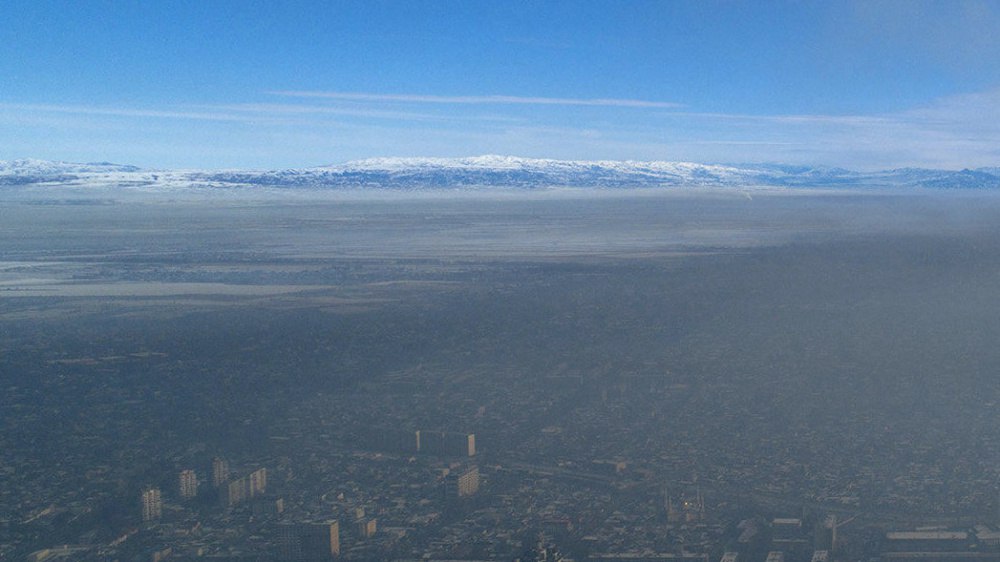
On January 20, Kyrgyzstan’s Minister of Natural Resources, Ecology, and Technical Supervision, Meder Mashiev, addressed parliament to discuss the sources of air pollution in Bishkek, the capital of Kyrgyzstan. Citing studies conducted by international organizations, Mashiev broke down the contributors to Bishkek’s smog, as reported by 24.kg. According to the minister, the primary sources of air pollution in Bishkek are: Burning of coal: 40% Exhaust gases from motor vehicles: 30% Smoke from the Bishkek Thermal Electric Power Plant: 15% Windborne dust: 13.5% Mashiev highlighted that efforts by the government in 2024 have led to improvements in air quality, based on data from the Hydrometeorological Service. However, he noted that Bishkek experienced its worst smog levels during 2021-2022. One of the key issues contributing to air pollution is the absence of catalytic converters in 85% of vehicles operating in Kyrgyzstan. Catalytic converters are critical for reducing the toxicity of vehicle emissions by converting harmful compounds into less hazardous ones. With over 600,000 registered vehicles in Bishkek — nearly double the city's road capacity of 350,000 — the Ministry estimates that motor transport accounts for 27% of the city's total air pollution. During the parliamentary session, parliamentary deputy Balbak Tulobayev proposed several measures to address the smog problem: Replace domestic coal: Prohibit the use of low-calorie, high-ash Kara-Keche coal in Bishkek and switch to high-calorie Kazakh coal, potentially reducing smog by 30-40%. Accelerate gasification: Attract additional companies, such as those from Azerbaijan or Iran, to expand gasification in Bishkek. Currently, Russia’s Gazprom is the only provider of natural gas in the city. The MP estimates this could reduce smog by another 30%. Improve public transportation: Construct a subway or monorail system in Bishkek to reduce reliance on private vehicles. Ban polluting vehicles: Restrict vehicles without catalytic converters from entering the city. Air pollution remains a persistent issue in Bishkek, a city with over one million residents. The problem worsens in the winter, as household coal burning for heating intensifies. Bishkek frequently ranks among the world’s top 10 most polluted cities on IQAir's global air quality index. To improve air quality, the government has outlined a comprehensive plan for 2024-2025, which includes the following measures: Transition to cleaner coal: Provide households with high-calorie coal that emits fewer pollutants. Modernize the thermal power plant: Replace outdated filters at the Bishkek coal-fired power plant and work toward converting it to natural gas. City planning for air circulation: Develop an architectural plan to enhance air movement in Bishkek. Expand gasification: Continue gasification of residential neighborhoods to reduce reliance on coal. Improve urban infrastructure: Construct transport interchanges and multi-level parking lots to ease traffic congestion. Promote public transport: Increase the attractiveness of public transportation and develop infrastructure for electric vehicles, including charging stations. Green belt initiative: Create a green belt in and around Bishkek to improve air quality and provide natural barriers to pollution. Air pollution in Bishkek is a complex and longstanding issue driven by coal burning, vehicle emissions, and outdated infrastructure. While the government has...

Massive Reserve for Red-Listed Animals to Be Created in Southern Kyrgyzstan

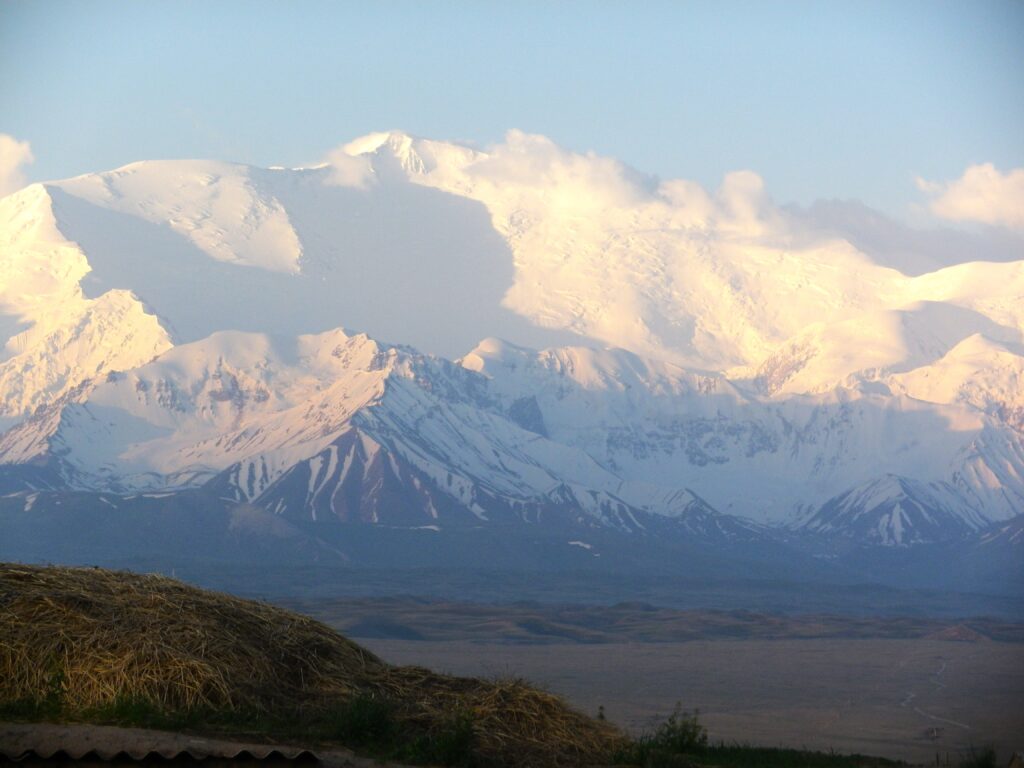
Kyrgyzstan’s Ministry of Natural Resources, Ecology, and Technical Supervision has proposed the creation of a new state natural park, Chon-Alai, in the southern region of Osh oblast. The planned park, covering an area of 66,830.79 hectares, aims to protect unique natural ecosystems and conserve endangered species of flora and fauna. A draft resolution has been published for public discussion. Land Reallocation for the Park To establish the Chon-Alai Nature Park, the government plans to reallocate 23,473.79 hectares of land from the “Reserve Land” category in the Chon-Alai district, as well as 43,357 hectares from the “State Forest Fund” under the Alai Forestry Administration. The combined area will be designated as a specially protected natural area. According to the Ministry of Natural Resources, the proposed territory meets all the criteria for protected areas, as it contains rare ecosystems and populations of endemic species. The park will span three sites on the southern macro-slope of the Alai Ridge and two sites on the northern slope of the western Zaalai Ridge, including part of the Kyzyl-Suu-Zapadnaya River valley. This region has been recognized for its environmental significance for years. As far back as 2004, there have been plans to establish a transboundary Pamir-Alai Nature Park in this area. Protecting Red-Listed Species The primary purpose of the Chon-Alai Nature Park is to ensure the protection of species listed in the Red Book of Kyrgyzstan and the International Union for Conservation of Nature (IUCN). The park will help preserve habitats for rare and endangered species, including: Mammals: Snow leopard, brown bear, Central Asian otter, Turkestan lynx, and warthog; Birds: Golden eagle, black vulture, and Alayan shieldbill; Fish: Turkestan catfish; Flora: Christoph's jaundice, Romanov's parnassus, evasive alaya, and Kostychev's prostrel. The creation of the park will provide a safe haven for these species, many of which are threatened by habitat loss, climate change, and human activity. A Milestone for Conservation The establishment of the Chon-Alai Nature Park represents a significant step forward in Kyrgyzstan's efforts to preserve its natural heritage. By protecting critical habitats and endangered species, the park will contribute to both national and global conservation goals.

Railway Relocation Project Aims to Decongest Traffic and Improve Air Quality in Bishkek

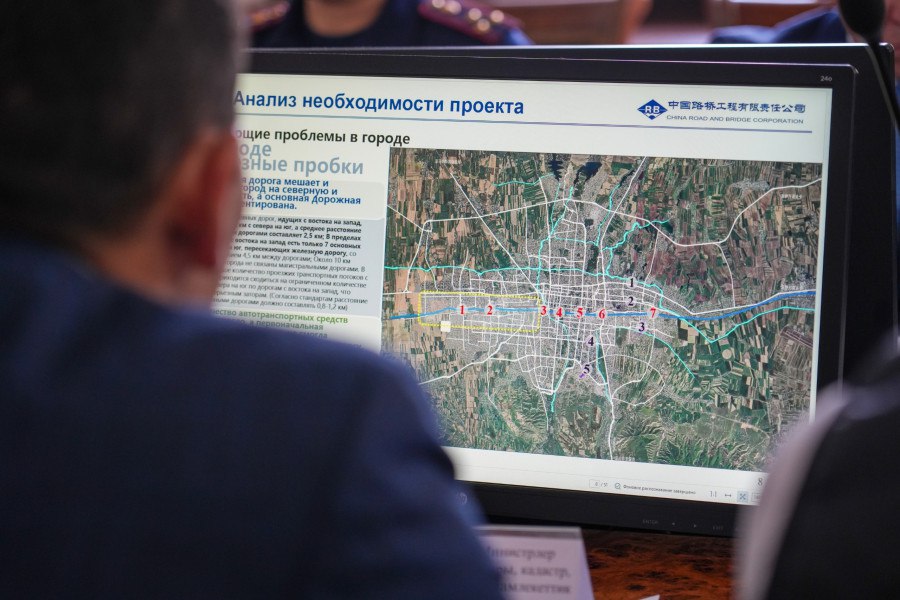
On January 16, the China Road and Bridge Corporation (CRBC) presented Bishkek Mayor Aibek Junushaliev with several proposals for a project to relocate the city’s railway tracks outside the capital’s limits, the Bishkek municipality’s press service reported. The railway, originally built during the Soviet era, runs through Bishkek from east to west, dividing the city nearly in half between its northern and southern parts. These tracks, used for cargo and passenger transport, pass through the central parts of the city and intersect with numerous strategic streets and roads. This setup has long been a major contributor to traffic congestion, especially during morning and evening peak hours. At the end of 2024, Kyrgyzstan’s Cabinet of Ministers approved a memorandum of cooperation with CRBC, focusing on a large-scale upgrade of Bishkek’s railway and road infrastructure. The ambitious project includes relocating the existing railway tracks to bypass the city, constructing a new railway line outside Bishkek, and transforming the current railway corridor into a high-speed roadway. Junushaliev explained that the new railway line will bypass the city to the north. The vacated area from the old railway tracks will be redeveloped with a new highway with high-rise residential buildings and shopping malls along its route. The total cost of the railway relocation project is estimated at $585 million. It is expected to address two major urban challenges: traffic congestion and air pollution. Traffic congestion in Bishkek has been a persistent issue, with vehicles frequently backing up at intersections where the railway intersects major city roads. This not only delays commuters but also significantly worsens air quality. Exhaust emissions from idling vehicles in traffic jams are considered one of the leading contributors to the city's air pollution. By relocating the railway tracks and introducing a high-speed roadway, the project is anticipated to streamline traffic flow, reduce congestion, and improve Bishkek’s air quality.

Kazakhstan Increases Water Levels in North Aral Sea by 42%

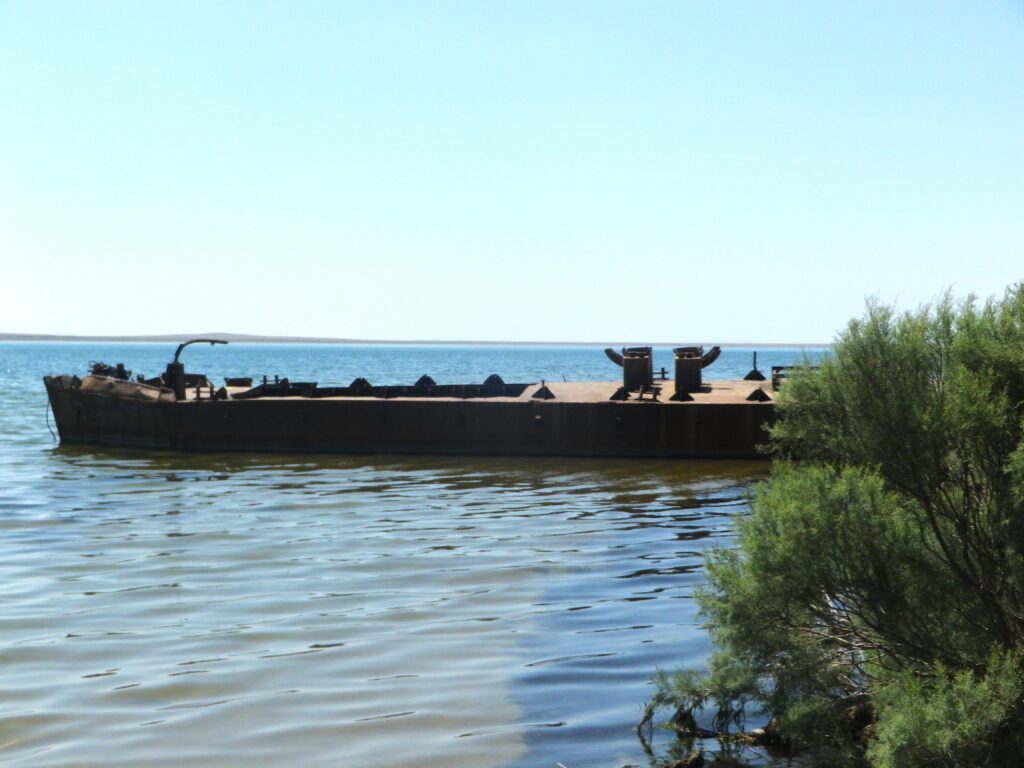
Kazakhstan’s efforts to restore the North Aral Sea have yielded significant results, with the water volume increasing by 42% to 27 billion cubic meters. The salinity of the sea has decreased nearly fourfold, and annual fish catches have risen to 8,000 tons. These achievements were highlighted by Minister of Water Resources and Irrigation Nurzhan Nurzhigitov during a meeting with residents of the Aral district in the Kyzylorda region on January 13. The North Aral Sea restoration project, initiated in response to the catastrophic shrinkage of the Aral Sea, focuses on the portion of the sea fed by the Syr Darya River. The North Aral Sea separated from the South Aral Sea in 1987-1988 due to declining water levels caused by extensive water diversion for agriculture. During the meeting, Nurzhigitov discussed plans for the second phase of the project, which aims to: Further increase water levels in the North Aral Sea; Improve water accumulation and management; Expand fisheries and promote ecotourism; Enhance the region’s overall ecological health. In 2024, Kazakhstan directed approximately 2.6 billion cubic meters of water into the Aral Sea, a dramatic increase compared to 816 million cubic meters in 2022. Nurzhigitov attributed the project’s success to the efficient distribution of water from the transboundary Syr Darya River, achieved through close cooperation with upstream countries. "These figures are the result of systematic work over the past two years. We [Kazakhstan] have reached a mutual understanding with neighboring countries on the conservation and fair distribution of water resources in transboundary rivers,” Nurzhigitov said. The minister emphasized that the project’s ultimate goal is to improve the region’s ecology, boost fisheries and tourism, and enhance the quality of life for local communities. The restoration of the North Aral Sea has become a symbol of Kazakhstan’s commitment to addressing ecological challenges while fostering sustainable development. By prioritizing cooperation with regional partners and implementing systematic water management strategies, the initiative offers hope for reversing decades of environmental degradation and improving economic opportunities for communities in the region.

Uzbekistan to Launch “Eco-Active Citizen” Project for a Greener Future

The Ministry of Ecology, Environmental Protection, and Climate Change of Uzbekistan, in collaboration with the Ministry of Digital Technologies, has announced plans to launch the “Eco-Active Citizen” project by June 1, 2025. This initiative is part of the nationwide “One Million Green Families” movement and integrates with the “Healthy Lifestyle” platform. It is outlined in the draft Presidential Decree “On the State Program for the Implementation of the Strategy ‘Uzbekistan – 2030,’” which places significant emphasis on environmental protection and fostering a “green economy.” The project seeks to promote an ecological lifestyle and enhance environmental awareness among the population. Citizens will be encouraged to take actions such as planting trees, using public transportation, walking 10,000 steps daily, reducing waste, and transitioning to electric vehicles. Additional recommended measures include installing solar panels, utilizing energy-saving materials, and conserving electricity, gas, and water. Active participation in public environmental activities will also be key. Participants in the “Eco-Active Citizen” program will qualify for public service discounts, lower interest rates on consumer loans, and may even receive environmentally friendly vehicles such as bicycles or scooters. Families in which all members achieve “eco-active” status will be recognized as “Green Families” and will have the opportunity to participate in an annual lottery to win an electric car. Neighborhoods (mahallas) with over 50% of households classified as “Green Families” will earn the title of “Green Neighborhoods” and will receive additional environmental benefits, such as designated waste collection sites, tree planting initiatives, and green public parks. Cities or villages with more than 50% “Green Neighborhoods” will be officially recognized as “Green Cities,” “Green Villages,” or “Green Auls” (fortified villages). The Ministry of Ecology underscored the environmental impact of individual actions. For instance, one car emits an estimated 4.6 tons of carbon dioxide annually, whilst walking 10,000 steps per day can prevent up to 1.5 tons of waste. Additionally, conserving 100 cubic meters of natural gas can prevent 2 tons of carbon dioxide emissions. These efforts aim to establish sustainable “green cities” while promoting environmentally responsible tourism. In a related development, The Times of Central Asia previously reported that Uzbekistan is preparing a draft national program to reduce plastic pollution for 2025-2027.