• KGS/USD = 0.01144 0%
  • KZT/USD = 0.00213 0%
  • TJS/USD = 0.10699 0%
  • UZS/USD = 0.00008 0%
  • TMT/USD = 0.28571 0%
  • KGS/USD = 0.01144 0%
  • KZT/USD = 0.00213 0%
  • TJS/USD = 0.10699 0%
  • UZS/USD = 0.00008 0%
  • TMT/USD = 0.28571 0%
  • KGS/USD = 0.01144 0%
  • KZT/USD = 0.00213 0%
  • TJS/USD = 0.10699 0%
  • UZS/USD = 0.00008 0%
  • TMT/USD = 0.28571 0%
  • KGS/USD = 0.01144 0%
  • KZT/USD = 0.00213 0%
  • TJS/USD = 0.10699 0%
  • UZS/USD = 0.00008 0%
  • TMT/USD = 0.28571 0%
  • KGS/USD = 0.01144 0%
  • KZT/USD = 0.00213 0%
  • TJS/USD = 0.10699 0%
  • UZS/USD = 0.00008 0%
  • TMT/USD = 0.28571 0%
  • KGS/USD = 0.01144 0%
  • KZT/USD = 0.00213 0%
  • TJS/USD = 0.10699 0%
  • UZS/USD = 0.00008 0%
  • TMT/USD = 0.28571 0%
  • KGS/USD = 0.01144 0%
  • KZT/USD = 0.00213 0%
  • TJS/USD = 0.10699 0%
  • UZS/USD = 0.00008 0%
  • TMT/USD = 0.28571 0%
  • KGS/USD = 0.01144 0%
  • KZT/USD = 0.00213 0%
  • TJS/USD = 0.10699 0%
  • UZS/USD = 0.00008 0%
  • TMT/USD = 0.28571 0%

Viewing results 1 - 6 of 89

Central Asia Tackles Plastic Pollution with Bag Ban Initiatives

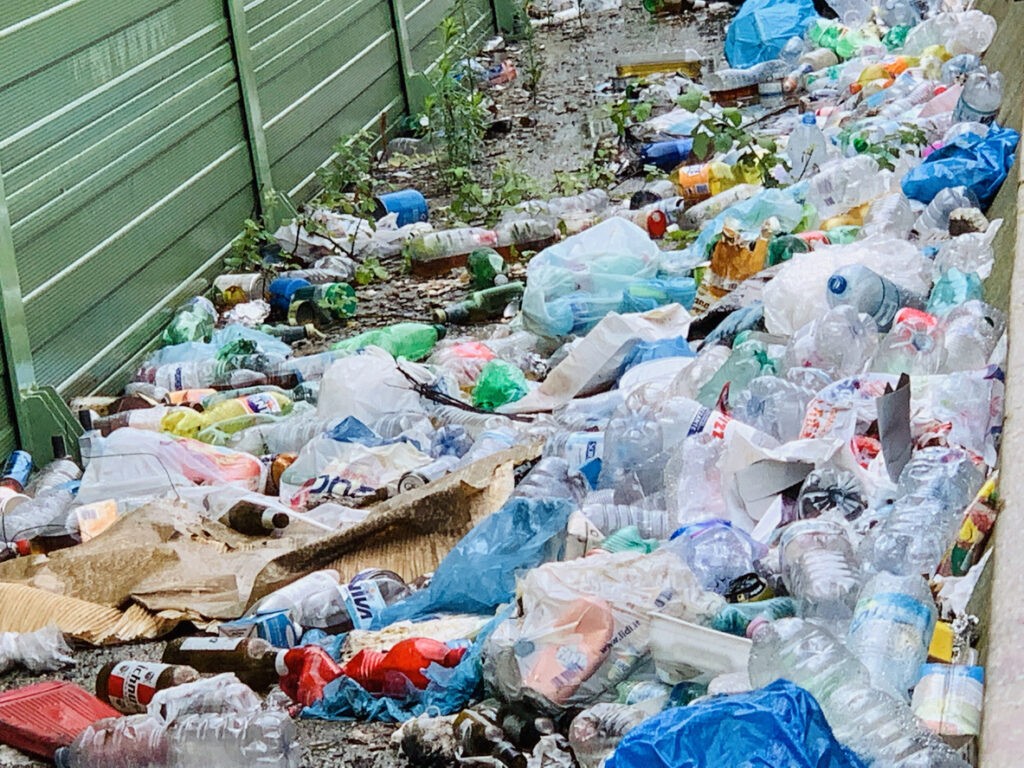
Globally, an estimated 5 trillion plastic bags are used every year. These bags take approximately 1,000 years to decompose in landfills and do not fully break down. Instead, they photodegrade into microplastics, which absorb toxins and continue to pollute the environment. Recognizing the urgency of this issue, Central Asian countries are committing to phasing out plastic bags, each pursuing distinct approaches. Uzbekistan Uzbekistan plans to introduce a draft national program to reduce plastic pollution for 2025–2027. This initiative is part of the draft State Program for the Implementation of the Strategy "Uzbekistan-2030" in the Year of Environmental Protection and Green Economy, currently under public discussion. The proposal includes: A ban on the production, import, and use of plastic bags starting in 2027. Promoting environmentally friendly, biodegradable packaging. Regulating harmful chemicals in plastic products. Encouraging recycled plastic use in packaging through established coefficients. The draft program is expected to be developed by September 2025 and submitted to the Cabinet of Ministers by November 2025. A related draft presidential decree outlines additional measures, such as: Developing legislation requiring manufacturers and importers of plastic packaging to collect and dispose of plastic waste. Establishing collection and disposal facilities. Imposing a disposal fee for plastic waste by November 1, 2025. Kazakhstan Kazakhstan had initially planned to ban plastic bags by 2025. However, the Ministry of Ecology and Natural Resources determined that the country is not yet prepared for this transition. Research reveals a significant gap: while the consumption of plastic tableware and packaging exceeds 430 million pieces annually, the production of alternative materials is limited to only 10 million pieces. This disparity highlights the urgent need to develop sustainable packaging solutions before implementing a comprehensive ban. Kyrgyzstan Kyrgyzstan is set to ban the use of polyethylene bags and plastic nationwide starting January 1, 2027. The Law on Limiting the Circulation of Polymer Film and Plastic Bags in the Territory of the Kyrgyz Republic, signed by President Sadyr Japarov in 2023, outlines penalties for violations: For citizens: Fines of 10,000 KGS (approximately $114.90). For legal entities: Fines of 28,000 KGS (approximately $321.80). Warnings will be issued for first-time violations involving the free distribution of plastic bags. Subsequent violations will incur fines: For legal entities: 5,000 KGS (approximately $57.40). For individuals: 1,000 KGS (approximately $11.40). Tajikistan Tajikistan will implement a ban on the import and use of plastic bags starting January 1, 2025. To support this transition, authorities have focused on developing environmentally friendly packaging alternatives made from materials such as cardboard, paper, fabric, ceramics, and biodegradable polymers.   These varied approaches reflect the commitment of Central Asian countries to tackling the global challenge of plastic pollution. By balancing environmental priorities with practical considerations, these nations aim to create a cleaner, more sustainable future.

Kyrgyzstan Plans to Reclaim All Uranium Tailings Dumps

Kyrgyz President Sadyr Japarov addressed the pressing issue of uranium waste during the People's Kurultai (national congress), emphasizing ongoing efforts to reclaim radioactive tailing dumps across the country. According to Japarov, many tailing dumps were constructed during the Soviet era along riverbanks and in headwaters used by local communities for domestic water supply. “We turned to Russia, as the legal successor of the USSR, for assistance. Rosatom allocated RUB 2.1 billion ($20 million). Work is now underway to relocate radioactive waste from hazardous areas to safer locations,” Japarov stated. Japarov highlighted the completion of uranium waste reclamation in Issyk-Kul Oblast, where nuclear waste had posed a threat to Lake Issyk-Kul. Without intervention, the region faced the risk of an ecological disaster. Efforts in Naryn region are also nearing completion, and attention will soon turn to tailing dumps in southern Kyrgyzstan. Local residents have noted that uranium mined in this area was used in the first Soviet atomic bomb. The tailing dump in Jalal-Abad region is particularly concerning due to its potential impact on neighboring Uzbekistan. Toxic waste from the site threatens the region’s ecology through contamination of a local river. Russian companies tasked with reclaiming five tailing dumps in Naryn and Jalal-Abad regions will be exempt from taxes, as previously reported by The Times of Central Asia. This collaboration is part of an agreement to address Kyrgyzstan’s most dangerous uranium waste sites​. According to Kyrgyzstan’s Ministry of Emergency Situations, the country is home to 92 burial sites containing toxic and radioactive materials.

Central Asia Faces Devastating $9 Billion Annual Loss from Climate Crises

Central Asia faces a complex mix of development challenges, according to a study conducted by the Analytical Credit Rating Agency (ACRA). These include global issues such as climate change, rising inequality, and demographic shifts, alongside regional concerns like water crises, aging infrastructure, border conflicts, and lack of access to sea routes. The region’s challenges can be categorized into external and internal risks. Since gaining independence, Central Asia has been shaped by the influence of global powers. Trade, security, energy, and education ties with Russia remain strong, while China’s Belt and Road Initiative has led to significant investment in infrastructure. Western nations and multinational corporations are active primarily in the raw materials sector, particularly in Kazakhstan, Uzbekistan, and Turkmenistan. While these international connections drive economic growth, they also heighten the region’s vulnerability to global shocks. For example, heavy reliance on remittances from migrant workers and low export diversification increase economic fragility. Climate change poses one of the most pressing threats to the region. Natural disasters—including floods, which affect about one million people annually, and earthquakes, impacting two million - result in $9 billion in annual GDP losses. Rising temperatures are expected to exacerbate issues such as water scarcity, droughts, heat waves, and the loss of agricultural land. Adopting sustainable development practices and green technologies could help mitigate these effects. Aging water and energy infrastructure is a major hurdle for the region. Energy insecurity, compounded by climate change, limits economic potential. Despite a rise in foreign investment from $1.5 billion in 2000 to $7.4 billion in 2023, the majority of funds are concentrated in raw materials, with only a small share allocated to infrastructure improvements. Transport development is equally critical. The lack of sea access places Central Asia at a 20% developmental disadvantage compared to coastal nations. Expanding roads, railways, and logistics hubs could significantly enhance regional and international trade. Territorial disputes, particularly around enclaves, remain a source of periodic clashes, with the Kyrgyz-Tajik border clashes of 2022 being a notable example. While these conflicts may not immediately affect economic stability, escalations could damage the region’s investment climate and trade prospects. A peace agreement signed later in 2022 has helped to stabilize the situation. Additionally, the situation in Afghanistan continues to present challenges, including terrorism, refugee flows, and border security concerns. These risks intensified following the regime change in Afghanistan in 2021, increasing the urgency for stronger border controls. Addressing these interconnected challenges will require coordinated efforts among all Central Asian nations. International organizations and major global partners must also play a role by supporting infrastructure and technological modernization. Such collaboration is essential to mitigating economic risks and fostering long-term development in the region.

Endangered Great Bustard Named Tajikistan’s Bird of the Year

The great bustard, also known as the red-breasted bustard, has been named the bird of the year for 2025 in Tajikistan. The decision, announced on December 11, followed a vote by the National Academy of Sciences​. The rare bird, locally called dugdogi zebo, is listed in both the International Union for Conservation of Nature (IUCN) Red List and the Red Book of Tajikistan, signifying its endangered status. Since 2007, Tajikistan has annually designated a bird of the year to raise awareness about avian conservation. Previous honorees include an owl, corncrake, pheasant, paradise flycatcher, Tibetan eagle, peregrine falcon, white stork, and oriole. The common turtle dove has held the title this year​. The great bustard resides in Tajikistan as both a breeding and migratory species. Experts estimate that only 23 breeding pairs inhabit the country, though the population temporarily rises to 50-60 individuals during migration periods. Slightly larger than a domestic hen, male great bustards have a body length of 65-75 cm and weigh between 1.8 and 3.2 kg, significantly smaller than the common bustard, which can weigh up to 15 kg. Omnivorous by nature, the bird’s diet includes fruits, seeds, leaves, flowers, locusts, beetles, and small reptiles. Known for their cautious behavior, great bustards avoid human contact and prefer to hide or flee when threatened. Their average lifespan in the wild is approximately 20 years. Globally, the International Bustard Conservation Foundation, supported by the UAE government, leads efforts to protect the species. To date, the foundation has bred over 480,000 bustards in captivity and released 285,000 into the wild​. In Kazakhstan, the foundation releases great bustards into the wild while simultaneously issuing hunting licenses for $1,280 per bird, catering to Arab hunters. Uzbekistan hosts an Emirati conservation center in the Kyzylkum Desert, dedicated to breeding and protecting the species, as well as releasing them into their natural habitat​. Despite these international initiatives, Tajikistan has yet to leverage Arab funding or hunting tourism to support conservation efforts. Utilizing such resources could bolster the great bustard population while generating additional economic benefits.

Solid Waste Recycling Plant Under Construction in Bishkek

Bishkek municipality has announced progress on the construction of a solid waste recycling plant at the city’s sanitary landfill, supported by a Chinese investor. Concrete foundations are being poured, and equipment and components for the facility have begun arriving from China. Currently, over 180 Chinese workers and engineers are active at the site. On March 29, Kyrgyzstan’s Cabinet of Ministers and the Chinese investor signed an agreement for the plant’s construction. The facility will generate electricity by incinerating municipal solid waste. In its initial phase, the plant is expected to process 1,000 tons of waste daily, with plans to increase capacity to 3,000 tons per day. The project’s total investment amounts to approximately $95 million, with construction slated for completion in December 2025. Addressing a Growing Problem Solid waste disposal has long been a critical issue in Kyrgyzstan, particularly in Bishkek, the nation’s largest city. According to the 24.kg news agency, the per capita production of waste is rising. Almaz Oskonbaev, an official from the Ministry of Natural Resources, Ecology, and Technical Supervision, reported that 1.792 million tons of solid waste were collected nationwide in 2023, a significant increase from 1.177 million tons in 2019. This equates to approximately 279 kilograms of garbage per person annually. Bishkek’s sanitary landfill currently receives around 200 tons of waste daily from the city and its suburbs, according to landfill director Nurlan Jumaliev. A New Landfill to Complement Recycling Efforts In a bid to improve waste management, Bishkek inaugurated a new sanitary landfill on October 31, 2023. Supported by the European Bank for Reconstruction and Development (EBRD) and the European Union (EU), this facility complies with both national and EU environmental standards. With a storage capacity of 1.9 million cubic meters, it is expected to accommodate the city’s waste disposal needs for at least a decade. The construction of the recycling plant represents a significant step forward in addressing Bishkek’s mounting waste challenges while contributing to sustainable energy production.

Justice for Veterans: U.S. Acknowledges Cancer Cases Tied to Service at Uzbekistan’s K2 Base

Thousands of American veterans who served at Uzbekistan’s K2 airbase have reported rare cancers and diseases - but only now, more than two decades later, is the U.S. government taking steps to address their dire situation. The U.S. Department of Veterans Affairs (VA) has announced plans to include bladder, urinary tract, and genitourinary cancers as conditions presumed to be linked to service at Uzbekistan’s Karshi-Khanabad airbase, known as K2. In 2001, the U.S. military moved into K2, a former Soviet airbase, to support a series of operations named “Enduring Freedom” which were purportedly aimed at tackling terrorism and Al-Qaeda in the wake of 9/11. However, in addition to the threat of terrorism, the troops faced another danger: the toxic environment. Reports from the base describe exposure to chemicals and radioactive materials. Soldiers recalled an underground “black bubble,” glowing lakes, and a chemical odor lingering in the air. [caption id="attachment_26149" align="aligncenter" width="634"] Image: Stronghold Freedom Foundation[/caption] The Karshi-Khanabad airbase was heavily used by the Soviet military during its operations in Afghanistan from 1979 to 1989, when it served as a site for producing, storing, and testing various weapons, including chemical weapons. The base also stored fuel, solvents, and other harmful substances. Additionally, it became a dumping ground for toxic waste, asbestos, enriched uranium, and other hazardous materials. Spills of these substances were frequent, leaving lasting environmental damage. Before the U.S. occupied K2, the destruction of Soviet-era missiles left some soil contaminated with low-level radioactive depleted uranium. The destruction of Soviet missiles was part of disarmament obligations under the 1987 Intermediate-Range Nuclear Forces (INF) Treaty. A 2001 survey found traces that could be harmful if inhaled, and a 2002 assessment confirmed small amounts of uranium, identified as non-U.S. depleted uranium, outside Camp Stronghold Freedom’s perimeter. The affected area was covered with clean soil, fenced off, and marked as off-limits in November 2001. Furthermore, approximately 392 chemical compounds were found at the K2 Air Base. Thousands of military personnel who served in K2 suffered from severe illnesses, including rare forms of cancer, associated with their time at the base. However, over the years, the U.S. government and the VA have delayed recognition of the link between service in K2 and these health issues, leaving many veterans without adequate support. [caption id="attachment_26150" align="aligncenter" width="1140"] Image: Stronghold Freedom Foundation[/caption] According to the Stronghold Freedom Foundation, K2 veterans are 500% more likely to get cancer than other veterans - 75% of U.S. service members deployed to Uzbekistan alone have developed at least one type of K2-related illness. On November 11, President Joe Biden announced an expansion of the PACT Act (Promise to Address Comprehensive Toxics Act), a law he signed in August 2022 to improve healthcare for veterans exposed to toxins. President Biden stated that the act has already helped over a million veterans and their families access benefits. Under new efforts, the VA will add bladder cancer, ureter cancer, multiple myeloma, and certain types of leukemia to the list of presumptive conditions. This expansion applies...