• KGS/USD = 0.01144 0%
  • KZT/USD = 0.00212 0%
  • TJS/USD = 0.10549 -0.28%
  • UZS/USD = 0.00008 0%
  • TMT/USD = 0.28530 0%
  • KGS/USD = 0.01144 0%
  • KZT/USD = 0.00212 0%
  • TJS/USD = 0.10549 -0.28%
  • UZS/USD = 0.00008 0%
  • TMT/USD = 0.28530 0%
  • KGS/USD = 0.01144 0%
  • KZT/USD = 0.00212 0%
  • TJS/USD = 0.10549 -0.28%
  • UZS/USD = 0.00008 0%
  • TMT/USD = 0.28530 0%
  • KGS/USD = 0.01144 0%
  • KZT/USD = 0.00212 0%
  • TJS/USD = 0.10549 -0.28%
  • UZS/USD = 0.00008 0%
  • TMT/USD = 0.28530 0%
  • KGS/USD = 0.01144 0%
  • KZT/USD = 0.00212 0%
  • TJS/USD = 0.10549 -0.28%
  • UZS/USD = 0.00008 0%
  • TMT/USD = 0.28530 0%
  • KGS/USD = 0.01144 0%
  • KZT/USD = 0.00212 0%
  • TJS/USD = 0.10549 -0.28%
  • UZS/USD = 0.00008 0%
  • TMT/USD = 0.28530 0%
  • KGS/USD = 0.01144 0%
  • KZT/USD = 0.00212 0%
  • TJS/USD = 0.10549 -0.28%
  • UZS/USD = 0.00008 0%
  • TMT/USD = 0.28530 0%
  • KGS/USD = 0.01144 0%
  • KZT/USD = 0.00212 0%
  • TJS/USD = 0.10549 -0.28%
  • UZS/USD = 0.00008 0%
  • TMT/USD = 0.28530 0%

Viewing results 1 - 6 of 213

Foreign Companies to Invest in Waste Recycling Plants across Uzbekistan

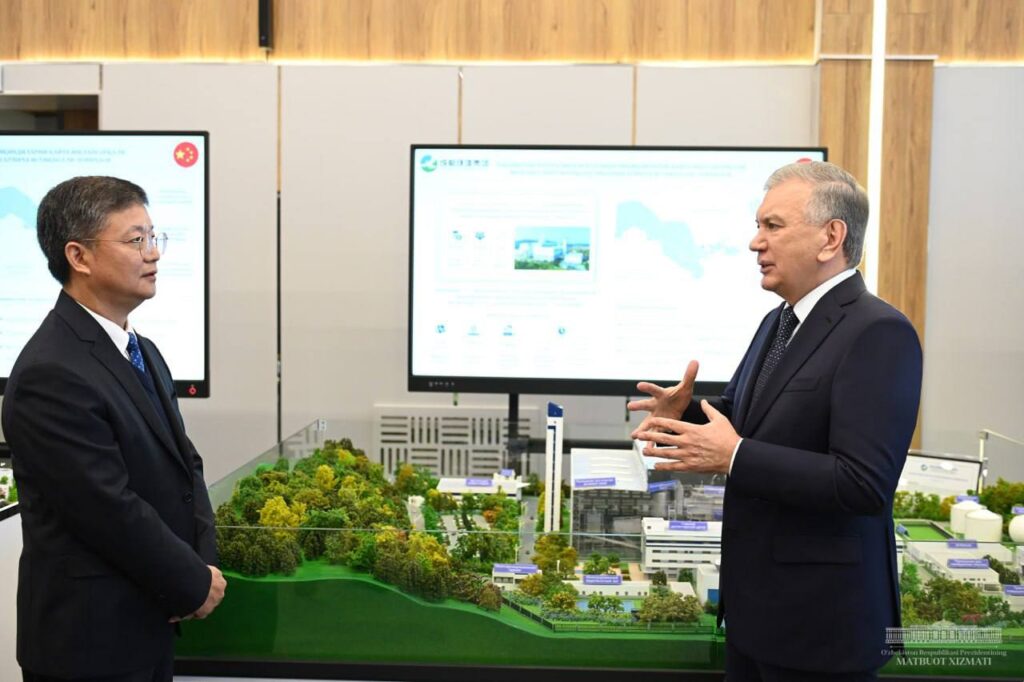
On October 21, Uzbekistan President Shavkat Mirziyoyev attended a presentation on new projects for recycling household waste into electricity. As  reported by the president’s press service, Uzbekistan produces 14 million tons of solid waste annually, but only 4-5 percent is recycled. As a consequence, over 7 million tons of greenhouse gases and 43,000 tons of toxic substances formed at waste landfills are annually emitted into the atmosphere and penetrate the soil. To resolve the problem, the Ministry of Ecology, Environmental Protection, and Climate Change has prepared several projects with foreign investors. The plan is to build waste incineration plants across Uzbekistan and process landfill gases at the Akhangaran landfill, with a total investment of about $1.3 billion. A Chinese company, CAMC Engineering, will invest $350 million in constructing two waste incineration plants in the Andijan and Tashkent regions, capable of processing 4,000 tons of waste daily and generating 630 million kilowatt-hours of electricity annually. Another Chinese company, Shanghai SUS Environment, plans to invest $310 million in building two plants in the Samarkand and Kashkadarya regions to process 3,000 tons of waste daily and generate 480 million kilowatt-hours of electricity annually. The United Arab Emirates Group is to invest $200 million in a plant in the Bukhara and Navoi regions to process 1,500 tons of waste daily and generate 363 million kilowatt-hours of electricity annually, and Sejin (Republic of Korea) will invest $55 million in the construction of a 16-megawatt electricity plant in the Akhangaran district of Tashkent to generate electricity from landfill gases. The combined projects, to be implemented between 2025-'27,  are predicted to burn over 4.7 million tons of solid municipal waste annually and generate 2.1 billion kilowatt-hours of electricity worth $97 million, saving  152 million cubic meters of natural gas and reducing greenhouse gas emissions by 2.4 million tons. Back on September 26, the President of Uzbekistan established the Agency for Waste Management and Circular Economy Development aimed to introduce modern methods of collecting, sorting, and recycling waste and producing alternative energy, raw materials, and organic fertilizers. Eco-industrial zones are also to be created on landfill sites across Uzbekistan.
Kyrgyzstan and Russia Set to Expand Cooperation

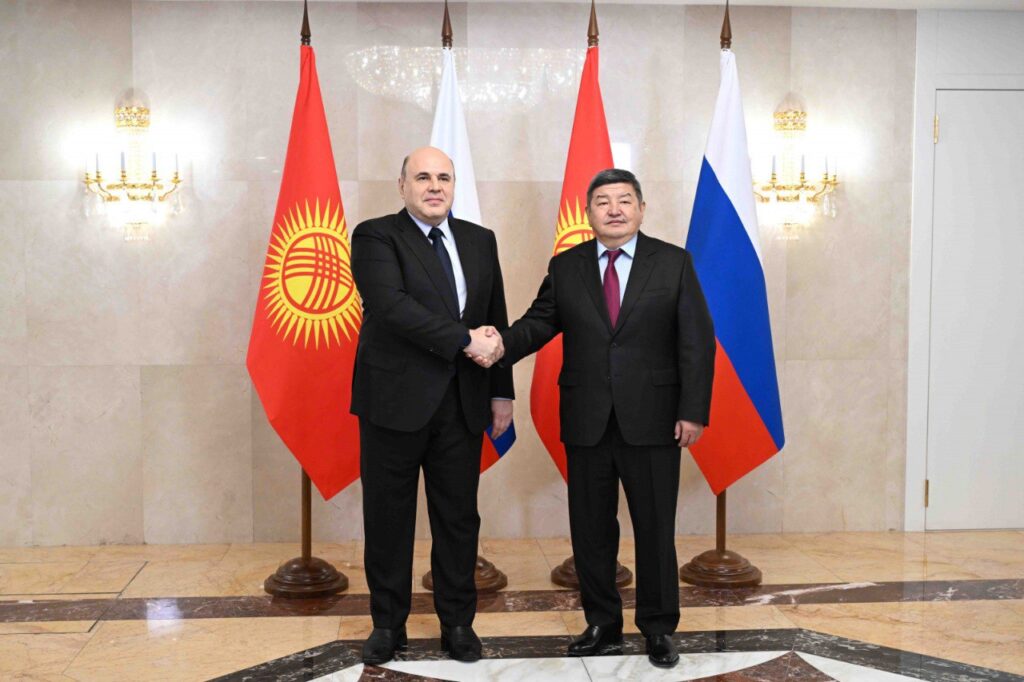
On October 21, in Moscow, Akylbek Japarov, the Chairman of Kyrgyzstan's Cabinet of Ministers, and Mikhail Mishustin, the Chairman of the Russian Government, chaired a joint meeting of the governments of both countries. Japarov's visit was planned to coincide with the centenary of the formation of the Kara-Kyrgyz Autonomous Region, and also with the beginning of the Days of Culture of Kyrgyzstan in Russia. “The establishment of the Kara-Kyrgyz Autonomous Region in 1924 as part of the Russian Soviet Federative Socialist Republic, followed by the formation of the Kyrgyz Autonomous Soviet Socialist Republic in 1926 and later the Kyrgyz Soviet Socialist Republic in 1936, was of colossal importance for our people, becoming the foundation of the sovereign Kyrgyz Republic. The friendship between the Kyrgyz and Russian peoples has been forged over the centuries, has gone through difficult times, but has given many examples of devotion and loyalty,” Japarov said. Noting that Kyrgyz-Russian relations have elevated to the status of "deepened relations" of alliance and strategic partnership, Japarov stated: "We are very pleased that Russian private businesses and investors have paid attention to Kyrgyzstan's possibilities and have intensified their work. We are always open to Russian investments and are ready to provide maximum assistance in implementing investment proposals." Mishustin in turn expressed Russia’s interest in further developing bilateral cooperation in all areas. "During the first eight months of this year, [Kyrgyz-Russian] trade turnover has grown by 16 percent. The share of the ruble in mutual settlements has reached almost 90 percent. We want to maintain this trend to ensure stable and predictable conditions for doing business," Mishustin said.

Kazakhstan and Russia Increase Rail Cargo Transportation to and from China

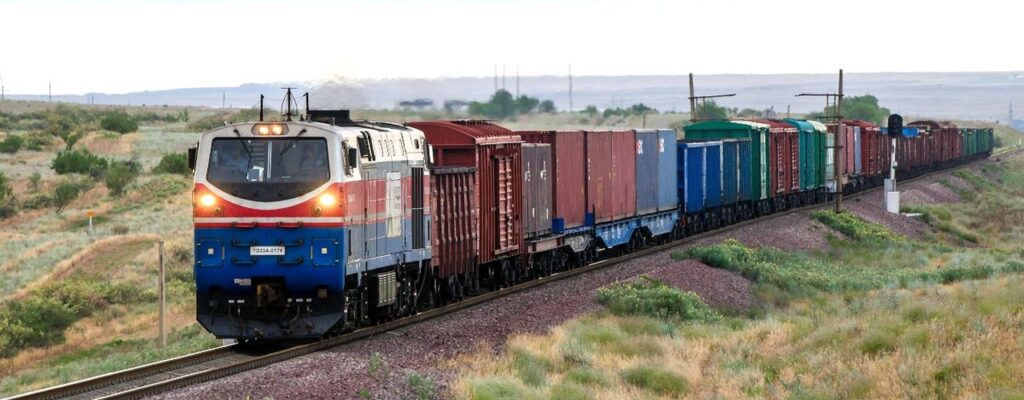
On October 18, Kazakhstan's Deputy Prime Minister Serik Zhumangarin, and Russia's Deputy Chairman of the Government Alexey Overchuk attended a meeting of the Intergovernmental Commission on Cooperation in Moscow, on Kazakhstan and Russia's transport and logistics sectors. As reported by the Kazakh government's press service, between January and September 2024, the volume of containers transported by rail from Russia to China through Kazakhstan, increased by 63% compared to the same period in 2023, while container transportation along the China-Europe-China route through Russia and Kazakhstan increased by 65%. During the meeting an agreement was made to further increase the flow of container trains on the China-Kazakhstan-Russia route by constructing the necessary transport infrastructure at the Selyatino rail station in the Moscow region. In April,  Kazakhstan’s national railway’s company Kazakhstan Temir Zholy (KTZ), Russia’s Slavtrans-Service JSC, and China’s Xian Free Trade Port Construction and Operation Co., Ltd began construction on a new transport and logistics center, CRK Terminal, at Selyatino, aimed at ensuring the efficient handling of cargo following the route Xi'an (China) - Dostyk/Altynkol (Kazakhstan) - Selyatino (Russia). The center is set to become an essential link in developing international transport corridors and increase the competitiveness of transportation through Kazakhstan. In 2023, the volume of cargo transported by rail between China and Russia through Kazakhstan amounted to 3.8 million tons, an increase of 35% compared to 2022. Kazakhstan also remains an important transit and transport link along the Trans-Caspian International Transport Route (TITR), which known as the Middle Corridor, connects China and Europe via Central Asia and the Caucasus.

OTS Countries Take Steps Towards Turkic Integration

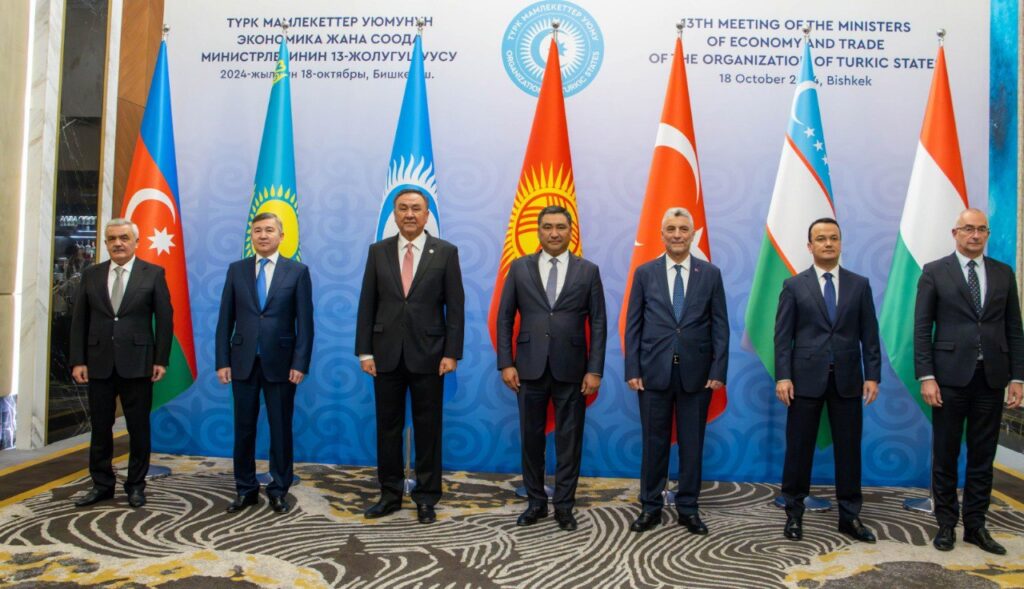
On October 18, Bishkek hosted the 13th meeting of the Organization of Turkic States (OTS), wherein Ministers of Economy and Trade aimed to strengthen economic cooperation between the OTS member states. The OTS, currently comprising Azerbaijan, Kazakhstan, Kyrgyzstan, Turkey, Uzbekistan, and Turkmenistan, with Hungary and the Turkish Republic of Northern Cyprus as observers, was founded in 2009 to foster comprehensive cooperation among Turkic-speaking nations. During the meeting, Chairman of the Cabinet of Ministers of Kyrgyzstan, Akylbek Japarov, stated that in recent years, Kyrgyzstan's trade turnover with the OTS member states has grown by almost 62%, with Kyrgyz exports increasing by 54.6%, and imports by 66%. The Deputy Prime Minister - Minister of National Economy of Kazakhstan, Nurlan Baibazarov, emphasized Kazakhstan’s adherence to the development of Turkic integration and announced that the "Turkic Investment Fund created within the OTS demonstrates a common desire to expand economic and investment cooperation, implement joint investment projects, and attract capital, technology, and talent for our countries' dynamic growth and prosperity." OTS ministers supported Kazakhstan's initiatives to create a Green Finance Council, a Council of Central (National) Banks of the OTS member states, and the inauguration of the Turan Special Economic Zone in the Kazakh city of Turkestan, where the next meeting will be held. In January-August 2024, trade between Kazakhstan and the OTS countries amounted to $7.2 billion, and according to the Turkish Ministry of Finance, by the end of 2024, the Turkic states are poised to play an important role in the world economy, reaching an economic volume of $1.9 trillion and a population of 178 million. As previously reported by The Times of Central Asia,  the Turkic Investment Fund, with an authorized capital of $1 billion, will begin financing major joint projects of the OTS member countries from January 2025.

Accelerating Growth: Uzbekistan’s Automotive Industry Continues to Expand

Uzbek-Singaporean company Technologies of Real-Time plans to start producing components for such famous brands as BYD, Chery, Changan, Geely, and Dongfeng, it was announced during President Mirziyoyev's visit to the Tashkent region. The project will cost $115 million and is planned to be realized by 2025. As a result, 43 new jobs will be created, and production capacity will increase from 180,000 to 280,000 units annually. The automobile industry is a critical component of the Uzbek economy, with car production growing almost threefold in recent years. By the end of this year, production volume is expected to reach 460,000 units, and by 2030, it is planned to increase this figure to 1 million. Two new private enterprises and international brands have been brought in to eliminate monopolies and promote competition in the industry, with more than 20 plants in the country producing a wide range of cars and trucks. In response to the growing demand for spare parts, more than 300 enterprises have joined a cooperative network, including Technologies of Real-Time in Zangiat. In November 2019, the President familiarized himself with the products of this enterprise at an international industrial fair, and recommended its further expansion. As a result, extensive modernization has been carried out, and new equipment from China, Russia, South Korea, Japan, and the United States has been installed in 12 workshops. Currently, more than 750 types of spare parts for 118 car models are produced here. The enterprise has created 220 jobs. Products are supplied to the domestic market, including to the Uzavto Motors plant in the Khorezm region, where 773,000 spare parts for Damas and Labo were shipped. Spare parts are also in demand abroad: last year, exports amounted to $3 million, including deliveries to Kazakhstan, Kyrgyzstan, Tajikistan, and Turkmenistan.

Kazakhstan, Kyrgyzstan and Uzbekistan Determine Operating Mode for Toktogul Reservoir

Following a meeting in Tashkent to coordinate the region's water and energy balance, ministers from Kazakhstan, Kyrgyzstan, and Uzbekistan determined a preliminary operating mode for Kyrgyzstan’s Toktogul reservoir for the autumn-winter period. Kyrgyzstan’s largest Toktogul hydroelectric power plant (HPP) reservoir on the Naryn River releases water downstream to Kazakhstan and Uzbekistan providing essential irrigation for fields in Kazakhstan's dry southern regions. In winter, the plant which produces around 40% of Kyrgyzstan’s electricity, releases more water to generate electricity to meet the country’s power shortages. Kazakhstan and Uzbekistan are now interested in helping Kyrgyzstan maintain a sufficient volume of water in the Toktogul reservoir for use during the 2025 irrigation season; a goal which could be achieved by exporting Kazakh and Uzbek electricity to Kyrgyzstan during the winter months. Commenting on the proposal, Kazakhstan’s Minister of Water Resources and Irrigation Nurzhan Nurzhigitov, stated: "An important area of cooperation for our countries is the water and energy sector. This year has become a vivid example of deepening such regional cooperation. We [Kazakhstan] have met our water needs thanks to the joint measures. For a downstream country, this is extremely important. First, it is used to fill the North Aral Sea. We will continue to adhere to the agreements reached for the autumn-winter period to provide farmers with irrigation water next year." The Kazakh Ministry of Water Resources and Irrigation announced on October 14 that the irrigation season had ended in all regions of the country and during the growing season, from April 1,  the Ministry supplied Kazakhstan's farmers with about 11.2 billion cubic meters of water.  Nurzhigitov also drew attention to the vital role of water diplomacy in preventing a shortage of irrigation water this year, with  Kyrgyzstan, Tajikistan, and Uzbekistan sending more water to Kazakhstan than planned. As previously  reported by The Times of Central Asia the Toktogul reservoir accumulated more water this year than last.