• KGS/USD = 0.01144 0%
  • KZT/USD = 0.00212 0%
  • TJS/USD = 0.10549 -0.28%
  • UZS/USD = 0.00008 0%
  • TMT/USD = 0.28530 0%
  • KGS/USD = 0.01144 0%
  • KZT/USD = 0.00212 0%
  • TJS/USD = 0.10549 -0.28%
  • UZS/USD = 0.00008 0%
  • TMT/USD = 0.28530 0%
  • KGS/USD = 0.01144 0%
  • KZT/USD = 0.00212 0%
  • TJS/USD = 0.10549 -0.28%
  • UZS/USD = 0.00008 0%
  • TMT/USD = 0.28530 0%
  • KGS/USD = 0.01144 0%
  • KZT/USD = 0.00212 0%
  • TJS/USD = 0.10549 -0.28%
  • UZS/USD = 0.00008 0%
  • TMT/USD = 0.28530 0%
  • KGS/USD = 0.01144 0%
  • KZT/USD = 0.00212 0%
  • TJS/USD = 0.10549 -0.28%
  • UZS/USD = 0.00008 0%
  • TMT/USD = 0.28530 0%
  • KGS/USD = 0.01144 0%
  • KZT/USD = 0.00212 0%
  • TJS/USD = 0.10549 -0.28%
  • UZS/USD = 0.00008 0%
  • TMT/USD = 0.28530 0%
  • KGS/USD = 0.01144 0%
  • KZT/USD = 0.00212 0%
  • TJS/USD = 0.10549 -0.28%
  • UZS/USD = 0.00008 0%
  • TMT/USD = 0.28530 0%
  • KGS/USD = 0.01144 0%
  • KZT/USD = 0.00212 0%
  • TJS/USD = 0.10549 -0.28%
  • UZS/USD = 0.00008 0%
  • TMT/USD = 0.28530 0%

Viewing results 1 - 6 of 213

Kazakhstan Seeks Co-Production Venture with Italy

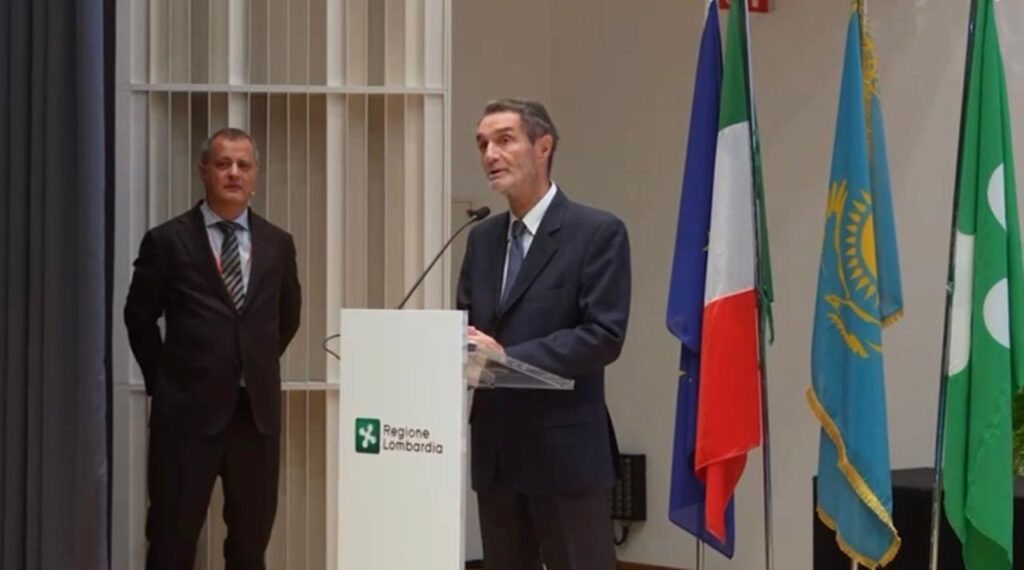
Following the Kazakh-Italian forum, "Kazakhstan–Italy: Trade and Investment Opportunities on the Way to Kazakhstan," on October 8 in Milan, the Kazakh Ministry of Trade and Integration reported that discussions had focused on renewable energy, the agro-industrial sector, tourism, pharmaceuticals, and technological innovations, with an emphasis on Kazakhstan's strategic importance in economic cooperation between Europe and Central Asia. The event came in the wake of Kazakhstan's President Kassym-Jomart Tokayev official visit to Italy in January 2024, which marked a significant step in strengthening Kazakh-Italian relations. The Minister of Trade and Integration of Kazakhstan Arman Shakkaliyev noted that Italy is one of Kazakhstan's key trading partners in the European Union with one of the three largest trade turnovers, and  proposed the introduction of  "Made with Italy"; a concept aimed to promote products created in collaboration with Italian companies. Valentino Valentini, Deputy Minister at the Italian Ministry of Enterprise and Made in Italy supported the notion and stressed that joint projects would stimulate the development of small and medium-sized businesses in both countries. Essential to the initiative, would be the creation of centers of excellence for the transition to European quality standards in Kazakhstan. To ensure the rapid entry of Kazakh products into the EU and Italian markets, such centers would issue certificates of equivalence of manufactured products to EU regulations. The forum also discussed prospects in the tourism sector, with Italian Minister of Tourism Daniela Santanke noting the significant potential for the growth of tourist exchange, facilitated by the launch of direct flights between Astana and Milan. The forum launched Kazakh companies' first trade and economic mission to Italy, involving over 50 enterprises representing agriculture, oilfield services, textile industry, tourism, and IT sectors. According to Kazakh statistics, in 2023, the trade turnover between Kazakhstan and Italy amounted to $16.1 billion, an increase of 7.8% since the previous year, with exports from Kazakhstan reaching $14.8 billion. In January-August 2024, bilateral trade increased by 33% to $13.8 billion, with Kazakh exports rising by 36% to $12.9 billion. Kazakhstan's main exports to Italy comprise crude oil (+38.1%), coal (309-fold increase), flax seeds ($4.1 million increase), and propylene polymers (71-fold increase).
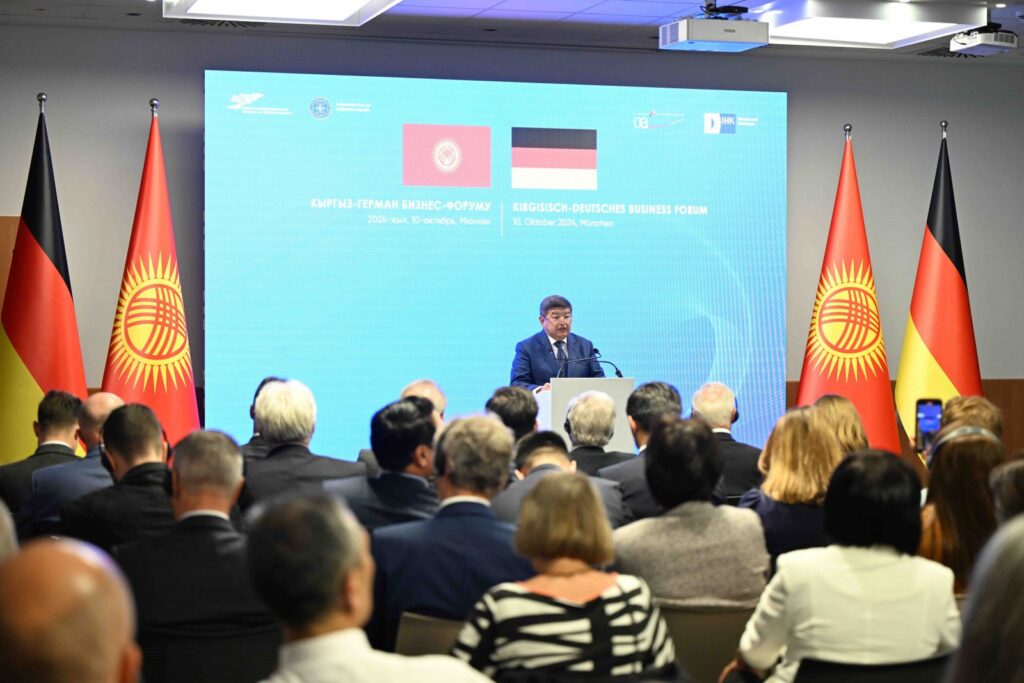

Kyrgyzstan Encourages German Investment in Raw Materials Extraction and Logistics

During a Kyrgyz-German Business Forum in Munich on October 10, Kyrgyzstan’s Chairman of the Cabinet of Ministers, Akylbek Japarov, stated that  following the first Kyrgyz-German Business Forum in Hamburg over a year ago, bilateral relations between the two countries had strengthened alongside a mutual interest in deepening cooperation. Japarov cited the fact that 180 joint Kyrgyz-German enterprises are currently engaged in Kyrgyzstan’s trade, industry, agriculture, tourism, energy, education, and services sectors, and to encourage further  German investment and  participation in implementing the government’s ambitious economic development plans, invited businesses to attend the ‘Day of German Economy in Kyrgyzstan.’ Scheduled for summer 2025, the event follows three 'Days of Kyrgyz Economy' in Hamburg, Frankfurt am Main, and Munich. Addressing the forum, Kyrgyz Minister of Economy and Commerce Daniyar Amangeldiev spoke of Kyrgyzstan's interest in developing cooperation with Germany on raw materials, with reference to the presence of  100 raw material deposits in Kyrgyzstan. In addition, he proposed that German investors participate in auctions to gain the right to use the subsoil in Kyrgyzstan and develop deposits using modern technologies that comply with environmental standards. The minister also touched upon the development of transport and logistics infrastructure and invited German companies to collaborate in the development of Kyrgyzstan's logistics system, stating: "Kyrgyzstan, located in the heart of Central Asia, is  ‘landlocked’. At the same time, the Great Silk Road — a trade route between West and East, North and South — has been passing through our country since ancient times. Therefore, our country should rightfully be called ‘land connecting,’”

Kazakhstan-Tajikistan Trade Turnover Rises 6%

According to the State Revenue Committee of Kazakhstan's Ministry of Finance, the trade turnover between Kazakhstan and Tajikistan has reached $780.7 million so far this year, 6% higher than for the same period last year. From January to August 2024, Kazakhstan exported over 1.6 million tons of goods worth $613.2 million to Tajikistan, an increase of 15.5% compared to last year. The main export product was wheat, with 629,100 tons valued at $154.5 million. Tajikistan also produces more sunflower, safflower, and soybean oil – 44,800 tons (+8.2%), pasta – 5,300 tons (+20.7%), and sweet drinks – 12.5 million liters (+5.8 times). The export of aluminum oxide also increased by 40.5% to 105,400 tons; iron and steel rods increased 1.5 times, up to 36,800 tons; plastic windows and frames increased ten times, up to 12,400 tons; and smartphones and media stations increased 1.8 times, up to 148,100 units. However, the supply of liquefied gas decreased by 4% (211,300 tons). At the same time, imports from this country continued to decrease. In January-August, 220,800 tons (-19.4%) of products worth $167.5 million were imported from there. This decrease affected the sales volume of ores and concentrates (lead, copper, zinc) by 12.3%, up to 106,500 tons, and children’s scooters and skateboards by 32.6%, up to 46,00 units. In addition, Kazakhstan has begun to buy fewer fresh fruits and vegetables. For example, the supply of apricots, peaches, and grapes immediately decreased by 2.1 times, to 6,900 tons, and onions by 3.3 times, to 17,600 tons. However, the volume of imported dried fruits increased by 23.3% and amounted to 36,800 tons.

Drop in Uzbekistan’s Exports to Central Asia

Local media has reported that from January - August, Uzbekistan's exports to its four neighboring countries decreased, compared to the same period in 2023. According to data from the  Statistical Agency data, exports to Kazakhstan dropped from 950 million USD to 872 million USD; to Kyrgyzstan, from 491 million USD to 365 million USD; to Tajikistan, from 389 million USD to 329 million USD, and to Turkmenistan, from 118 million USD to 78 million USD. The share of Central Asian countries in Uzbekistan's total foreign trade turnover (FTT) in the first nine months of 2023 was 11.5%. The total FTT was worth 40 billion 45 million USD, of which 4 billion 574.3 million USD were with Central Asian countries. This year, it has decreased to 10.3%, meaning 4 billion 400.6 million USD of FTT of 42 billion 703.3 million USD are with CA countries. The Ministry of Investments, Industry, and Trade attributed the drop to an increase Uzbekistan's exports to international markets with high purchasing power, especially Europe, Arab countries, Southeast Asia, and the Americas, and explained, " due to diversification, the volume of exports to neighboring countries, which are considered a traditional market, decreased. In particular, the volume of exports to Kazakhstan decreased by 8.3%, to Kyrgyzstan by 25.6%, to Tajikistan by 15.3%, and to Turkmenistan by 36.2%."

EU and Turkmenistan Launch Coordination Platform of Trans-Caspian Transport Corridor

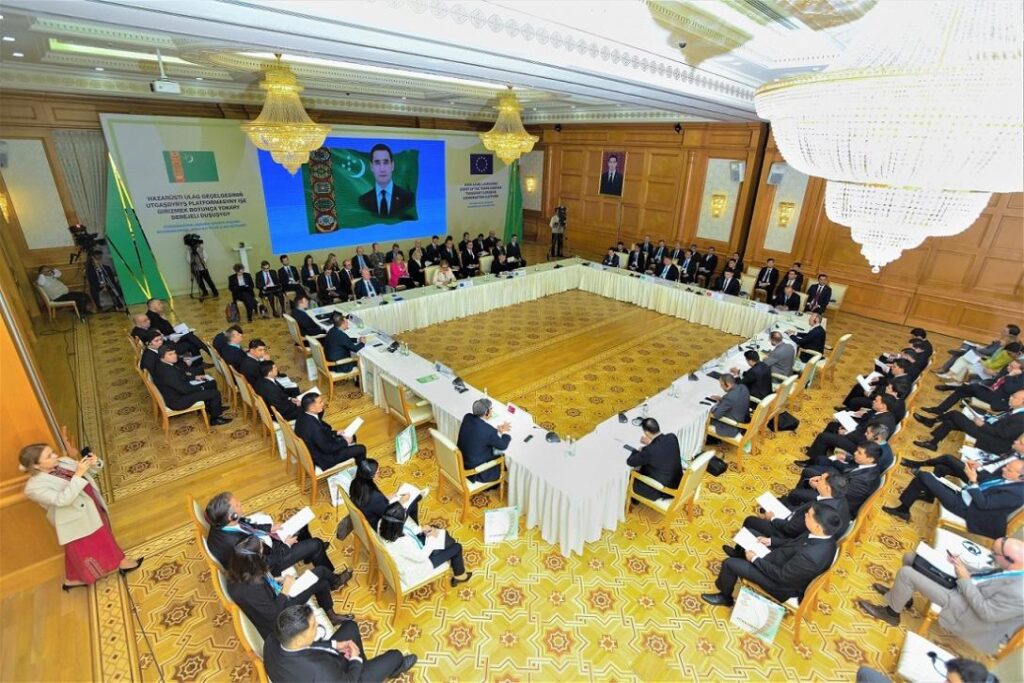
On October 3 in Ashgabat, the European Union and Turkmenistan launched the Trans-Caspian Transport Corridor Coordination Platform. The platform aims to strengthen connectivity by developing transport routes within Central Asia and the European Union. The event brought together the European Union, representatives of the countries along the Trans Caspian Transport Corridor in Central Asia, the South Caucasus, and Türkiye, and international financial institutions. The European Union delegation was led by European Commissioner for International Partnerships Jutta Urpilainen. As reported by the EU Delegation to Turkmenistan, the Trans-Caspian Transport Corridor is a flagship of the EU’s Global Gateway investment strategy, and the establishment of the Coordination Platform is one of the key deliverables of the Global Gateway Investors Forum for EU-Central Asia Transport Connectivity held in January 2024. European and international financial institutions at the Forum committed to mobilizing €10 billion for sustainable transport connectivity in Central Asia. The EU aims to work with partners towards a modern route that boosts trade and facilitates the flow of goods between Central Asia and Europe while driving economic development and regional integration. The platform's main role will be to promote the corridor and coordinate efforts to implement priority projects in hard and soft infrastructure in Central Asia. It will also coordinate with investments and activities in the South Caucasus and Turkey that are relevant to strengthening operational efficiency and seamless connections across the Trans-Caspian Transport Corridor. Urpilainen said: “Central Asia, as a region at the crossroads of Europe and Asia, plays a pivotal role in the EU Global Gateway investment strategy and connectivity vision. The Trans-Caspian Transport Corridor is a critical artery linking Europe and Asia, boosting trade, facilitating exchanges, and driving prosperity across our regions while ensuring improved connectivity, cooperation, and economic growth between all Corridor countries. Harnessing this potential will require massive infrastructure investments in the coming years; I am pleased to see governments from countries along the Corridor, key International Financing Institutions, EU Member States, G7 countries, and other partners coming together.” Urpilainen said that to the European Union, Turkmenistan is an important partner in Central Asia. She also emphasized the European Union's commitment to supporting Turkmenistan's transition to a sustainable, green economy while enhancing its business environment. The EU has further allocated €18 million to strengthen its partnership with Turkmenistan, highlighting its dedication to fostering sustainable development and economic growth.

Tajikistan and Russia Explore Joint Oil and Gas Development Opportunities

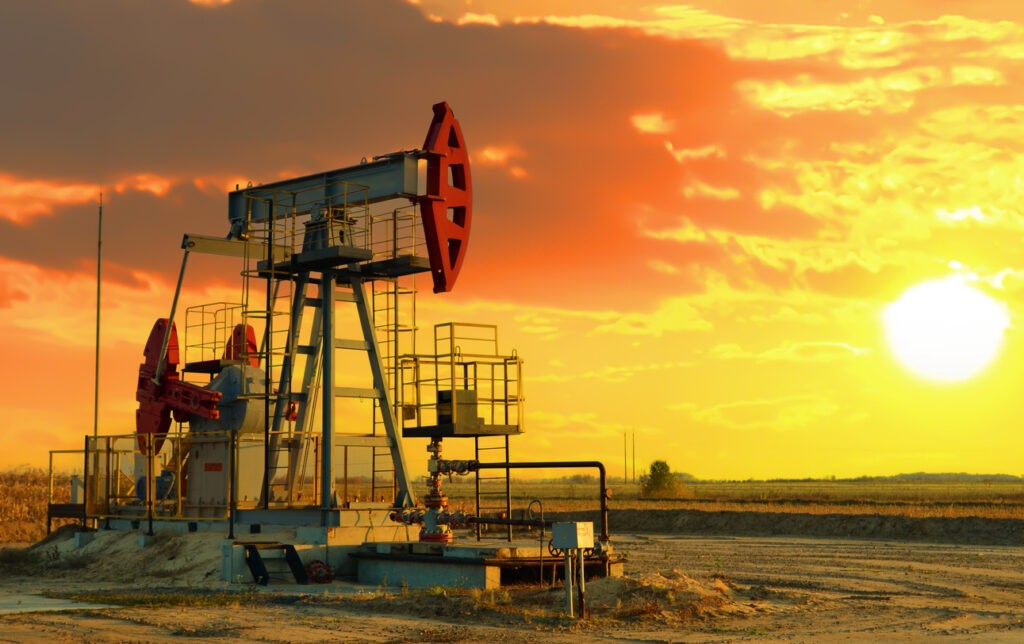
Tajikistan and Russia are studying the possibility of jointly exploiting oil and gas fields in Tajikistan. At the intergovernmental commission meeting held in Dushanbe, Tajikistan's Prime Minister, Kohir Rasulzoda, and the Deputy Chairman of the Russian Government, Marat Khusnullin, discussed the development of mines. “We have given the Russian side a list of promising oil and gas fields in Tajikistan for joint development. We propose to continue working on finding common ground to implement a mutually beneficial project in this area,” Rasulzoda said. He said the Russian side's opinions were considered when making this decision. The Statistical Agency of Tajikistan provides information that in 2023, about 18,000 tons of oil were produced in the country, which isn’t enough to supply oil refineries. In this regard, oil products are imported to Tajikistan. Russia, the leading supplier, provides gasoline and diesel to Tajikistan without customs fees.