
• KZT/USD = 0.00211
  • TJS/USD = 0.10810
  • UZS/USD = 0.00008
  • TMT/USD = 0.29760
  • KZT/USD = 0.00211
  • TJS/USD = 0.10810
  • UZS/USD = 0.00008
  • TMT/USD = 0.29760
  • KZT/USD = 0.00211
  • TJS/USD = 0.10810
  • UZS/USD = 0.00008
  • TMT/USD = 0.29760
  • KZT/USD = 0.00211
  • TJS/USD = 0.10810
  • UZS/USD = 0.00008
  • TMT/USD = 0.29760
  • KZT/USD = 0.00211
  • TJS/USD = 0.10810
  • UZS/USD = 0.00008
  • TMT/USD = 0.29760
  • KZT/USD = 0.00211
  • TJS/USD = 0.10810
  • UZS/USD = 0.00008
  • TMT/USD = 0.29760
  • KZT/USD = 0.00211
  • TJS/USD = 0.10810
  • UZS/USD = 0.00008
  • TMT/USD = 0.29760
  • KZT/USD = 0.00211
  • TJS/USD = 0.10810
  • UZS/USD = 0.00008
  • TMT/USD = 0.29760
01 August 2026

Viewing results 1 - 6 of 155

Kazakhstan-EU Cooperation Focuses on Critical Raw Materials and Regional Connectivity

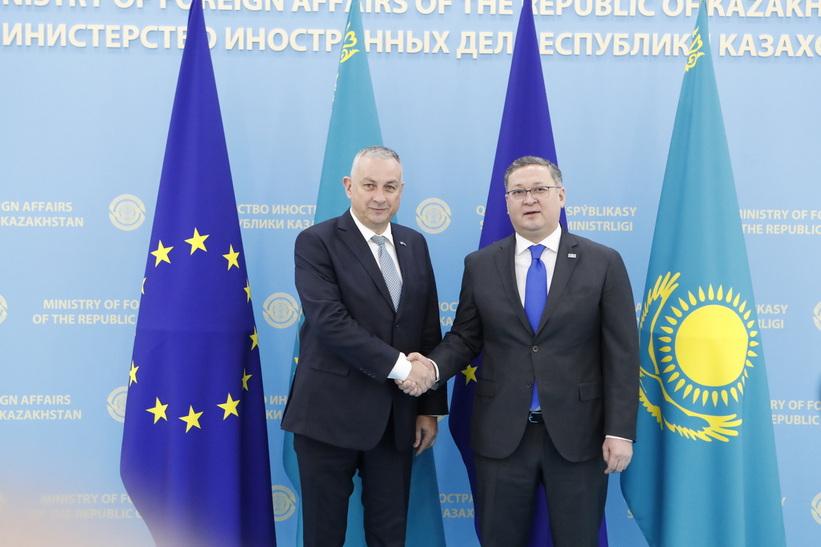
On March 13, European Commissioner for International Partnerships Jozef Síkela visited Kazakhstan and held negotiations with Deputy Prime Minister and Minister of Foreign Affairs Murat Nurtleu. As a result of the visit, the European Union and Kazakhstan have taken steps to strengthen their partnership, signing key agreements to support sustainable economic growth and foster regional connectivity, according to the EU Delegation to Kazakhstan. Investments in Transport and Renewable Energy During the visit, Commissioner Síkela and Kazakh officials oversaw the signing of a €200 million framework loan agreement between the European Investment Bank (EIB) and the Development Bank of Kazakhstan (DBK). This loan, backed by an €18 million EU guarantee, will finance investments in sustainable transport and renewable energy. The initiative aligns with the EU’s Global Gateway strategy, particularly its programs on the Trans-Caspian Transport Corridor and the Team Europe Initiative on Water, Energy, and Climate Change. Síkela underscored the EU’s commitment to strengthening economic ties with Kazakhstan through sustainable investments. “This financing agreement will boost connectivity, enhance renewable energy infrastructure, and further integrate Kazakhstan into the Trans-Caspian Corridor, a key component of the Global Gateway strategy,” he stated. Critical Raw Materials Cooperation The visit also marked the signing of a €3 million contract to enhance cooperation between the EU and Central Asia in the critical raw materials (CRM) sector. The agreement, implemented by the European Bank for Reconstruction and Development (EBRD), will support the identification of joint projects and promote international best practices for sustainable and responsible supply chains. Síkela highlighted the importance of the agreement, stating: “The EU and Kazakhstan are natural partners. Europe needs reliable access to critical raw materials, which are essential for modernizing our economy. We are committed to advancing mutually beneficial cooperation with Kazakhstan on their extraction and development. This partnership will support all Central Asian countries, strengthen Kazakhstan’s industrial capacity, create new opportunities for Kazakh businesses, drive innovation, and generate high-quality jobs.” Kazakhstan-EU Trade and Investments Foreign Minister Nurtleu reaffirmed Kazakhstan’s commitment to expanding its partnership with the EU. “Astana and Brussels have built a strong political dialogue, established dynamic cooperation between executive bodies, and fostered productive cultural and humanitarian ties between our peoples,” he said. According to the Kazakh Foreign Ministry, the EU is Kazakhstan’s primary trade and investment partner. In 2024, bilateral trade between Kazakhstan and the EU totaled $49.7 billion, with Kazakhstan’s exports reaching $38.6 billion and imports totaling $11.1 billion. From 2005 to October 2024, the total foreign direct investment (FDI) inflow from EU countries reached $200.7 billion, accounting for 47.8% of Kazakhstan’s total FDI inflows ($419.5 billion).
Kazakhstan Looks to Reduce Dependence on Feed Imports

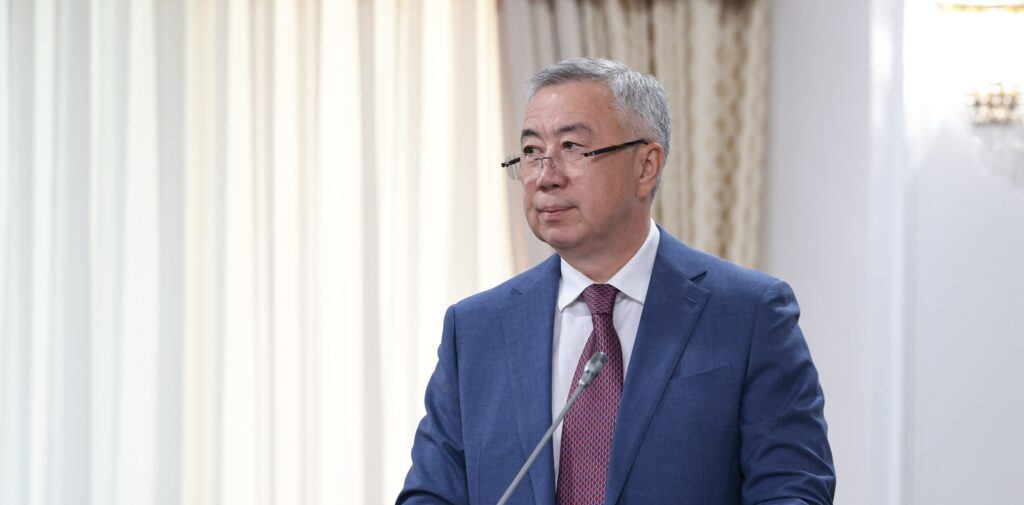
On March 12, Kazakhstan’s Deputy Prime Minister, Serik Zhumangarin, met with executives from Hungary’s UBM Group, which plans to build three plants in Kazakhstan to produce 48,000 tons of premixes and 300,000 tons of compound feed annually. The project also includes the establishment of a laboratory and a training center. According to the Kazakh government’s press service, the project aims to reduce Kazakhstan’s reliance on imported compound animal feed, which currently exceeds 250,000 tons per year. Zhumangarin emphasized that ensuring local livestock farmers have access to high-quality, domestically produced feed is a strategic priority for lowering meat production costs. He also reiterated Kazakhstan’s broader goal of meeting at least 90% of domestic food demand with locally produced goods, particularly essential food products. The UBM Group project will involve the construction of facilities in the Kostanay and Karaganda regions, as well as in Almaty. In the Karaganda region, a business partner and construction site have already been selected. In Kostanay and Almaty, local partners have been identified, but final decisions on construction sites are still pending. To expedite the process, Zhumangarin instructed local administrations and the Ministry of Agriculture to allocate land plots by the end of March, allowing the investor to begin earthworks in the second quarter of this year. The entire construction project is expected to be completed within two years.

Visit by EU’s Sikela Strengthens Global Gateway Partnership with Turkmenistan

On March 12, European Commissioner for International Partnerships Jozef Síkela visited Turkmenistan, as part of the European Union’s work to expand cooperation under the Global Gateway strategy. The visit focused on transport connectivity, renewable energy, and trade facilitation, aiming to integrate Turkmenistan into regional and global economic networks, according to the EU Delegation to Turkmenistan. Global Gateway and the Trans-Caspian Transport Corridor The Global Gateway strategy is the EU’s initiative to bridge global investment gaps by promoting sustainable connectivity in digital, energy, and transport sectors, while strengthening education and research systems. The initiative seeks to mobilize €300 billion in public and private investments between 2021 and 2027, fostering sustainable growth and resilient partnerships worldwide. A key topic during Síkela’s meetings with Turkmenistan’s President Serdar Berdimuhamedov and Foreign Minister Rashid Meredov was the Trans-Caspian Transport Corridor, a strategic route enhancing connectivity between Central Asia and Europe. Síkela reaffirmed the EU’s support for Turkmenistan’s role in this corridor, emphasizing its potential to create faster, more secure trade routes. “We see Turkmenistan as a key partner for building stronger connections between Europe and Central Asia. By working together under the Global Gateway, especially through the Trans-Caspian Transport Corridor, we are creating faster, more secure trade routes that will open new opportunities for businesses, attract investments, and create jobs. Our joint efforts aim to cut trade times between Europe and Asia to only 15 days, while helping Turkmenistan become an important hub for commerce between Asia and Europe.” According to the Turkmen Foreign Ministry, Berdimuhamedov highlighted the Turkmenbashi Port as a vital transit hub on the Caspian coast, offering a direct link to the Black Sea, Europe, the Middle East, South Asia, and the Asia-Pacific region. While in Turkmenistan, Síkela visited the Turkmenbashi Port, where he met with Mammethan Chakyev, Director General of the Agency for Transport and Communications under the Cabinet of Ministers. He reaffirmed the EU’s commitment to supporting infrastructure modernization and regulatory alignment to international standards. Energy and Climate Cooperation As part of the visit, two key initiatives were launched under the EU-Turkmenistan bilateral cooperation facility: A €6 million project, implemented by the International Trade Centre (ITC), will support Turkmenistan’s accession to the World Trade Organization (WTO) and promote economic modernization. A €4.5 million initiative, implemented by GIZ, aims to advance renewable energy development, reduce methane emissions, and improve energy efficiency. Síkela also welcomed Turkmenistan’s accession to the Global Methane Pledge, stressing the importance of emissions reduction and sustainable energy solutions for fostering a greener economy. The EU’s technical and financial assistance will further support Turkmenistan’s efforts to align with international trade and environmental standards.

Uzbekistan and Turkmenistan Implement Free Trade Agreement

On February 25, 2025, the free trade agreement between Uzbekistan and Turkmenistan officially came into effect, eliminating customs duties on most goods produced in both countries, with certain exceptions. This landmark move aims to strengthen trade and economic ties between the two neighbors. The announcement was made by Uzbekistan’s Ministry of Investments, Industry, and Trade on March 7, following the completion of all legal procedures for the Protocol on Exceptions to the Free Trade Regime, signed on July 16, 2024. The protocol had been approved earlier by Uzbek President Shavkat Mirziyoyev through Resolution No. 29 on January 27, 2025. Key Provisions and Economic Sectors Under the new trade rules, Turkmenistan has removed customs duties on a range of key Uzbek exports, including the following items with their previous tariffs or taxes noted: Cement (100%) Textiles (50%) Furniture (50%) Glass containers (50%) Water heating boilers (15%) Plastic and polypropylene products (10%) Sausages and meat products ($2 per kg) Cottonseed oil ($1 per kg) Officials anticipate that the free trade system will boost economic activity between the two countries by facilitating business operations and encouraging investment. The Uzbek Ministry of Investments, Industry, and Trade, along with other government bodies, is working to help Uzbek businesses maximize the benefits of the new trade framework, whilst both governments expect the deal to accelerate industrial cooperation across sectors such as construction, agriculture, and manufacturing. Growing Trade Volume or a One-Way Street? The agreement reflects already expanding trade dynamics. According to TurkmenPortal, trade turnover between Uzbekistan and Turkmenistan increased by 23% in the first quarter of 2024 compared to the same period in 2023, reaching $455 million. Turkmen exports to Uzbekistan surged by 36%, totaling $407 million. Turkmenistan's imports from Uzbekistan experienced a 30% decline, however, dropping from $69.2 million to $48 million during the January- May period compared to the same timeframe in 2023. Strengthened Bilateral Relations and Regional Impact Nevertheless, the agreement represents more than economic policy and could underscore a new era of trust and cooperation. Both countries have worked to improve their relationship through proactive diplomacy, with recent high-level meetings - including those between Uzbek President Shavkat Mirziyoyev and Turkmen President Serdar Berdimuhamedov - emphasizing the shared goal of collaborating across trade, cultural, and political spheres. The free trade regime sets a benchmark for greater economic collaboration within Central Asia, whilst the elimination of tariffs and smoother trade between Uzbekistan and Turkmenistan could inspire similar agreements among neighboring countries. While challenges such as infrastructure harmonization and policy alignment remain, the benefits of this agreement showcase the potential for regional integration.

Kazakhstan Seeks Cooperation with South Korea in Lithium Production

Kazakhstan is ready to expand collaboration with South Korea in the exploration, extraction, and processing of lithium, a strategically vital resource for high-tech industries and sustainable economic development. This was stated by Nurgali Arystanov, Kazakhstan’s Ambassador to the Republic of Korea, during the Investment Dialogue on Critical Minerals between Korea and Kazakhstan, held in Seoul on February 28, according to the Kazakh Foreign Ministry. The event, organized with the support of the Korea Institute of Geoscience and Mineral Resources (KIGAM), brought together leading Korean companies, including Hyundai Development Company, POSCO International, and LX International, as well as scholars from Seoul National University and Pusan National University. KIGAM President Lee Pyeong-Koo encouraged Korean companies to increase investments in Kazakhstan, emphasizing the country’s significant potential in the development of critical minerals. During the event, researchers presented findings on the Bakennoye lithium deposit in the East Kazakhstan region. In March 2024, The Korea Times reported that KIGAM had discovered a lithium deposit in eastern Kazakhstan, in an area previously mined for tantalum. Since tantalum is often found alongside lithium and cesium, KIGAM began studying the site in May 2023 at the request of the Kazakh government. The deposit is estimated to contain resources worth $15.7 billion, according to Kazakh data cited by KIGAM. 

Uzbekistan and Pakistan Agree to Increase Trade Volume by $2 Billion

Uzbekistan and Pakistan have agreed to expand trade, transport, and cultural cooperation, following talks between Uzbek President Shavkat Mirziyoyev and Pakistani Prime Minister Shehbaz Sharif in Tashkent on February 26. During the meeting, both leaders expressed satisfaction with the growing bilateral relationship. In 2024, trade volume between the two countries exceeded $400 million, and the number of joint ventures reached 130. Additionally, direct flights between Tashkent and Lahore have been resumed. The two sides discussed plans to boost trade to $2 billion and simplify customs procedures under a recently adopted roadmap. Key areas of cooperation include pharmaceuticals, agriculture, mining, and textiles. Transport connectivity was a major focus of the discussions. Freight traffic through the Uzbekistan-Afghanistan-Pakistan corridor has increased fivefold in recent years, and the two countries agreed to establish a joint transport and logistics company. They also pledged to advance the Trans-Afghanistan railway project, which aims to enhance regional trade routes. The two governments also committed to expanding cultural and educational exchanges. Agreements were reached on mutual cultural weeks, tourism development, and cooperation in science, technology, youth policy, and security. To strengthen long-term cooperation, Uzbekistan and Pakistan will establish a High Council for Strategic Partnership, with its first meeting scheduled for next year.
