• KZT/USD = 0.00211
  • TJS/USD = 0.10810
  • UZS/USD = 0.00008
  • TMT/USD = 0.29760
  • KZT/USD = 0.00211
  • TJS/USD = 0.10810
  • UZS/USD = 0.00008
  • TMT/USD = 0.29760
  • KZT/USD = 0.00211
  • TJS/USD = 0.10810
  • UZS/USD = 0.00008
  • TMT/USD = 0.29760
  • KZT/USD = 0.00211
  • TJS/USD = 0.10810
  • UZS/USD = 0.00008
  • TMT/USD = 0.29760
  • KZT/USD = 0.00211
  • TJS/USD = 0.10810
  • UZS/USD = 0.00008
  • TMT/USD = 0.29760
  • KZT/USD = 0.00211
  • TJS/USD = 0.10810
  • UZS/USD = 0.00008
  • TMT/USD = 0.29760
  • KZT/USD = 0.00211
  • TJS/USD = 0.10810
  • UZS/USD = 0.00008
  • TMT/USD = 0.29760
  • KZT/USD = 0.00211
  • TJS/USD = 0.10810
  • UZS/USD = 0.00008
  • TMT/USD = 0.29760

Viewing results 1 - 6 of 155

Kyrgyzstan Moves to Join Chinese Banking Payment System

Kyrgyz Finance Minister Almaz Baketaev and National Bank Chairman Melis Turghanbaev met with Chinese Finance Minister Lan Fuan in Beijing to discuss expanding financial and economic cooperation between the two countries. A key outcome of the meeting was an agreement to establish a financial infrastructure for cross-border settlements and to deepen interbank cooperation. Among the proposals discussed was the connection of Kyrgyz state banks to China’s Cross-Border Interbank Payment System (CIPS), an alternative to the international SWIFT system, along with the opening of correspondent accounts in Chinese financial institutions. “This step will create a secure and stable channel for bilateral settlements in yuan, reduce transaction costs, and decrease dependence on settlements through third currencies,” noted the Kyrgyz Ministry of Finance. Toward Deeper Financial Integration Kyrgyz officials also expressed interest in acquiring or establishing a licensed payment organization in China. Such a move could streamline financial transactions with Chinese companies and individuals and connect Kyrgyzstan more directly to China's national payment systems. This would significantly enhance opportunities for Kyrgyz businesses operating in or with the Chinese market. Baketaev reaffirmed Kyrgyzstan’s commitment to maintaining a systematic dialogue with the People's Bank of China and the National Financial Regulatory Administration. The Kyrgyz delegation also participated in a meeting of finance ministers and central bank governors from member states of the Shanghai Cooperation Organization (SCO), reinforcing the regional dimension of Kyrgyzstan’s financial diplomacy.

Energy, Industry, and Diplomacy: Kazakhstan-Italy Relations Reach New Heights

On May 30, Italian Prime Minister Giorgia Meloni will pay an official visit to Kazakhstan. The same day will also mark the inaugural Central Asia-Italy summit, to be held in Astana with the participation of regional heads of state. In anticipation of the visit, the Kazakh-Italian Business Forum opened in Astana on May 28, focusing on the development of trade and logistics cooperation. Kazakhstan’s Prime Minister Olzhas Bektenov highlighted a key milestone in bilateral relations: trade between the two countries increased by 25% in 2024, reaching nearly US$20 billion. Of this, Kazakh exports accounted for more than US$18 billion. Diplomatic relations between Kazakhstan and Italy were established in 1992. Italy opened its embassy in Kazakhstan in October of that year, followed by the opening of the Kazakh embassy in Italy in 1996. In 1994, then-President Nursultan Nazarbayev made his first official visit to Rome. A reciprocal visit by Italian President Oscar Luigi Scalfaro followed in 1997. Over the ensuing decades, Kazakhstan received visits from Italian Prime Ministers Romano Prodi, Silvio Berlusconi, Mario Monti, and Matteo Renzi. Kassym-Jomart Tokayev visited Italy twice before assuming the presidency: first as Foreign Minister in 1997, and again in 2018 as Chairman of the Senate. His first presidential visit to Italy took place in January 2024. Over the years, bilateral relations have reached a high level of maturity. A sustained political dialogue is ongoing, mutual trade is rising, the legal framework is expanding, and multilateral cooperation is strengthening. A pivotal moment in this relationship came in 2009 with the signing of a Strategic Partnership Agreement. During a productive visit by Nazarbayev to Italy, multiple agreements were signed, facilitating mutual investments exceeding US$6 billion. Italy is now Kazakhstan’s third-largest trading partner, following China and Russia, and ranks among the top five foreign investors in the Kazakh economy. In 2023, bilateral trade turnover was around US$20 billion. Approximately 250 Italian companies operate in Kazakhstan, contributing significantly to sectors such as oil and gas, renewable energy, machine building, and agriculture. Over the past two decades, Italy has invested US$7.6 billion in Kazakhstan, prioritizing the oil and gas sector, green energy, machinery, and the agro-industrial complex. Kazakhstan's main exports to Italy include crude oil, ferroalloys, wheat and meslin, copper, aluminum, zinc, lead, scrap precious metals, fuel oil, and cranes. In turn, Italy supplies Kazakhstan with pharmaceuticals, industrial equipment, pumps, and other finished goods. According to the Italian media, Prime Minister Meloni’s upcoming visit aims to strengthen energy and industrial cooperation. Meloni is expected to sign a cooperation agreement alongside President Tokayev between Italian firm, Maire, and Kazakhstan’s sovereign wealth fund Samruk-Kazyna to establish an engineering and industrial hub. Samruk-Kazyna is also slated to sign an agreement with Ansaldo Energia for the production of gas turbine components for power plants. In January 2024, during Tokayev’s visit to Rome, Ansaldo committed to supplying gas turbines and generators for the reconstruction of the TPP-3 power plant in Almaty, as well as collaborating on new energy projects. Additional agreements expected during the visit...

Kazakhstan and the UAE Elevate Strategic and Economic Partnership

Kazakhstan and the United Arab Emirates (UAE) are taking their long-standing partnership to new heights. President Kassym-Jomart Tokayev hosted Abu Dhabi Crown Prince Sheikh Khalid bin Mohammed bin Zayed Al Nahyan at the Akorda presidential residence, underscoring the deepening ties between the two nations. A Key Middle Eastern Partner Sheikh Khalid’s official visit was marked by a ceremonial welcome and substantive high-level talks. President Tokayev emphasized the growing breadth of the Kazakh-Emirati relationship, which now extends well beyond economics into sectors such as energy, transport, digital technologies, and education. “The UAE is among Kazakhstan’s top ten foreign investors,” Tokayev noted, citing a more than twofold increase in Emirati direct investment in 2024, a record high. During the Crown Prince’s visit, over 20 commercial agreements were signed, totaling approximately $5 billion. These projects are expected to further catalyze bilateral cooperation and open new avenues for mutual investment. Strategic Agreements Following the talks, an official document exchange ceremony was held. Key agreements included: Transport Cooperation - A memorandum between the Kazakh Ministry of Transport and the UAE Ministry of Energy and Infrastructure; Judicial Cooperation - A memorandum between the respective Ministries of Justice; Energy Infrastructure - An agreement between Samruk-Kazyna JSC and Masdar for continuous power supply (up to 500 MW) and energy storage (up to 2,000 MW); Digital Transformation - Agreements between Samruk-Kazyna JSC and AIQ, and QazaqGaz and AIQ, focusing on oil and gas sector digitalization; Financial Collaboration - A memorandum between Samruk-Kazyna JSC and Abu Dhabi Commercial Bank; High-Performance Computing - An agreement to establish a supercomputer cluster with Pre-sight; Maritime Expansion - A protocol between KazMunayGas and Abu Dhabi Ports Group on developing Kazakhstan’s merchant fleet; Healthcare Investment - A memorandum on financing and constructing a maternity hospital in Turkestan; Aviation Infrastructure - An agreement on investing in the Nursultan Nazarbayev International Airport and its surroundings; Green Energy - Announcement of the ratified agreement for a major wind power project. Expanding Cooperation Horizons President Tokayev and Sheikh Khalid also participated in the Kazakhstan-UAE Business Forum, where Tokayev reiterated the significance of expanding trade, economic, and investment ties. He highlighted the UAE’s role as Kazakhstan’s top partner in the Gulf, with cumulative Emirati investment exceeding $4.3 billion. Tokayev underscored his administration’s economic reforms aimed at fostering a more attractive investment climate, including the establishment of the Investment Promotion Council to support foreign businesses. He identified energy, logistics, finance, high technology, and agriculture as priority areas for future cooperation. Institutional and Cultural Engagement During the visit, the leaders toured the Astana International Financial Centre (AIFC), where they were briefed on the operations of the Financial Services Regulatory Committee, the stock exchange, and the International Arbitration Center. Currently, 46 UAE companies are registered residents at the AIFC. The delegation also visited the Sheikh Khalifa bin Zayed Al Nahyan Lyceum No. 84, where they observed students’ progress in Arabic language studies. Later, they attended the Ethnoaul exhibition, showcasing Kazakh cultural heritage. The visit highlighted the shared commitment of Kazakhstan and the UAE...

Kazakhstan Attracts British Agricultural Technologies

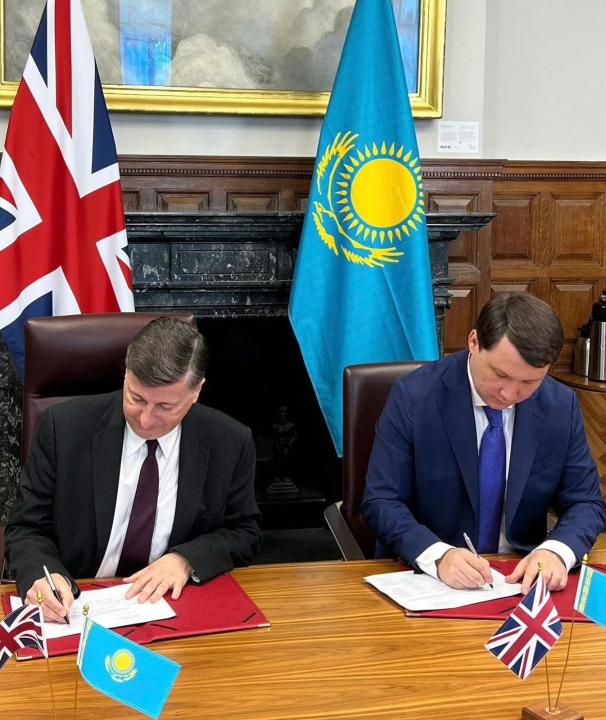
Kazakhstan and the United Kingdom have signed a roadmap for cooperation in agriculture, paving the way for partnerships in agricultural science, the export and processing of agricultural products, and the transfer of British agricultural technologies. According to the Kazakh Ministry of Agriculture, the two countries also signed memorandums of understanding on collaboration in water resource management and the production of biopharmaceuticals in Kazakhstan in partnership with AstraZeneca. These agreements were concluded during the 11th meeting of the Kazakhstan-UK Intergovernmental Commission on Trade and Economic Cooperation, held in London last week. Deputy Minister of Agriculture Ermek Kenzhekhanuly stated that the introduction of British technologies and investment would enhance the competitiveness of Kazakhstan’s agro-industrial sector and improve its resilience to climate change. "In 2024, agricultural trade between Kazakhstan and the UK totaled $50 million. We intend to significantly increase this figure," he said. At the meeting, Deputy Minister of Foreign Affairs Alibek Kuantyrov, who headed the Kazakh delegation, emphasized the UK's strategic role: “The UK is one of Kazakhstan’s key trading partners and top investors, with total FDI (Foreign Direct Investment) exceeding $22 billion. We greatly value the UK’s contribution to the development of Kazakhstan’s key industries and are committed to building a next-level partnership, focused on investment, technology, and knowledge transfer.” The Strategic Partnership and Cooperation Agreement signed between the two countries last year has opened new avenues for collaboration in critical minerals, green energy and climate initiatives, transport and logistics, pharmaceuticals and healthcare, education, and financial services.

Uzbekistan Prepares to Host Historic Central Asia-EU Summit in Samarkand

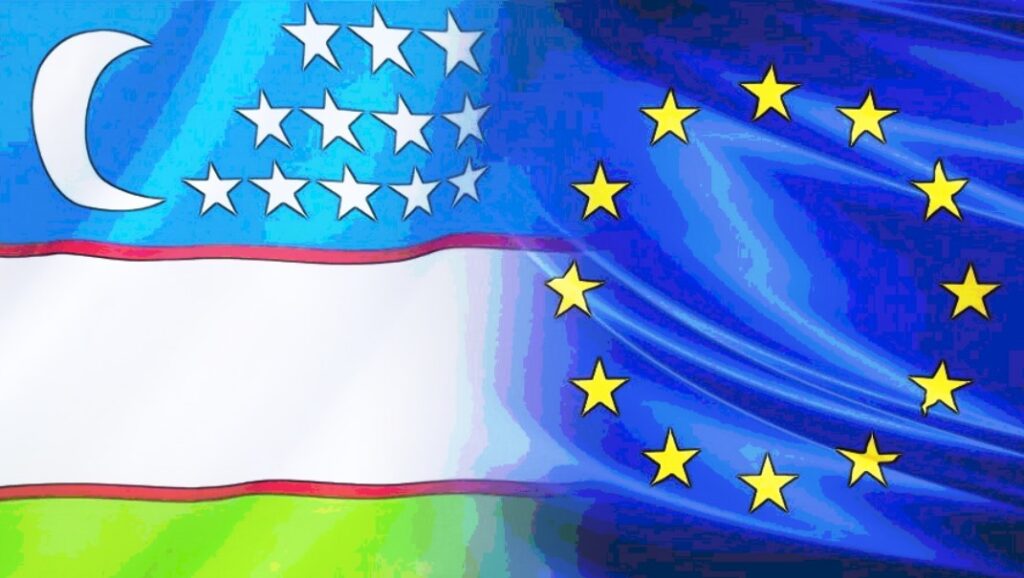
Samarkand is set to host the first-ever Central Asia-European Union (EU) summit on April 3-4, marking a pivotal moment in relations between the two regions. In the lead-up to the event, Uzbek President Shavkat Mirziyoyev spoke with Euronews about the growing cooperation between Central Asia and the EU. Deepening Economic Ties President Mirziyoyev emphasized the historical and strategic depth of Central Asia’s relationship with the EU. “Over the past 30 years, our partnership has grown steadily in trade, investment, security, and digital transformation. Today, we are entering a new phase of cooperation that will benefit both regions,” he said. In recent years, economic ties between the regions have strengthened significantly. Trade turnover has quadrupled over the past seven years, reaching €54 billion. European companies are increasingly investing in Uzbekistan and across Central Asia. Mirziyoyev noted that Central Asia has become a model for constructive dialogue and cooperation. “We have proven that through dialogue and mutual respect, we can resolve even the most complex issues. The recent agreement between Kyrgyzstan and Tajikistan on border demarcation is a testament to this approach.” As chair of the Central Asian Five, Uzbekistan is prioritizing regional security, economic integration, and environmental sustainability. Key infrastructure projects, such as the Trans-Caspian and Trans-Afghan transport corridors, are central to improving connectivity with international markets. To attract further European investment, Uzbekistan has introduced reforms to improve the business climate. In 2024, trade with EU member states reached $6.4 billion, and more than 1,000 European companies now operate in the country. The anticipated signing of the Enhanced Partnership and Cooperation Agreement (EPCA) is expected to deepen economic relations. Mirziyoyev also proposed aligning the EU’s Global Gateway strategy with regional transport initiatives. “We must work together to simplify trade procedures and ensure that Central Asian products gain greater access to European markets. Only through joint efforts can we build a strong and resilient economic partnership,” he stated. He added that enhanced financial assistance from European institutions could further bolster the region’s economic resilience. Energy and Security: Shared Priorities Central Asia is emerging as an important player in global energy markets, particularly in renewable energy. Uzbekistan is implementing over 50 solar and wind projects, aiming to raise the share of renewables to 54% within five years. “Green energy is the future, and Uzbekistan is ready to lead this transformation in our region. A Central Asia-EU Clean Energy Partnership will help us achieve this goal,” Mirziyoyev said. On security, he emphasized the need for coordinated efforts to combat terrorism, extremism, and cyber threats. “We must strengthen our cooperation in security matters, because stability in Central Asia means stability in Europe as well.” Uzbekistan also continues its active engagement with Afghanistan, stressing the importance of inclusive dialogue and regional support. “Afghanistan should not be left in isolation. We must continue dialogue and provide support to help the Afghan people rebuild their country,” the president concluded.

EU-Uzbekistan Cooperation Focuses on Digital Connectivity and Critical Raw Materials

On March 18, European Commissioner for International Partnerships Jozef Síkela visited Uzbekistan on the final leg of his Central Asia tour. In Tashkent, he met with President Shavkat Mirziyoyev to strengthen the growing partnership between Uzbekistan and the European Union. According to the EU Delegation to Uzbekistan, discussions centered on expanding digital connectivity, promoting sustainability, and fostering job creation through critical raw materials. Another key focus was the development of the Trans-Caspian Transport Corridor to enhance trade. The visit also highlighted how the EU’s Global Gateway strategy supports infrastructure and clean energy initiatives. Both sides acknowledged the increasing momentum in EU-Uzbekistan relations, particularly in political, trade, economic, investment, cultural, and humanitarian cooperation. They also discussed preparations for the first-ever Central Asia-EU summit, set to take place in early April in Samarkand. New EU-Funded Projects in Uzbekistan As part of the Team Europe Initiative on Digital Connectivity in Central Asia, Síkela witnessed the signing of agreements for two key EU-funded projects aimed at improving digital infrastructure across the region: The Connectivity for Central Asia (C4CA) Project - This initiative seeks to enhance digital infrastructure and regional integration, supporting economic growth and better access to online services. By fostering stronger digital ties among Central Asian countries, the project aims to bridge the digital divide and promote economic cooperation. The Satellite Connectivity for Underserved Populations Project - This project is designed to provide high-speed internet access to remote and underserved communities in Central Asia. By improving digital access in rural areas, the initiative supports education, healthcare, and economic development, aligning with the EU’s broader goal of promoting inclusive digital connectivity. Síkela underscored the importance of EU-Uzbekistan cooperation in improving internet access across the region. “European technology combined with Uzbek expertise can ensure more people have access to fast and secure internet, support businesses to grow, create new jobs, and improve living conditions in local communities. By investing in digital connectivity, we're bridging gaps, creating opportunities, and ensuring that Central Asia is ready to benefit from the digital economy,” he said. Cooperation on Critical Raw Materials During his visit, Síkela also toured the Almalyk Mining and Metallurgical Complex, one of Uzbekistan’s key industrial facilities. The visit aimed to explore opportunities for sustainable resource development and responsible investment in critical raw materials, further strengthening economic cooperation between the EU and Uzbekistan.