• KGS/USD = 0.01144 0%
  • KZT/USD = 0.00216 0%
  • TJS/USD = 0.10585 -0.28%
  • UZS/USD = 0.00008 0%
  • TMT/USD = 0.28530 0%
  • KGS/USD = 0.01144 0%
  • KZT/USD = 0.00216 0%
  • TJS/USD = 0.10585 -0.28%
  • UZS/USD = 0.00008 0%
  • TMT/USD = 0.28530 0%
  • KGS/USD = 0.01144 0%
  • KZT/USD = 0.00216 0%
  • TJS/USD = 0.10585 -0.28%
  • UZS/USD = 0.00008 0%
  • TMT/USD = 0.28530 0%
  • KGS/USD = 0.01144 0%
  • KZT/USD = 0.00216 0%
  • TJS/USD = 0.10585 -0.28%
  • UZS/USD = 0.00008 0%
  • TMT/USD = 0.28530 0%
  • KGS/USD = 0.01144 0%
  • KZT/USD = 0.00216 0%
  • TJS/USD = 0.10585 -0.28%
  • UZS/USD = 0.00008 0%
  • TMT/USD = 0.28530 0%
  • KGS/USD = 0.01144 0%
  • KZT/USD = 0.00216 0%
  • TJS/USD = 0.10585 -0.28%
  • UZS/USD = 0.00008 0%
  • TMT/USD = 0.28530 0%
  • KGS/USD = 0.01144 0%
  • KZT/USD = 0.00216 0%
  • TJS/USD = 0.10585 -0.28%
  • UZS/USD = 0.00008 0%
  • TMT/USD = 0.28530 0%
  • KGS/USD = 0.01144 0%
  • KZT/USD = 0.00216 0%
  • TJS/USD = 0.10585 -0.28%
  • UZS/USD = 0.00008 0%
  • TMT/USD = 0.28530 0%

Viewing results 1 - 6 of 145

S&P Global Ratings Predicts 5.6% Annual Growth for Uzbekistan Through 2027

S&P Global Ratings has reaffirmed Uzbekistan’s long-term sovereign credit rating at BB, forecasting strong economic growth averaging 5.6% annually from 2024 to 2027. This growth will be driven by public investment and private consumption. While rising public and external debt presents some risks, S&P expects fiscal and current account deficits to narrow after peaking in 2023. Economic Projections Uzbekistan’s gross general debt is projected to reach 39% of GDP in 2024, a level considered moderate by global standards. Most of this debt originates from official creditors under concessional terms. The agency’s stable outlook reflects robust growth prospects, balanced against challenges posed by debt accumulation. The country’s economy expanded by 6.6% in the first nine months of 2024, fueled by sectors such as construction, trade, and communications. Investments continue to play a pivotal role, with Uzbekistan maintaining one of the world’s highest investment-to-GDP ratios at 34%. Key investment areas under the “Uzbekistan - 2030” strategy include energy, transport, agriculture, and tourism. Diversification and Energy Goals As part of efforts to diversify energy sources, Uzbekistan is targeting 40% green energy by 2030. Saudi Arabia’s ACWA Power has pledged $7.5 billion in investments for electricity projects. The government is also expanding exports of critical resources such as copper, gold, silver, and uranium to boost revenue streams. Opportunities and Risks Despite challenges such as low GDP per capita and reliance on remittances, Uzbekistan benefits from a young workforce and rising foreign investment. However, risks remain, including potential sanctions on companies linked to Russia and difficulties in creating sufficient jobs. In 2024, remittance inflows - primarily from Russia, along with Germany and South Korea - increased by 35%, providing a significant economic boost. Trade with Russia also grew by 26%, and Uzbekistan signed a two-year gas import contract with Gazprom. Meanwhile, the government is taking steps to mitigate the risks of secondary sanctions stemming from its trade ties with Russia. Broader Context These developments align with Uzbekistan’s long-term economic strategies while highlighting both opportunities and vulnerabilities. S&P’s latest forecasts reaffirm the country’s growth trajectory, supported by strategic investments and economic reforms, yet underscore the importance of managing debt and external risks.
Construction of TAPI Gas Pipeline Begins in Afghanistan

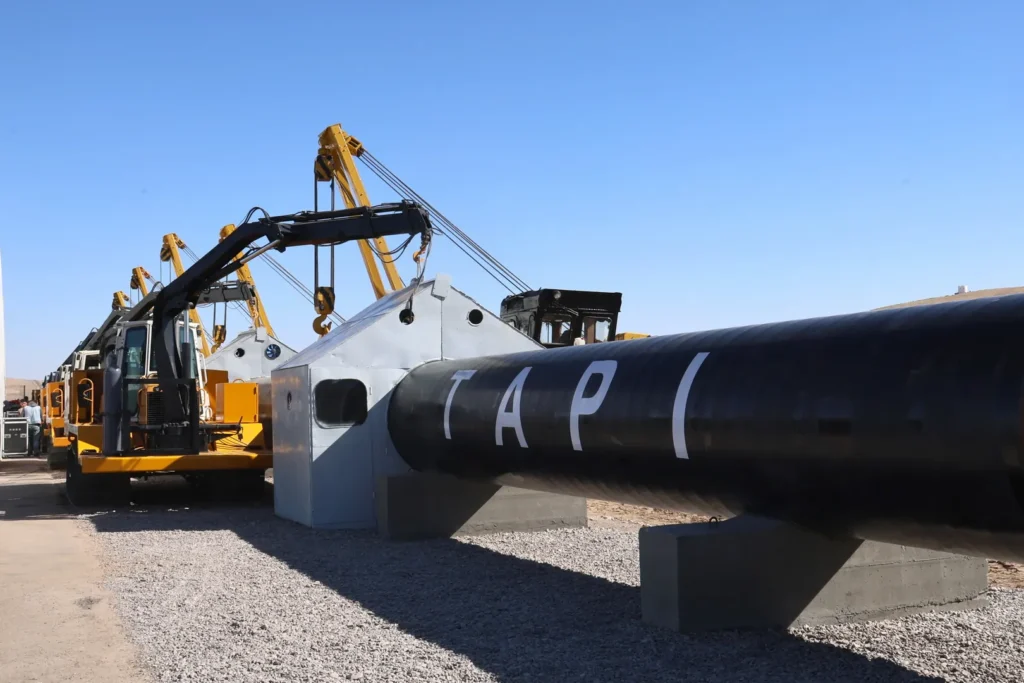
Afghanistan has commenced the practical phase of the Turkmenistan-Afghanistan-Pakistan-India (TAPI) gas pipeline project, one of the region’s most ambitious infrastructure initiatives. Local media report that essential materials and equipment have been delivered to the border areas between Afghanistan and Turkmenistan, enabling work to start on the Afghan section of the pipeline. The TAPI gas pipeline will span 1,814 kilometers, with 774 kilometers crossing Afghanistan. Once operational, the pipeline will transport 33 billion cubic meters of natural gas annually, significantly boosting economic development across the region. Afghanistan is set to receive 5 billion cubic meters of gas each year from the pipeline and create over 12,000 jobs for its citizens. Economists estimate that the project could generate approximately $1 billion annually in revenue for Afghanistan. Discussions around the TAPI pipeline began in the early 2000s, and in 2013, an agreement was signed to form a consortium. The Turkmen state-owned company Turkmengaz holds an 85% stake, while Afghanistan, Pakistan, and India each hold 5% shares. Construction on the Turkmenistan section of the pipeline began in 2015 and has since been completed. Afghanistan is the next country to advance the project, with work on the section from Serhetabat to Herat initiated in September this year.

Uzbekistan Attracts $26 Billion in Foreign Investment in First Ten Months of 2024

On November 27, Uzbek President Shavkat Mirziyoyev chaired a meeting to assess the country's foreign investment performance and set priorities for the coming year. In the first ten months of 2024, Uzbekistan secured over $26 billion in foreign investment—an increase of 1.7 times compared to the previous year. Of this amount, direct investment accounted for $24 billion of the total. These funds enabled the launch of 6,300 enterprises, generated an additional 30 trillion Uzbekistani Sums (UZS) in value, and boosted exports by $305 million. Crucially, 163,000 high-income jobs were created. An additional $8.6 billion in investment is anticipated by the end of the year. Regional and Sectoral Challenges During the meeting, a detailed analysis of investment performance across Uzbek regions and industries revealed that eight districts and cities showed low activity. Furthermore, some sectors experienced declines compared to the previous year. Delays in document preparation and tender processes also hindered the progress of 17 projects funded by international financial institutions. Mirziyoyev emphasized the need for enhanced regional investment initiatives and innovative approaches. He pointed out untapped opportunities, such as funding from the European Bank for Reconstruction and Development (EBRD), which is keen to support private-sector projects amid Uzbekistan’s improved business environment and economic growth. Strategic Focus The president also called on regional leaders to leverage financing opportunities effectively and focus on attracting investments that deliver tangible results. Priority areas include accelerating industrial development, creating jobs, and expanding export potential. Mirziyoyev also instructed officials to evaluate the volume and strategies of international financial institution financing and foreign investment. Each region and sector was tasked with identifying specific projects for 2025, emphasizing public-private partnerships and private investment.

Government Reports Steady Economic Growth in Kyrgyzstan

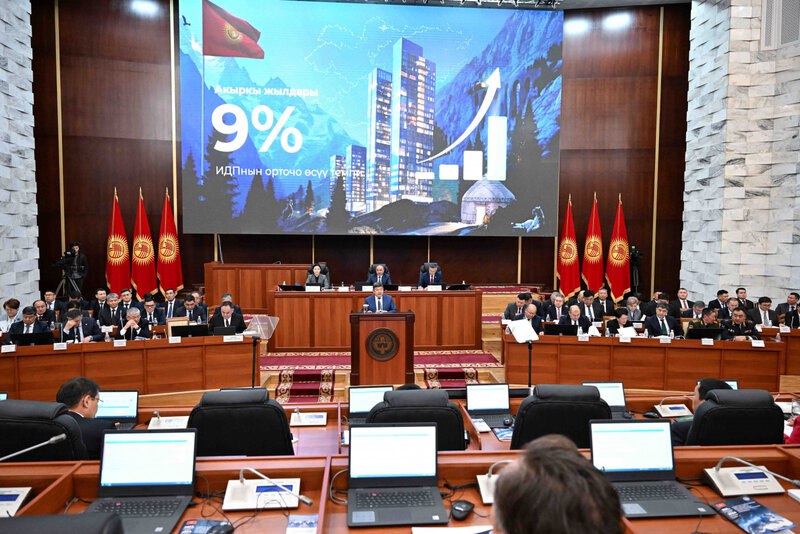
Chairman of the Cabinet of Ministers Akylbek Japarov announced in parliament on November 14 that Kyrgyzstan's GDP exceeded a historical high of 1.3 trillion KGS in 2023 and is projected to reach 1.5 trillion KGS ($17.35 billion) by the end of the year. Presenting the state budget execution for 2023 and the draft budget for 2025, Japarov reported a 9% real GDP growth rate for 2023, consistent with the growth rate in 2022. For context, Kyrgyzstan’s GDP growth was 7% in 2021. Japarov offered a conservative forecast for 2024, predicting 9.2% GDP growth. “If we divide GDP per capita, then in 2020, this figure was $1,200, and in 2024, it will exceed $2,500,” he noted. The average monthly wage in Kyrgyzstan has risen steadily from $239 (20,249 KGS) in 2021 to $316 (26,620 KGS) in 2022 and $376 in 2023. By the end of 2024, it is expected to reach $415 (35,791 KGS). From January to September 2024, Kyrgyzstan’s foreign trade volume was $12.1 billion, an 8.4% increase. Exports grew by 28.2%, totaling $2.8 billion, while imports rose by 3.7%, amounting to $9.3 billion. Inflation has significantly decreased, dropping from 14.7% in 2022 to 7.3% in 2023, and reaching 4.2% from January to October 2024. Japarov also highlighted the growth of Kyrgyzstan’s industrial sector, attributing it to investments and government support. By the end of 2024, more than 150 new enterprises are expected to open, with total investment projected at $2.2 billion and an estimated 19,000 jobs created. Further, for the first time since independence, Kyrgyzstan has started producing cars, standard gold bars, and new types of medicines. In the energy sector, Japarov reported that small hydroelectric power plants with a combined capacity of 48.3 MW were brought online in 2024. Additionally, solar and wind power projects are underway, alongside the reconstruction of the Toktogul hydroelectric power plant, the country’s largest.

Car Multimedia System Plant Launched in Almaty

The opening ceremony of the Kazakhstan Mobility Engineering Plant took place on October 30 in Almaty, Kazakhstan’s largest city. The new production facility is part of Astana Motors, Kazakhstan’s major automobile distribution and manufacturing company. In April last year, Astana Motors signed a memorandum of cooperation with South Korea’s Motrex Co Ltd., receiving the right to produce multimedia devices in Kazakhstan using the Korean partner's technology. The plant was launched in September 2024, and the first batch of its audio and video multimedia systems has already been delivered to the Hyundai Trans Kazakhstan plant for installation on Tucson and Elantra cars. Speaking at the opening ceremony, Minister of Industry and Construction of Kazakhstan, Kanat Sharlapayev, emphasized that multimedia systems are high-precision production requiring first-class specialists' competencies in digital technologies. “Our key goal is to create a production cycle with a high share of [production] localization [inside Kazakhstan]. And we will make maximum use of domestic raw materials and components. That is why Kazakhstan Mobility Engineering is important for the country.” Motrex CEO Junseon Kim also stressed the importance of local production: "Our goal is to closely cooperate with our partners to increase local production of components and leadership in the assembly of multimedia devices. The partnership will allow us to respond quickly to local needs, create jobs, and support Kazakhstan's economic growth." The Kazakhstan Mobility Engineering plant is part of the Astana Motors Engineering Technopark, constructed in the Industrial Zone of Almaty to produce automobile components. The technopark will also open a car seat manufacturing plant, a rubber and plastic products manufacturing plant, and a logistics hub. Its products will be supplied to the Hyundai Trans Kazakhstan plant and other automobile plants in Kazakhstan. Astana Motors has also signed a memorandum with Sanico Electronics, a South Korean manufacturer, to obtain the right to produce motherboards and cases for multimedia systems. In other news, Kazakhstan’s national company, Kazakh Invest, and KIA Qazaqstan discussed projects to produce original South Korean auto components for KIA cars in Kazakhstan. The parties considered cooperating with South Korean companies SJG Sejong and Seoyon E-Hwa, the original manufacturers of seats, bumpers, mufflers, and other components for KIA cars. Representatives of the companies expressed interest in implementing investment projects in Kazakhstan, emphasizing the strategic importance of localizing the production of automotive components in the country. A full-cycle plant to produce KIA cars is currently under construction in Kazakhstan’s Kostanay. The new plant will cost about $200 million and have a production capacity of 70,000 vehicles annually. This project is KIA's first direct investment in a joint venture to construct a plant outside Korea. At a government meeting on October 29, Minister of Industry and Construction Sharlapayev said that from January to September 2024, Kazakhstan produced more than 82,000 cars.

OTS Countries Take Steps Towards Turkic Integration

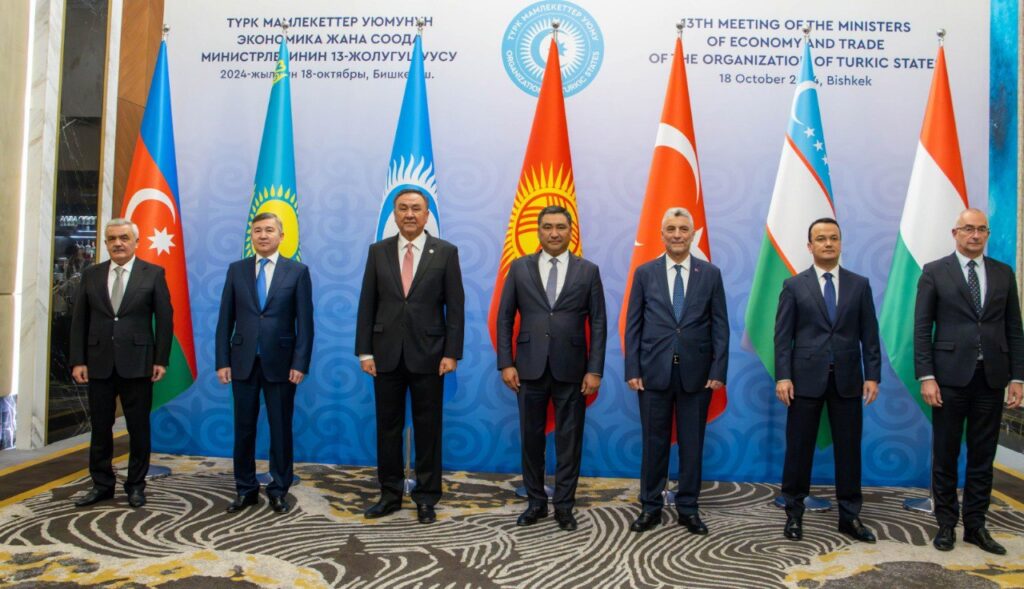
On October 18, Bishkek hosted the 13th meeting of the Organization of Turkic States (OTS), wherein Ministers of Economy and Trade aimed to strengthen economic cooperation between the OTS member states. The OTS, currently comprising Azerbaijan, Kazakhstan, Kyrgyzstan, Turkey, Uzbekistan, and Turkmenistan, with Hungary and the Turkish Republic of Northern Cyprus as observers, was founded in 2009 to foster comprehensive cooperation among Turkic-speaking nations. During the meeting, Chairman of the Cabinet of Ministers of Kyrgyzstan, Akylbek Japarov, stated that in recent years, Kyrgyzstan's trade turnover with the OTS member states has grown by almost 62%, with Kyrgyz exports increasing by 54.6%, and imports by 66%. The Deputy Prime Minister - Minister of National Economy of Kazakhstan, Nurlan Baibazarov, emphasized Kazakhstan’s adherence to the development of Turkic integration and announced that the "Turkic Investment Fund created within the OTS demonstrates a common desire to expand economic and investment cooperation, implement joint investment projects, and attract capital, technology, and talent for our countries' dynamic growth and prosperity." OTS ministers supported Kazakhstan's initiatives to create a Green Finance Council, a Council of Central (National) Banks of the OTS member states, and the inauguration of the Turan Special Economic Zone in the Kazakh city of Turkestan, where the next meeting will be held. In January-August 2024, trade between Kazakhstan and the OTS countries amounted to $7.2 billion, and according to the Turkish Ministry of Finance, by the end of 2024, the Turkic states are poised to play an important role in the world economy, reaching an economic volume of $1.9 trillion and a population of 178 million. As previously reported by The Times of Central Asia,  the Turkic Investment Fund, with an authorized capital of $1 billion, will begin financing major joint projects of the OTS member countries from January 2025.