• KGS/USD = 0.01144 0%
  • KZT/USD = 0.00215 0%
  • TJS/USD = 0.10639 0.76%
  • UZS/USD = 0.00008 0%
  • TMT/USD = 0.28530 0%
  • KGS/USD = 0.01144 0%
  • KZT/USD = 0.00215 0%
  • TJS/USD = 0.10639 0.76%
  • UZS/USD = 0.00008 0%
  • TMT/USD = 0.28530 0%
  • KGS/USD = 0.01144 0%
  • KZT/USD = 0.00215 0%
  • TJS/USD = 0.10639 0.76%
  • UZS/USD = 0.00008 0%
  • TMT/USD = 0.28530 0%
  • KGS/USD = 0.01144 0%
  • KZT/USD = 0.00215 0%
  • TJS/USD = 0.10639 0.76%
  • UZS/USD = 0.00008 0%
  • TMT/USD = 0.28530 0%
  • KGS/USD = 0.01144 0%
  • KZT/USD = 0.00215 0%
  • TJS/USD = 0.10639 0.76%
  • UZS/USD = 0.00008 0%
  • TMT/USD = 0.28530 0%
  • KGS/USD = 0.01144 0%
  • KZT/USD = 0.00215 0%
  • TJS/USD = 0.10639 0.76%
  • UZS/USD = 0.00008 0%
  • TMT/USD = 0.28530 0%
  • KGS/USD = 0.01144 0%
  • KZT/USD = 0.00215 0%
  • TJS/USD = 0.10639 0.76%
  • UZS/USD = 0.00008 0%
  • TMT/USD = 0.28530 0%
  • KGS/USD = 0.01144 0%
  • KZT/USD = 0.00215 0%
  • TJS/USD = 0.10639 0.76%
  • UZS/USD = 0.00008 0%
  • TMT/USD = 0.28530 0%

Viewing results 1 - 6 of 145

Kyrgyz Economy Is on the Rise

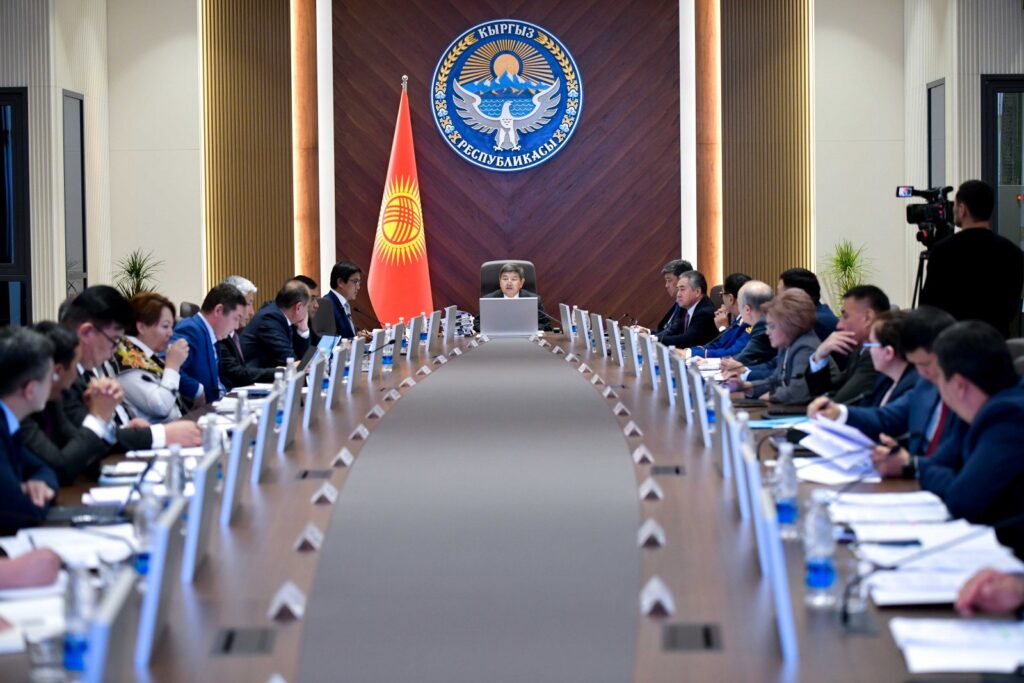
Government statistics and independent analysts note growth in almost all sectors of the Kyrgyz economy The most significant increase is recorded in the construction sector, which in turn, has positively impacted other sectors, such as industrial production, agriculture, and foreign trade. Speaking to The Times of Central Asia, macroeconomics expert Nasirdin Shamshiev remarked: “This year, due to favorable weather, twice as many beets, and one and a half times more barley and wheat were harvested. Due to the high rate of construction of small hydropower plants, the energy sector is also showing good growth. In addition, the production of construction materials has increased, and textile production is growing. Exports for the first eight months of 2024 increased by 13.5%, and imports by 8.1%." According to Shamshiev, the good economic dynamics were influenced by several factors: the strengthening of fiscal rules, fighting corruption and illegal financial flows, and a balanced monetary policy. Earlier, Kyrgyzstan' president Akylbek Japarov, held a meeting of the Cabinet of Ministers, during which the socio-economic development results for the first nine months of 2024 were summarized. According to Japarov, Kyrgyzstan's GDP grew by 8.4%. However, gold exports, traditionally the economy's leading revenue-generating sector, have declined  this year; a situation previously reported  by The Times of Central Asia with reference to a decline in production at  Kumtor, the country's largest gold mine. According to the Prime Minister's information, 37% of the growth in the construction sector provides an increase in industrial production in Kyrgyzstan. Data also shows that over the past year, following the launch of the Chinese oil refinery Junda near Bishkek, the production of refined petroleum products almost doubled. Hailing the success of recent ventures, Japarov stated: “The growth rate of our economy is nothing short of encouraging. We are now implementing the Leap of the Leopard program and approaching our set ambitious goals and objectives."
Decrease Expected in Central Asia’s Economic Growth

According to the World Bank, economic growth in Europe and Central Asia (ECA) is expected to slow to 3.3% this year, down from 3.5% in 2023. This is much lower than the average growth of 4.1% seen between 2000 and 2019, and is not enough for many of the region's middle-income countries to become high-income. Growth in the region has mainly been driven by an increase in people's spending, rising wages, and government policies, while demand from outside the area, especially from the EU, remains weak. Although the average yearly inflation rate had dropped to 3.6% by August 2024, from 4.6% at the end of last year, it is still higher than the 2.7% average seen in 2018-2019. Prices of goods have grown more slowly in most countries, but prices for services remain high because of rising labor costs. Some central banks have lowered interest rates as inflation has slowed, but are cautious. Government spending has not been reduced in most of the region's countries and indeed, has dramatically increased, especially on public wages, pensions, social benefits, and defense. The economies of Central Asia are expected to grow by 4.3% in 2024; slower than the 5.6% growth seen last year. In Kazakhstan, growth is predicted to slow to 3.4%, down from 5.1% in 2023, mainly because the expansion of the Tengiz oil field is taking longer, and the government is spending less. For other Central Asian countries, growth estimates have been raised by an average of nearly one percentage due to increased consumer spending, more government spending, and ongoing support from money sent home by workers in Russia and trade with Russia. However, despite these improvements, the growth per capita GDP (the average income per person) in Central Asia is only expected to be 2.7% this year, making it the slowest in the region, apart fromTurkey. The Central Asian sub region, with growth expected at 5%, will outpace all other sub regions in 2025. This is driven primarily by renewed strong growth in Kazakhstan amid rising oil production. However, growth in the rest of Central Asia is projected to slow as trading and remittance flows from Russia normalize. The lowest median consumer price growth rate was recorded in the South Caucasus, at 1.5% year-on-year in August 2024. In contrast, Central Asia had the highest median consumer price inflation rate, at 6.1%. This rate reflects 10% inflation in Uzbekistan, driven by removing energy subsidies in May 2024.

IMF: Uzbekistan’s Economy Is Growing, but Reforms and Stability Are Key

The International Monetary Fund (IMF) says the forecasts for Uzbekistan's economy are optimistic. The economy continues to grow actively; however, risks and opportunities remain. Maintaining macroeconomic stability and continuing to implement structural reforms is necessary to sustain high growth rates, restore buffer stocks, and protect against external shocks. The economy grew by 6.4% in the first half of 2024 compared to the same period last year. Due to an increase in energy prices in early May, overall inflation increased from 8% at the end of April to around 10.5% recently. The underlying inflation rate rose more moderately, reaching 7% in August, up by one percentage point since June. Remittances increased by 32% in the first seven months of 2024, and international reserves are still substantial, covering 9.5 months of imports as of August. Economic growth is expected to stay above 5.5% this year and next, driven by strong investments and reforms. Inflation is predicted to gradually decline due to tighter monetary and fiscal policies and the fading impact of energy price hikes. The current account deficit is expected to decrease to 6.25% of GDP in 2024 and 6.1% in 2025, supported by strong exports, remittances, and fewer large machinery imports. Risks include regional challenges, fluctuating commodity prices, a possible global slowdown, and issues with state-owned enterprises or partnerships. Opportunities may come from increased financial flows, remittances, and higher gold prices. The impact of energy price hikes in May 2024 and wage increases in September-October 2024 could lead to higher inflation. Experts recommend that the Central Bank of Uzbekistan keep interest rates high until there is clear evidence of inflation decreasing. The bank should also be prepared to raise rates further if inflation rises more than expected.

Central Asian Economies to See Continued Growth in 2024 and 2025

The latest economic outlooks from the European Bank for Reconstruction and Development (EBRD) and Asian Development Bank (ADB) project continued economic growth in the five Central Asian countries in 2024 and 2025. According to the latest edition of the EBRD’s Regional Economic Prospects report, Kazakhstan’s economy will grow by 4% in 2024, with upside from public spending to restore flood-affected infrastructure and housing. The trade, transport, warehousing, services, and IT sectors were the main growth drivers for Kazakhstan in the first half of the year. The EBRD forecasts that in 2025, the country’s real GDP will likely grow by 5.5% amid the planned expansion of the Tengiz oil field. The Asian Development Bank’s (ADB) Asian Development Outlook (ADO) September 2024 projects 3.6% growth of Kazakhstan’s gross domestic product (GDP) this year, slightly lower than the bank’s previous forecast of 3.8% in April 2024. The reason is a weaker service expansion in the first half of the year, lower oil outputs, massive spring floods, and a slowdown in investment. ADB forecasts Kazakhstan’s economic growth to accelerate to 5.1% in 2025. The government of Kazakhstan anticipates the country’s economic growth at 5.6% in 2025. The EBRD report forecasts Kyrgyzstan’s GDP growth to reach 9% in 2024 before moderating slightly to 7% in 2025. The country’s growth potential stems from the expansion of tourism, investment in infrastructure, and gold exports. Both remittances and real wages have remained elevated, helping retail and wholesale trade grow. ADB projects 6.3% growth for Kyrgyzstan in 2024 and 5.8% in 2025. Kyrgyzstan’s Ministry of Economy forecasts economic growth of 6.3% in 2024 and 6% in 2025. Kyrgyzstan’s Minister of Economy, Daniyar Amangeldiev, has explained why the economic forecasts from international financial institutions sometimes differ from those of the Kyrgyz Ministry of Economy. According to Amangeldiev, the forecasts differ because international financial organizations often do not take into account specific measures and actions that the government plans, each of which would potentially impact the country’s economic growth. He added that international forecasts can be skeptical, based on data that may not reflect all the government's actions. According to the EBRD report, Tajikistan’s GDP growth is projected to reach 8% in 2024 and 7% in 2025. Hikes in public-sector salaries, pensions, and minimum wages drove domestic demand in the year's first half, boosting the retail and wholesale trade sectors. The resumption of precious and semi-precious metal exports increased public infrastructure spending, and fixed capital investment was a major growth factor. However, fluctuations in remittances from Tajik labor migrants working in Russia present a significant downside risk for the Tajik economy. ADB forecasts Tajikistan’s economy to grow 6.5% in 2024 and 2025. The EBRD report says Turkmenistan’s economy has shown stability in recent years, citing investment in public infrastructure projects, production facilities, and fixed capital investment as key growth factors. Launching a new single window for export-import operations has improved Turkmenistan’s customs efficiency and simplified transit procedures, enabling higher freight turnover. This has led to the expansion of the country’s transportation sector. The EBRD forecasts...

EDB Upgrades Economic Growth Forecast for Most Member States

In a newly-released Macroeconomic Outlook for its six member states,  the Eurasian Development Bank (EDB) reported that in 2024, Armenia’s GDP is expected to grow by 7.5%, Belarus’s by 3.4%, Kazakhstan’s by 5%, Kyrgyzstan’s by 5.5%, Russia’s by 3%, and Tajikistan’s by 8%. For most EDB member countries, the outlook has been upgraded in response to strong early year performance and continued robust utilization of domestic growth sources. EDB analysts forecast a 3.4% growth in the region’s GDP by the end of 2024. In Armenia, Kyrgyzstan, and Tajikistan, high growth rates early in the year, driven by strong domestic demand and increased exports of basic metals, have led to the following upgraded GDP growth projections for 2024: 7.5% for Armenia, 5.5% for Kyrgyzstan, and 8% for Tajikistan. Kazakhstan’s economy is expected to maintain a high GDP growth rate of around 5% in 2024. Government efforts to diversify the economy are anticipated to catalyse and sustain a steady GDP growth rate in the medium term. Russia’s GDP growth forecast for 2024 has been improved to 3%. EDB analysts note that the expansion of domestic demand has been driven by high household incomes and fiscal stimuli. However, due to tight monetary policy, it is anticipated that consumer activity will gradually decline in the coming year. Belarus’s GDP growth forecast for 2024 has been upgraded to 3.4%, supported by continued strong growth in demand from Russia and wage increases. EDB researchers forecast that inflation in Kyrgyzstan and Tajikistan may drop below target levels, while Russia and Kazakhstan continue to face increased inflationary pressures. Bank analysts project that inflation rates will gradually approach targets in 2024: 1.5% in Armenia, 6% in Belarus, 8.3% in Kazakhstan, 4.3% in Kyrgyzstan, 5.8% in Russia, and 4.1% in Tajikistan.  

U.S. and Central Asia Further Trade, Economic and Investment Cooperation

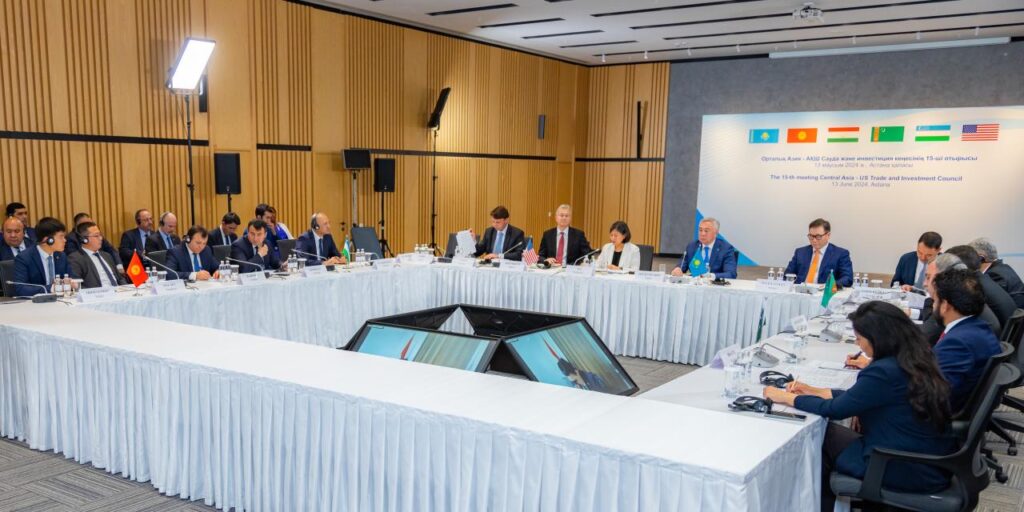
The 15th meeting of the U.S.-Central Asia Trade and Investment Framework Agreement (TIFA) Council was held in Astana on 13 June. TIFA was signed in Washington in June 2004 by the United States, Kazakhstan, Kyrgyzstan, Tajikistan, Turkmenistan, and Uzbekistan to expand international trade, attract foreign investment, and establish trade relations between Central Asian countries and Afghanistan. The US-Central Asian Trade and Investment Council was established within its framework. Reporting from Astana, the Kazakh Ministry of Trade and Integration, said that the agenda had covered prospects for diversifying trade and expanding investment cooperation. Representatives of the six countries also discussed the development of new trade routes to improve supply chain resilience and diversify the economy. During the event, Kazakh Deputy Prime Minister Serik Zhumangarin remarked, “As one of the major economies in the region and a WTO member, Kazakhstan recognizes the high potential offered by TIFA to strengthen not only bilateral but also regional trade relations. This year's meeting of the TIFA Central Asia Regional Council is further proof of the progressive development of regional cooperation and sustainability, which in turn, plays an important role in stabilizing world economy by connecting the global markets of both the West and the East.” U.S. Trade Representative Katherine Tai, emphasizing the need to coordinate joint efforts to ensure sustainable growth of TIFA economies, stated: “Central Asia remains a very important economic and strategic partner for the United States. We are also experiencing climate change and facing the consequences of technological and industrial progress. It is necessary to jointly develop traditional supply chains, the stability of which will ensure sustainable economic growth. The US is interested in improving the quality of trade, supplying critical metals for the production of cars and semiconductors.”