• KGS/USD = 0.01144 0%
  • KZT/USD = 0.00191 -0%
  • TJS/USD = 0.10840 0.37%
  • UZS/USD = 0.00008 0%
  • TMT/USD = 0.28571 0%
  • KGS/USD = 0.01144 0%
  • KZT/USD = 0.00191 -0%
  • TJS/USD = 0.10840 0.37%
  • UZS/USD = 0.00008 0%
  • TMT/USD = 0.28571 0%
  • KGS/USD = 0.01144 0%
  • KZT/USD = 0.00191 -0%
  • TJS/USD = 0.10840 0.37%
  • UZS/USD = 0.00008 0%
  • TMT/USD = 0.28571 0%
  • KGS/USD = 0.01144 0%
  • KZT/USD = 0.00191 -0%
  • TJS/USD = 0.10840 0.37%
  • UZS/USD = 0.00008 0%
  • TMT/USD = 0.28571 0%
  • KGS/USD = 0.01144 0%
  • KZT/USD = 0.00191 -0%
  • TJS/USD = 0.10840 0.37%
  • UZS/USD = 0.00008 0%
  • TMT/USD = 0.28571 0%
  • KGS/USD = 0.01144 0%
  • KZT/USD = 0.00191 -0%
  • TJS/USD = 0.10840 0.37%
  • UZS/USD = 0.00008 0%
  • TMT/USD = 0.28571 0%
  • KGS/USD = 0.01144 0%
  • KZT/USD = 0.00191 -0%
  • TJS/USD = 0.10840 0.37%
  • UZS/USD = 0.00008 0%
  • TMT/USD = 0.28571 0%
  • KGS/USD = 0.01144 0%
  • KZT/USD = 0.00191 -0%
  • TJS/USD = 0.10840 0.37%
  • UZS/USD = 0.00008 0%
  • TMT/USD = 0.28571 0%
14 November 2025

Viewing results 1 - 6 of 8

EBRD Projects Central Asia Economies 2025 Growth at 6.1%

The European Bank for Reconstruction and Development (EBRD) projects that the economies of Kazakhstan, the Kyrgyz Republic, Mongolia, Tajikistan, Turkmenistan, and Uzbekistan will grow by an average of 6.1% in 2025. According to the EBRD, the region’s momentum is being driven by strong industrial output, robust domestic demand, higher investment, rising wages, and continued remittance inflows. In 2026, growth is expected to remain positive but moderate to 5.2%. The report warns, however, that volatility in commodity prices, reliance on remittances, and dependence on Russian and Chinese markets pose ongoing risks to stability. Kazakhstan, Central Asia’s largest economy, is forecast to expand by 5.7% in 2025. Growth has been fueled by increased oil production at the Tengiz field, which boosted industrial activity and wholesale trade. The construction sector grew by 18.4% in the first half of the year, reflecting large infrastructure projects and residential development. Even so, the EBRD cautions that over-reliance on Russian transit routes and global commodity fluctuations could slow growth to 4.5% in 2026. The Kyrgyz Republic is projected to remain one of the region’s fastest-growing economies, with GDP expected to rise by 9.0% in 2025. The economy expanded by 11.4% in the first half of the year, supported by strong public investment, remittance inflows, and rising wages. Manufacturing, trade, and construction are key drivers, while tourism is growing through new investments. Growth is forecast to ease to 6.0% in 2026 but is expected to remain resilient unless remittance flows decline. Mongolia’s economy is expected to grow by 5.8% in 2025. A 35.6% rebound in agriculture after two difficult years helped offset slower mining activity and weaker coal prices, while copper production increased. Tajikistan’s economy grew by 8.1% in the first half of 2025, driven by trade, agriculture, transport, and a doubling of mining output. Remittances rose by 64%, and sharp wage growth boosted household consumption. The EBRD forecasts GDP growth of 7.5% in 2025, moderating to 5.7% in 2026. Continued support from international institutions such as the World Bank and IMF is expected to sustain growth, although reliance on remittances remains a structural vulnerability. Turkmenistan is projected to grow by 6.3% in both 2025 and 2026, supported by trade, transport, services, and construction. Official data show capital investment up 15.6% year on year. Uzbekistan’s economy is expected to expand by 6.7% in 2025, backed by strong domestic demand, rising wages, and a 28.7% increase in remittances. Services grew by more than 8%, while industrial output was buoyed by high gold prices and stronger manufacturing in food and metals. Growth is projected to ease slightly to 6.0% in 2026 but will remain supported by diversified manufacturing and stable foreign investment.

Kazakhstan’s Economy Posts Fastest Growth in 14 Years

Kazakhstan’s economy expanded by 6.2% in the first half of 2025, marking the country’s fastest growth rate since 2011. The data was announced by Deputy Prime Minister and Minister of National Economy Serik Zhumangarin during a government meeting. Zhumangarin noted that a similar level of growth was last recorded in the first half of 2011, when GDP increased by 7.1%, eventually reaching 7.5% for the full year. Since then, annual growth rates have rarely surpassed 6%. By comparison, the economy grew 4.8% in 2024. “The current figure is 0.2 percentage points higher than the growth recorded in the first five months of this year and is the highest in the last 14 years. For context, growth during the same period in 2024 was just 3.2%,” Zhumangarin said. He cited the real sector (+8%) and the services sector (+5.2%) as the primary drivers. Key Growth Sectors Transport (+22.7%) and construction (+18.4%) led the surge, driven in part by a 35.2% increase in grain and flour exports, which totaled 11.8 million tons. The mining industry also posted steady gains, with oil production rising 11.6% and coal production up 11.7%, contributing to overall mining growth of 8.4%. Manufacturing expanded by 5.5%, buoyed by strong performances in machinery (+11.1%), food production (+10%), oil refining (+9.6%), metal products (+14.6%), construction materials (+8.6%), and chemicals (+7%). Agricultural output rose by 3.7%. Trade and Investment Outlook From January to May 2025, Kazakhstan’s foreign trade turnover reached $53.5 billion. Exports stood at $29.8 billion, including $10.2 billion in high value-added products. Imports rose by 2.2% to $23.8 billion, resulting in a positive trade balance of $6 billion. Prime Minister Olzhas Bektenov reaffirmed the government’s ambition to double Kazakhstan’s GDP by 2029, a goal originally set in 2023. “Last year, our GDP was $286 billion. This year, we expect to surpass the $300 billion mark. If current growth rates hold, we are capable of reaching $450 billion by 2029,” Bektenov stated at a press briefing. He emphasized that the government is investing in industrial development, economic diversification, and high value-added production to ensure that the majority of national revenue and profits remain within Kazakhstan. Diverging Forecasts Earlier this year, the Eurasian Development Bank forecast Kazakhstan’s GDP growth at 5.5% for 2025, with similar rates expected for 2026 and 2027. However, the European Bank for Reconstruction and Development (EBRD) recently downgraded its 2025 forecast from 5.2% to 4.9%, citing potential risks to oil output.

Kazakhstan Takes Bold Steps to Revive Caspian Sea Fishing Industry

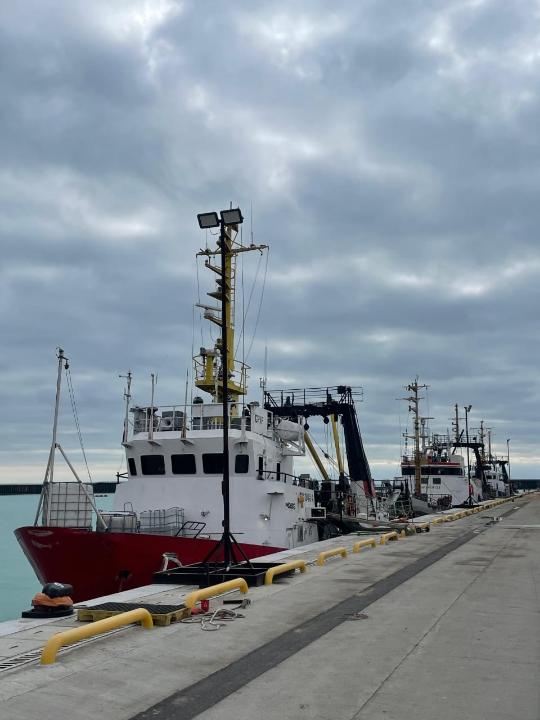
For the first time in over 30 years, commercial fishing has resumed in Kazakhstan’s section of the Caspian Sea. On December 20, Deputy Minister of Agriculture Amangaliy Berdalin attended the ceremonial departure of fishing boats targeting sprat from the port of Sarzha in the village of Kuryk, located in the Mangistau region. Commercial fishing in the Mangistau region was active before 1991 but declined after the dissolution of the Soviet Union. Its revival is part of Kazakhstan’s broader efforts to develop a sustainable fishing industry and bolster food security. One of the first steps in this revival was the purchase of two fishing vessels by Aktau Balyk Company LLP. The company aims to catch approximately 10,000 tons of Caspian sprat annually, providing this resource to the domestic market. Plans are already underway to expand operations. Next year, Aktau Balyk intends to acquire four additional vessels, increasing its fleet and boosting its annual catch volume to 30,000 tons. The government’s commitment to revitalizing the fishing industry is underscored by the Program for the Development of Fisheries until 2030. This initiative prioritizes fish farming as a cornerstone of the sector's growth. According to the program: Kazakhstan aims to produce 270,000 tons of fish annually through fish farming by 2030. The government seeks to increase domestic fish consumption to 134,000 tons annually. Fish imports are targeted to drop from 45,000 tons to 25,000 tons annually. This strategic push signals Kazakhstan’s determination to establish a thriving fishing industry to meet domestic demand and position the country as a competitive player in the regional seafood market.

Securing EIB Funding in Kyrgyzstan: An Interview with VP Kyriacos Kakouris

Central Asia is rapidly developing its economy, with several international financial institutions successfully operating here. Among them is the European Investment Bank. Vice-President Kyriacos Kakouris spoke with The Times of Central Asia about its activity in Kyrgyzstan. TCA: Could you briefly introduce the European Investment Bank (EIB) and its main objectives in Kyrgyzstan? KK: The EIB is more than a bank, it is part of the EIB Group, one of the largest multilateral financial institutions in the world with a unique position allowing it to mobilize large-scale financing. The European Investment Bank, as the long-term financing institution of the European Union, is closely aligned with EU priorities, such as the EU-Central Asia strategy and the EU Global Gateway strategy, and is ready to play a more significant role in helping Kyrgyzstan respond more effectively to current and future challenges. The Bank has already been involved in economic development, transport, and climate action operations. We are interested in supporting the development of a competitive and environmentally friendly private sector that can incorporate modern and green technologies into various sectors. TCA: What are the EIB's priorities for supporting economic growth and sustainability in Kyrgyzstan? KK: EIB Global launched its activity in Kyrgyzstan in 2014 and up to now, has signed three separate operations worth a total of €112 million. We have established a very positive relationship with the Embassy of Kyrgyzstan in Brussels, which is essential for our dialogue with the Kyrgyz authorities. All operations involve co-financing either with other international financial institutions like the World Bank and the European Bank for Reconstruction and Development (EBRD) or development institutions such as KfW. So far, the Bank has approved lending operations for three projects on power transmission, water and waste management, and the agri-food sector, in line with the priorities defined in the EU-Central Asia and the EU Global Gateway strategies. The main aims of these projects are to protect the environment and take action against climate change. We will soon sign a €9 million top-up for the completion of the Kyrgyz section of the high-voltage transmission line known as CASA-1000. This project is part of a larger regional electricity scheme called Central Asia - South Asia Electricity Transmission and Trade initiative, covering Kyrgyzstan, Tajikistan, and Pakistan. This project is essential for developing trade in sustainable renewable electricity between the countries, using energy generated from renewable hydropower sources in the region. This will alleviate power shortages and increase export revenue in Kyrgyzstan and Tajikistan. TCA: How does the EIB's role differ from that of other development banks or financial institutions? KK: The EIB is the EU bank, and its shareholders are the 27 EU Member States. EIB Global is focused on EU policy priorities such as the EU strategy on Central Asia and the EU Global Gateway, supporting the green transition, boosting technological innovation, bolstering security and defense, and supporting regional cohesion and the development of social infrastructure. Our commitment to international development and capital market integration secures Europe’s strong global presence. Our...

EBRD’s Transformative Investments in Kyrgyzstan: An Interview With Hüseyin Özhan, Managing Director for Central Asia

The European Bank for Reconstruction and Development (EBRD), established in 1991, has been working in the Kyrgyz Republic since 1992 and has invested in over 250 projects amounting to over €1 billion. TCA sat down with Hüseyin Özhan to discuss the bank’s operations in Kyrgyzstan. TCA: Could you briefly introduce the EBRD and its main objectives within Kyrgyzstan? Özhan: The European Bank for Reconstruction and Development (EBRD) is owned by 73 shareholders as well as the EU and the EIB and has been operating in Kyrgyzstan for over 30 years. During this time, we have invested in more than 250 projects, surpassing €1 billion in total investments across the country. As an international financial institution, our operations in Kyrgyzstan are guided by a country strategy jointly prepared by the EBRD and local stakeholders and approved by the Bank’s Board of Directors. This year marks a significant milestone, as we have approved a new five-year country strategy outlining our priorities in Kyrgyzstan. We focus on fostering private sector growth and enhancing competition and also invest in infrastructure and sovereign-guaranteed projects. These efforts position the EBRD as one of the most influential international players in Kyrgyzstan. TCA: You mention the bank recently approved its new five-year strategy for Kyrgyzstan; could you share what this plan entails? Özhan: Our country's strategies are built on diagnostics conducted to identify transition gaps. These strategies align with the EBRD’s Strategic and Capital Framework and the Bank’s medium-term strategy and combine elements of the reform agenda and investment needs. The new strategy for Kyrgyzstan focuses on three key priorities: private sector development and competitiveness, the green economic transition with an emphasis on decarbonization and energy efficiency, and improved connectivity across the country. These priorities align closely with Kyrgyzstan’s recent reform agenda and development goals, which aim to enhance competitiveness, attract foreign investment, boost trade, and strengthen the country’s regional relevance. Decarbonization and resource efficiency are particularly critical, as Kyrgyzstan is significantly impacted by regional water scarcity. This makes sustainable water management a central focus, with numerous projects planned to support sustainable development in this sector. Additionally, developing the private sector, particularly local businesses, is vital. The EBRD works closely with the government in this regard, not only by providing funding but also through initiatives like “risk-sharing networks” and advisory programs for small businesses. These efforts help enhance productivity, relevance, and competitiveness, ensuring that Kyrgyzstan’s private sector is well-equipped to thrive in the market. TCA: How does EBRD’s mission differ from other development banks or financial institutions in the region? Özhan: Our institution has a slightly different approach to delivering our work and fostering transition in Kyrgyzstan. Unlike some other international financial institutions (IFIs) that provide budget support, the EBRD operates on a project-by-project basis and channels most of its resources to support good private-sector initiatives. A recent example of project finance is the signing of water projects in three cities in Kyrgyzstan. These sovereign lending agreements, signed with the Ministry of Finance, aim to modernize regional water...

ADB to Help Upgrade Strategic Road in Kazakhstan

The Asian Development Bank (ADB) has approved a sovereign-guaranteed local currency loan of up to $291.49 million for KazAvtoZhol, the company overseeing the planning, construction, operation, and maintenance of Kazakhstan's national highways. This loan will support reconstructing a 208-kilometer road connecting Kyzylorda and Zhezkazgan in central Kazakhstan. The project will upgrade the existing two-lane highway to a higher-standard, climate-resilient two-lane road, providing all-weather access and reducing travel time from 4 to 2 hours. The reconstruction will also improve domestic and regional connectivity and road safety and promote national and international trade. ADB Director General for Central and West Asia Yevgeniy Zhukov commented: “By improving the Kyzylorda–Zhezkazgan corridor, we are addressing critical infrastructure constraints that hinder Kazakhstan’s economic growth and balanced regional economic development. The project road is also crucial for leveraging Kazakhstan’s geostrategic advantage and boosting regional and global integration.” Kazakhstan, the largest economy in Central Asia, is well-positioned to become a bridge between Asia and Europe. However, due to inefficiencies and high transport and logistics costs, the country needs help leveraging its strategic position. The country has also seen a high traffic fatality rate, with 12.2 deaths per 100,000 people in 2021. The ADB project incorporates rumble strips, safer pedestrian crossings, and interchanges to improve road safety. These measures are expected to significantly reduce accidents and enhance the overall safety of the road corridor.