• KGS/USD = 0.01143 0%
  • KZT/USD = 0.00205 0%
  • TJS/USD = 0.10724 0.09%
  • UZS/USD = 0.00008 0%
  • TMT/USD = 0.28571 0%
  • KGS/USD = 0.01143 0%
  • KZT/USD = 0.00205 0%
  • TJS/USD = 0.10724 0.09%
  • UZS/USD = 0.00008 0%
  • TMT/USD = 0.28571 0%
  • KGS/USD = 0.01143 0%
  • KZT/USD = 0.00205 0%
  • TJS/USD = 0.10724 0.09%
  • UZS/USD = 0.00008 0%
  • TMT/USD = 0.28571 0%
  • KGS/USD = 0.01143 0%
  • KZT/USD = 0.00205 0%
  • TJS/USD = 0.10724 0.09%
  • UZS/USD = 0.00008 0%
  • TMT/USD = 0.28571 0%
  • KGS/USD = 0.01143 0%
  • KZT/USD = 0.00205 0%
  • TJS/USD = 0.10724 0.09%
  • UZS/USD = 0.00008 0%
  • TMT/USD = 0.28571 0%
  • KGS/USD = 0.01143 0%
  • KZT/USD = 0.00205 0%
  • TJS/USD = 0.10724 0.09%
  • UZS/USD = 0.00008 0%
  • TMT/USD = 0.28571 0%
  • KGS/USD = 0.01143 0%
  • KZT/USD = 0.00205 0%
  • TJS/USD = 0.10724 0.09%
  • UZS/USD = 0.00008 0%
  • TMT/USD = 0.28571 0%
  • KGS/USD = 0.01143 0%
  • KZT/USD = 0.00205 0%
  • TJS/USD = 0.10724 0.09%
  • UZS/USD = 0.00008 0%
  • TMT/USD = 0.28571 0%

Viewing results 1 - 6 of 1939

World Bank Warns Tajikistan on Limits of Migration-Driven Growth

Tajikistan has made notable strides in reducing poverty over the past decade, but sustaining this progress will require a shift away from reliance on labor migration and remittances, according to a new World Bank report. The Poverty and Equity Assessment in Tajikistan notes that the share of people living in poverty fell from 56 percent in 2010 to around 20 percent in 2024. During the same period, the middle class expanded from 8 percent to 33 percent of the population, with 35 percent of households joining its ranks between 2021 and 2023. However, these gains have largely been driven by remittances, which consistently account for more than 30 percent of GDP, rather than domestic job creation. Job Creation Remains Weak Employment generation, however, remains limited. As of 2022, only 40 percent of the working-age population was employed, the lowest rate in the region, while female labor force participation stood at just 21 percent. Inequality has also worsened. The Gini coefficient rose from 32 to 38 between 2021 and 2023, with rural and remote areas most affected due to poor infrastructure and weak market access. Education poses an additional constraint. In 2023, 31 percent of children were not attending school, especially at higher grade levels. Contributing factors include financial hardship, distance to schools, and low parental education. Many university graduates either take low-paid jobs or emigrate. World Bank Recommendations The World Bank urges Tajikistan to transition from a remittance-dependent model to one grounded in domestic employment and economic resilience. Key recommendations include: modernizing agriculture with climate-resilient technologies; promoting labor-intensive private sector growth, particularly in agricultural processing, services, and small enterprises; expanding access to education, vocational training, and digital infrastructure, especially in rural areas; strengthening targeted social support for vulnerable households. “Tajikistan’s progress in poverty reduction is impressive, but sustaining and deepening these gains requires a rebalancing of priorities,” said Wei Winnie Wang, the World Bank’s Acting Country Manager in Tajikistan. She emphasized that improving domestic job creation, reducing spatial inequality, and investing in human capital would help build a more inclusive and sustainable economy. Government Response Tajikistan’s Ministry of Economic Development and Trade acknowledged that the report’s findings align with national development priorities. Deputy Minister Ahliddin Nuriddinzoda highlighted the role of the Poverty and Middle Class Expansion Council, established with World Bank support, as a platform for monitoring poverty and shaping related policy. According to the ministry, the World Bank’s current portfolio in Tajikistan includes 26 projects worth $1.9 billion, focused on infrastructure, human capital, and institutional reforms. The International Finance Corporation has also invested more than $70 million in the private sector.

Uzbekistan Aims to Cut Poverty Rate to 6% by End of 2025

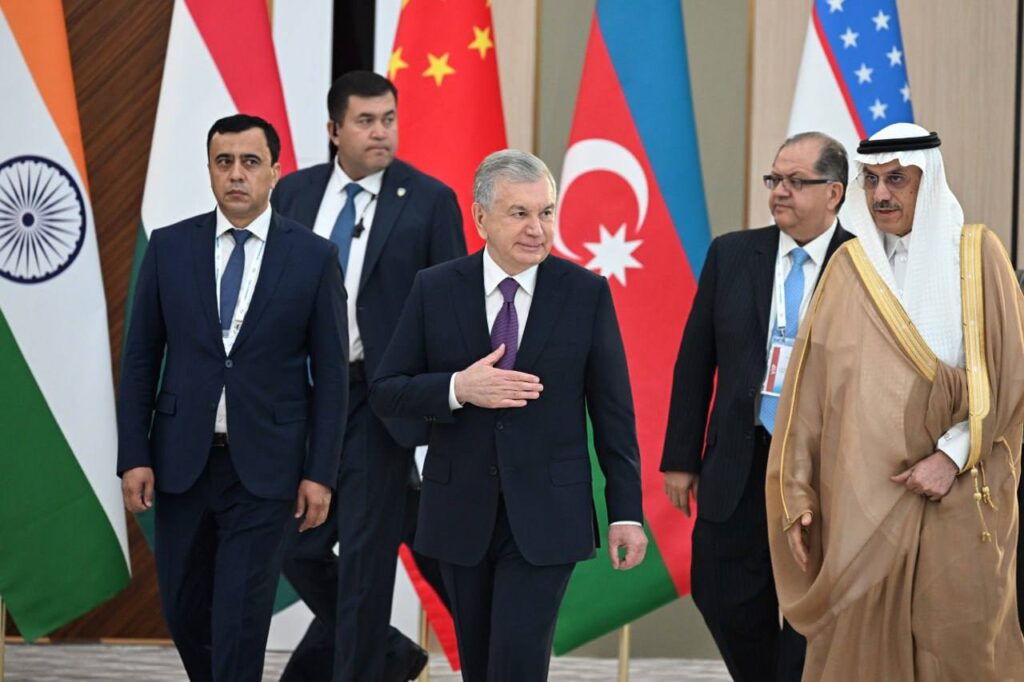
Uzbekistan aims to cut its national poverty rate to 6 percent by the end of 2025, President Shavkat Mirziyoyev announced at the opening of the third international forum From Poverty to Prosperity in Namangan on September 17. The forum brought together representatives from more than 30 organizations and approximately 200 experts, including Islamic Development Bank President Muhammad Al-Jasser, Asian Development Bank Vice President Yingming Yang, Japan International Cooperation Agency Senior Vice President Sachiko Imoto, United Nations Special Representative for Central Asia Kaha Imnadze, and World Bank Global Director for Poverty Reduction Luis Felipe López-Calva. Mirziyoyev warned that the world is entering a period of increasing instability, citing climate change, water scarcity, pandemics, and slowing economic growth. Since 2015, global economic growth has averaged just 3 percent annually, while the number of people living in poverty has risen from 650 million to over 800 million. In Uzbekistan, poverty reduction has become a national priority. Over the past eight years, government reforms have focused on human rights, employment, and income generation, supported by international institutions such as the World Bank and the United Nations. According to official data, 7.5 million people have been lifted out of poverty, bringing the national poverty rate down to 8.9 percent in 2024. “By the end of this year, we aim to reduce it further to 6 percent,” Mirziyoyev said. Uzbekistan’s economy has doubled in size in recent years, with per capita income projected to reach $3,500 by the end of 2025. Growth has been driven by targeted social programs, mahalla-based community initiatives, and land reforms. During the COVID-19 pandemic, more than 2 million families received social assistance, while the redistribution of 235,000 hectares of farmland provided an additional source of income for 800,000 families. “Every neighborhood is becoming a hub for business, and every family is seeing the benefits of prosperity,” Mirziyoyev said. He added that Uzbekistan is on track to halve poverty by 2030, in line with the UN Sustainable Development Goals, and could eradicate absolute poverty by the end of the decade. The president also called for a “new financial architecture” to mobilize global resources for sustainable development. He proposed hosting an international conference in Khiva in 2026, with the participation of donor organizations, financial institutions, and partner governments. “Uplifting human dignity through decent living conditions and poverty reduction lies at the heart of all our reforms,” he concluded.

Kazakhstan Labor Ministry Increases Pressure on Employers Paying “Gray” Salaries

Kazakhstan’s Ministry of Labor and Social Protection has drafted legislation aimed at eliminating the widespread practice of paying employees off the books, known locally as “gray” salaries, Minister Svetlana Zhakupova announced this week. According to ministry estimates published earlier this summer, approximately 30% of Kazakhstan’s employed population fails to contribute to the Unified Accumulative Pension Fund (UAPF), a clear indicator that they may be receiving unreported wages. Data from the Bureau of National Statistics shows that in the second quarter of 2025, 9.3 million people were employed across the country. Of these, 7.1 million were salaried employees (76.8%) and 2.2 million were self-employed (23.2%). This suggests that more than 3 million workers may be receiving wages outside the official system, avoiding both income tax and social contributions. Targeting the Shadow Economy The ministry plans to focus first on those who make no contributions at all. “We have cases where highly qualified employees officially receive the minimum wage of 85,000 KZT (about $159),” Zhakupova said. “To avoid taxes, employers declare the minimum wage on paper and pay the rest in cash.” This practice, she added, creates striking wage disparities among employees with the same qualifications and roles. “In some instances, workers in identical positions earn between 229,000 KZT ($426) and 1.2 million KZT ($2,200), depending on the employer,” Zhakupova noted. These discrepancies are particularly acute in Kazakhstan’s mining and metallurgical sector. Digital Oversight and Industry Agreements To address the issue, the ministry is negotiating industry-wide wage agreements and requiring companies to declare their staffing structures. A digital tool for this purpose is available on the enbek.kz platform. “About 20 to 25 major organizations, including several under our jurisdiction, have already submitted their staffing schedules in a pilot project,” said Zhakupova. She believes the initiative will help ensure a more equitable distribution of company profits. “We’ve seen cases where salaries have risen, yet labor productivity has not. That contradicts basic economic logic. Our digital system identifies such ‘red zones’ for inspection,” she explained. Legislative Timeline The draft law is currently under interagency review and has received support from both the government and the presidential administration. It is expected to be submitted to Kazakhstan's parliament, the Mazhilis, for consideration in the near future. In the meantime, the ministry has begun flagging suspicious labor contracts, particularly those listing highly skilled workers, such as mechanical engineers, at or near the minimum wage. More than 1.1 million people in Kazakhstan currently earn wages at or below the legal minimum. “When we see such contracts, it's clear these companies are operating in the shadow economy,” Zhakupova said during a recent government briefing. “Inspectors are now actively working with such employers.” As The Times of Central Asia previously reported, the government has also decided to freeze the minimum wage in 2026, despite earlier pledges to raise it.

Tajikistan Raises Minimum Monthly Wage to $110 Amid Broad Income Hikes

Effective September 1, Tajikistan has implemented a nationwide increase in salaries, pensions, and scholarships, ranging from 10% to 30% across various sectors. The country’s minimum wage is now officially set at 1,000 Tajikistani somoni (TJS) per month, approximately $110. This marks a 25% increase from the previous rate of 800 TJS ($88). “This means that from September 1, 2025, the monthly salary of employees of all institutions, organizations, and enterprises, regardless of ownership, must not be less than 1,000 TJS,” the official decree states. The salary hikes apply broadly. Employees of kindergartens and general education schools will see a 30% increase. Teachers at universities and research institutions will receive a 20% raise, matching the increase granted to doctors, chief physicians, nurses, and other healthcare personnel. The same 20% boost also extends to social workers, including staff at elderly care homes and facilities for people with disabilities, as well as to cultural sector employees, such as those working in theaters, libraries, museums, media, and public broadcasting. Civil servants at all levels of government have also received a 20% salary increase. In parallel, insurance, labor, and social pensions have been increased by 10%. Scholarships, including presidential scholarships and other academic grants, have also been raised, with the exception of stipends for cadets in military universities and the Academy of the Ministry of Internal Affairs. The 2025 state budget includes provisions to finance these increases. Funding sources include surplus revenue collections, local taxes, free budget balances, the Social Insurance and Pension Fund, and reallocation of reserve and discretionary funds. Total budget revenues are projected at TJS 49.6 billion (approximately $5.45 billion), with around 65% expected to come from tax revenues. The government forecasts a 20.8% increase in tax collections compared to 2024. Spending on public sector wages, pensions, and scholarships now accounts for more than 35% of the national budget. In 2025, the total wage fund has reached nearly TJS 13 billion ($1.43 billion), marking a 35.7% rise year-on-year. Pension allocations total TJS 5.1 billion ($561 million), while benefits and scholarships are funded at TJS 350 million ($38.5 million) and TJS 280 million ($30.8 million), respectively, each reflecting a 25% to 26% increase over last year. Despite the official wage growth, low salaries remain a persistent issue for many Tajik citizens. As consumer prices continue to rise, the increases are widely viewed as a form of income indexation rather than a substantial improvement in living standards.

Kazakhstan Tops Central Asia for GDP per Capita, Surpassing Russia and China

Kazakhstan has emerged as the regional leader in gross domestic product (GDP) per capita, overtaking both Russia and China, according to the International Monetary Fund (IMF). IMF data shows that in 2025 Kazakhstan’s GDP per capita reached $14,770, compared to $14,260 in Russia and $13,690 in China. Within Central Asia, Turkmenistan followed with $13,340, while Uzbekistan posted $3,510, Kyrgyzstan $2,750, and Tajikistan $1,430. Kazakhstan also leads among Commonwealth of Independent States (CIS) members, ahead of Georgia ($9,570), Armenia ($8,860), Moldova ($8,260), Belarus ($7,880), Azerbaijan ($7,600), and Ukraine ($6,260). Only the Baltic states recorded higher figures: Estonia ($32,760), Lithuania ($30,840), and Latvia ($24,370). Ireland remained Europe’s leader with $108,920 per capita. The IMF calculates GDP per capita at current prices, offering a snapshot of purchasing power and overall economic wellbeing. Its analysts attribute Kazakhstan’s strong performance to vast mineral resources, with energy and mineral exports continuing to drive growth. Recent years have also seen expansion in raw material processing and production of high value-added goods. The report cites ongoing business reforms, foreign investment inflows, and infrastructure upgrades as key factors enhancing competitiveness. Significant spending is going into transport, logistics, technology, education, healthcare, and social services, bolstering domestic demand and labor productivity. Kazakhstan’s strategic position on trade routes linking Europe and Asia, participation in the Belt and Road Initiative, and active engagement with Russia, China, the EU, and other partners are also seen as growth drivers. The IMF notes that macroeconomic stability is supported by low inflation, a steady tenge exchange rate, and a balanced budget. “The policies of the National Bank and the government are helping to maintain economic stability even amid global challenges,” the report states. The Times of Central Asia previously reported that, according to IMF forecasts, Central Asian economies are expected to grow faster than the global average in 2025.

Kazakhstan Faces Turbulence as External Pressures Mount

Kazakhstan, Central Asia’s largest economy, is facing a convergence of pressures that President Kassym-Jomart Tokayev and National Bank Chairman Timur Suleimenov must now manage simultaneously, from currency depreciation and geopolitical turmoil to volatile oil markets and contentious fiscal reforms, that are testing its economic resilience. Geopolitical Pressures Escalate By mid-2025, it had become increasingly apparent that Kazakhstan has limited capacity to influence global geopolitical dynamics. Like many “middle powers,” the country must adapt to the actions of larger states, whose unpredictable decisions continue to exert downward pressure on the tenge and fuel inflation. On July 28, U.S. President Donald Trump shortened a previously issued 50-day ultimatum to Russian President Vladimir Putin, giving him just 10-12 days to agree to a peace deal with Ukraine. This development added to the mounting uncertainty already impacting Kazakhstan’s economy. As previously reported by The Times of Central Asia, analysts warn that Trump’s secondary sanctions, 100% tariffs targeting Russia’s trading partners, could potentially be extended to Kazakhstan and other Central Asian economies. Though Kazakhstan is not among Russia’s largest trading partners, its economic links to Moscow are still substantial. The country relies heavily on imports from Russia, including electricity, gasoline, food, and medicine. Adding to the pressure, on July 7, Trump announced a 25% tariff on Kazakhstani goods, effective August 1, 2025. While $1.8 billion of Kazakhstan’s $2 billion in exports to the U.S. (mostly oil, metals, and rare earth elements) are exempt, the move has nonetheless rattled Kazakhstan’s already fragile industrial sector and spooked investors. Oil price instability, largely driven by Western efforts to curtail Russian exports, also poses a major risk. Oil revenues make up the bulk of Kazakhstan’s export income and are a key source of budget financing. Further complicating matters, new Russian restrictions require foreign tankers to obtain Federal Security Service (FSB) approval before accessing key Black Sea ports. This affects the Caspian Pipeline Consortium (CPC), which handles more than 80% of Kazakhstan’s oil exports and is partly owned by U.S. firms Chevron and ExxonMobil. Reuters estimates the new rules could disrupt over 2% of global oil supply. Tenge Hits Historic Low As of July 28, the tenge dropped to a record low of 544.87 per U.S. dollar. The depreciation is driving up the cost of imports, an acute problem in an import-dependent economy, pushing more families to spend over half their income on food. Companies with debt obligations in U.S. dollars are also seeing their liabilities grow, worsening the investment climate and prompting firms to scale back on planned expansions. Central Bank Warns Against Intervention National Bank Chairman Timur Suleimenov cautioned against government intervention in currency markets, a position supported by President Kassym-Jomart Tokayev, who has repeatedly cautioned against short-term administrative measures that can destabilize the economy. Suleimenov noted that past attempts to control the exchange rate led to abrupt and damaging devaluations. Suleimenov attributed the tenge’s vulnerability to rising fiscal injections and an 18% increase in the money supply, stressing that without parallel growth in GDP and industrial output,...