• KGS/USD = 0.01143 0%
  • KZT/USD = 0.00212 0%
  • TJS/USD = 0.10823 0.19%
  • UZS/USD = 0.00008 0%
  • TMT/USD = 0.28571 0%
  • KGS/USD = 0.01143 0%
  • KZT/USD = 0.00212 0%
  • TJS/USD = 0.10823 0.19%
  • UZS/USD = 0.00008 0%
  • TMT/USD = 0.28571 0%
  • KGS/USD = 0.01143 0%
  • KZT/USD = 0.00212 0%
  • TJS/USD = 0.10823 0.19%
  • UZS/USD = 0.00008 0%
  • TMT/USD = 0.28571 0%
  • KGS/USD = 0.01143 0%
  • KZT/USD = 0.00212 0%
  • TJS/USD = 0.10823 0.19%
  • UZS/USD = 0.00008 0%
  • TMT/USD = 0.28571 0%
  • KGS/USD = 0.01143 0%
  • KZT/USD = 0.00212 0%
  • TJS/USD = 0.10823 0.19%
  • UZS/USD = 0.00008 0%
  • TMT/USD = 0.28571 0%
  • KGS/USD = 0.01143 0%
  • KZT/USD = 0.00212 0%
  • TJS/USD = 0.10823 0.19%
  • UZS/USD = 0.00008 0%
  • TMT/USD = 0.28571 0%
  • KGS/USD = 0.01143 0%
  • KZT/USD = 0.00212 0%
  • TJS/USD = 0.10823 0.19%
  • UZS/USD = 0.00008 0%
  • TMT/USD = 0.28571 0%
  • KGS/USD = 0.01143 0%
  • KZT/USD = 0.00212 0%
  • TJS/USD = 0.10823 0.19%
  • UZS/USD = 0.00008 0%
  • TMT/USD = 0.28571 0%

Viewing results 1 - 6 of 5

Kazakhstan’s Higher Education Transformation – Minister Sayasat Nurbek on Attracting Global Talent and Driving Innovation

Kazakhstan is moving quickly to reposition its universities for a more competitive, tech-driven future and to become Central Asia’s study destination of choice. In an interview with The Times of Central Asia, Minister of Science and Higher Education of Kazakhstan, Sayasat Nurbek, explained that a flagship target captures this ambition: to attract 150,000 international students by 2029, nearly five times today’s level, while deepening partnerships with global universities, expanding research in critical minerals, and backing student entrepreneurship and AI talent pipelines. Kazakhstan as an Emerging Education Hub in Eurasia Government strategies and institutional partnerships frame Kazakhstan not only as Central Asia’s study destination of choice, but as a new nexus for education in Eurasia. The country’s location at the crossroads of Europe and Asia positions it to serve diverse regional markets, while rapidly multiplying branch campuses and partnerships with leading universities demonstrate how this ambition is taking shape. Inside the system, the reform agenda is anchored in greater university autonomy, modular and English-medium programs, stronger international accreditation, and a shift from rote learning to research-led, industry-connected education. As Sayasat Nurbek, Kazakhstan’s Minister of Science and Higher Education, told The Times of Central Asia: “Kazakhstan is not only Central Asia’s education leader - we are becoming a new Eurasian hub. Our partnerships with global universities and the growth of world-class campuses show that students no longer need to leave the region to access international-quality education.” Capturing Demographic Shifts and International Demand Demographics are one reason why this might work. Central Asia and the broader Eurasian neighborhood together have over a billion people under the age of 25 - a cohort that will strain capacity in nearby systems as the demand for higher education surges. Kazakhstan’s bet is to meet that need locally, in English, at global standards, and at a cost point that undercuts Western destinations. In this sense, the country is explicitly targeting an opportunity to capture demographic shifts and attract students from abroad, while positioning itself as a credible, accessible alternative to saturated or costly Western markets. Minister Nurbek emphasized this point: “With more than a billion young people across Central Asia and our neighboring regions, the demand for higher education is exploding. Kazakhstan is seizing this demographic opportunity by offering English-medium programs at global standards, and at a cost that is far more accessible than traditional destinations.” This change is visible on the ground through a rapid expansion of foreign branch campuses and deep partnerships. In September 2025, Cardiff University officially opened in Astana - the first Russell Group presence in the country. Branches of the British De Montfort and Coventry universities have already opened their doors in Almaty and Astana, whilst a campus of the South Korean university, Woosong, is set to launch in Turkestan this month. Ministerial briefings and project sheets describe a broader pipeline that includes operating collaborations as well as branches at varying stages - from Penn State and the University of Arizona to SeoulTech, TU Berlin, Queen’s University Belfast, New York Film Academy,...

From Kazakhstan to Arizona: First Student Cohort Marks Nation’s Education Hub Ambitions

On August 23, 2025, 29 students from Kozybayev University in Petropavlovsk arrived at the University of Arizona. Their journey marks the start of a dual-degree program that allows Kazakh students to spend a semester in the U.S. while completing the rest of their studies at home. Graduates will receive two diplomas, one from each institution. The program, launched under President Kassym-Jomart Tokayev’s directive, is Kazakhstan’s first large-scale partnership with a U.S. university. Fully funded by the state, it covers tuition, housing, visas, and travel expenses. Courses are offered in biotechnology, information systems, and inclusive education - fields aligned with Kazakhstan’s development priorities. Part of a Broader Strategy This initiative is not just about Kozybayev University. It is part of a broader government strategy to internationalize higher education and transform Kazakhstan into an academic hub for Central Asia. In 2022, Tokayev set a goal of opening five foreign university branches by 2025. Since then, partnerships have multiplied: De Montfort University (UK) in Almaty, MEPhI and Gubkin University (Russia) in Almaty and Atyrau, and the University of Arizona in Petropavlovsk. Others are in development, including Heriot-Watt University (Scotland), SeoulTech (South Korea), and Tianjin University (China). These ventures come with incentives. The government treats foreign universities as “strategic investors,” offering land, tax breaks, and simplified bureaucracy. In return, Kazakhstan gains access to advanced curricula and English-language teaching, while local universities benefit from joint research and faculty exchanges. Building Domestic Capacity Kozybayev University has expanded rapidly to accommodate the Arizona program: a new academic laboratory, dormitories, and upgraded infrastructure are in place. The university is also hosting students from 16 countries, including a hundred from Türkiye. This signals a shift - Petropavlovsk, once peripheral in academic terms, is now a point of attraction for international students. The government’s long-term aim is to convert more domestic universities into research-intensive institutions. By embedding foreign collaborations into the national strategy, Kazakhstan hopes to ensure lasting benefits rather than temporary prestige projects. Rising Student Mobility Kazakhstan’s pivot to become an education destination reflects changing regional dynamics. More than 31,000 foreign students now study in Kazakhstan, including over 12,000 from India in medical programs. This is a sharp rise from a few years ago and a reversal of the trend where most Kazakh students went abroad, often to Russia. The Ministry of Science and Higher Education is actively promoting the country under the “Study in Kazakhstan” campaign, targeting markets like Pakistan, China, and Azerbaijan. For many students, Kazakhstan offers lower costs than the West and the chance to earn dual degrees with reputable foreign institutions. For many international students, Kazakhstan is becoming an appealing study destination. Tuition fees are comparatively low - ranging from US $1,500 to $5,000 per year - while monthly living costs are in the U.S. $550–$750 range, encompassing accommodation, food, transport, and essentials. These financial benefits, along with government scholarships, English-taught programs, and dual-degree opportunities, make Kazakhstan an increasingly attractive option. Lessons from Abroad Kazakhstan’s ambition echoes strategies pursued by the UAE and Singapore. Dubai, for example,...

Colorado School of Mines to Open First International Campus in Kazakhstan

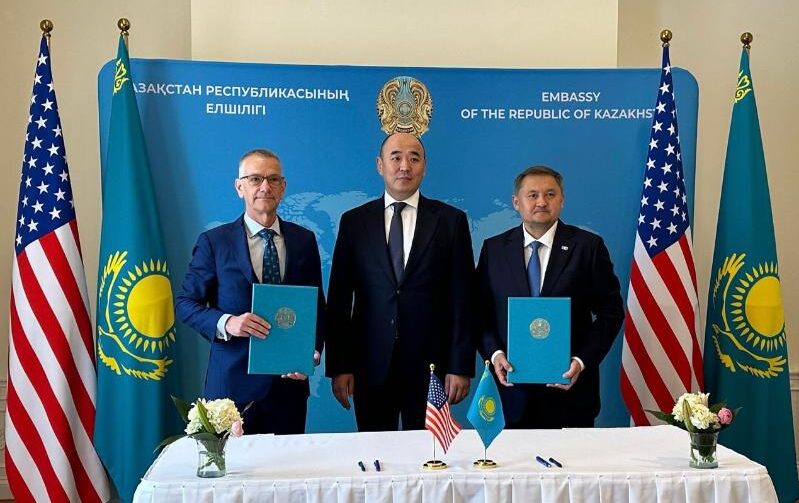
In 2026, the Colorado School of Mines will open its first international campus in Kazakhstan, marking a significant milestone in U.S.-Kazakhstan academic cooperation. An agreement to establish the branch was signed between Kazakhstan’s Ministry of Science and Higher Education and the Colorado School of Mines, which currently ranks No. 1 globally in Mineral & Mining Engineering according to the QS World University Rankings 2025. The new campus will be located in Zhezkazgan, the center of Kazakhstan’s geological industry, on the grounds of the newly established Ulytau Technical University. Instruction will be in English and will focus on four core bachelor's degree programs: Mining, Geology and Geological Exploration; Geophysical Engineering; and Petroleum Engineering. According to the Ministry, the project underscores Kazakhstan’s growing status as a destination for educational investment and knowledge transfer in technical fields. “We have identified Kazakhstan as a priority country for partnership and development,” said John Bradford, Vice President of Global Initiatives at the Colorado School of Mines. “This agreement will allow us to elevate our collaboration and academic exchange.” Earlier, the Colorado School of Mines signed a dual degree agreement with Kazakhstan’s Satbayev University in the fields of geology, petroleum engineering, and mining, which also includes joint research initiatives. Once operational, the Zhezkazgan campus is expected to attract young professionals to the region, create new job opportunities, and train highly qualified specialists for both Kazakhstan’s domestic needs and the global labor market.