• KGS/USD = 0.01143 0%
  • KZT/USD = 0.00200 0%
  • TJS/USD = 0.10593 -0.19%
  • UZS/USD = 0.00008 0%
  • TMT/USD = 0.28575 0%
  • KGS/USD = 0.01143 0%
  • KZT/USD = 0.00200 0%
  • TJS/USD = 0.10593 -0.19%
  • UZS/USD = 0.00008 0%
  • TMT/USD = 0.28575 0%
  • KGS/USD = 0.01143 0%
  • KZT/USD = 0.00200 0%
  • TJS/USD = 0.10593 -0.19%
  • UZS/USD = 0.00008 0%
  • TMT/USD = 0.28575 0%
  • KGS/USD = 0.01143 0%
  • KZT/USD = 0.00200 0%
  • TJS/USD = 0.10593 -0.19%
  • UZS/USD = 0.00008 0%
  • TMT/USD = 0.28575 0%
  • KGS/USD = 0.01143 0%
  • KZT/USD = 0.00200 0%
  • TJS/USD = 0.10593 -0.19%
  • UZS/USD = 0.00008 0%
  • TMT/USD = 0.28575 0%
  • KGS/USD = 0.01143 0%
  • KZT/USD = 0.00200 0%
  • TJS/USD = 0.10593 -0.19%
  • UZS/USD = 0.00008 0%
  • TMT/USD = 0.28575 0%
  • KGS/USD = 0.01143 0%
  • KZT/USD = 0.00200 0%
  • TJS/USD = 0.10593 -0.19%
  • UZS/USD = 0.00008 0%
  • TMT/USD = 0.28575 0%
  • KGS/USD = 0.01143 0%
  • KZT/USD = 0.00200 0%
  • TJS/USD = 0.10593 -0.19%
  • UZS/USD = 0.00008 0%
  • TMT/USD = 0.28575 0%
22 February 2026

Viewing results 1 - 6 of 51

EBRD and EU Allocate €43 Million to Modernize Tajikistan’s Power Grid

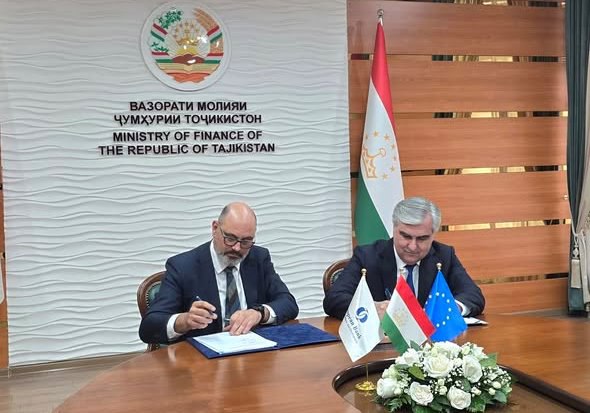
The European Bank for Reconstruction and Development (EBRD) and the European Union have announced a joint initiative to enhance the reliability and transparency of Tajikistan’s electricity distribution system. Under the agreement, a €43 million financing package will support the state-owned electricity distributor Shabakahoi Taqsimoti Barq (STB). The funding aims to reduce technical losses and improve efficiency by upgrading essential infrastructure. The “Energy Loss Reduction” project was officially signed on December 4 at Tajikistan’s Ministry of Finance. The agreement was endorsed by Minister of Finance Faiziddin Kahhorzoda and the EBRD’s permanent representative in Tajikistan, Holger Wiefel. The project is backed by €28 million in sovereign loans from the EBRD and €15 million in EU grants via the Asia-Pacific Investment Fund. Funds will be directed toward upgrading billing systems and installing new electricity metering equipment in nine cities across the Sughd and Khatlon regions. These areas are among the most affected by outdated infrastructure, which contributes to technical power losses, inaccurate metering, and the reduced financial viability of STB. The modernization program includes digitizing STB’s core operations and implementing cybersecurity measures to safeguard the national power grid. Technical assistance from both the EU and EBRD will support the rollout of these reforms. A key component of the initiative is human capital development. Specialized training programs on sustainable technologies and modern energy sector skills will be offered, with a focus on youth and women. This is intended to enhance the qualifications of local professionals and strengthen the regional labor market. The EBRD remains one of Tajikistan’s most significant international investors. To date, the bank has invested more than €1 billion across 188 projects in various sectors. The new energy initiative reflects the continued strategic role of international partners in supporting the modernization of Tajikistan’s critical infrastructure.


Energy-Saving Measures Introduced in Kyrgyzstan: Who Will Be Affected?

Kyrgyzstan's Cabinet of Ministers has implemented a series of measures aimed at improving energy efficiency and ensuring the rational use of electricity. The move comes amid an electricity shortage caused by persistently low water levels in the country’s main reservoirs. What’s Happening? Officials have reported a record surge in electricity consumption this year, coupled with a continuing regional drought. In response, the government has ordered a restriction on indoor and outdoor lighting between 6p.m. and 6a.m. However, the Cabinet emphasized that the new measures will not apply to strategic facilities, 24-hour operations, or institutions responsible for defense, security, health care, social services, or other critical public functions. “These measures do not affect processes essential to the technological operation of buildings,” stated the government’s press service. According to official estimates, the restrictions could save approximately 40 million kilowatt-hours of electricity per month. This year, Kyrgyzstan has already recorded electricity consumption that exceeds last year’s figures by 1 billion kilowatt-hours. The government attributes the increased demand to the launch of new industrial enterprises, the expansion of social and educational institutions, and ongoing residential construction. The situation is further worsened by declining water inflow to the Naryn River, which feeds the Toktogul Reservoir and its namesake hydroelectric plant. The reservoir's water level is currently 2 billion cubic meters lower than it was during the same period last year. “The Cabinet’s primary objective is to ensure rational water use in the Toktogul Reservoir and reduce the load on the energy system,” the government said. The goal is to prevent the reservoir from reaching a critical low. Who Will Be Responsible? The Ministry of Energy has mandated that all government agencies and state-owned entities switch off power in the evenings and at night once staff have left their workplaces. Heads of municipal bodies and public institutions will bear personal responsibility for any violations of the new regulations. How Are Residents Responding? For now, residents in the private sector report that little has changed. However, there are growing concerns that household power limits may soon be tightened. “They say our electricity consumption will be restricted. It used to be capped at 5 kilowatts at a time, but now they’re talking about reducing it to 3. That would make things much harder, especially if it’s a cold winter,” said Alexander Verkholantsev, a resident of central Bishkek, who spoke with The Times of Central Asia. Authorities have already announced that electricity restrictions for residential consumers during peak hours will be in place from October 2025 through March 2026. Despite this, many households still exceed the 3-kilowatt threshold.

Kyrgyz Authorities Reject Proposal to Let Wealthy Pay for Unlimited Electricity Amid Winter Deficit

As winter nears, the National Electric Grid of Kyrgyzstan introduced new electricity consumption limits for households, cutting the cap from 5 kilowatts to 3 kilowatts during peak morning and evening hours. At the same time, the company proposed allowing citizens to pay a higher tariff for unlimited electricity usage. The proposal sparked immediate backlash amid Kyrgyzstan’s chronic autumn-winter energy shortages, when many households depend on electric heating. President Sadyr Japarov swiftly condemned the initiative, calling it “unacceptable” during a period of scarcity. He warned that such a measure risked deepening social inequality and ordered the immediate cancellation of the unlimited-use tariff. Japarov also directed officials to implement equitable policies to ensure fair access to electricity for all citizens during the winter. Following the president’s intervention, the Ministry of Energy stated that the proposal had been introduced without its approval. The ministry also announced disciplinary action against the leadership of the National Electric Grid of Kyrgyzstan. On November 6, the Cabinet of Ministers introduced a series of emergency measures aimed at promoting responsible energy consumption. These include restrictions on the use of indoor and outdoor lighting and electrical equipment in government institutions between 6:00 p.m. and 6:00 a.m. Exemptions apply to strategic facilities and institutions that provide defense, security, healthcare, and social services, as well as those operating 24/7. The Cabinet estimates that the new measures could save up to 40 million kilowatt-hours of electricity per month. Government data shows that in the first nine months of 2025, electricity consumption increased by nearly 1 billion kilowatt-hours, largely due to the launch of new industrial sites, schools, and residential developments. Energy Minister Taalaibek Ibraev recently warned that the upcoming winter could be among the most challenging in years, citing critically low water levels at the Toktogul reservoir, which supplies approximately 40% of Kyrgyzstan’s electricity. In 2024, the country consumed 18.3 billion kilowatt-hours of electricity, up 1.1 billion kWh from the previous year. To cover the shortfall, Kyrgyzstan imported 3.6 billion kWh from Kazakhstan, Turkmenistan, Uzbekistan, and Russia. Additional imports have already been secured for the 2025-2026 winter. President Japarov has pledged that Kyrgyzstan will achieve energy self-sufficiency during winter months within two and a half years. “In two and a half years, we will no longer import electricity during winter. We will have enough domestically produced power,” Japarov said, urging citizens to remain patient as the government works to address the crisis. The country’s long-term energy security hinges on the construction of the Kambarata-1 Hydropower Plant, which is expected to be the largest in Kyrgyzstan and Central Asia. Once completed, it will have an installed capacity of 1,860 MW and generate 5.6 billion kilowatt-hours annually. The project is being developed in partnership with Kazakhstan and Uzbekistan.

Afghanistan Restores Power Imports from Uzbekistan and Tajikistan After Earthquake

A powerful earthquake that struck northern Afghanistan on November 2 caused significant destruction and disrupted electricity imports from neighboring Uzbekistan and Tajikistan, according to Da Afghanistan Breshna Sherkat (DABS), the country’s national power company. The earthquake damaged two major transmission lines, Nayibabad to Samangan and Kholm to Pul-e-Khumri, severing power supplies from Uzbekistan to several provinces, including Kabul, Baghlan, Parwan, Panjshir, Kapisa, Logar, Paktia, Ghazni, and Maidan Wardak. Electricity imported from Tajikistan to Kunduz was also interrupted, leaving large swathes of northern Afghanistan without power. Technical teams were immediately deployed to assess the damage and begin restoration work. The U.S. Geological Survey reported that the 6.3-magnitude quake struck at a depth of 28 kilometers near Mazar-i-Sharif. Tremors were felt across multiple provinces, including Samangan, Balkh, and the capital, Kabul. The cities of Aybak, Mazar-i-Sharif, Maymana, Takhar, Kunduz, and Sar-e-Pul experienced the strongest shocks. According to CNN, at least 27 people were killed and more than 950 injured, citing Dr. Sharafat Zaman Amar, spokesperson for Afghanistan’s Ministry of Public Health. The quake also damaged one of the country’s historic mosques in the north. DABS confirmed that electricity imports have now been fully restored, including the damaged 220-kilovolt transmission line from Tajikistan. On November 3, the company’s spokesperson told TOLONews that imports from both Uzbekistan and Tajikistan had been interrupted due to the earthquake. DABS representative Mohammad Sadiq Haqparast said, “Our technical teams are working diligently to restore both transmission lines as quickly as possible.” Following the disruption, Kabul residents urged the government to accelerate repairs, emphasizing that stable and reliable access to electricity remains a critical concern, particularly in the capital. Afghanistan is heavily reliant on imported electricity, receiving over 720 megawatts from Uzbekistan, Tajikistan, Turkmenistan, and Iran. These imports cost the country between $250 million and $280 million annually. Separately, on the sidelines of the International Conference and Exhibition on Energy, Construction Affairs, Industry and Development of Chemicals of Turkmenistan-2025, DABS General Director Dr. Abdul Bari Omar met with Turkmen Deputy Cabinet Minister Batur Amanov. Their discussions focused on key regional energy projects, including the 500 kV transmission line, the TAPI gas pipeline, and the electrification of Bala Murghab district. The meeting underscored the importance of regional cooperation in bolstering Afghanistan’s energy infrastructure.

Opinion: Uzbekistan’s Winds of Change – A Blueprint for Renewable Energy Transformation in Central Asia

For much of its post-Soviet history, Uzbekistan’s energy system has been defined by natural gas. Its abundant domestic reserves provide a cheap and reliable source of electricity generation, export revenues, and industrial growth. However, this reliance has come at a cost, including vulnerability to fossil fuel volatility, carbon emissions inconsistent with global climate commitments, and an energy profile increasingly at odds with international investment trends. Today, a new landscape is emerging in Uzbekistan’s energy sector. The vast steppes and desert plateaus of the Karakalpakstan and Navoi regions have emerged as some of the most promising areas for wind turbines and energy sector development. This transformation could redefine not only Uzbekistan’s energy security but also the regional energy map of Central Asia. A Decade in the Making: From Pilot to Pioneer This story begins in 2020, when the United Arab Emirates’ renewable energy developer Masdar signed an agreement to construct the Zarafshan Wind Farm in the Navoi region. Initially, this was not a pilot project, as its proposed capacity was about 500 MW, making it the largest wind project among the Central Asian countries at the time. Its symbolism pulsed with an energy no less powerful than the current itself. For Uzbekistan, which had no operating commercial wind capacity, the project marked a significant shift from concept to execution. The Zarafshan Wind Farm reached financial close in 2020, commenced construction in 2022, and was officially inaugurated in December 2024 by Uzbekistan’s President Shavkat Mirziyoyev. Developer reports describe it as one of the largest operational wind farms in Central Asia. It represented a step forward toward sustainability and a message of resolve for energy resilience. In a region where fossil fuels still dominate, Uzbekistan has positioned itself as a regional leader in large-scale wind energy production.. Scaling Beyond Zarafshan: Kungrad and Nukus The breakthrough at the Zarafshan Wind Farm signaled the dawn of a larger journey. Subsequently, Saudi Arabia’s ACWA Power, a giant in renewable energy, agreed to set up the Kungrad Wind IPP. This project includes a transformative complex of three 500 MW wind farms with a total capacity of 1.5 GW of power generation. According to project plans, it will also be accompanied by a 300 MW battery energy storage system (BESS) and roughly 1,450 kilometers of new transmission infrastructure. This single project surpasses Uzbekistan’s earlier renewable efforts and, when completed, will represent one of the most significant clean energy undertakings in the region. Similarly, the Nukus II wind farm-plus-storage project, which secured financing from the Asian Development Bank (ADB) and other partners in mid-2025, seeks to expand renewable energy use, reduce reliance on fossil fuels, cut greenhouse gas emissions, and strengthen energy security. It includes building and operating a 200 MW wind power plant, a 100 MWh battery storage system, a 44 km transmission line, and an upgrade of the 220 kV Beruniy substation. This integration of renewables with flexible storage represents a new phase of Uzbekistan’s energy transition, one where renewables are not simply added to the grid...

Kyrgyzstan Faces Power Shortages Amid Record Low Water Levels at Toktogul Reservoir

Kyrgyz authorities have warned of potential rolling blackouts this winter due to critically low water levels at the country’s main hydropower facility, the Toktogul Hydroelectric Power Station. At a press conference in Bishkek, Energy Minister Taalaibek Ibraev reported that as of mid-September, the Toktogul reservoir had accumulated just 10.8 billion cubic meters of water, 1.5 billion cubic meters less than at the same time last year. The shortfall significantly limits the country’s electricity generation capacity during peak winter demand. “Kyrgyzstan is facing a persistent energy crisis, exacerbated by insufficient water reserves amid global warming and rising demand for electricity,” Ibraev stated. Hydropower provides around 90 percent of Kyrgyzstan’s electricity. If water levels at Toktogul fall to 6.5 billion cubic meters, the turbines will be unable to function, increasing the risk of large-scale outages. Officials clarified, however, that the current deficit does not necessarily mean the country will face a total blackout during the winter of 2025-26. On the eve of the announcement, energy ministers from Kyrgyzstan, Kazakhstan, and Uzbekistan met in the town of Cholpon-Ata, where they agreed to facilitate electricity transit from Russia and Turkmenistan through their respective territories. “Through joint efforts, we will ensure an uninterrupted power supply to our cities and strengthen regional energy security. We expect our Kazakh and Uzbek colleagues to adhere to the delivery schedules set out in the signed protocols,” Ibraev added.