
• KGS/USD = 0.01144 0%
  • KZT/USD = 0.00207 0%
  • TJS/USD = 0.10440 -0.19%
  • UZS/USD = 0.00008 0%
  • TMT/USD = 0.28490 0%
  • KGS/USD = 0.01144 0%
  • KZT/USD = 0.00207 0%
  • TJS/USD = 0.10440 -0.19%
  • UZS/USD = 0.00008 0%
  • TMT/USD = 0.28490 0%
  • KGS/USD = 0.01144 0%
  • KZT/USD = 0.00207 0%
  • TJS/USD = 0.10440 -0.19%
  • UZS/USD = 0.00008 0%
  • TMT/USD = 0.28490 0%
  • KGS/USD = 0.01144 0%
  • KZT/USD = 0.00207 0%
  • TJS/USD = 0.10440 -0.19%
  • UZS/USD = 0.00008 0%
  • TMT/USD = 0.28490 0%
  • KGS/USD = 0.01144 0%
  • KZT/USD = 0.00207 0%
  • TJS/USD = 0.10440 -0.19%
  • UZS/USD = 0.00008 0%
  • TMT/USD = 0.28490 0%
  • KGS/USD = 0.01144 0%
  • KZT/USD = 0.00207 0%
  • TJS/USD = 0.10440 -0.19%
  • UZS/USD = 0.00008 0%
  • TMT/USD = 0.28490 0%
  • KGS/USD = 0.01144 0%
  • KZT/USD = 0.00207 0%
  • TJS/USD = 0.10440 -0.19%
  • UZS/USD = 0.00008 0%
  • TMT/USD = 0.28490 0%
  • KGS/USD = 0.01144 0%
  • KZT/USD = 0.00207 0%
  • TJS/USD = 0.10440 -0.19%
  • UZS/USD = 0.00008 0%
  • TMT/USD = 0.28490 0%

Viewing results 1 - 6 of 7

Italy’s Eni Expands Energy Projects in Kazakhstan with Hybrid Power Plant

The Italian energy company Eni is accelerating the expansion of its projects in Kazakhstan. By the end of the year, the company plans to complete construction of a hybrid power plant in Zhanaozen, one of the country’s key oil and gas centers. The 247-MW project combines three energy sources: solar, wind, and gas generation. The approach is expected to reduce the carbon footprint while providing a more stable energy supply in a region where strategically important production assets are concentrated Construction is proceeding in stages. The first component is already operational. In September 2025, a solar power plant with 80,000 panels was commissioned. Full completion of the complex is scheduled for the end of 2026, following the launch of gas and wind generation facilities. According to the Ministry of Energy, the project is intended to strengthen energy security for major enterprises in the Mangistau region, including Ozenmunaygaz and the Kazakh Gas Processing Plant. In a region that regularly experiences power shortages, this is a significant development. The project was discussed during a meeting between Kazakhstan’s Minister of Energy Yerlan Akkenzhenov and Italy’s Ambassador to Kazakhstan Antonello De Riu. Italian companies are gradually expanding their presence in Kazakhstan’s energy sector, from upstream production to processing and power generation. Cooperation extends beyond electricity generation. In January 2026, QazaqGaz and Eni moved to the practical phase of exploration at the Kamenkovsky block in the Caspian Basin. Work is also continuing at the Yuzhny Shu-Sarysu and Bereke blocks. Another major initiative is the gas-chemical complex under construction in the Atyrau region. The polyethylene project, with a planned capacity of 1.25 million tons per year and an estimated cost of $7.5 billion, has already entered the construction phase. The project is being implemented by KMG PetroChem, with Italy’s MAIRE group (through its subsidiary Tecnimont) serving as a key contractor. At the same time, conventional power generation projects are advancing. Cooperation with Italian power engineering company Ansaldo Energia has enabled the installation of new gas turbines at Almaty CHPP-3, with equipment deliveries completed in January 2026. However, this expanding cooperation is taking place amid legal uncertainty. Earlier, Eni and Shell, partners in the development of the Karachaganak field, lost a key stage of arbitration proceedings in London and may be required to pay Kazakhstan between $2 billion and $4 billion. While this could affect future investment decisions, it has not so far slowed the growth of Italian companies’ activities in the country.

Uzbekistan Lifts Import Duties and Advances ACWA Power Projects

Uzbekistan will remove unilateral import duties for seven countries as part of a government initiative to develop its construction materials sector, according to a presidential decree published on Lex.uz. The countries included in the exemption are Morocco, Tunisia, Egypt, Algeria, Saudi Arabia, Qatar, and Mongolia. The Ministry of Investments, Industry and Trade, in coordination with the Chamber of Commerce and Industry, the Customs Committee, and the Ministry of Foreign Affairs, has been given two months to draft a program of measures through 2027. This program will focus on lifting import duties and establishing systems for mutual recognition of certificates of origin with the designated states. A separate plan for conducting intergovernmental negotiations with each of the seven countries will also be prepared. In parallel, the interagency commission on cooperation with the World Trade Organization has been tasked with approving, within two weeks, a list of raw materials and inputs for the construction materials industry that will be exempt from customs duties until January 1, 2028. According to the decree, Uzbekistan aims to increase domestic production of construction materials to UZS 62 trillion and boost exports to $1.5 billion. The government plans to promote the use of energy-efficient and environmentally friendly materials, while facilitating investment in the sector. Projects totaling $3.5 billion are expected to be launched. Deputy Prime Minister Jamshid Khodjaev will supervise the approval of project parameters in cooperation with regional authorities and the O’zsanoatqurilishmateriallari association. Border security services have been instructed to ensure the safe passage of Uzbek business representatives through the Termez border crossing into Afghanistan. The decree coincides with Uzbekistan’s deepening economic ties with key international partners. On November 5, President Shavkat Mirziyoyev met with a delegation of Saudi companies led by Mohammad Abunayyan, chairman of ACWA Power and co-chair of the Uzbek-Saudi Business Council. The sides reviewed ongoing joint projects and explored new areas for collaboration. During the visit, four wind power plants with a combined capacity of 752 megawatts were connected to the national grid. Construction also began on five additional wind plants with a total capacity of 2.3 gigawatts, along with 300 megawatts of energy storage systems in Karakalpakstan and the Bukhara region. Work has also commenced on a 500-kilovolt power line spanning 1,790 kilometers, intended to improve energy transmission across Samarkand, the Tashkent region, Karakalpakstan, and Bukhara. The talks also addressed cooperation in transport infrastructure, IT, healthcare, agriculture, and other sectors, highlighting the government’s broader push to strengthen partnerships and attract investment across the Uzbek economy.

Kyrgyzstan Secures €9 Million in EIB Funding for CASA-1000 Energy Project

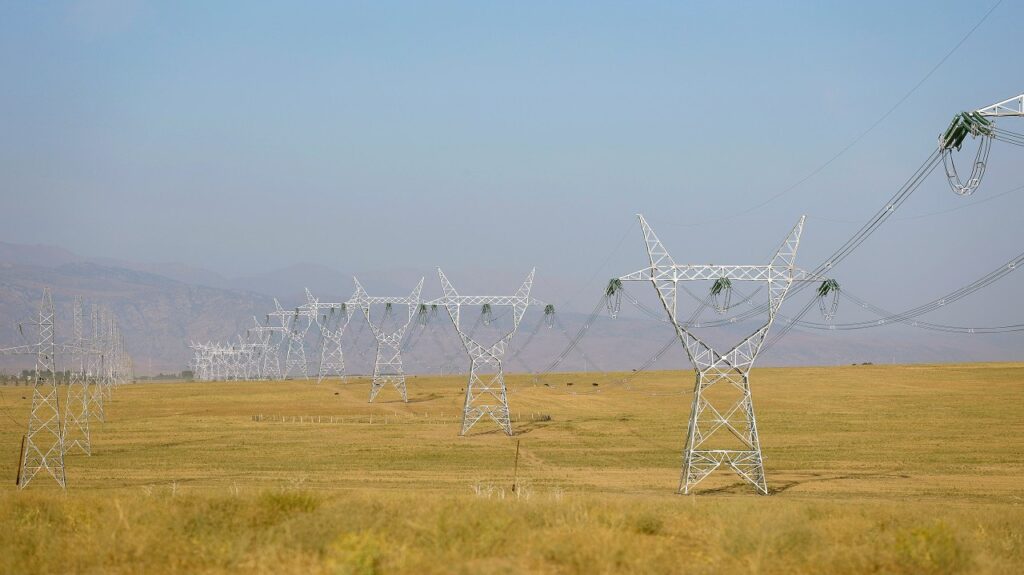
The Kyrgyz Ministry of Finance has approved the signing of a €9 million financing agreement with the European Investment Bank (EIB) to support the ongoing implementation of the CASA-1000 regional energy project. Under the terms of the agreement, the EIB will provide the Kyrgyz government with a 29-year loan, including an eight-year grace period, at an interest rate of 3.6% per annum. The funds will be used to complete infrastructure work under CASA-1000, a cross-border initiative aimed at exporting surplus summer electricity from Kyrgyzstan and Tajikistan to Afghanistan and Pakistan. According to the Ministry of Finance, the funds will be re-lent to the state-owned National Electric Grid of Kyrgyzstan (NEGK), the country's main electricity transmission operator and the contractor responsible for CASA-1000 infrastructure in Kyrgyzstan. Officials stated that the loan will not place additional pressure on the state budget. Repayment will be made through revenue generated by NEGK from electricity exports to South Asia. In line with the Kyrgyz Constitution, the agreement requires parliamentary approval by the Jogorku Kenesh before the funds can be disbursed to a dedicated Ministry of Finance account. The CASA-1000 project is now in an advanced stage of implementation. Kyrgyz President Sadyr Japarov and Tajik President Emomali Rahmon recently attended the inauguration of the 480-kilometer Datka-Sughd high-voltage transmission line, which connects the two countries’ power systems. This event marked the completion of all CASA-1000 infrastructure in Kyrgyzstan. Construction continues in southern Tajikistan, Afghanistan, and Pakistan. The full CASA-1000 corridor spans four countries, with a total transmission line length of 1,400 kilometers and an estimated total cost of $1.1 billion. Initial electricity deliveries to Afghanistan and Pakistan are scheduled for 2027.
